24hrs Cortina d'Ampezzo
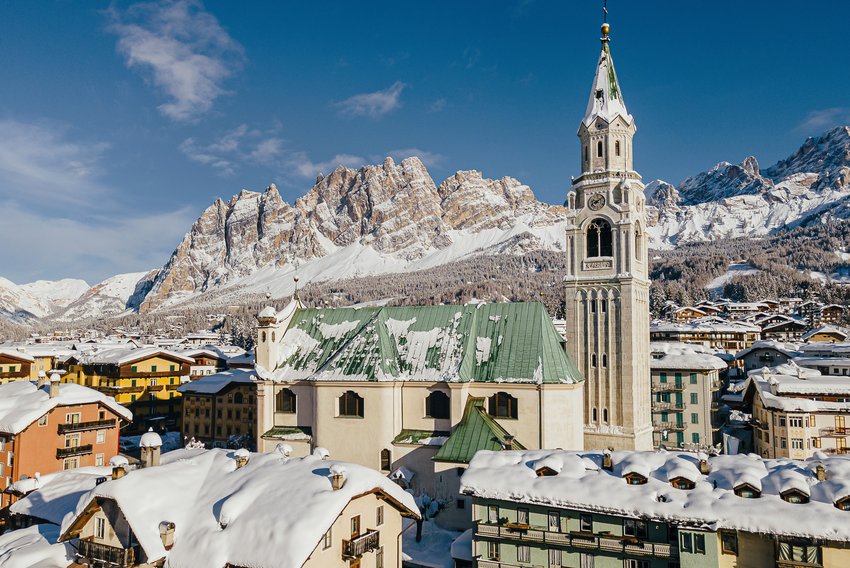
Cortina, in the Italian collective imagination, carries that unmistakable aura of exclusivity and is often compared to St. Moritz or Aspen. And perhaps, in part, it is. Yet, after spending a weekend there, I found myself surprised: Cortina is simply Cortina.
This identity began to take shape as early as the 1956 Winter Olympics, a defining moment that projected the town onto the international stage and marked the beginning of its transformation into a global alpine destination. Decades later, the Milano–Cortina 2026 Winter Olympics have once again left their mark, accelerating a process of change that is both visible and subtle. Transformation is evident not only in improved infrastructure and mobility, but also in a renewed vision of hospitality. By 2030, this alpine town –home to just over a thousand residents– will host thirteen five-star hotels. And yet, paradoxically, Cortina resists expansion. A centuries-old local rule, governed by the Regole (a traditional male lineage-based body), prohibits new constructions. Only the replacement of existing buildings is permitted, ensuring continuity disguised as renewal. What emerges is a place that looks forward while remaining deeply anchored, increasingly attentive to sustainability, circularity, and environmental care.
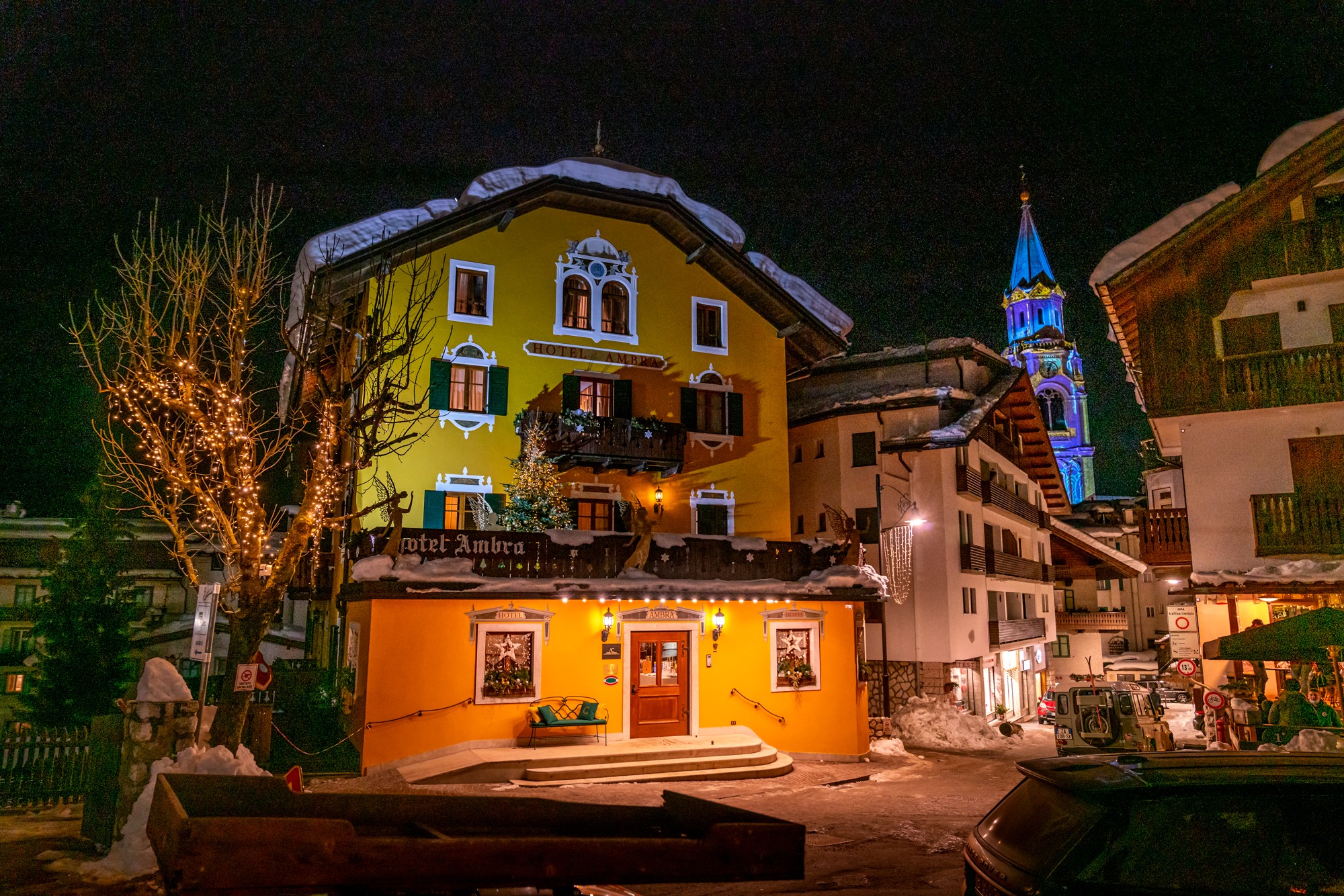
The hotel: Hotel Ambra Cortina
This vision materializes vividly at Hotel Ambra Cortina, where I had the pleasure of staying. Here, Elisabetta Dotto – known as “La Signora” or, as she prefers, “La Locandiera”– presides with elegance and intuition. Originally from Treviso, with experience across the Adriatic Riviera and Veneto, she has built her path through a refined understanding of hospitality as a form of cultural dialogue. Her approach is not merely managerial but curatorial: she creates atmospheres, occasions, and encounters that connect the hotel with the city around it. The hospitality I experienced was not performative, but deeply attentive, almost intimate. I felt not simply hosted, but genuinely received.
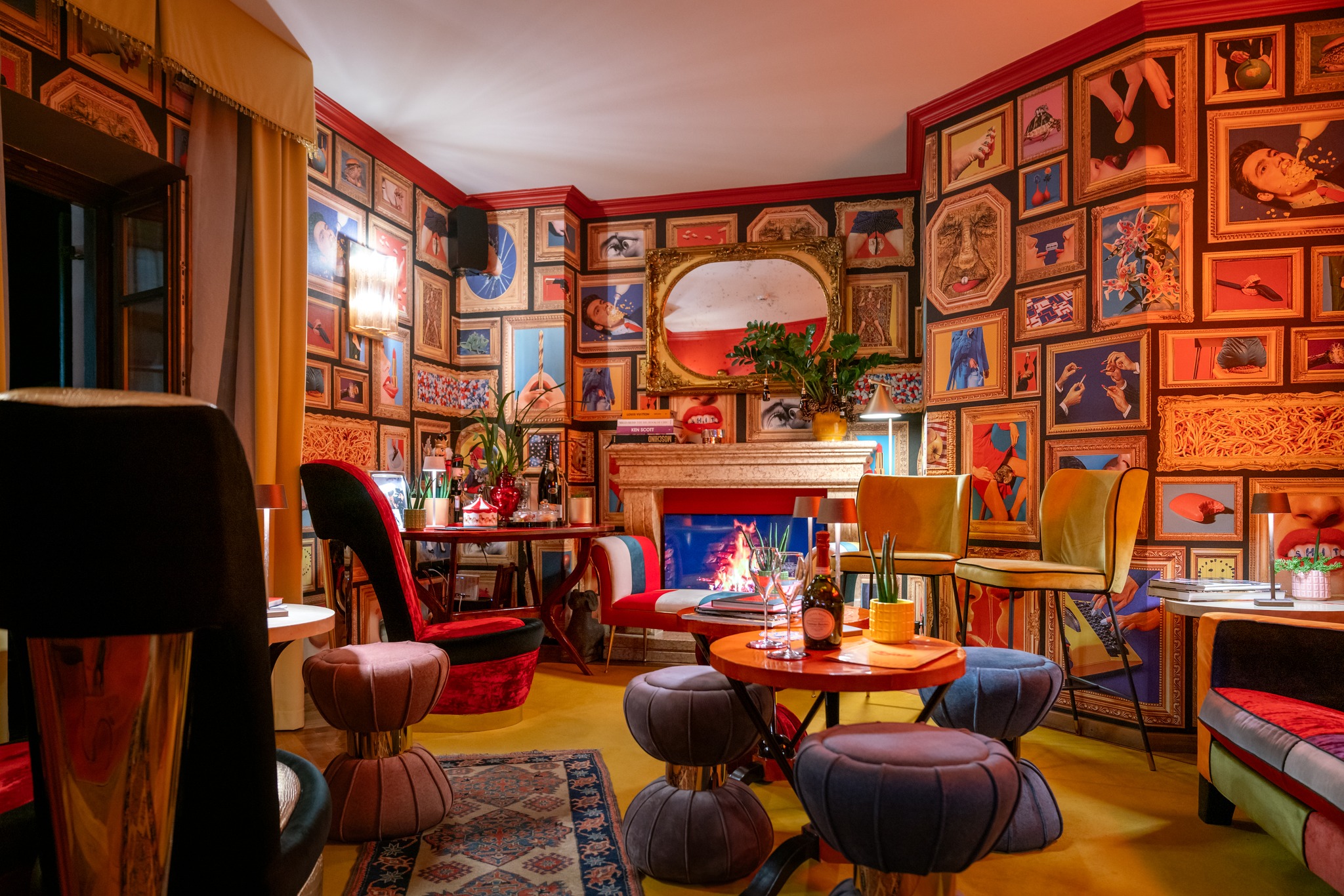
The hotel itself is a dialogue between past and present. Once the Pensione Emiliana, dating back to 1920, has been reimagined by Elisabetta since the early 2000s as a “Fashion & Luxury Hotel.” Fashion and design converse in every detail: from interiors designed by architect Gianluca Persinotto and shaped through collaborations with Toilet Paper and local artisans, to a palette of more than sixty Pantone shades that give rhythm and identity to each space. Even the staff uniforms, created in partnership with the Japanese denim brand Denham, become part of the narrative, blending functionality with aesthetic precision.
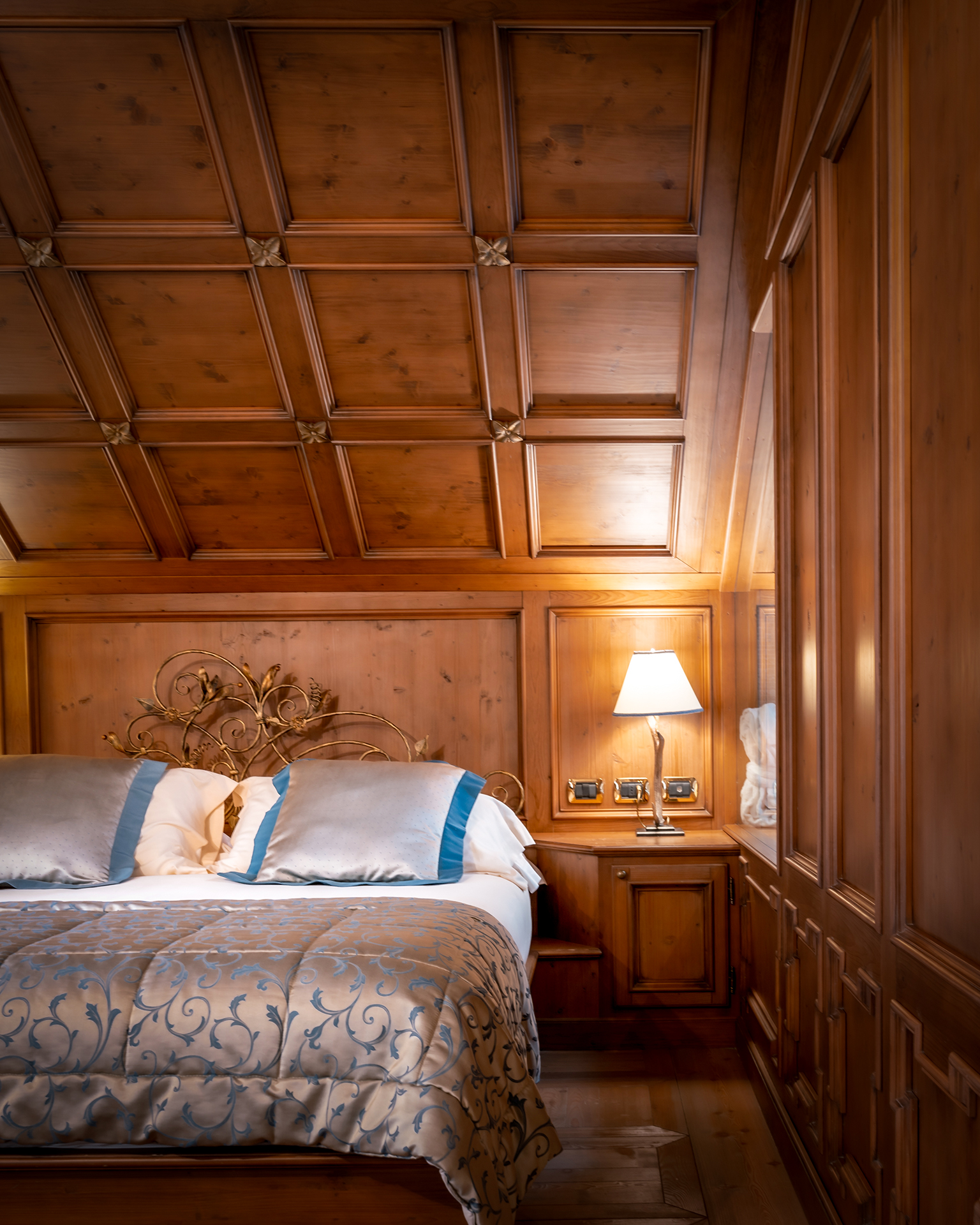
My suite, “Afrodite,” offered an intimate world of its own: a refined interplay between Cortina craftsmanship and a broader, international design language. The presence of objects, textures, and carefully selected elements, from the exquisite tableware by Geminiano Cozzi (Venice, 1765) to the Ortigia amenities, transformed the stay into a sensory experience. Books, including three authored by Elisabetta herself, added a personal layer, making the space feel lived, curated, and deeply individual.
Beyond the rooms, Hotel Ambra extends into two distinctive spaces, also open to the public: the Zelda Bar and La Lanterna. The former is vibrant, visually striking, and immersed in a bold, contemporary design language; the latter offers a softer, almost Parisian atmosphere, where one can enjoy a drink or a light dish in a refined yet relaxed setting. Together, they position the hotel not only as a place to stay, but as a social and cultural node within Cortina. Denham is partner of La Lanterna since this year, thus enriching the allure of the entire space.
At the core of this vision stands Elisabetta herself. A true fashion figure –effortlessly elegant, with a presence that blends charisma and precision– she has transformed Hotel Ambra Cortina into Cortina’s first and still only “Fashion & Luxury Hotel”. Through curated events and original formats such as Colbacco e Tacco 12, she has reimagined the role of hospitality, turning it into a stage where fashion, lifestyle, and local identity intersect.
Today, Hotel Ambra Cortina, together with Zelda and La Lanterna, has become one of Cortina’s most vibrant and informal “places to be,” where luxury meets a new rhythm, one that resonates with younger generations while remaining rooted in the timeless allure of the Dolomites and Cortina.
What to Do:
But what is there to do in Cortina d’Ampezzo, beyond enjoying Hotel Ambra Cortina? Quite a lot. For those who love skiing, the slopes of Faloria and the Tofane are certainly an unmissable experience. Yet Cortina is equally compelling beyond winter sports, revealing a more layered and cultural dimension.
A visit to the Parish Church, built in 1769 by M. Promperg-Costa and dedicated to Saints Philip and James, is a natural starting point. Its frescoes and architectural presence offer a glimpse into the historical and spiritual identity of the town.
For those seeking a deeper cultural immersion, Cortina offers three remarkable museums. The Museo d’Arte Moderna Mario Rimoldi houses one of the most important collections of Italian modern art, featuring masters such as De Chirico, Morandi, and De Pisis. The Museo Paleontologico Rinaldo Zardini presents an extraordinary collection of fossils from the Dolomites, revealing a prehistoric world that once lay beneath the sea. Finally, the Museo Etnografico delle Regole d’Ampezzo tells the story of local traditions, social structures, and everyday life, preserving the memory of a community shaped by centuries of shared rules and collective identity.
And then, quite simply, there is the pleasure of slowing down. An aperitivo at Bar Sport, in the heart of Corso Italia, is almost a ritual where locals and visitors alike gather, observe, and become part of Cortina’s social rhythm.

Where to Shop:
In Cortina, fashion is a refined dialogue between tradition and contemporary elegance.
At Paoletti, a historic brand founded in 1795 in Follina (Treviso), this philosophy finds one of its highest expressions. Today, led by Lucia Paoletti, the maison builds on a heritage of craftsmanship and quality, offering timeless pieces that move effortlessly between mountain and city. Here, style is never costume; it is identity, shaped by materials, precision, and an understated sense of luxury. The post-Olympic momentum has only reinforced this vision, bringing renewed attention to excellence.
Cortina’s aesthetic, in fact, is the result of a subtle yet distinctive cultural stratification: a sophisticated balance between Tyrolean-Austrian rigor and Ladin-South Tyrolean softness, where structured silhouettes, rich textiles, and alpine functionality meet a more intimate, rooted, and almost narrative sense of belonging. It is precisely this interplay between discipline and warmth, heritage and reinterpretation, that defines the unmistakable elegance of the “Ampezzo style”.
A different, yet complementary narrative unfolds at Ghedina Zuccaro, established in 1963. Known for its Tyrolean jackets and bespoke Ampezzo traditional attire, Ghedini blends Austrian influences with local tailoring. Its clientele, ranging from Americans to Canadians and the Middle East, seeks authenticity rendered with precision. Each garment is both heritage and statement.
For children, Carolina translates this aesthetic into a softer, yet equally distinctive language. Here, the “Cortina style” is reimagined for the youngest, preserving its elegance while embracing comfort and playfulness.
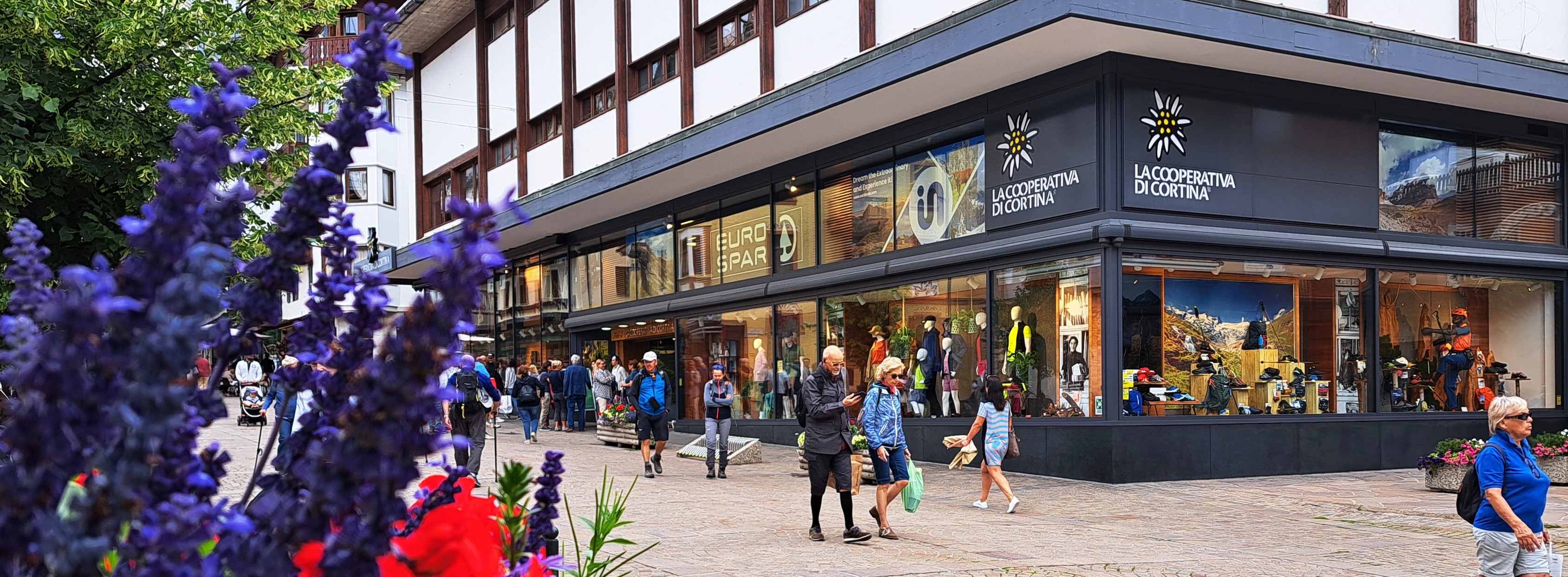
Alongside this refined retail landscape, the Cooperativa di Cortina remains an essential pillar of local life. Founded in 1893 by the parish priest, inspired by Rerum Novarum (the papal encyclical that laid the foundations of modern Catholic social thought), it was the first Austro-Hungarian cooperative, created as a collective purchasing group to ensure fair prices for everyday goods in a then-rural economy based on forests and livestock. Today, under the direction of Emanuela De Zanna since 2018, it counts around 600 members (descendants of the original families) while continuing to uphold its founding values: a single, indivisible share and a strong commitment to community support.
From the arrival of elite tourism in the early 20th century to the transformative impact of the 1956 Winter Olympics, the cooperative has adapted alongside Cortina, evolving from a subsistence structure into a modern enterprise while remaining deeply rooted in local identity and Ladin culture. Looking ahead, its vision remains firmly anchored in its social role, now reinterpreted through an ESG perspective: a strong focus on social sustainability, welfare, and equality guides its ongoing modernization, ensuring that growth continues to serve not only the market, but above all the community it was created to support.
Yet Cortina is, above all, a place of leisure, where time unfolds between moments of beauty, taste, and quiet discovery. Besides its three remarkable museums, the town itself becomes an open-air museum, shaped by its inhabitants, traditions, and layered history.
It is therefore through this lens of a living, breathing place that one should approach not only its shops, but also its cuisine.
Where to Eat:
Cortina’s cuisine reflects the same layered identity that defines its style: a meeting point between Alpine tradition, Ladin heritage, and a strong Tyrolean-Austrian influence.
At “Ra Stua”, located at the end of Corso Italia, this identity is expressed in its most traditional form. Here, one finds the essence of Cortina’s cuisine: a blend of Tyrolean and Austrian flavors, hearty, authentic, and deeply rooted in the Alpine territory.
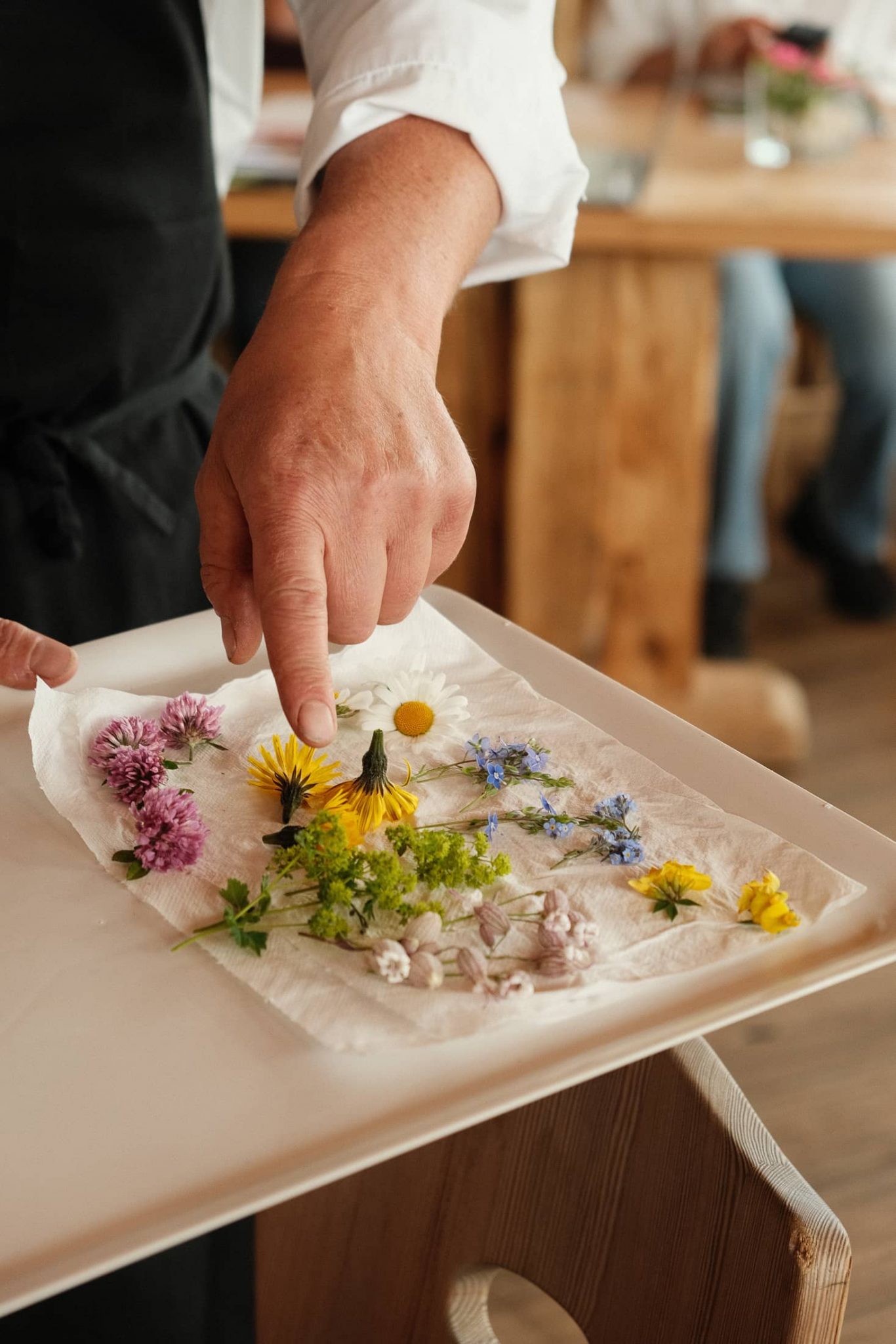
A completely different experience awaits at “Da Aurelio”: simply a fantastic place. Reaching it requires a drive along one of the most breathtaking panoramic roads in the Dolomites, leading up to Passo Giau, where the restaurant is located. Here, cuisine becomes an immersion into nature. While meat is certainly present, the true core of the restaurant lies in its research on wild herbs and edible flowers, treated almost as a science to be preserved and transmitted to future generations. Each year, for a limited number of participants, courses are organized in collaboration with the Laimburg Research Centre (Bolzano, Italy), guiding guests through the recognition and understanding of alpine botanicals. Nature enters the kitchen silently, shaped by Luigi’s vision, who, following in the footsteps of his father, Aurelio, who opened the restaurant in 1970, reinterprets the magic of nature through a contemporary lens. Dishes such as Venison meatballs with black cabbage and truffle become new interlocutors of the palate, where technique and landscape meet in refined harmony.
Finally, “Leone e Anna” tells a beautiful and deeply human story. Born in 1971 from Leone’s aunt, who had arrived in Cortina with her husband in search of work, the restaurant began as a simple expression of Sardinian home cooking and gradually became a true “place to be” in the Ampezzo social life, so much so that finding a table today is almost impossible. And, quite frankly, I feel fortunate to have experienced it: the spaghetti with bottarga of mullet and tuna was simply outstanding. Here, cuisine is memory, generosity, and authenticity, served in a warm and welcoming atmosphere that feels, unmistakably, like home.
Our Take from Cortina:
Cortina is not a destination that reveals itself all at once. It asks for time, for attention, and for a certain sensitivity to what lies beneath its surface. At first glance, it carries that familiar aura of exclusivity: polished, composed, almost distant. Yet, as the days unfold, that image softens, revealing something far more complex: a place where identity is lived.
What struck me most is its coherence. Cortina does not follow trends: it absorbs them, filters them, and quietly reshapes them according to its own codes. This is evident in its fashion, where tradition and refinement coexist without friction; in its hospitality, where elegance never becomes rigidity; and in its cuisine, where memory and innovation are not opposites, but part of the same narrative.
Experiencing Cortina as an Ampezzano was, quite simply, beautiful. I felt welcomed, listened to, and included in a way that goes beyond the usual idea of hospitality. It was not just about being hosted, it was about being understood. Through this, I gained access not only to places, but to people: individuals who carry a deep, almost instinctive love for their homeland. A love that is not nostalgic, but active, expressed in the daily effort to preserve, improve, and reinterpret what Cortina is and can become.
There is a quiet strength in this community, a sense of responsibility that is both individual and collective. Cortina is a cultural and human ecosystem, where traditions are not frozen in time but continuously reimagined.
As I write these final lines, snow is falling outside; soft, steady, almost suspended in time. And in that gentle, silent presence, there is something deeply reflective of Cortina itself: an elegance that does not need to be declared, a beauty that emerges naturally, and a sense of place that remains, unmistakably, its own.
related posts
Travel & Living
Corinthia Rome Opens its Doors

.jpg)