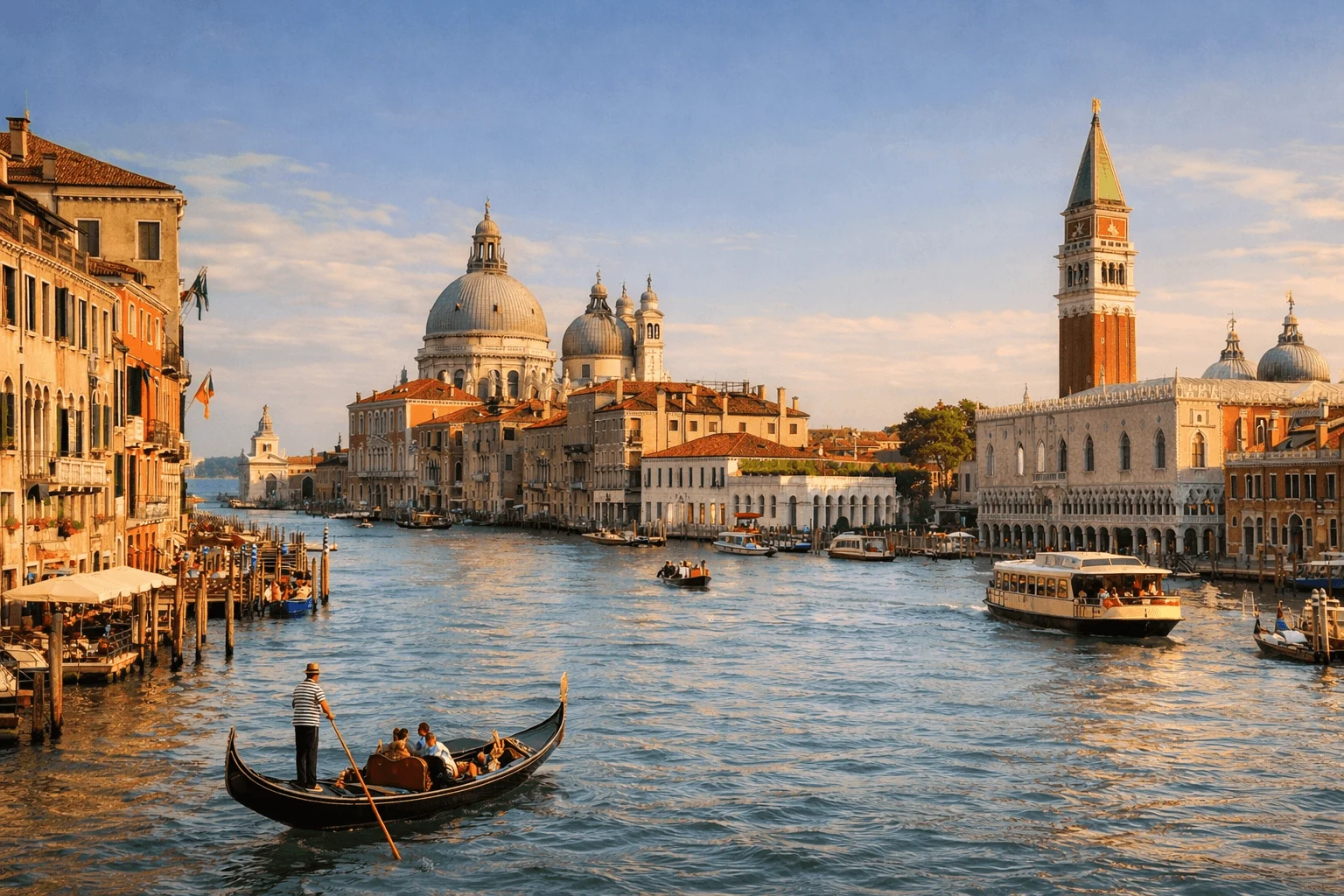
After leaving Elisabetta Dotto in her beloved Cortina d’Ampezzo, we find her again in Venice. Not in the Venice of overcrowded itineraries, endless queues and postcard clichés, but in a city that reveals itself through contemporary art, craftsmanship and a quiet, sophisticated form of luxury. A Venice that lives in the spaces between centuries-old palaces and avant-garde installations, where beauty is continuously reinvented.
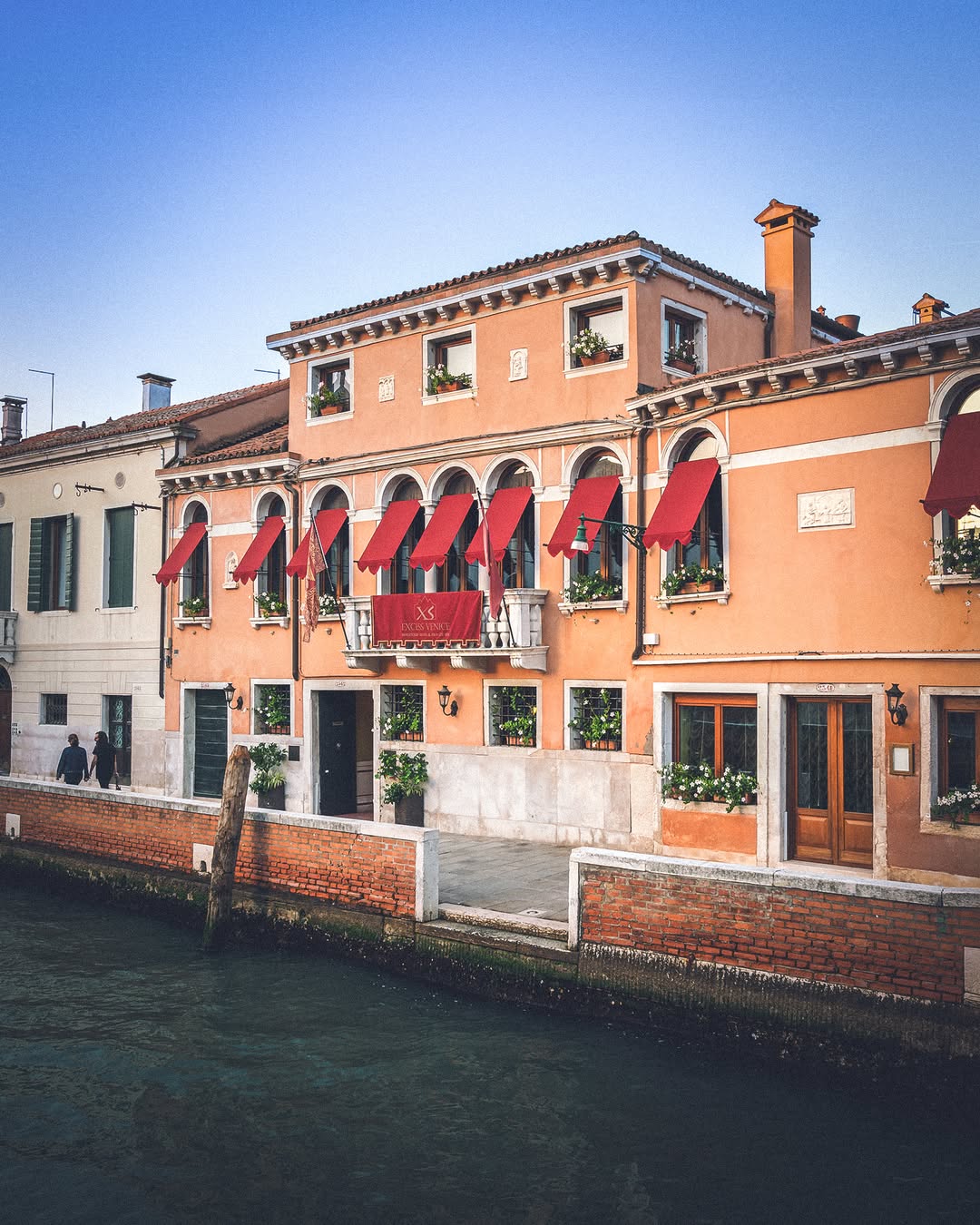
The Excess Venice Hotel
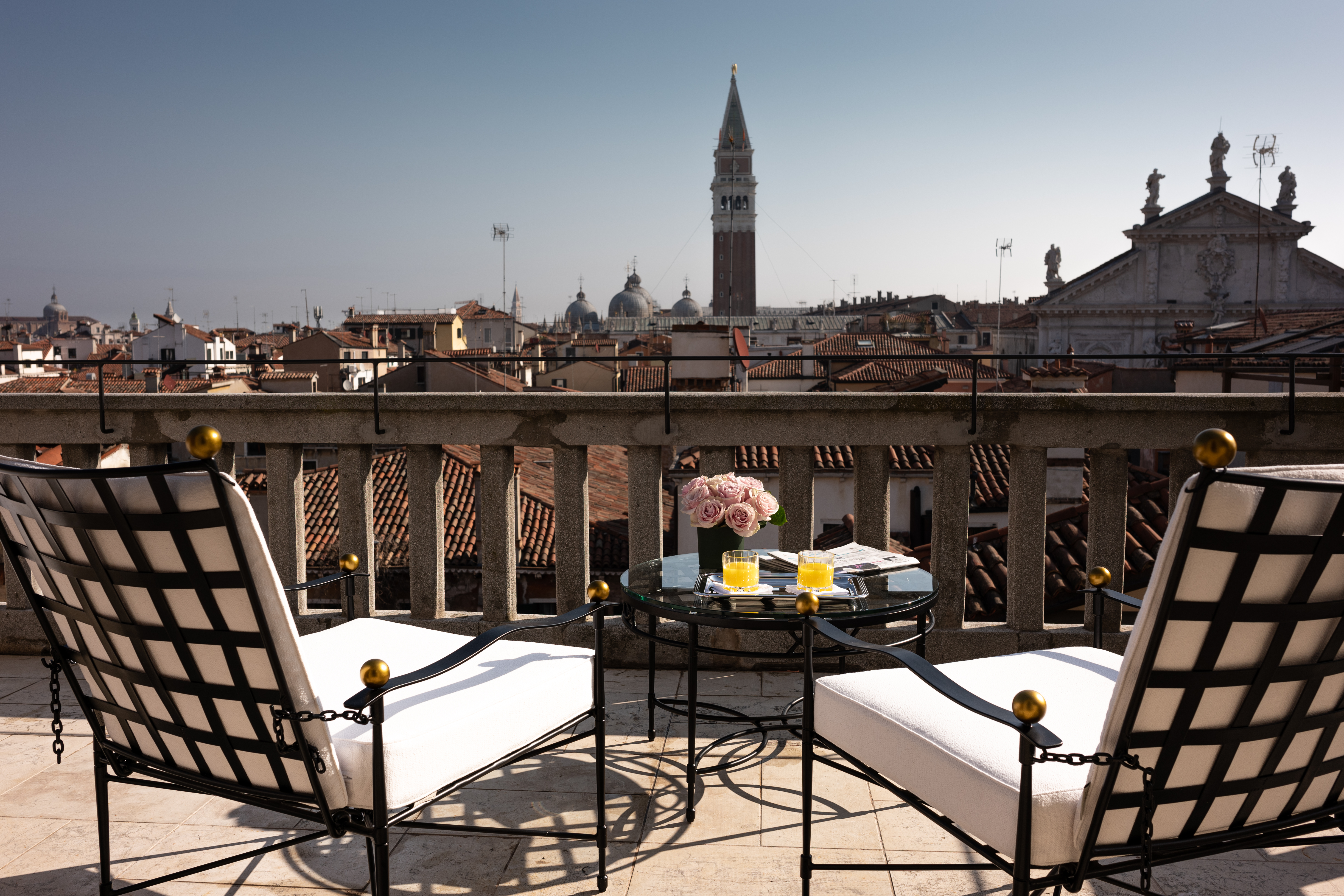
Our base for the next twenty-four hours is Excess Venice, a discreet five-star boutique hotel tucked away in Dorsoduro, one of the city’s most authentic sestieri. Located only a short walk from Piazzale Roma, the gateway through which most visitors arrive in Venice, the hotel occupies a remarkable seventeenth-century palazzo whose history is as fascinating as the city itself.
Having belonged over the centuries to ambassadors and prominent Venetian families, the building was transformed into a hotel only in 2019. Yet it feels as though hospitality has always belonged here. Excess Venice is perhaps what one could call “the hotel Venice was missing”: intimate, refined and deeply rooted in the cultural identity of the city.
What immediately captures the imagination is its extraordinary 500-square-metre garden, a rarity in Venice. Romantic and poetic, it unfolds like a secret sanctuary hidden behind ancient walls. Fourteenth- and fifteenth-century columns coexist effortlessly with contemporary artworks, while lush vegetation softens the architectural lines. It is a space where past and present engage in a constant conversation, setting the tone for everything that follows.
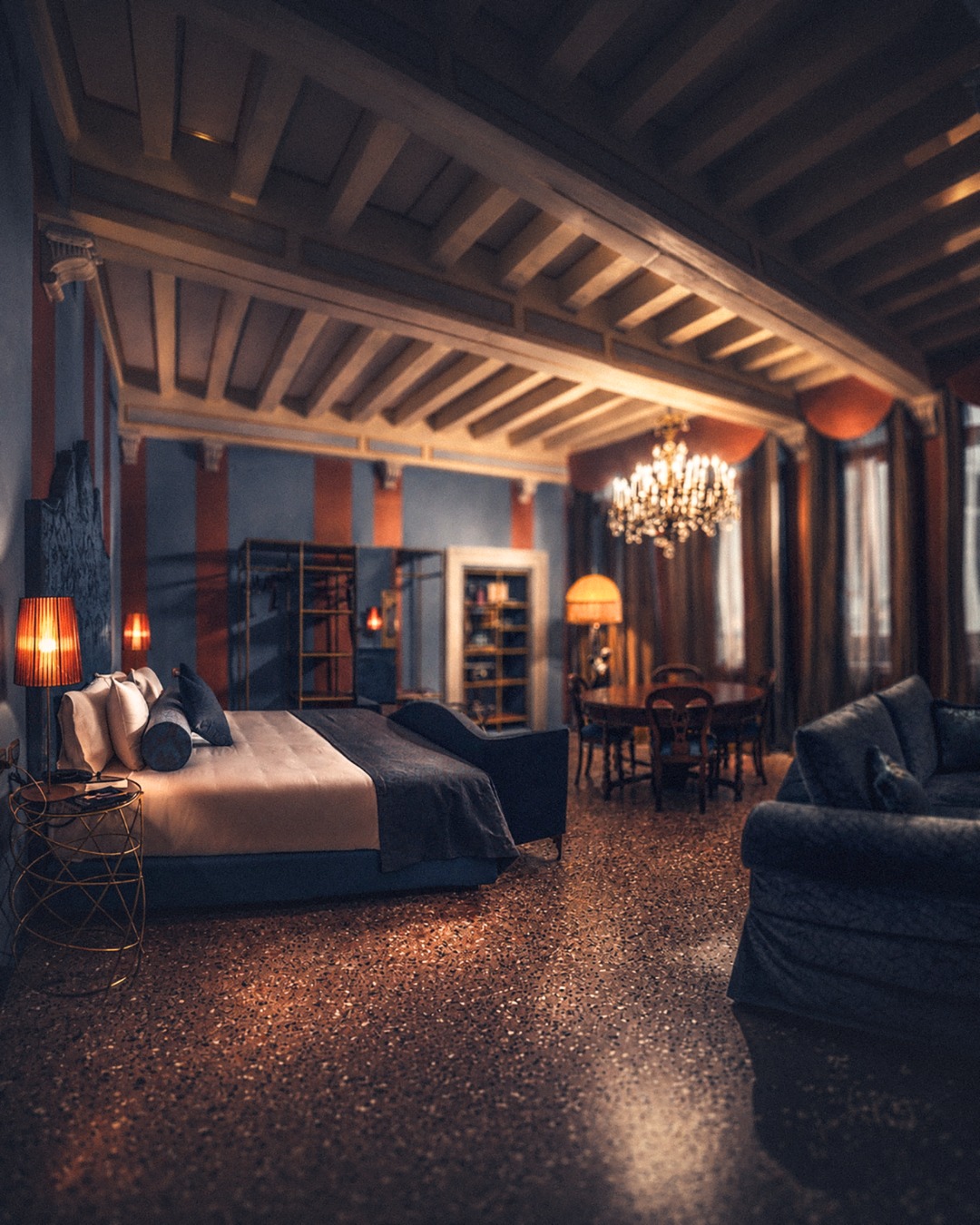
The hotel also bears the unmistakable imprint of Elisabetta Dotto. Affectionately described as a Locandiera, a traditional innkeeper in the noblest sense of the word, she has created and curated a spectacular experience: every room reflects an attention to detail that speaks to her personal vision, combining elegance with warmth and intellectual curiosity.
My suite, number 36, exemplified this philosophy perfectly. Refined without being ostentatious, sophisticated without sacrificing comfort, it felt designed for the kind of traveller who values stories as much as luxury. In many ways, Excess Venice resembles a private residence for the world's most discerning connoisseurs. It has just 15 rooms, six of which are suites, gorgeous suites with amenities that include Ortigia shower kit and the iconic Dyson hair dryer.
Breakfast is elegantly understated yet thoroughly satisfying. I was particularly fortunate during my stay, as the buffet featured two of my all-time favourite cakes on consecutive mornings: a perfectly balanced Linzer Torte and a wonderfully moist carrot cake. The pastry selection was excellent throughout, complemented by attentive service and a carefully curated range of products. A special mention goes to the juices by Mamma Mia!, whose fresh, vibrant flavours provided the perfect start to the day.
One of the defining elements of the property is its relationship with Venetian textile heritage. Throughout the hotel, fabrics by Rubelli create an atmosphere of understated grandeur. Their textures, colours and patterns are not decorative accessories but an essential part of the narrative.
What to Visit: Fondazione Rubelli, Studio Berengo and Fondazione Dries Van Noten
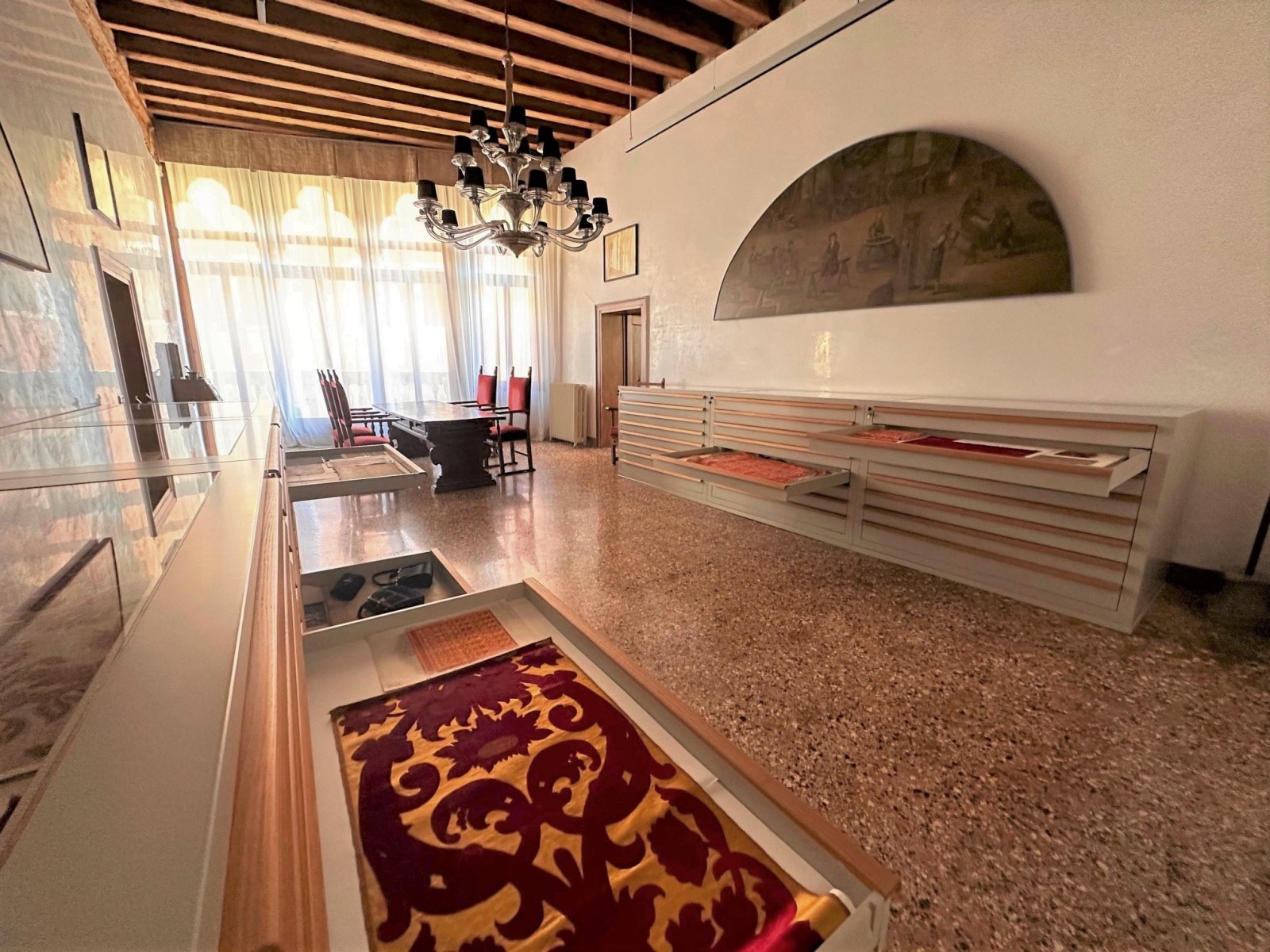
One of the most fascinating experiences arranged by Elisabetta Dotto and her team is a visit to the Rubelli Foundation, housed within the historic Palazzo Ca' Pisani Moretta. Founded in 2018 by Alessandro Favaretto Rubelli, the Foundation preserves the legacy of a company that has been shaping Venetian textile excellence since 1889. Renowned for its extraordinary mastery of soprarizzo velvet (one of the most sophisticated and prestigious weaving techniques in the world), Rubelli has played a pivotal role in safeguarding and renewing Venice's textile heritage. Yet the company's success has always been driven by a forward-looking vision. Alongside its historic craftsmanship, Rubelli embraced design, innovation and creative experimentation, collaborating with some of the most influential figures and brands of the twentieth century, from Gio Ponti to Dior. The Foundation offers a compelling journey through this unique dialogue between tradition and modernity, craftsmanship and creativity.
If Rubelli represents one of the textile souls of Venice, Berengo Studio embodies its ability to transform ancient craftsmanship into contemporary art.
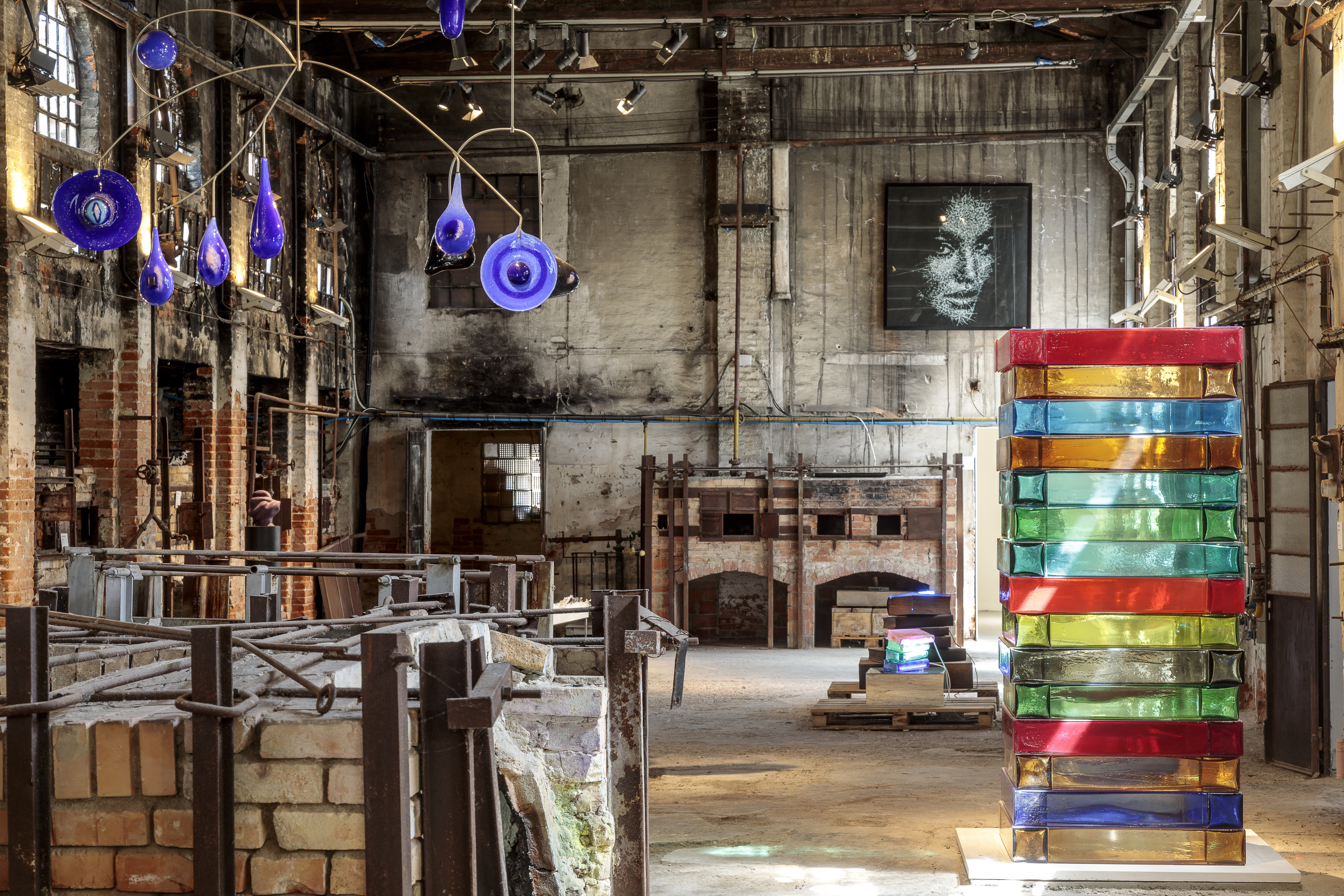
Founded by Adriano Berengo, the studio has spent decades building a bridge between Murano's master glassmakers and the international art world. His intuition was revolutionary: inviting leading contemporary artists to work directly with Venetian artisans and translate their visions into glass.
The list of collaborators reads like a who's who of contemporary art. From Thomas Schütte to Marina Abramović and Ai Weiwei, some of the world's most influential artists have passed through Berengo's furnaces.
Stepping inside the workshop is an experience in itself. Molten glass glows in the darkness as artisans move with a precision acquired over generations. The atmosphere feels suspended between theatre and ritual, between physical labour and artistic creation.
Yet what makes the visit unforgettable are the stories. Adriano Berengo possesses the rare gift of turning anecdotes into living history. Hours seem to disappear while listening to his recollections of artists, collectors and the extraordinary personalities who have shaped Venice's cultural life.
One story in particular lingers in the memory. Peggy Guggenheim, whose collection would forever change the city's artistic landscape, apparently had a soft spot for Venetian gondoliers. She found them irresistibly charming. It is a small detail, perhaps, but one that humanises a legendary figure and reminds us that history is often built as much from personal passions as from grand achievements.
As the Biennale unfolds across Venice, the city itself becomes an immense exhibition space. Art spills from pavilions into palaces, churches, gardens and unexpected corners. Contemporary works coexist with centuries of history, creating a dialogue found nowhere else in the world.
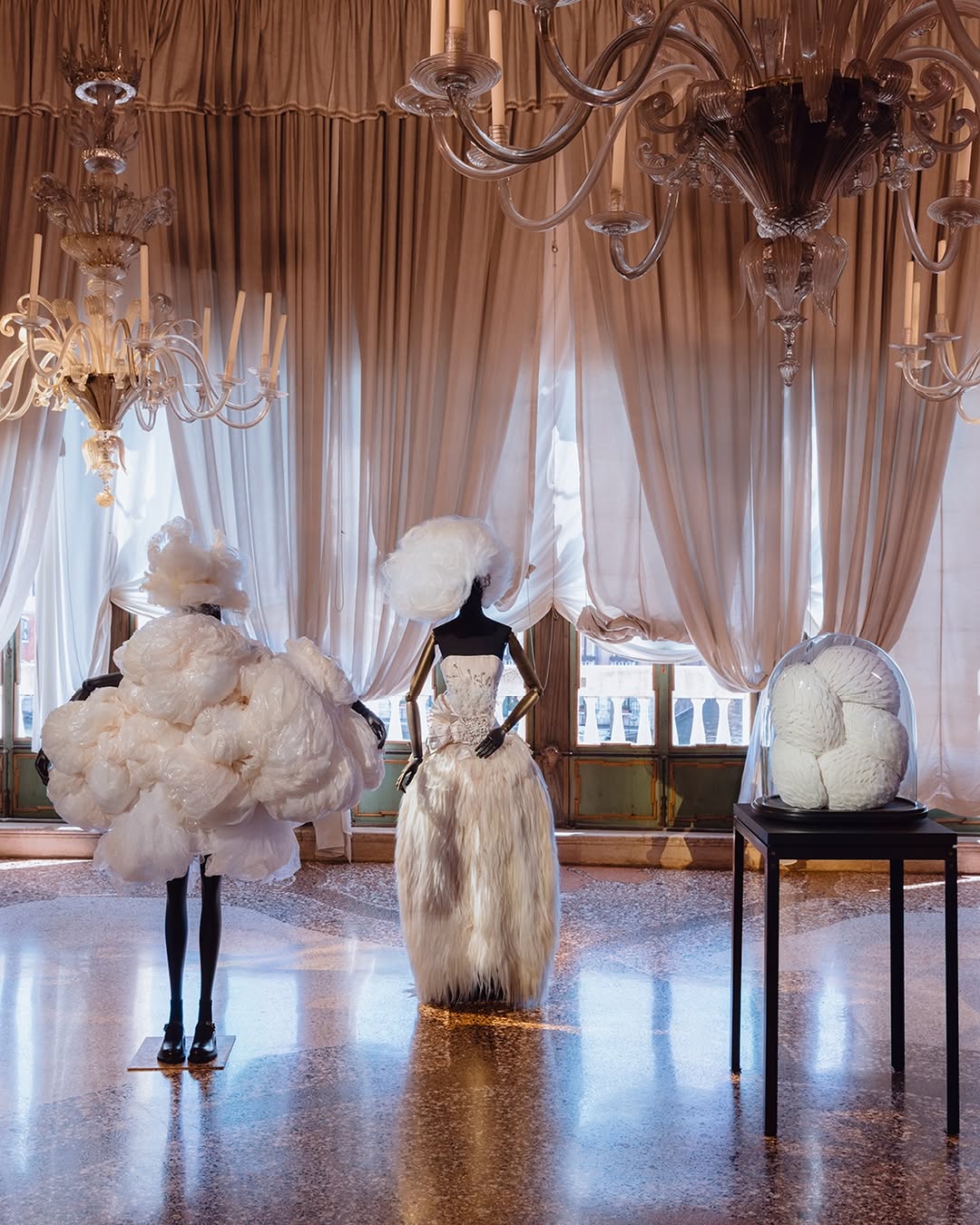
This encounter between past and present reaches one of its most compelling expressions at Palazzo Pisani Moretta on the Grand Canal.
Here, the newly inaugurated exhibition of the Dries Van Noten Foundation, The Only Truth Is Beauty, transforms the historic palace into a meditation on aesthetics, craftsmanship and identity.
Fashion, art and decorative arts merge seamlessly. Creations by Christian Lacroix converse with works by Hubert Duprat, while the celebrated jewels of Codognato introduce another layer of Venetian excellence. Throughout the exhibition, objects seem to transcend their material nature, becoming symbols of a larger conversation about beauty itself.
Walking through the rooms feels like moving through a series of poetic tableaux where concept meets matter, where imagination encounters craftsmanship, and where the boundaries between disciplines dissolve entirely. It is precisely this ability to embrace complexity that continues to make Venice a global capital of culture and intercultural dialogue.
Of course, no day in Venice would be complete without exploring its culinary traditions.
Where to Eat: La Madonna and Locanda Montin
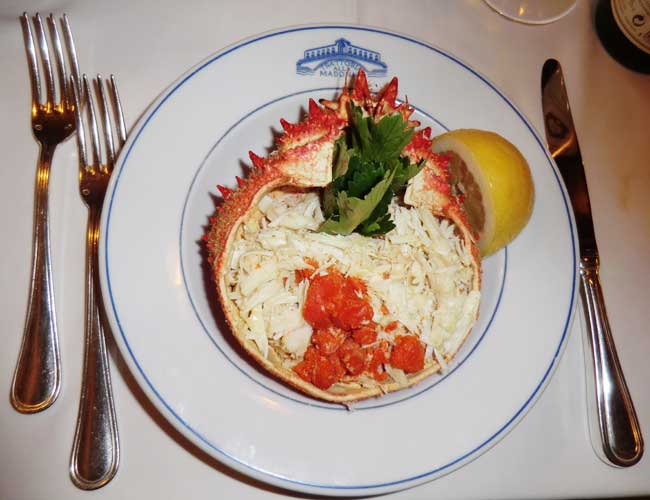
For lunch, a stop at Ristorante Alla Madonna, just steps away from the Rialto Bridge, offers a taste of authentic Venetian cuisine. Here, the spider crab in saor (the traditional Venetian sweet-and-sour preparation) showcases the richness of the lagoon's culinary heritage, balancing delicate flavours with remarkable depth. Paired with a perfectly cooked sea bream, it becomes a meal that captures the essence of Venice and the Adriatic in every bite.
For dinner, the atmosphere shifts to Dorsoduro and the timeless charm of Locanda Montin. Long favoured by artists, intellectuals and locals, the restaurant remains one of the city's most authentic addresses. The granseola (spider crab) served in its shell highlights the purity of the ingredient, while the filetto di branzino alla mediterranea (Mediterranean-style sea bass fillet) provides a refined conclusion to the meal. Simple in appearance yet rich in flavour, the dishes reflect the same balance between tradition and elegance that characterises Venice itself.
Before leaving the city, there is still time for one final indulgence.
Where to Shop: Vibi Venezia
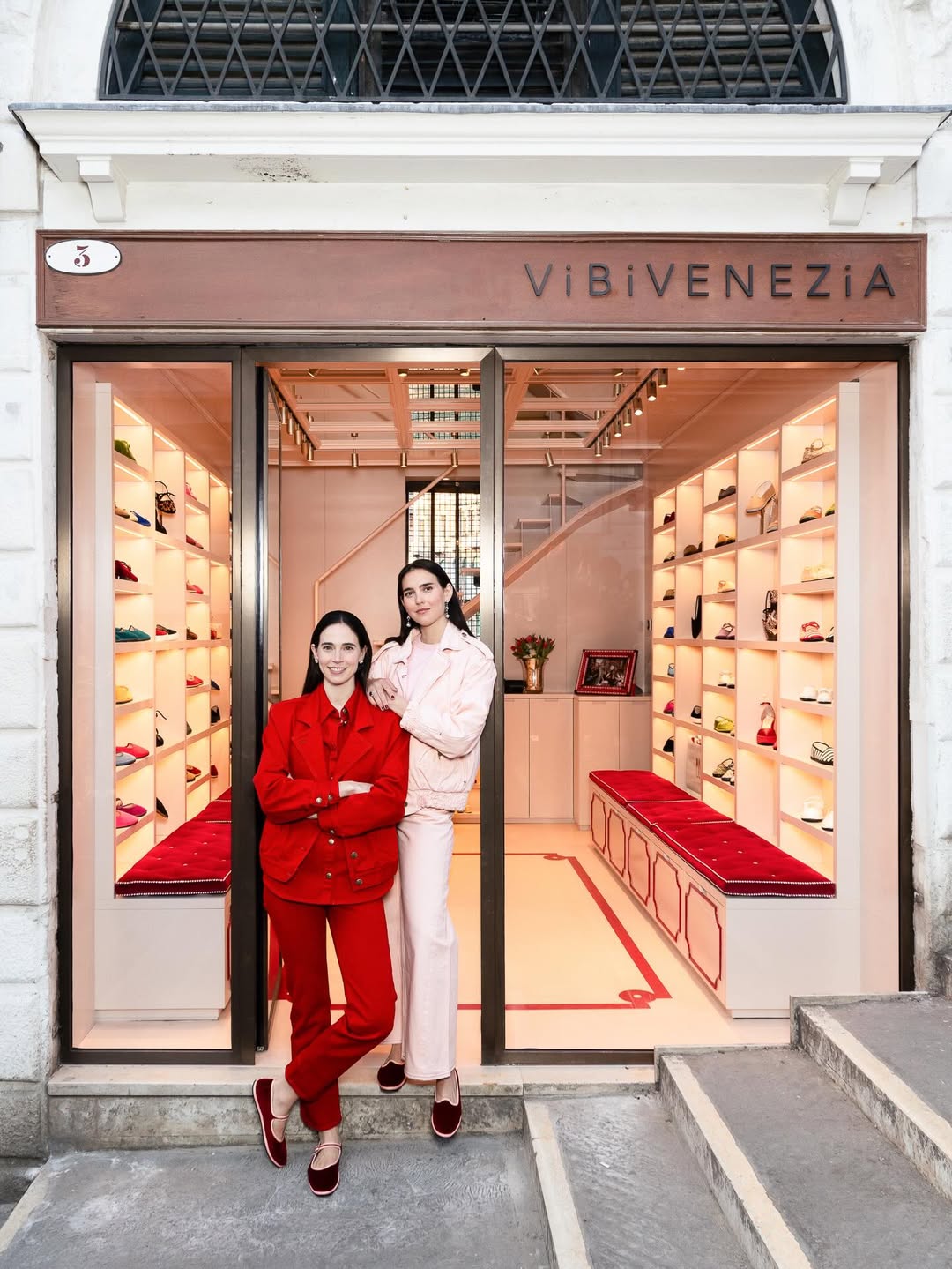
Beyond the major luxury maisons that dominate the shopping scene, true Venetian style often hides in more discreet addresses. Vibi Venezia at the Rialto Bridge has become a modern icon thanks to its reinterpretation of the traditional friulana slipper. Elegant, comfortable and unmistakably Venetian, these shoes encapsulate the city's unique ability to transform heritage into contemporary style.
As evening settles over the canals and the reflections of palaces shimmer on the water, it becomes clear that these twenty-four hours have revealed a side of Venice that many visitors never encounter.
Venice is a living ecosystem of ideas, craftsmanship and creativity, a place where centuries-old villas become intimate boutique hotels, where textile dynasties preserve cultural memory while embracing innovation, where Murano furnaces collaborate with global artists, and where contemporary exhibitions inhabit historic palaces without diminishing their grandeur.
Guided by Elisabetta Dotto, these twenty-four hours become an exploration of what makes the city eternally relevant: its ability to honour the past while continuously reinventing itself.
And perhaps that is Venice's greatest masterpiece of all.
related posts


Travel & Living
Visit Graubunden Curates The Perfect Alpine Winter Escape
.jpg)