A Quiet Power
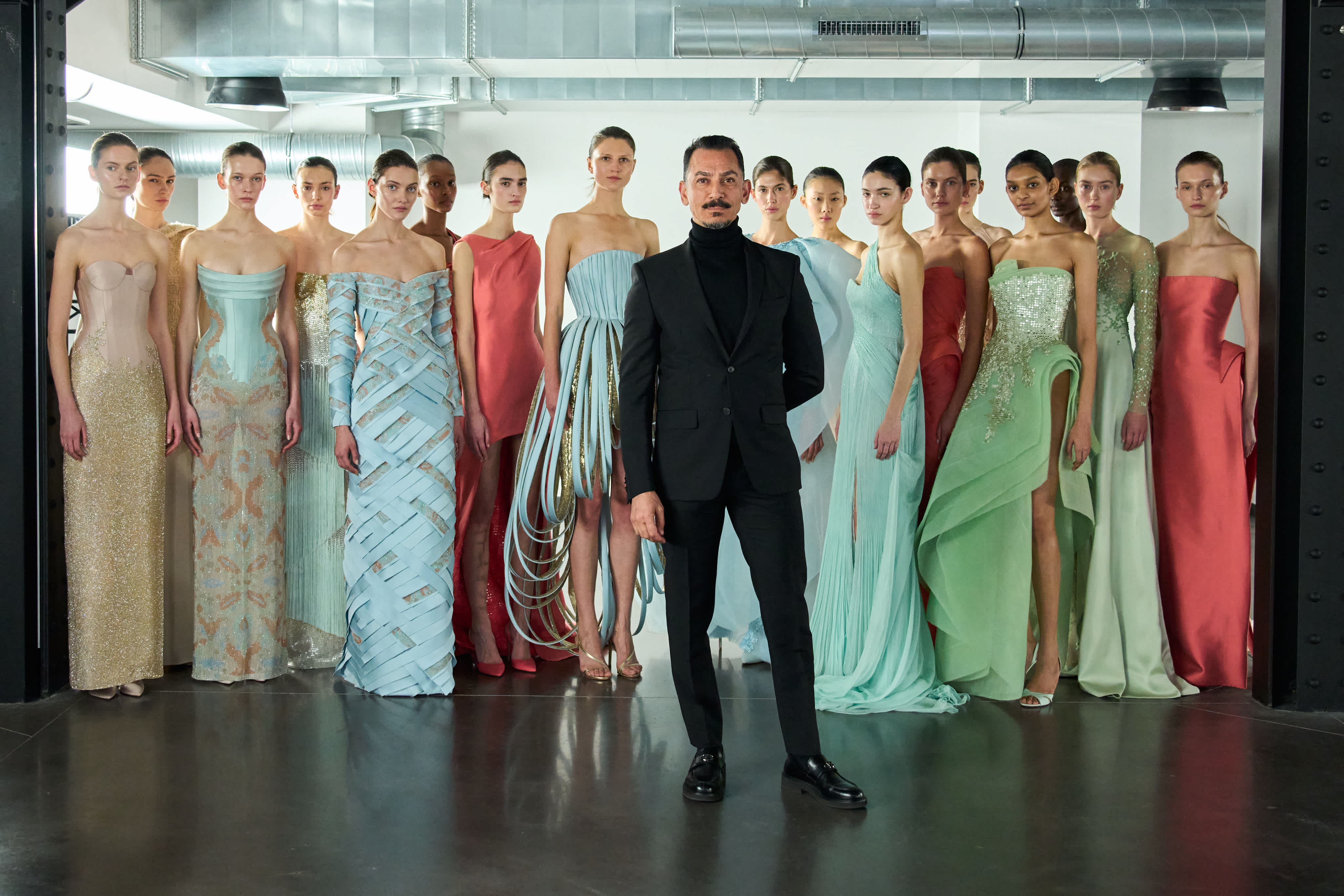
I arrived at Rami Al Ali’s Spring–Summer 2026 couture show with the familiar anticipation that defines Haute Couture Week in Paris; the expectation of spectacle, precision and craft pushed to its highest level. What unfolded, however, was something quieter, more introspective, and ultimately more affecting. Fragments in Harmony was not designed to overwhelm the senses; it invited them inward.
From the opening moments, the collection established a gentle rhythm. The silhouettes moved slowly, deliberately, as if asking the audience to pause. There was an immediate sense that movement itself was central to the story; garments were not static objects but living forms, designed to breathe and evolve with the body. Long lines elongated the figure, while layered elements appeared to separate and reunite as the models walked, mirroring the idea of fragmentation followed by reconciliation.
The philosophical foundation of the collection, inspired by the writings of the 13th-century Persian poet Rumi, was present without being literal. Rather than illustration, Al Ali translated the idea that beauty exists within rupture into form, construction and texture. Fragmentation appeared subtly: in asymmetrical draping, in layered transparencies, in surfaces that seemed intentionally interrupted. Yet nothing felt unresolved. Each piece ultimately came together with clarity, suggesting harmony as a process rather than a fixed state.
The collection balanced architectural precision with softness. Clean, elongated structures were softened by sheer overlays, lace and organza, creating a dialogue between strength and fluidity. At times, the garments appeared almost weightless, as though floating just away from the body. At others, sharper lines anchored the silhouettes, grounding them in structure and intention. This tension between discipline and ease gave the collection its emotional depth.
One of the most striking elements was Al Ali’s use of visible construction. Seams were not hidden; they were celebrated. In couture, where perfection often means invisibility, this choice felt deliberate and symbolic. These seams became connective lines; visual reminders of assembly, repair and craftsmanship. They spoke to the idea that unity is built, not assumed, and that the act of joining fragments can be as beautiful as the finished whole.
Embroidery played a central narrative role. Motifs inspired by broken glass and mosaic patterns were reassembled across bodices and skirts using metallic threads, beads and crystals. The effect was luminous rather than ornate. Light caught on these surfaces gently, never aggressively, enhancing the feeling that the garments were slowly revealing themselves. Lace and organza were layered to create depth, allowing fabrics to overlap and interact like translucent pages.
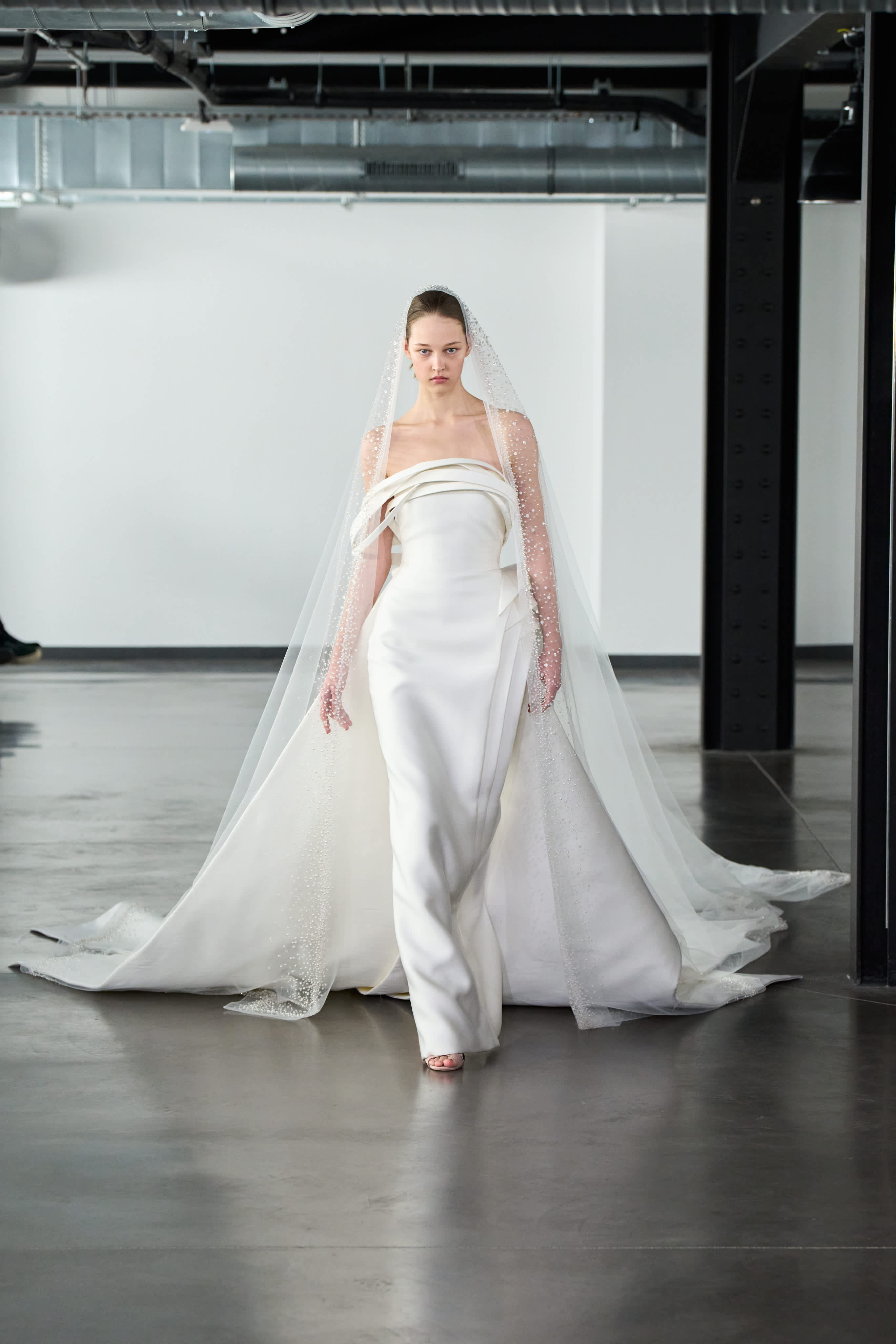
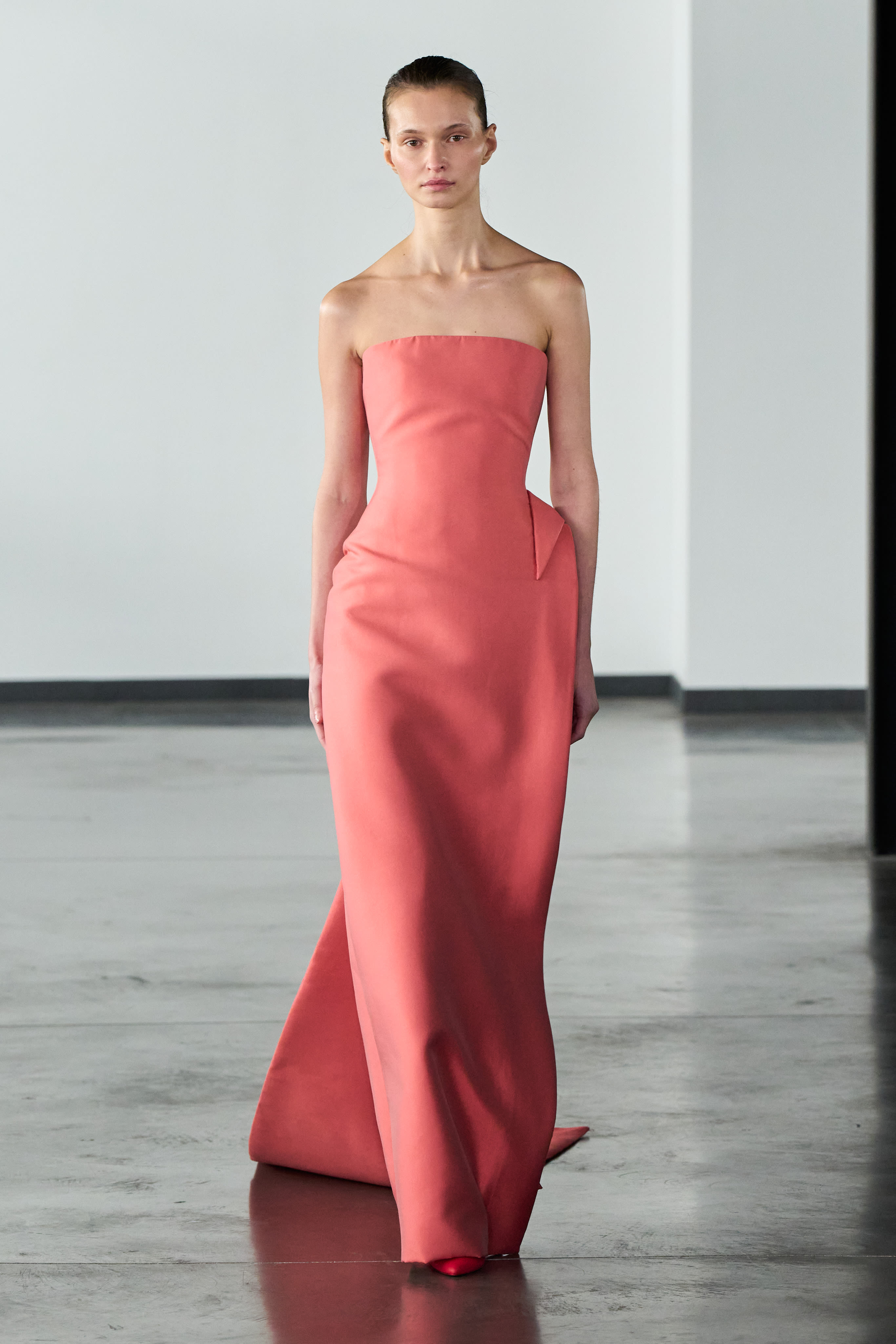
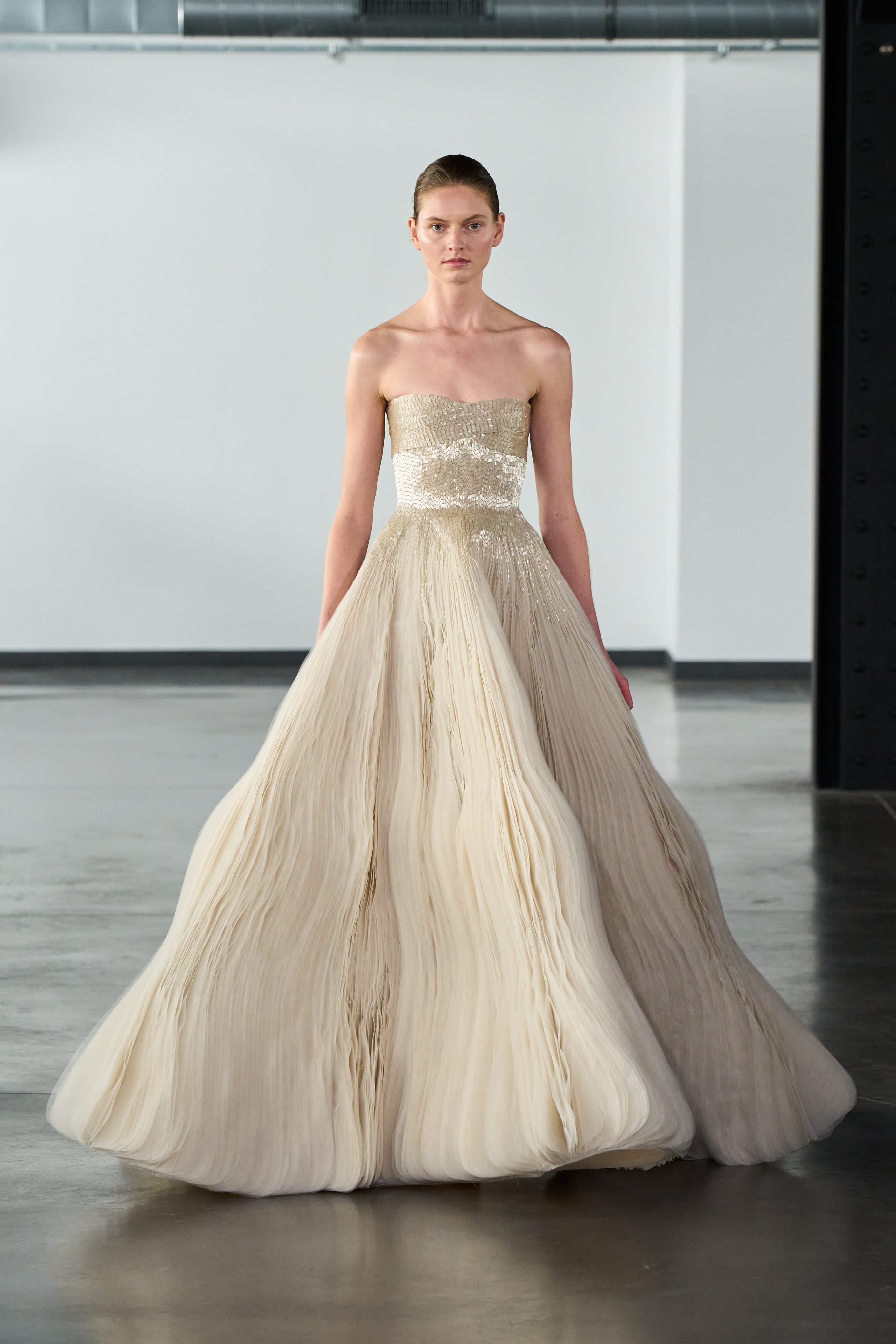
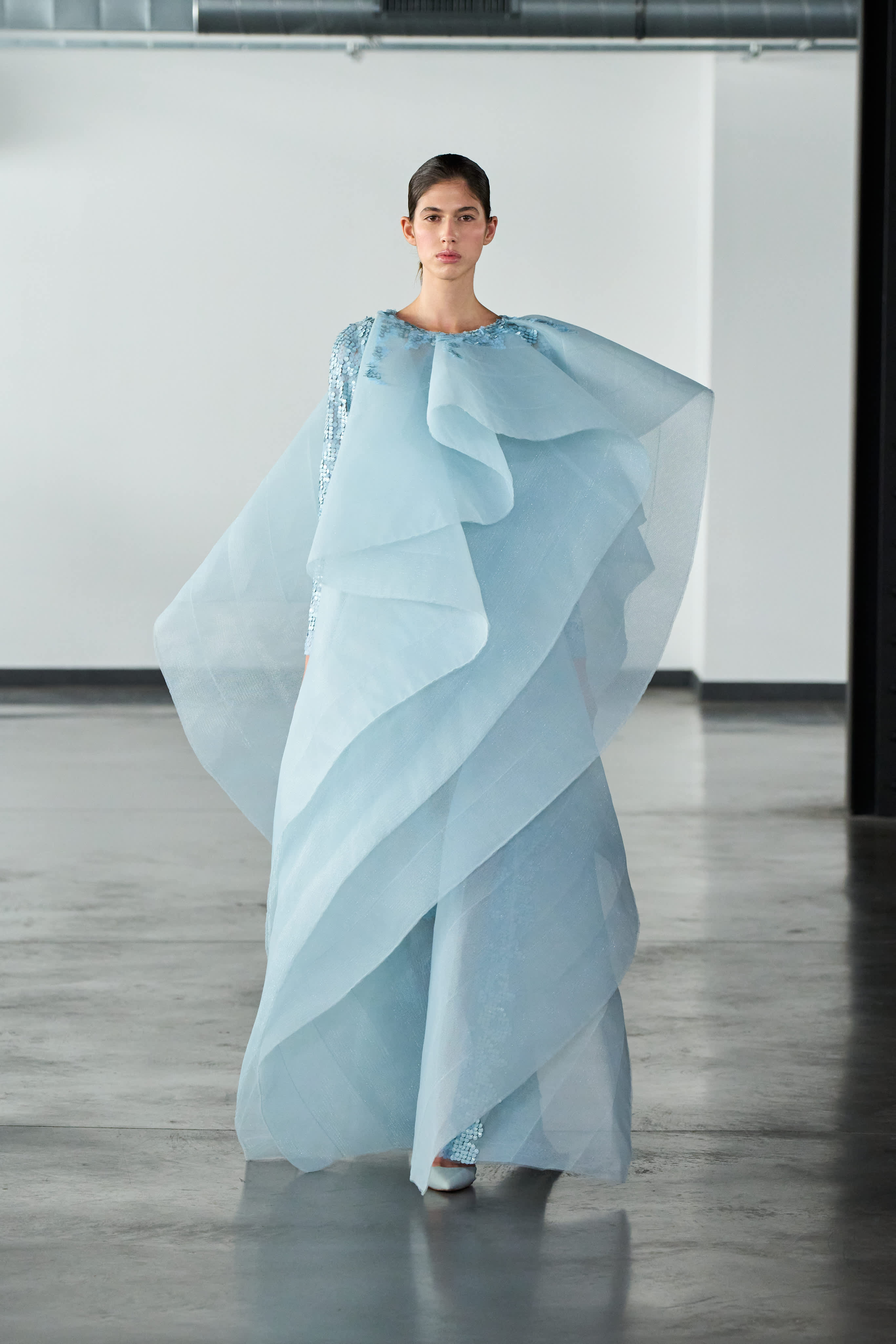
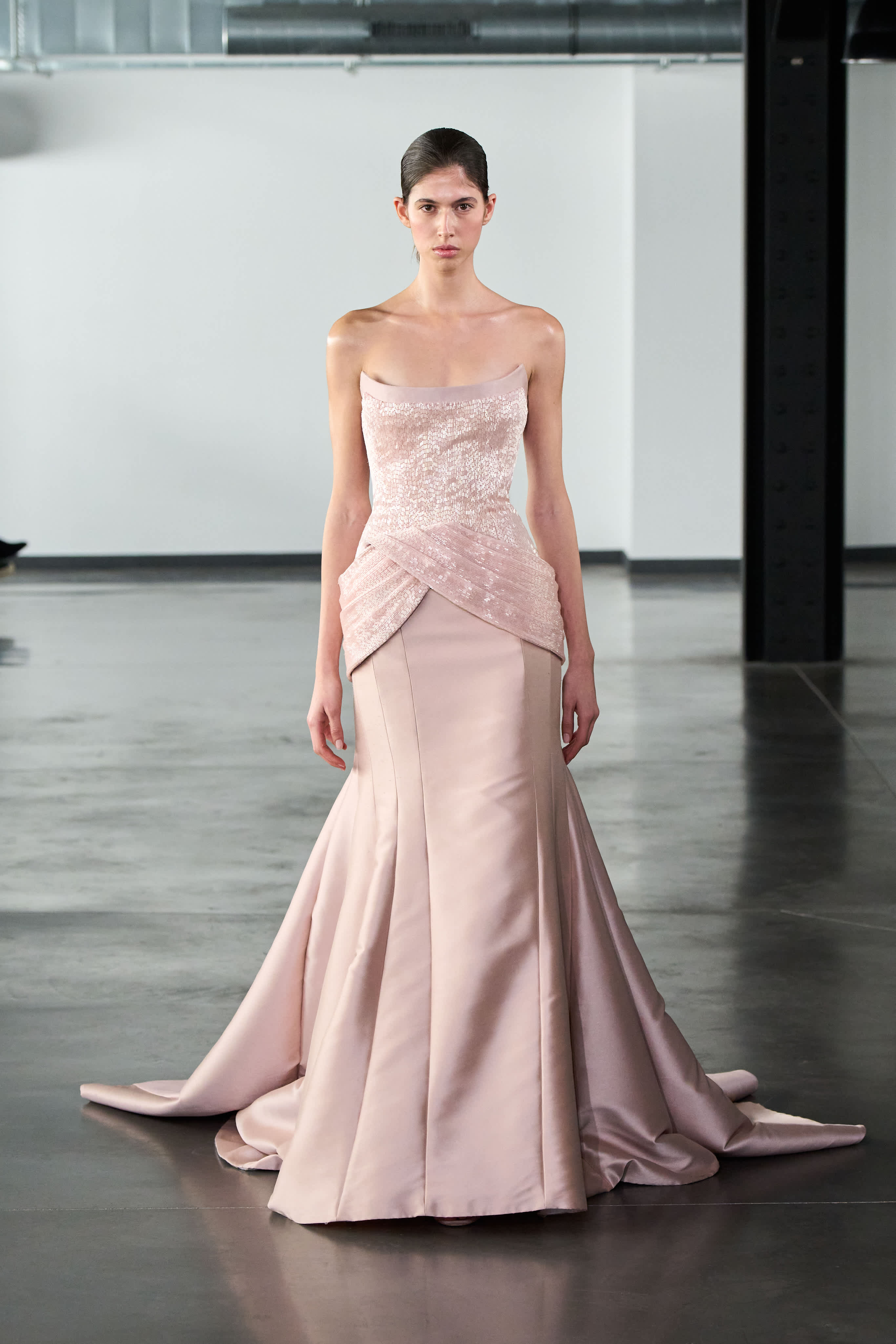
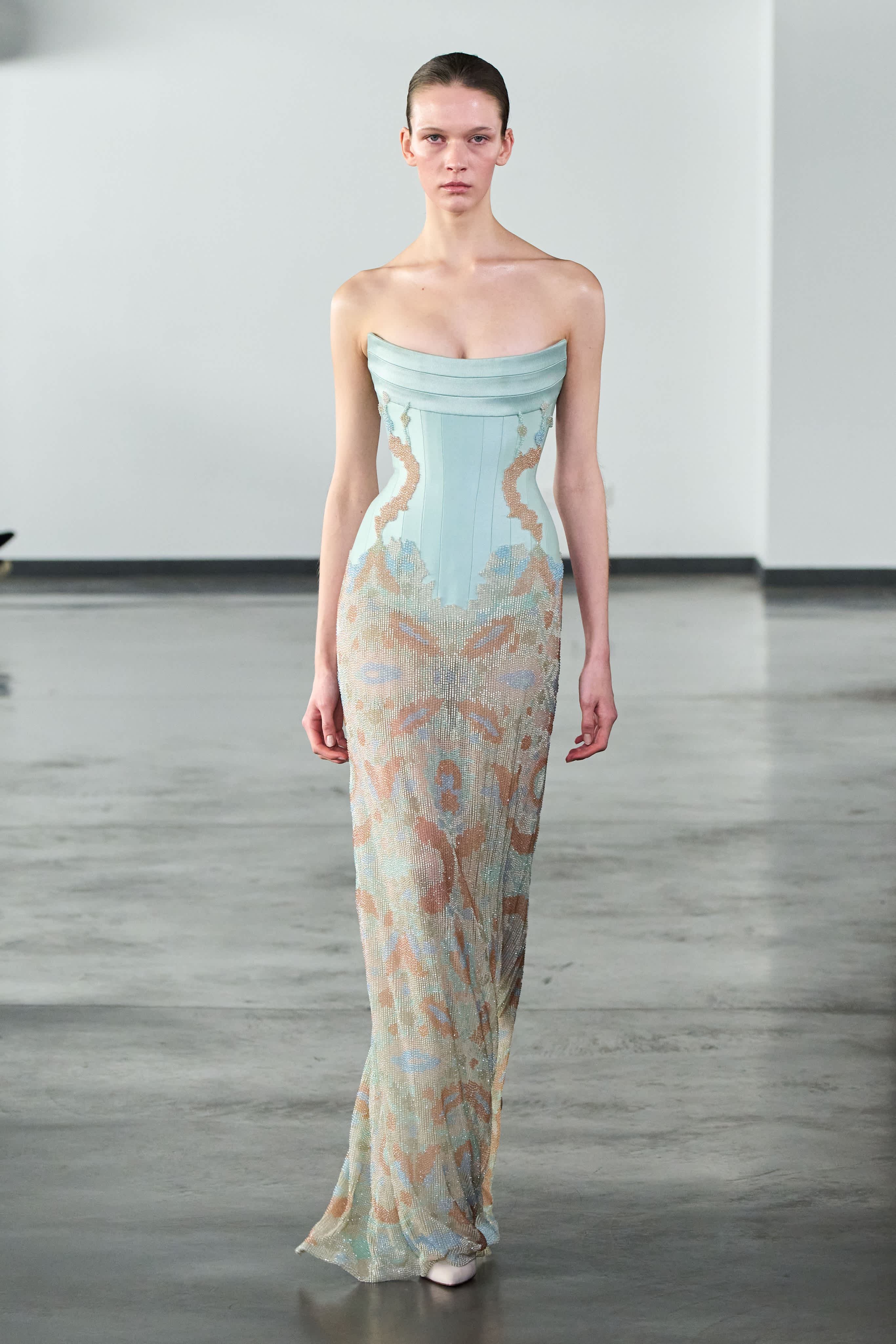
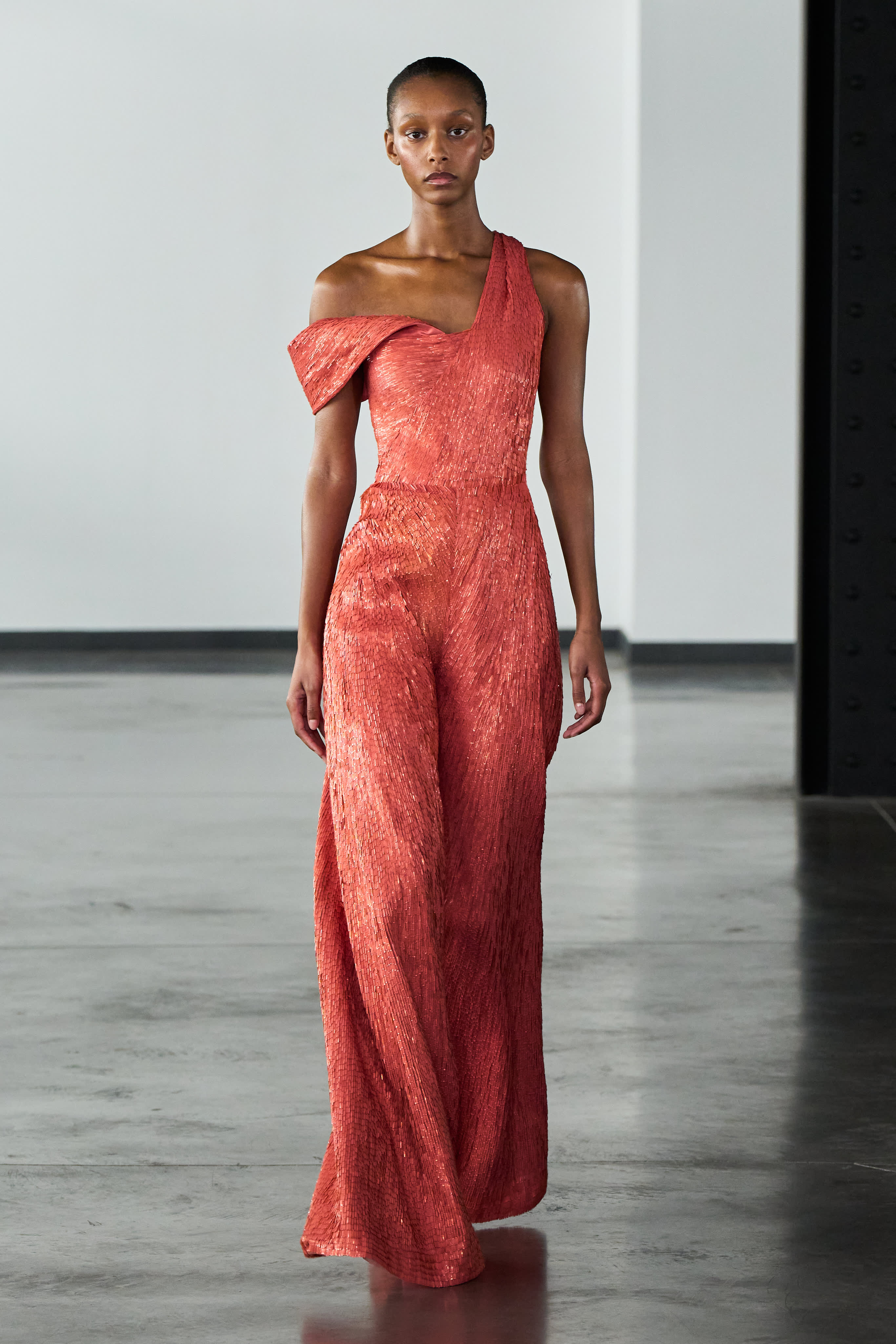
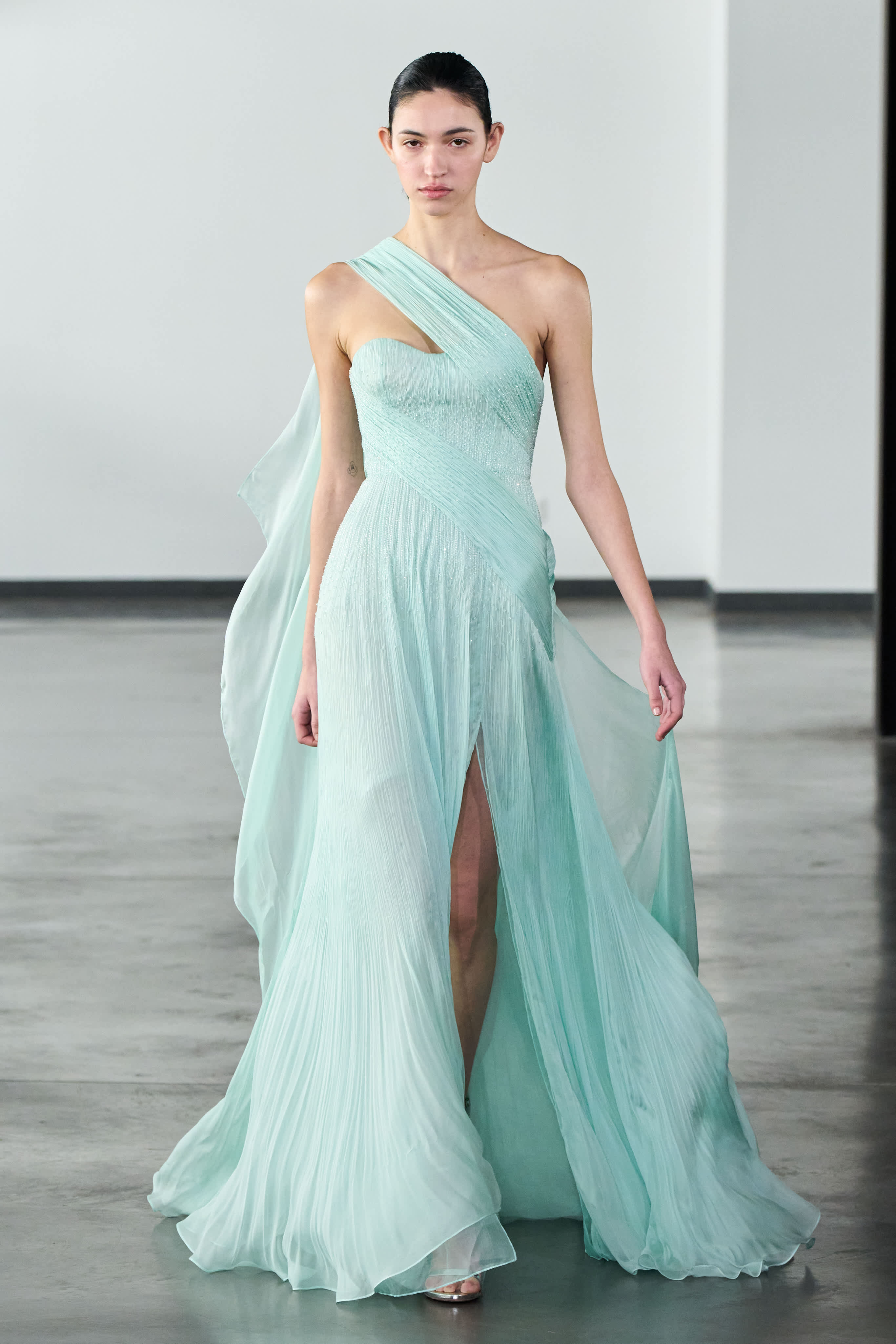
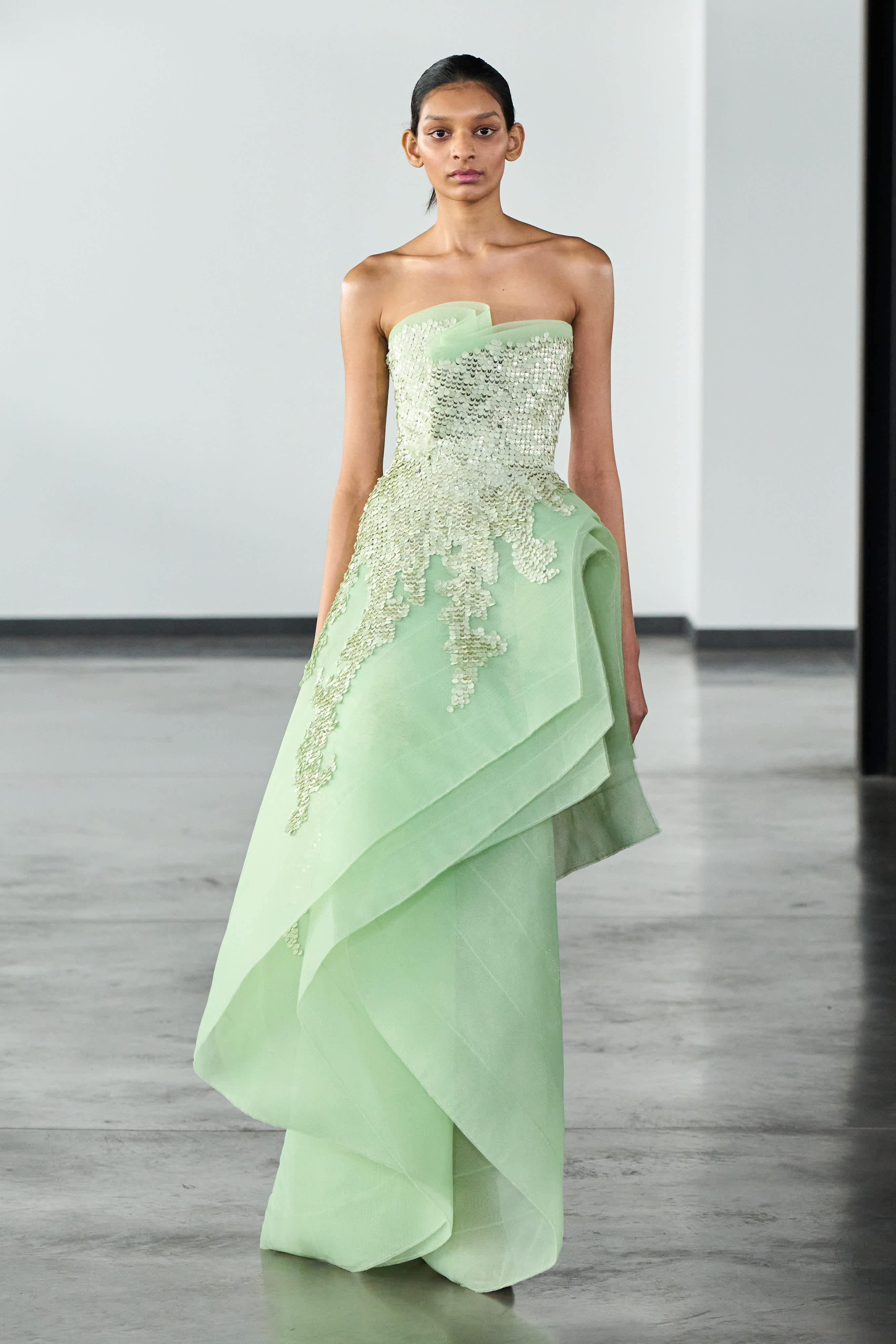
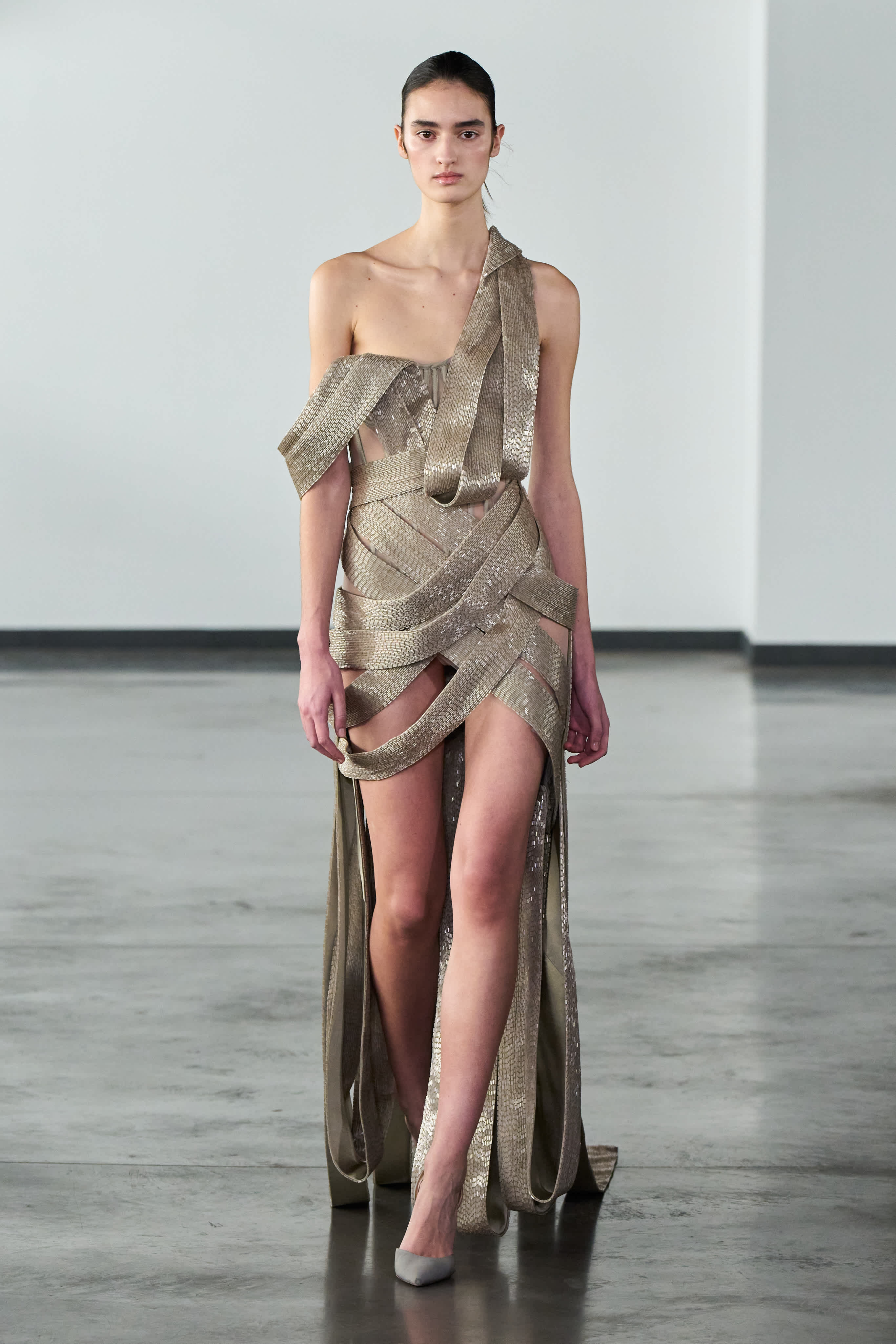
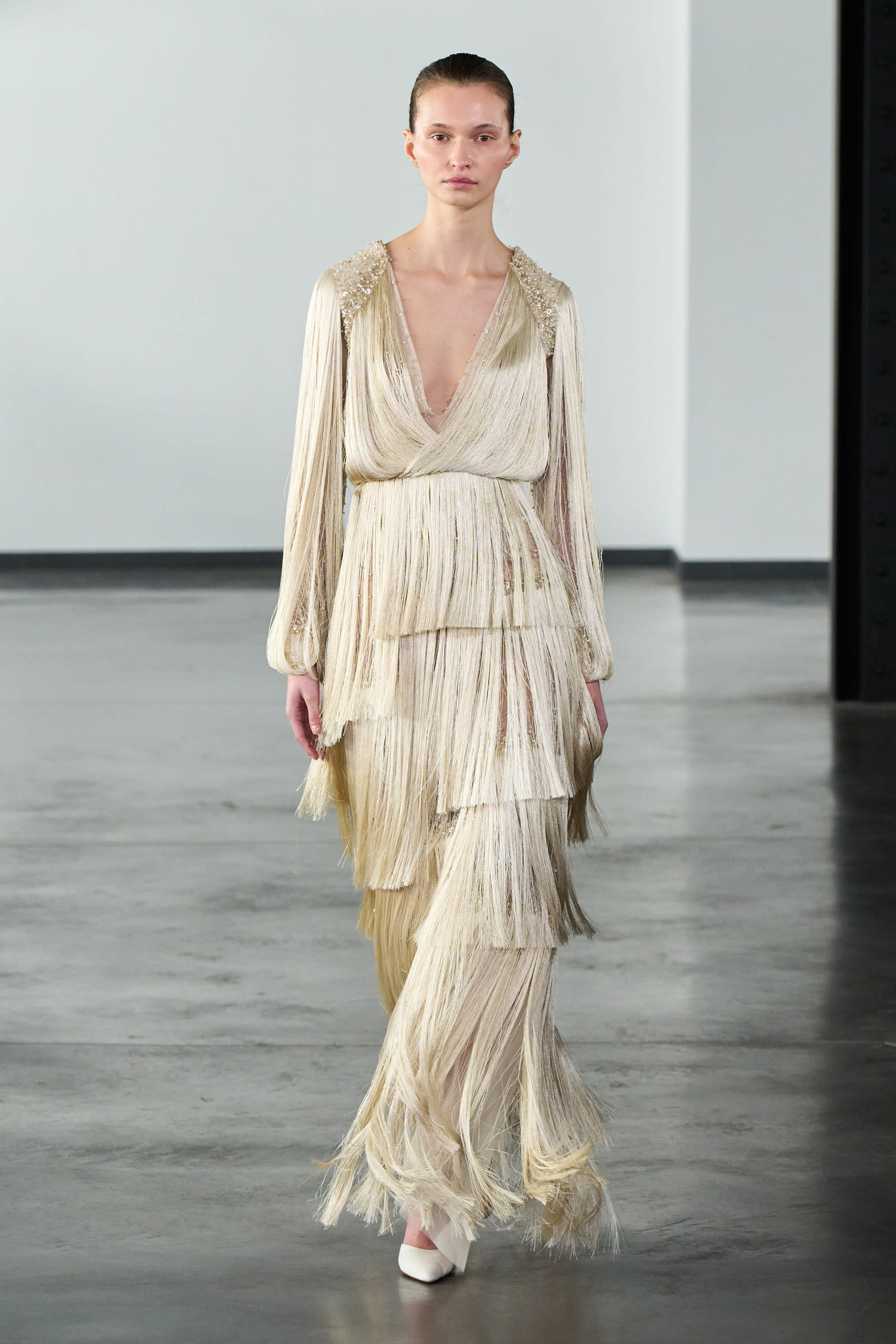
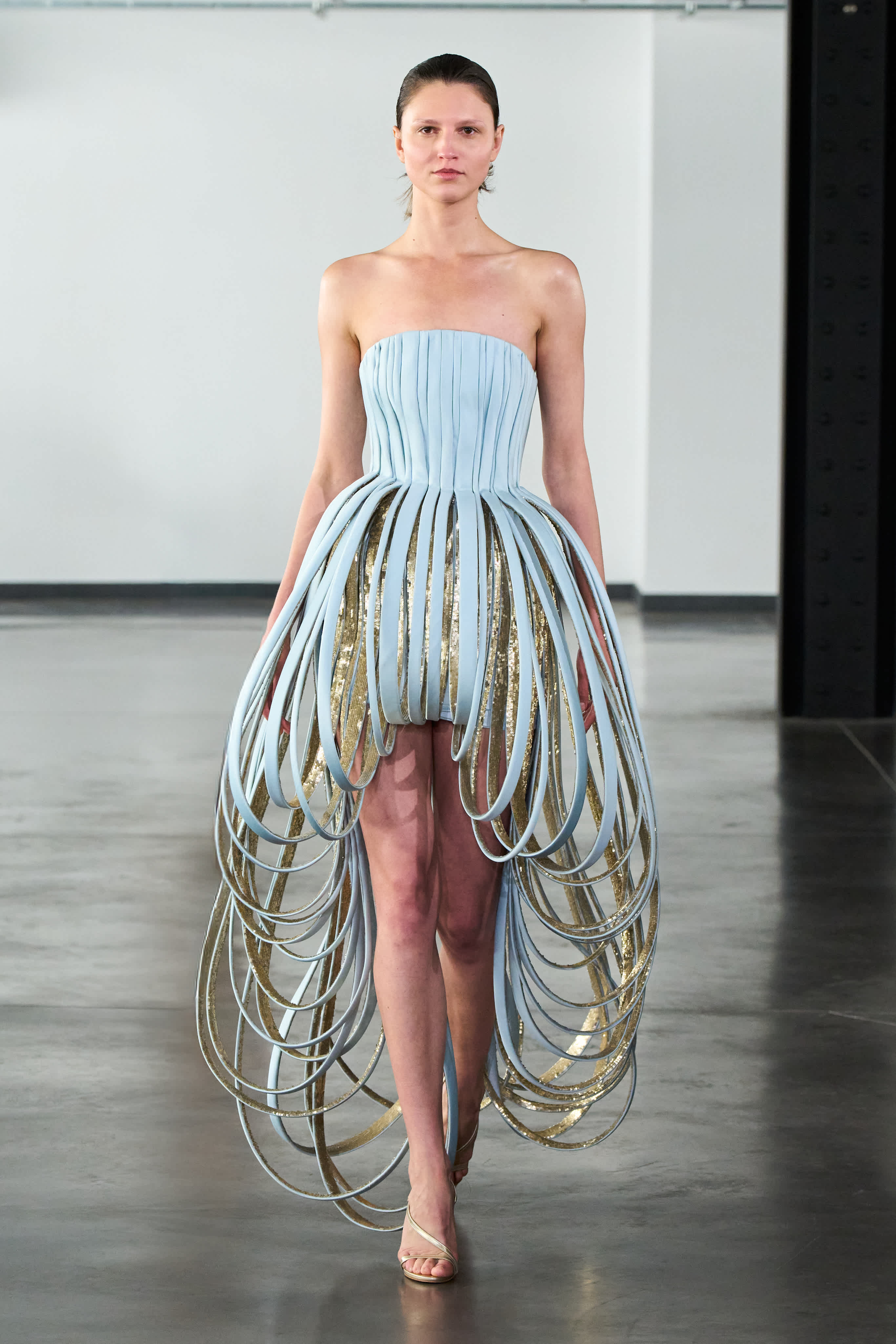
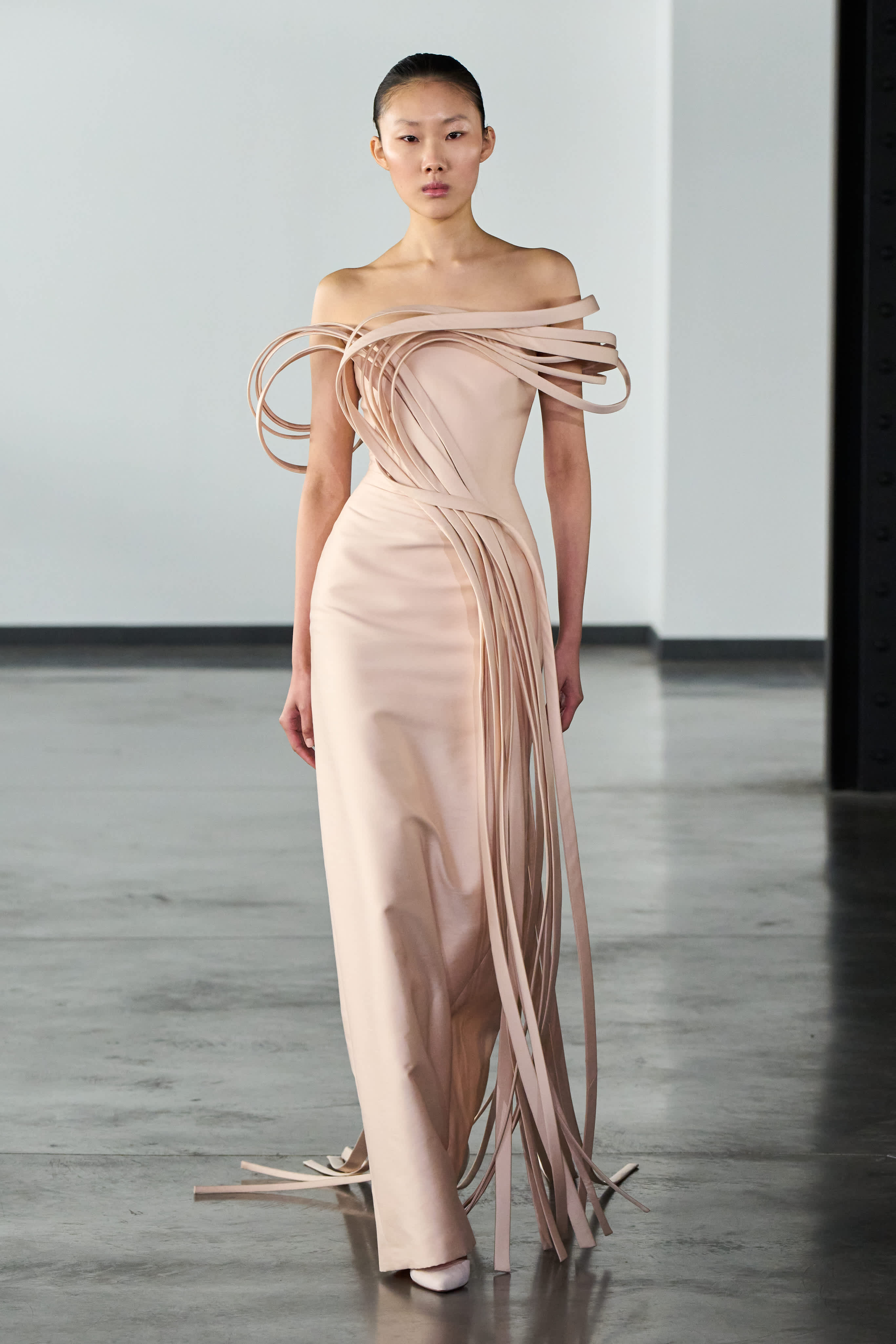
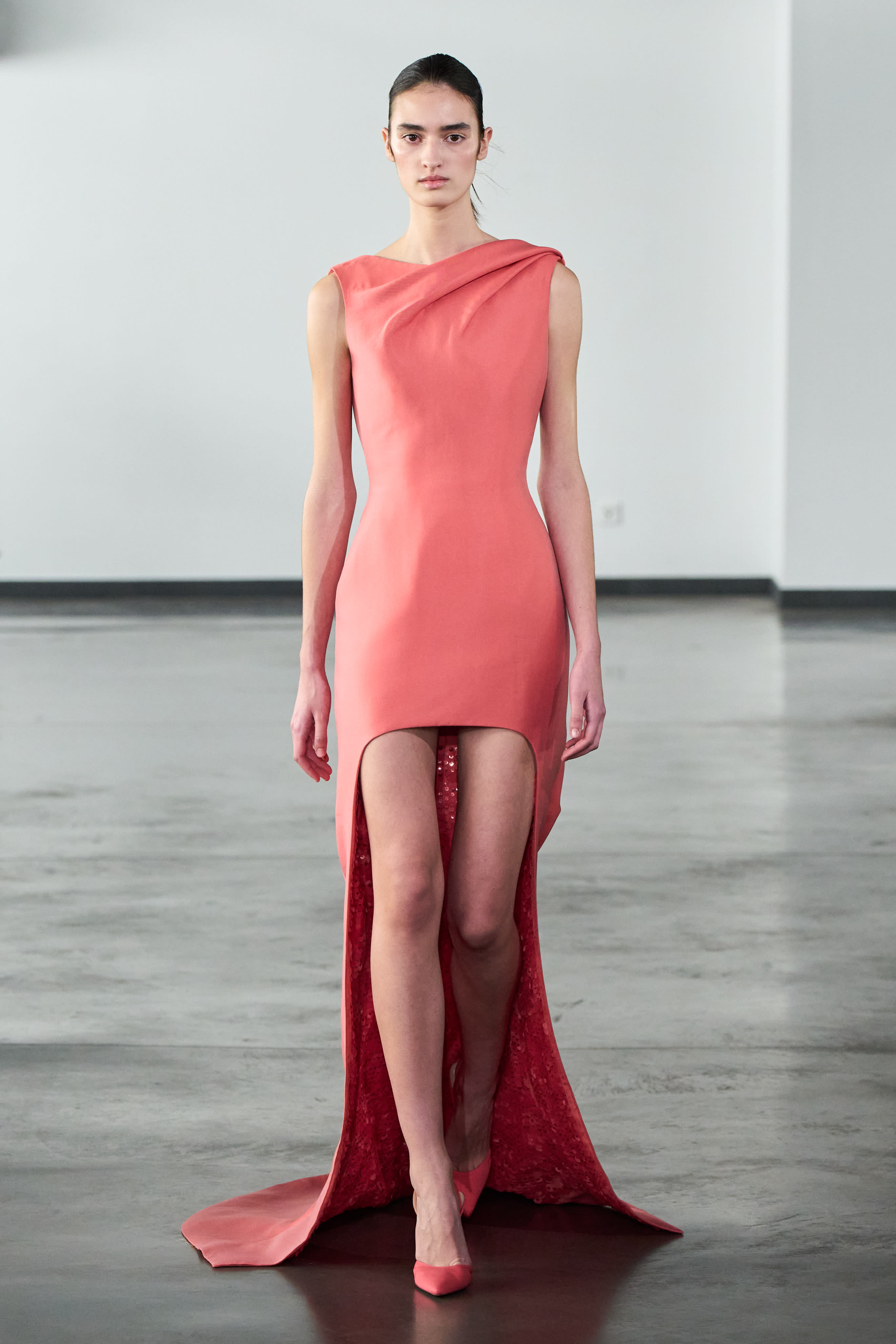
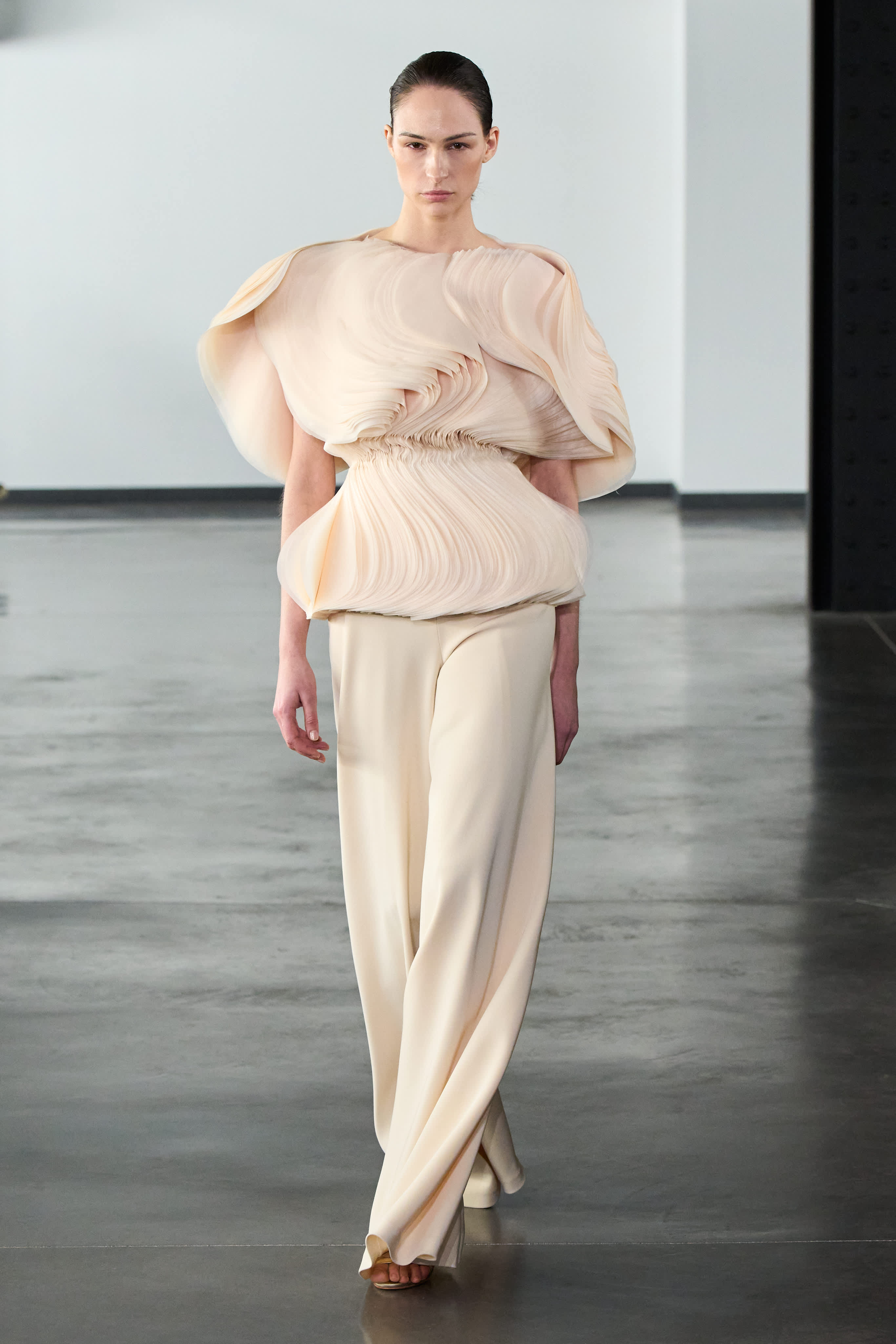
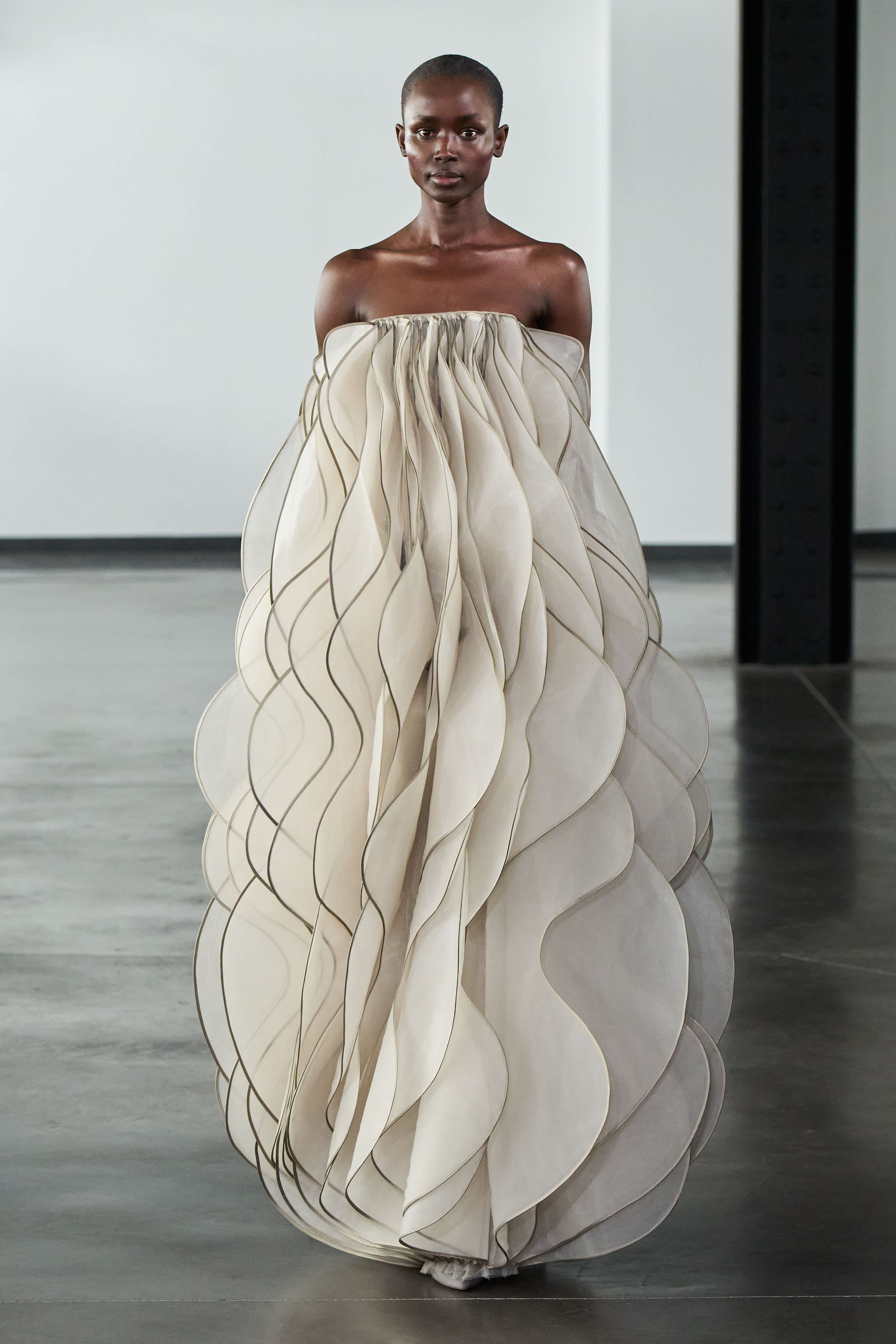
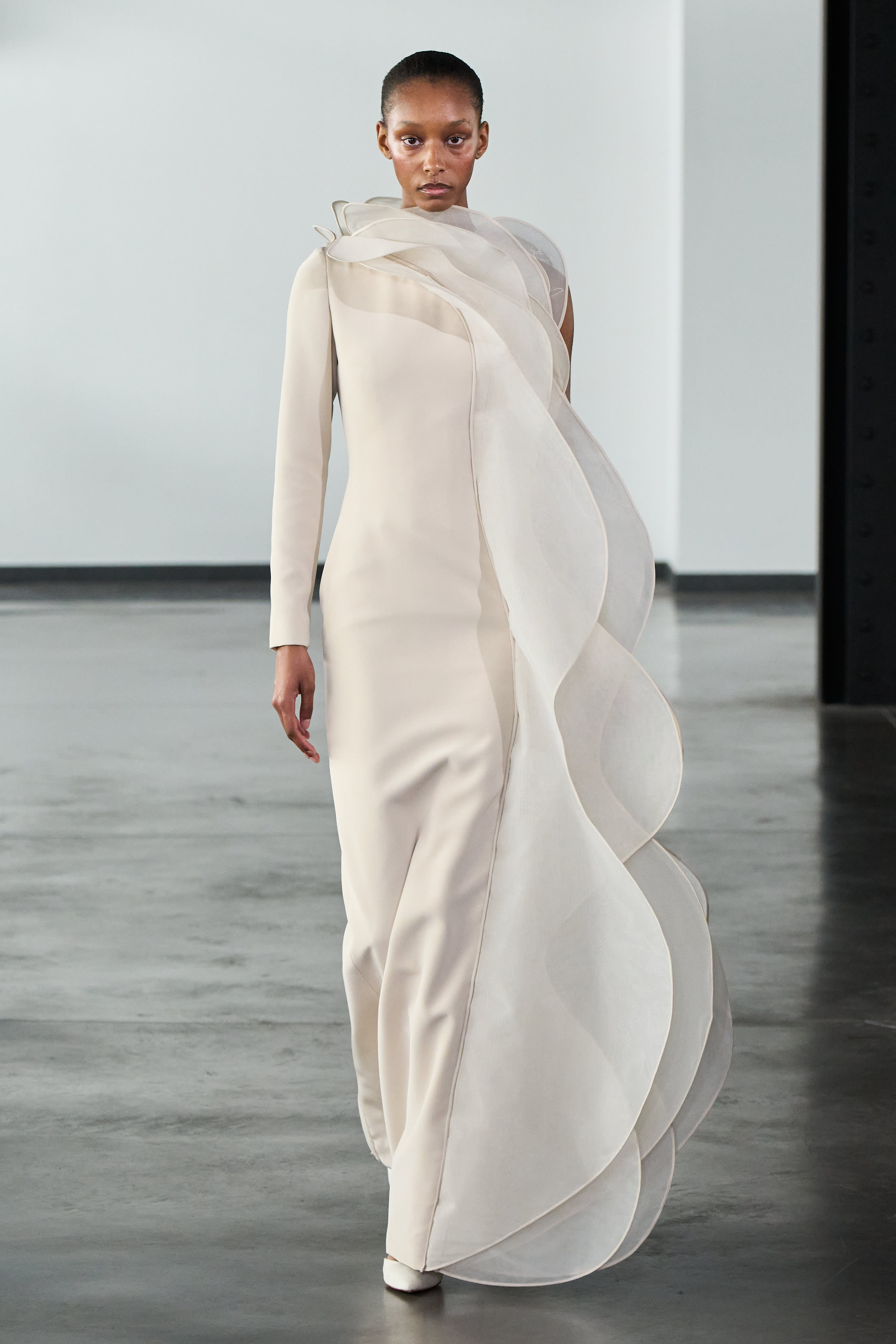
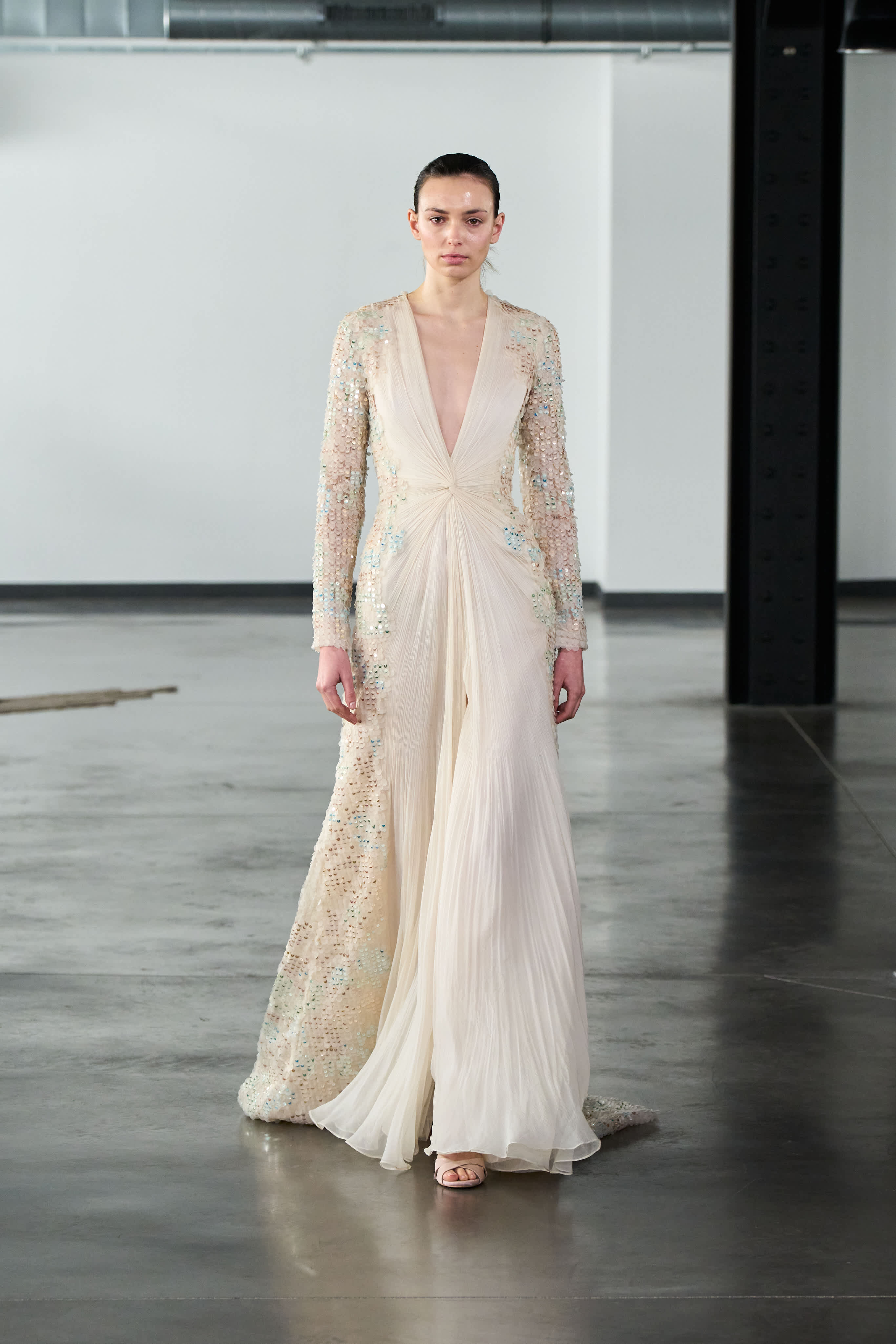
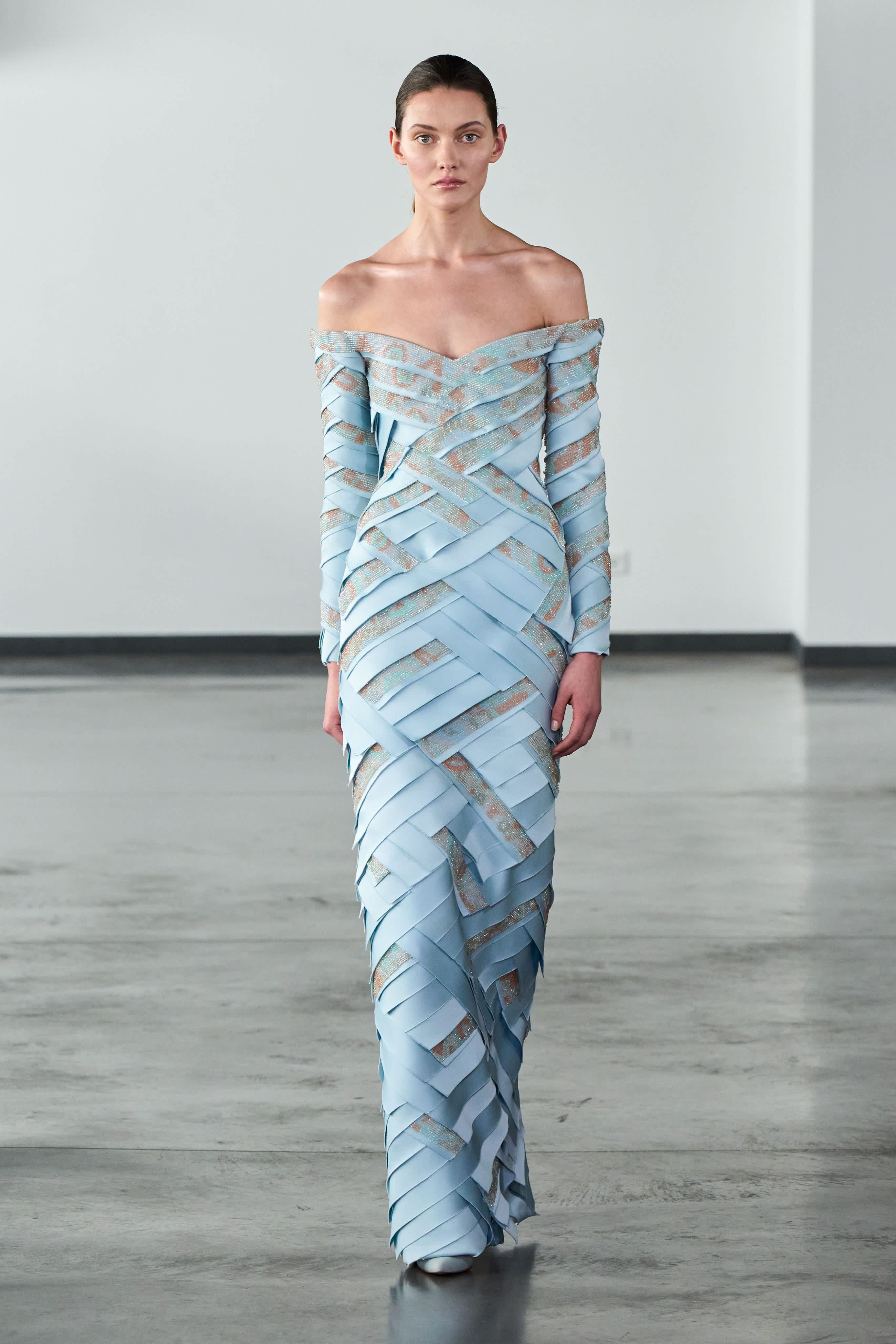
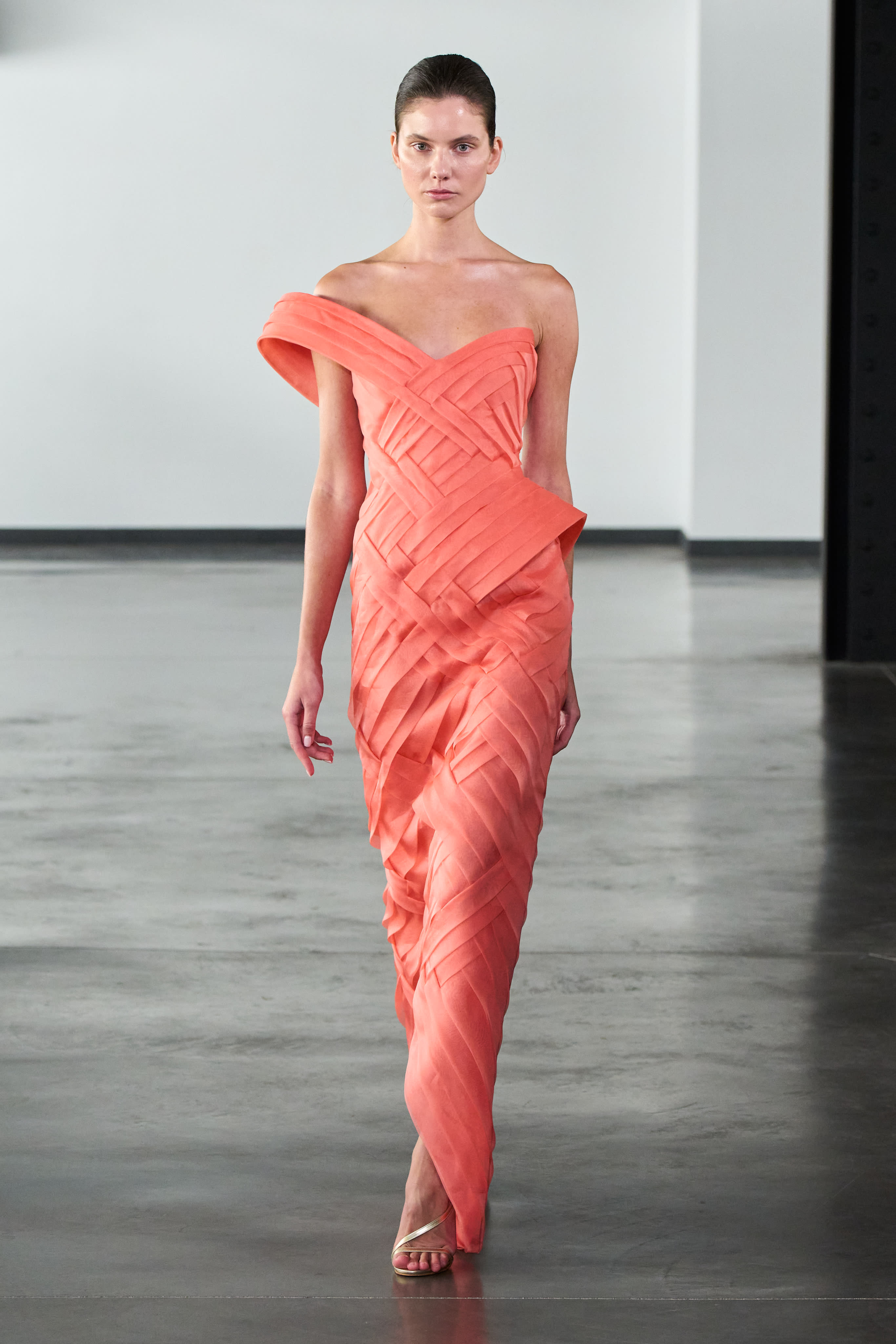
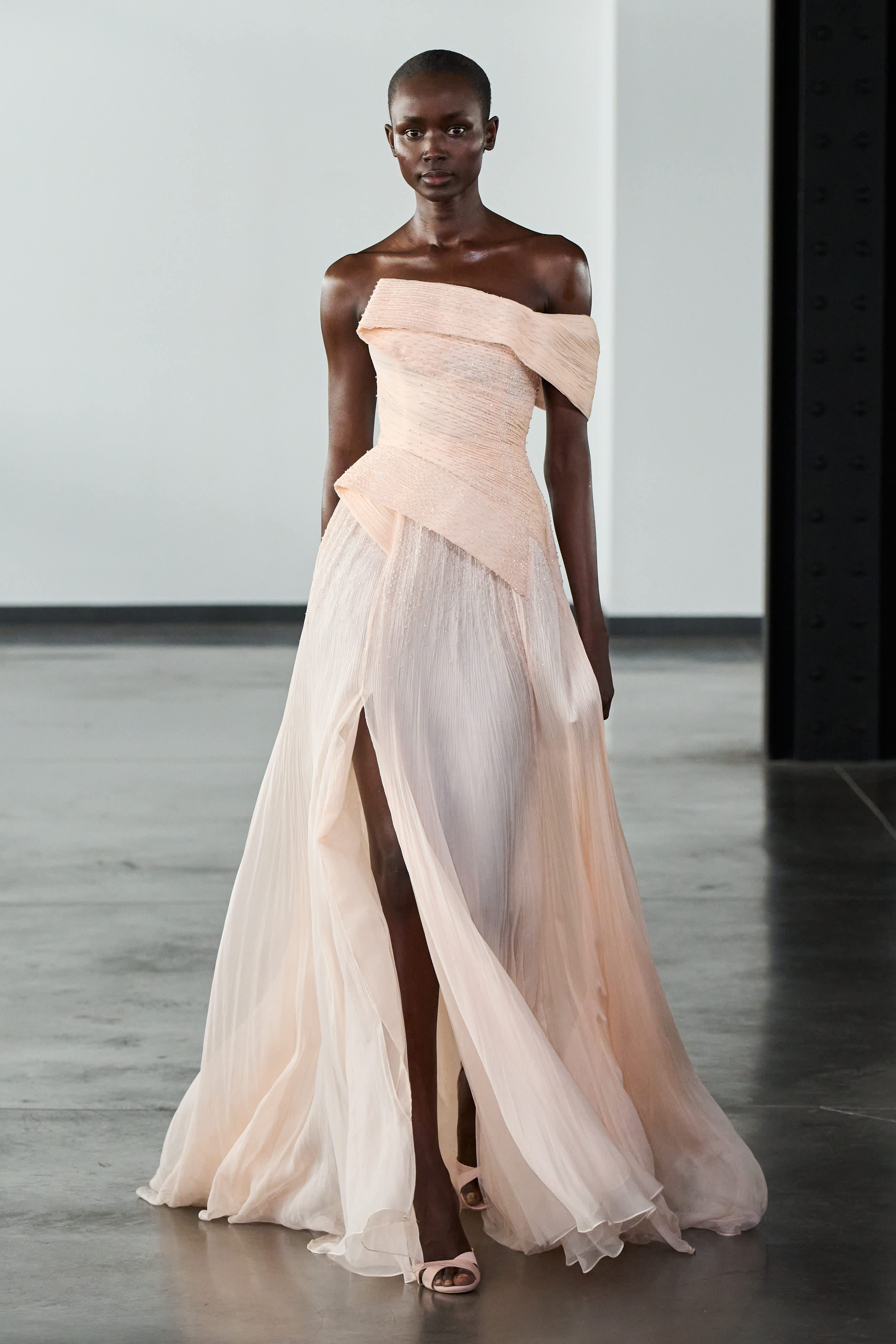
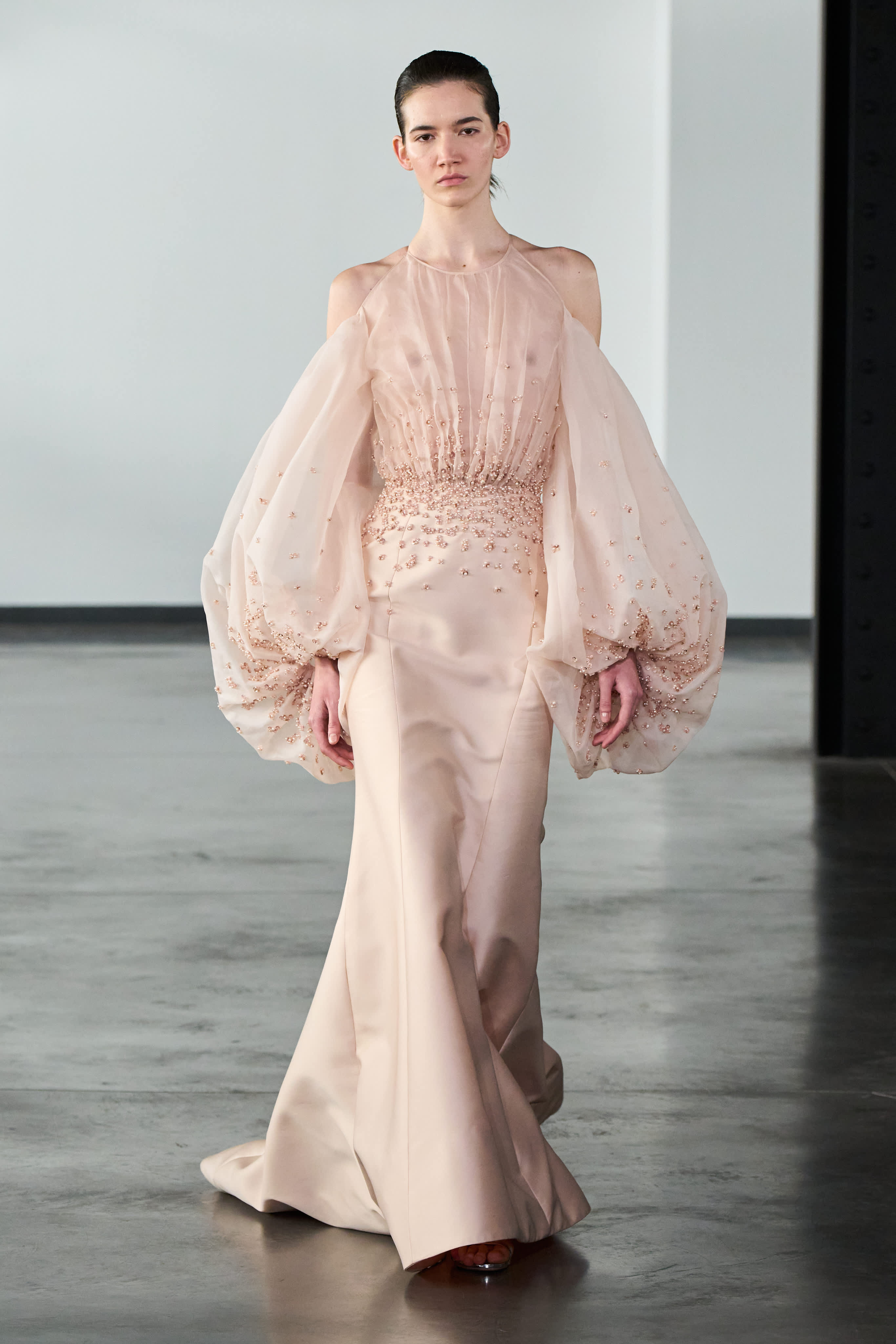
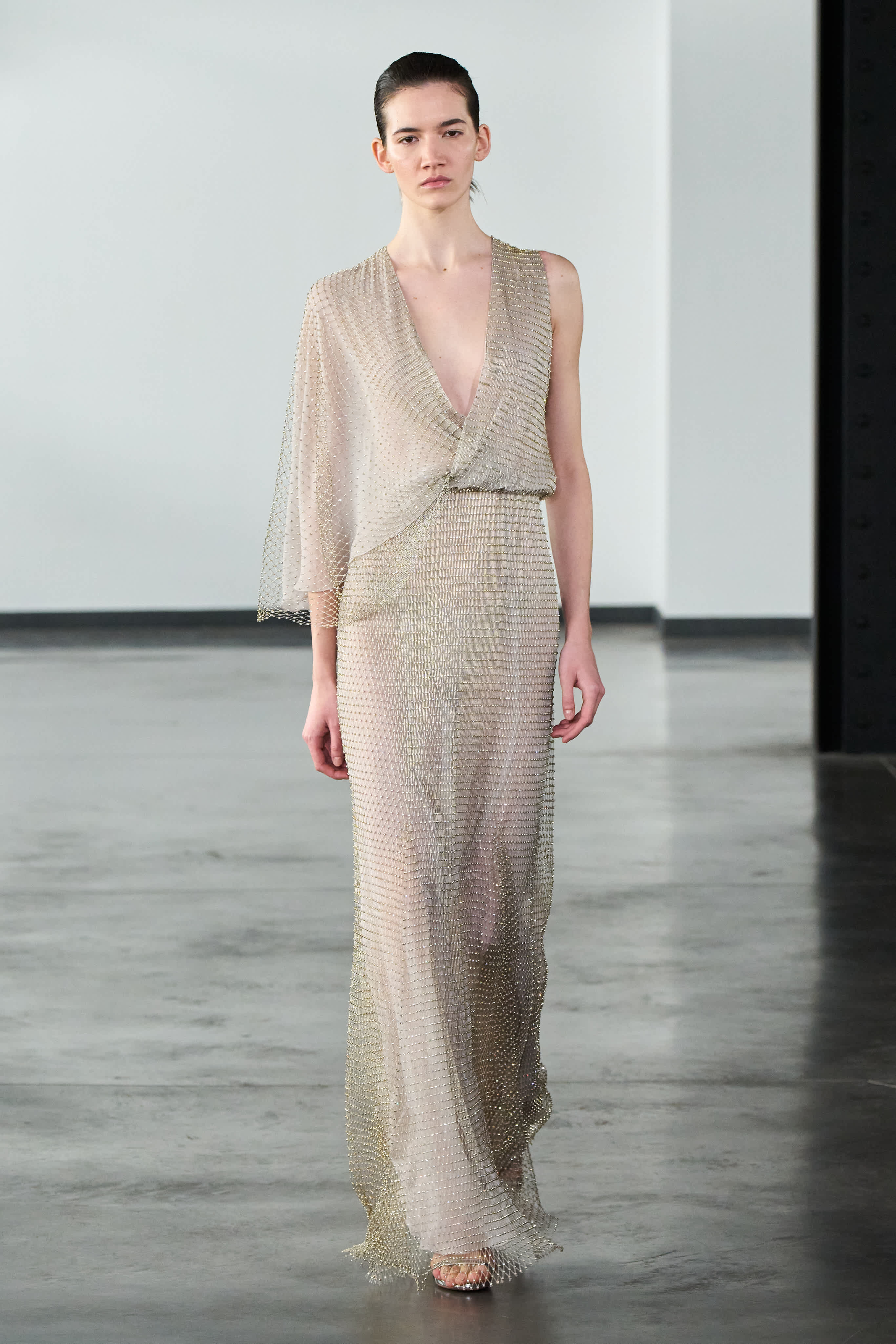
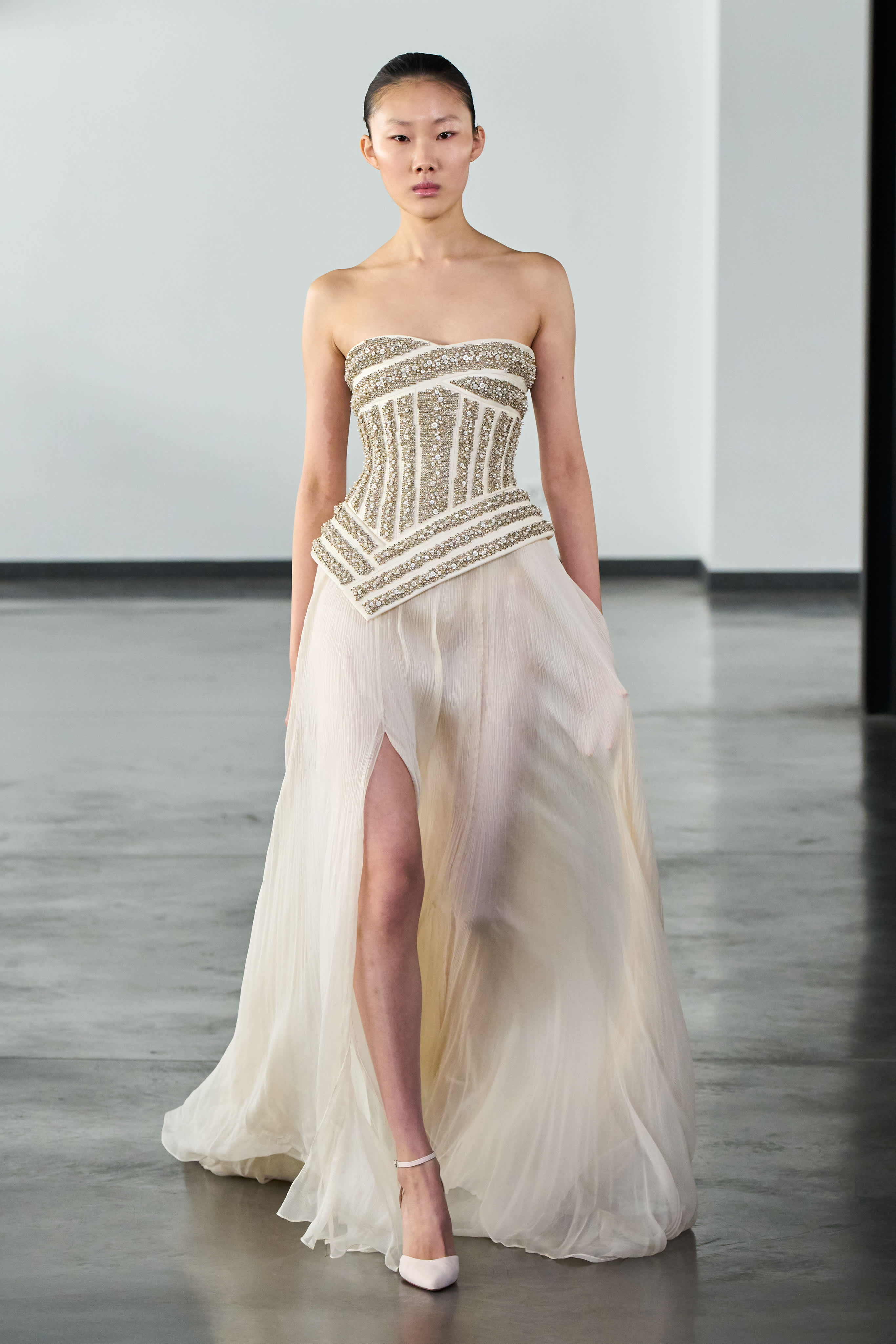
The colour palette reinforced this sense of calm evolution. It began in luminous, almost ethereal tones (ivory, alabaster, pale pink and soft peach) before deepening into warmer, more grounded shades of beige, powdered rose, sage green and delicate blue. Metallic accents in gold, pearl and champagne added quiet radiance, while subtle hints of coral and amber introduced warmth without disrupting the overall serenity. Nothing felt decorative for its own sake; every colour served the emotional flow of the collection.
Sound played an unexpectedly powerful role in shaping the experience. An original musical composition, created specifically for the show, filled the space with a meditative atmosphere. The music did not simply accompany the garments; it guided them. There was a clear dialogue between sound and movement, reinforcing the idea that this was couture meant to be felt as much as seen. The effect was immersive, transforming the runway into a moment of collective stillness.
What stayed with me most after the show was its restraint. In a week defined by grand gestures and dramatic statements, Rami Al Ali chose introspection. Fragments in Harmony did not rely on shock or excess to assert its presence. Instead, it offered a refined confidence; one rooted in craftsmanship, emotion and thoughtful storytelling. It was couture that trusted its audience to slow down and engage.
This collection also felt like a natural evolution of Al Ali’s language. His mastery of feminine silhouettes and handwork remains unmistakable, but here it was paired with a deeper conceptual clarity. The result was a body of work that felt both intimate and forward-looking, grounded in tradition yet open to transformation.
Leaving the show, I was struck by how quietly powerful it had been. Fragments in Harmony did not demand attention. It earned it. Through light, movement and meticulous craft, Rami Al Ali offered a vision of couture as a space for reflection, resilience and becoming whole.
Photos: Courtesy of Rami Al Ali
related posts
Fashion Weeks
Marrakech, Illuminated by Maroc Fashion Week 2026



.jpg)