Berlin Fashion Week A/W26 in Review: Going Back To (Design) The Future
Reflecting on the past is inevitable in the German capital - Berlin’s history renders it loud and unavoidably political, including its style and fashion. Unsurprisingly, the guests of Berlin Fashion Week Autumn/Winter 2026 sported combat boots, trench coats, ushankas and officer’s berets this season.
Uniform Memory
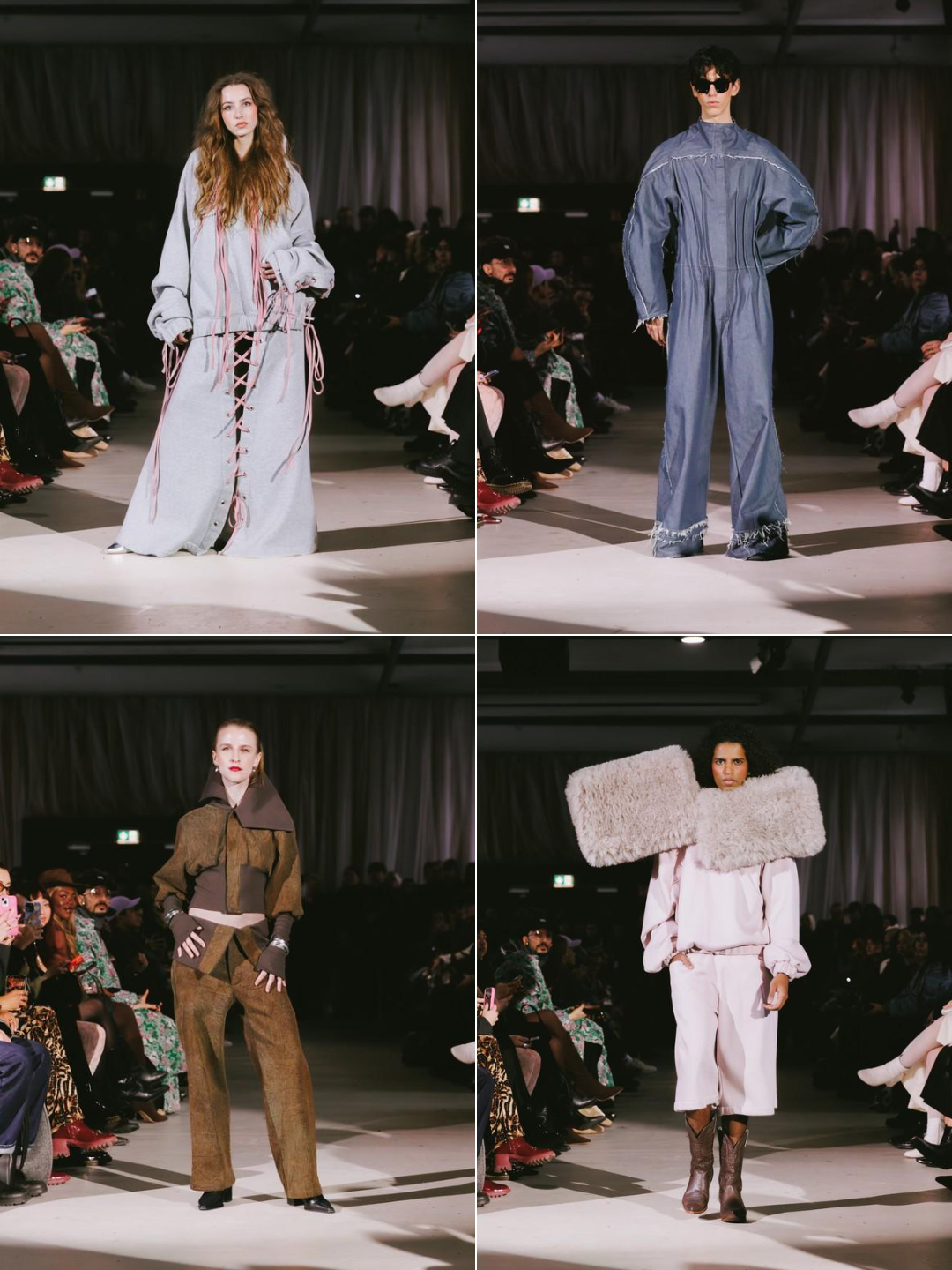
On the runway, Ruben Nowak of NOWRUBI gives a nod to his time in the air force. In his newest collection INNOCENCE, he showcases the appropriation of military uniforms by constructing recognizable uniform silhouettes with softer textures using contemporary materials, including denim, faux furs and athletic knit fabrics. Combining military-coded elements, such as lace-up closures, cargo-style pockets, ‘boxy’ shoulders, high protective necklines, and trench coat-inspired waistlines, with elements of modern daily life, Nowak alludes to ever-present political undercurrents.
Fusion Dressing: Layers of Self
In her newest collection, Heimweh (homesickness), Abarna Kughathasan, Kitschy Couture designer, investigates the complexity of this sentiment for individuals of diasporic backgrounds. As a first-generation German of Tamil heritage, particularly Kughathasan’s teens were defined by constant renegotiation of identity. She grew up in the city of Pforzheim - her memories of the day-to-day aesthetics of its people serving as major inspiration for this collection. The looks are completed by footwear from the Kitschy Couture x Converse collaboration - Chucks were an integral part of the ‘cool kid’ uniform in German schools during the mid-2000s. Elements of traditional Tamil dress, modeled for Kughathasan in her multicultural adolescence by female family members, are added by using material from vintage ‘90s and early-2000s saris. Lingerie aesthetics, as a symbol of intimacy and proximity, are incorporated into this collection’s pieces to signify how cultural practices like sari-draping are safeguarded and passed down through femininity and female lineages. By throwing it back to her hyphenated girlhood, Kughathasan asserts sovereignty over layered identities that don’t fit rigid definitions.
Material Archives: The Fabric of Memory
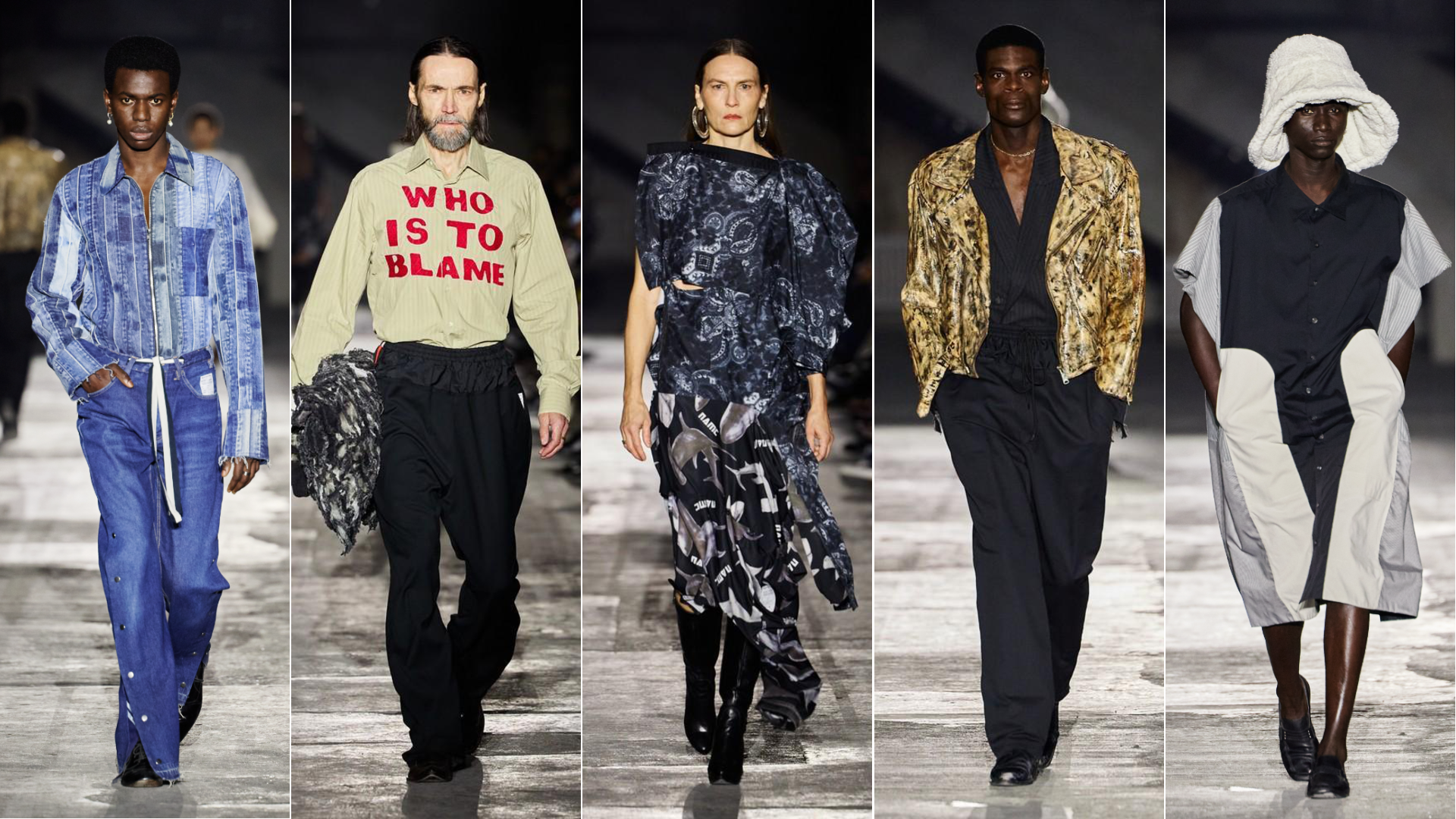
An urgent need for revisiting the past, to decode the present and consciously design the future, was at the core of several collections this season. Bobby Kolade, designer of Ugandan label BUZIGAHILL, draws inspiration from his grandparents’ photographs of life, including dress, in ‘60s/’70s East Africa. For this collection, he redesigns second-hand clothes sourced from Owino Market, a major trading post for donated textiles at the end of their lifecycle. Here, they outcompete locally made textiles and garments, displacing the once-booming local textile industry, formerly a major contributor to the country’s economy post Ugandan independence. Along with the textile factories, local aesthetics and craftsmanship are also disappearing and with them, parts of Ugandan identity. In an act of economic and cultural resistance, the brand employs local craftsmen to reshape donated pieces into East African styles of the 1960s and ‘70s. A suit jacket with wide lapels is layered beneath a cropped, distressed leather jacket and tucked into elegant, flowy, high-waisted sweatpants. The garments are then resold to Northern customers, hence the title of the collection, RETURN TO SENDER 12, turning the tables on domineering Northern textile markets and rebirthing a sense of aspiration and optimism for Uganda.
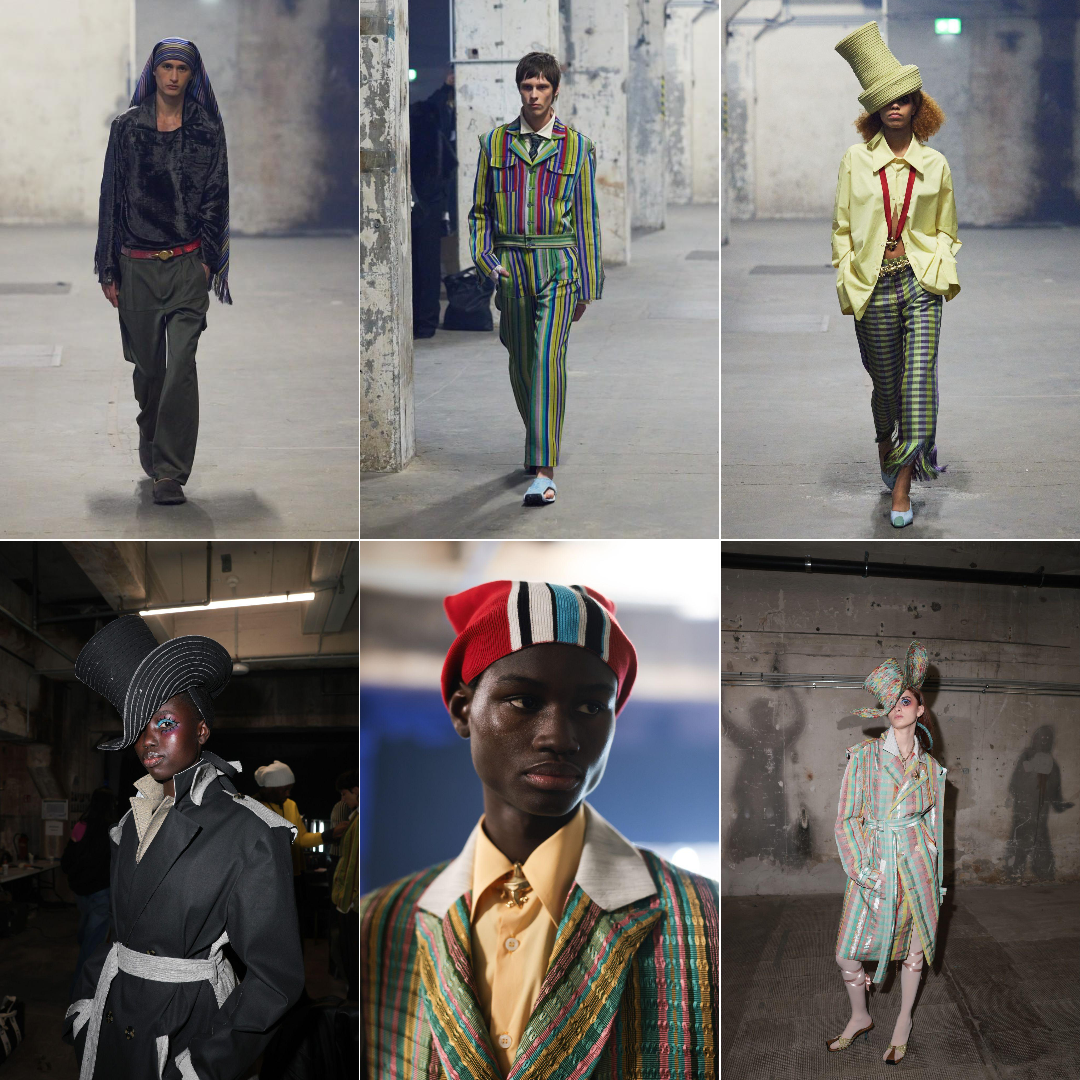
In his newest collection JOY, Nigerian designer Kenneth Ize also transports ancestral aesthetics into a modern reality dominated by Northwestern fashion. Familial and other meaningful interpersonal narratives are physically archived as they are handwoven into Aso Oke, a material traditionally worn by the Yoruba people. This textile, along with contemporary denim, cotton and velvet is then tailored into modern silhouettes, from classic suits and collared button-downs to trench coats. The headwear likely nods to the traditional voluminous gele headwraps worn by Yoruba women and fila caps worn by the men: a draped veil-style headscarf; tall, oversized top hats; a brimless amalgamation of a watch cap and beanie. A photographer participated in the show, documenting each look from various angles in real time on the runway stage, foregrounding cultural longevity in the digital age. Yoruba cultural heritage thus transcends time and space, facilitating the survival of Yoruba identity under new conditions.
Memory in the Making: Crafting Memory
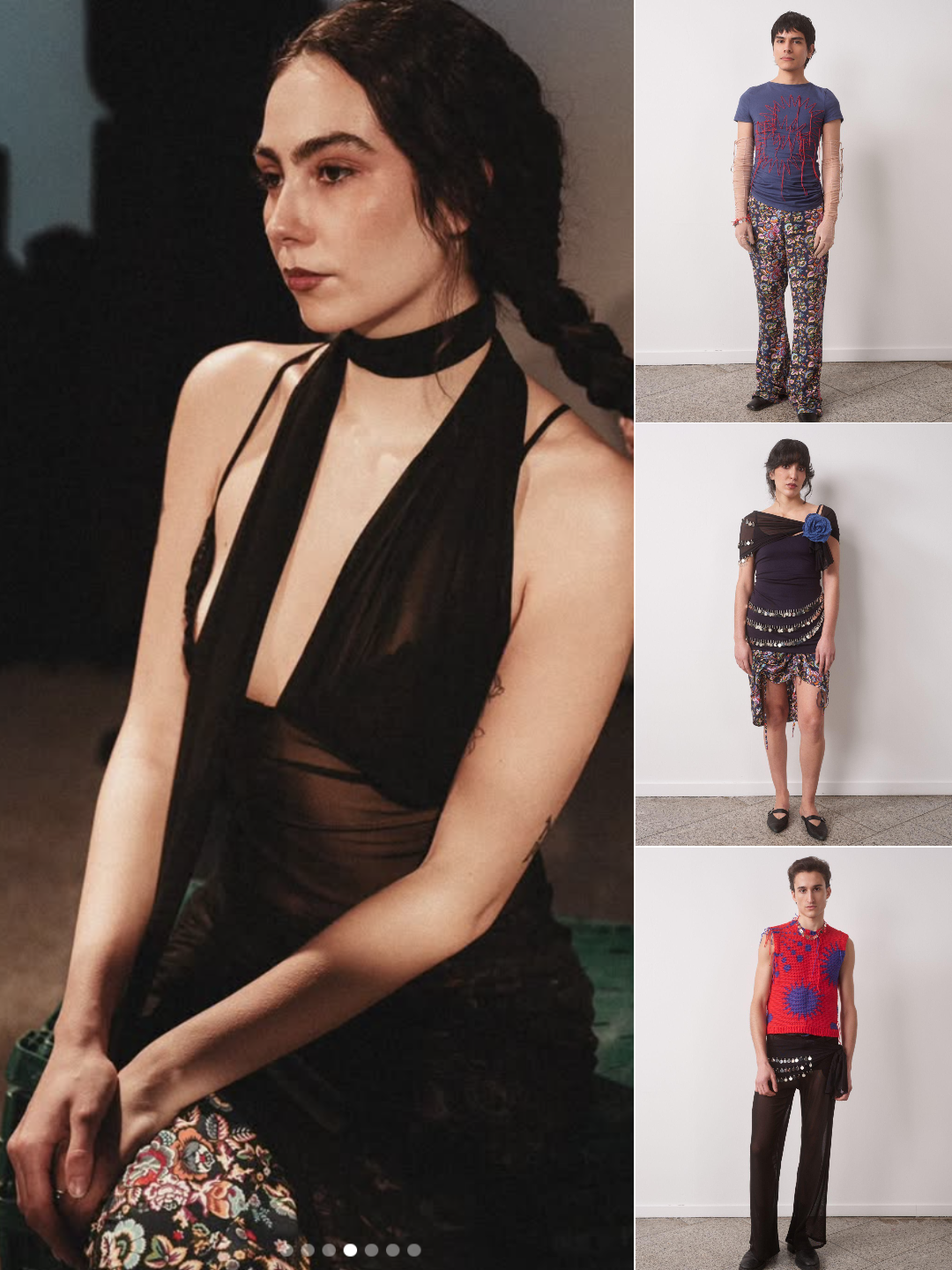
Like Ize, SEZGIN designer Sezgin Kivrim recruits traditional Kurdish hand-knitting and crochet to create modern designs. This collection, When the Sun Hasn’t Reached Us Yet, stages a memory of togetherness, a “family evening in Kurdistan, when a sudden change in weather kept everyone indoors,” the label explains on Instagram. Looking back at moments of unity like this during the creative process and also when experiencing the designs in the real world, is depicted as important: they serve as a source of strength in resisting systemic marginalization of the Kurdish people and repression of their culture. The 21-point Kurdish sun appears on multiple pieces, functioning “as a metaphor for the different stages of Kurdish cultural visibility.” Notably, Kivrim used his moment of visibility to further reinforce Kurdish pushback through solidarity: During the presentation, three female models braided each other’s hair, an inherited cultural practice literally braided into Kurdish womanhood over generations.
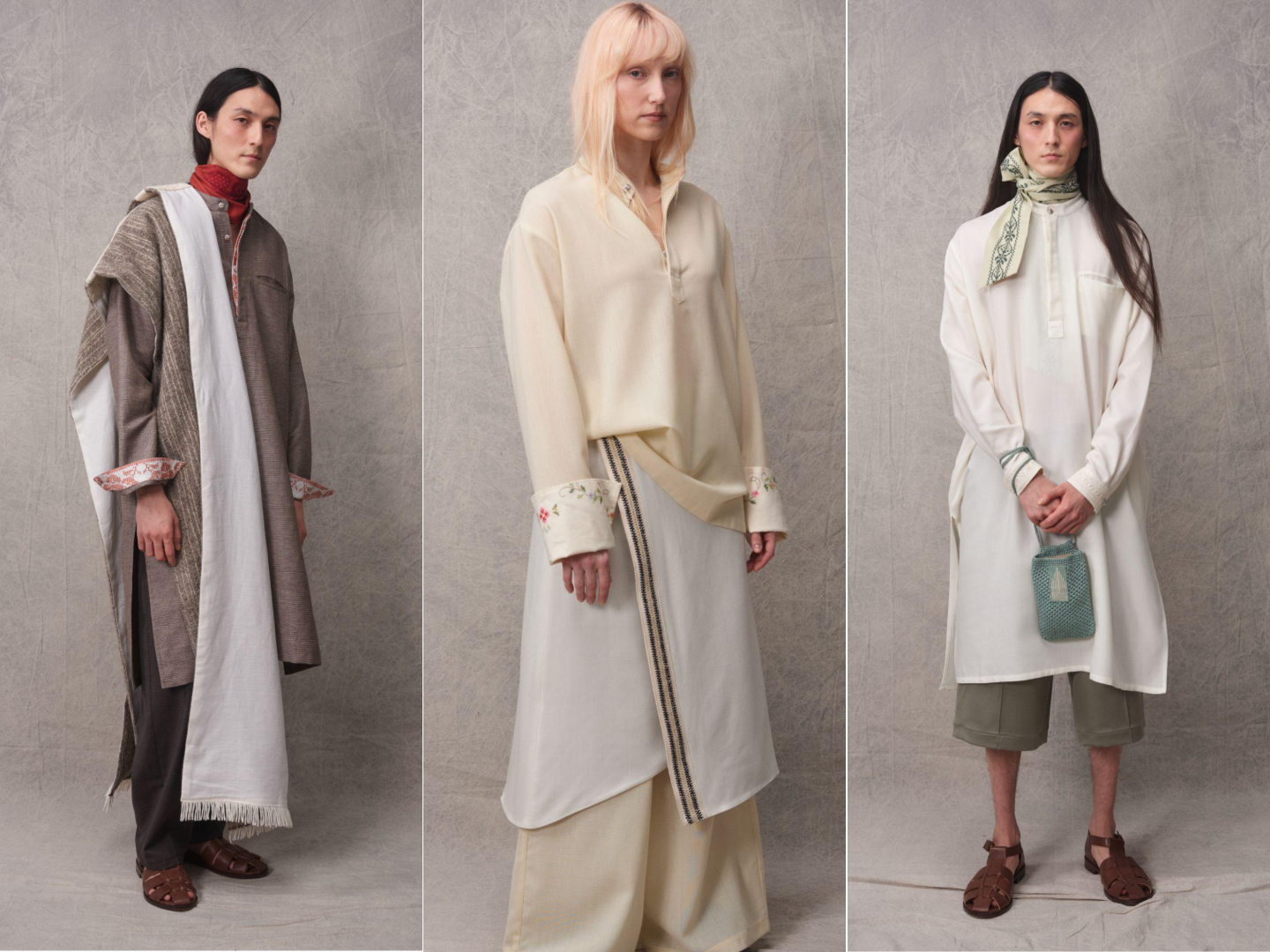
Greek artisanal craftsmanship, like embroidery, cross-stitch cuffs, fine tailoring, and hand-weaving on traditional looms, constituted the focus of PANOS GOTSIS’ presentation. For designer Panos Gotsis, however, it’s not only a garment’s form, but also the material from which it is molded that holds memory all the way back to its natural origins. Organic materials, from wool to cotton to linen, dominate the brand and collection. On social media, the brand self-describes as existing for appreciators of craft and “for everyone who understands what it really means.” The handwoven textiles, a caption reads, “reflect a belief in investing in what is worth preserving,” namely, a traditional practice that “requires time, dedication, talent and refinement” to master, yet transcends time, carrying forward the stories of its keepers.
Mirror Selfie: Reflecting (Digital) Identity
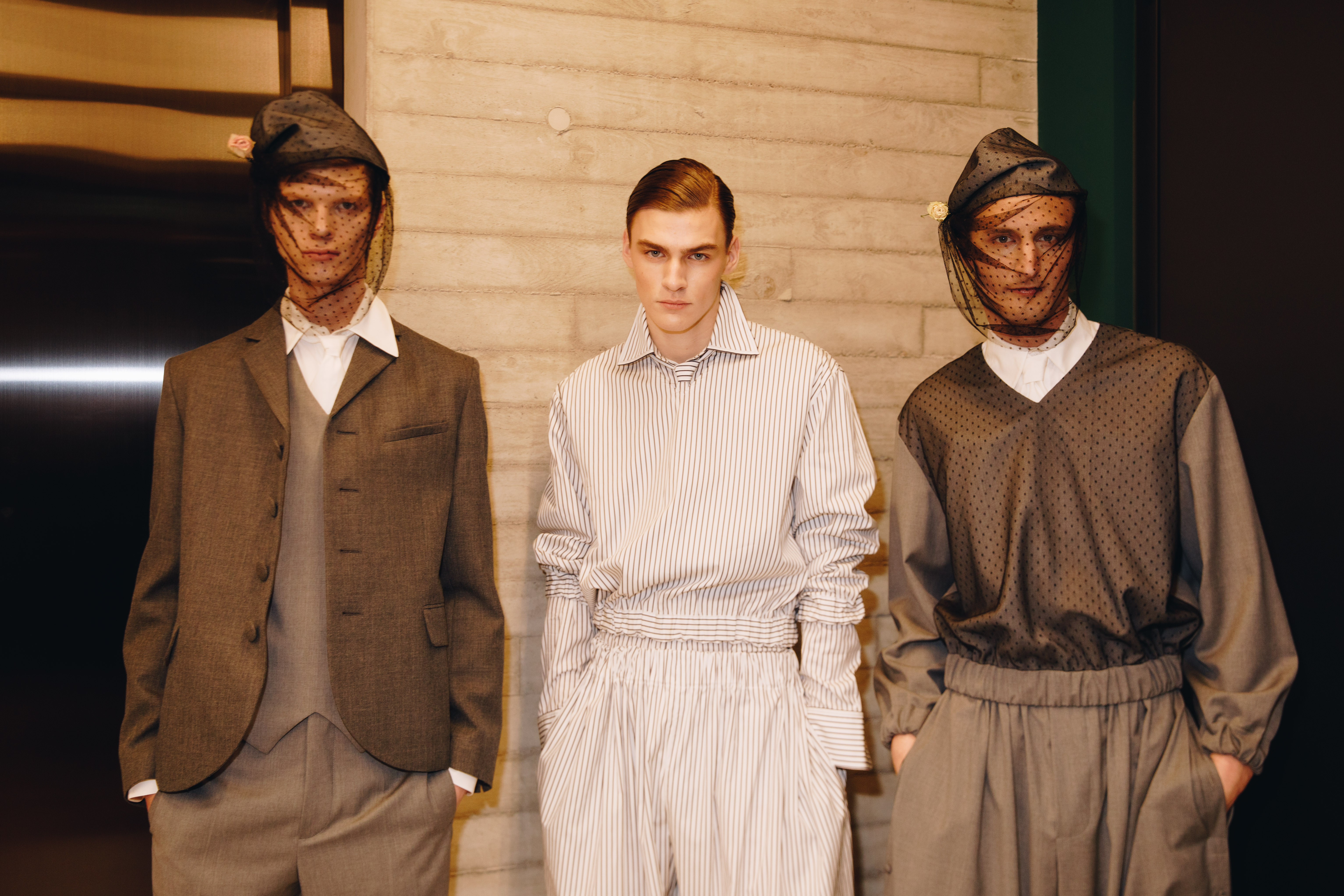
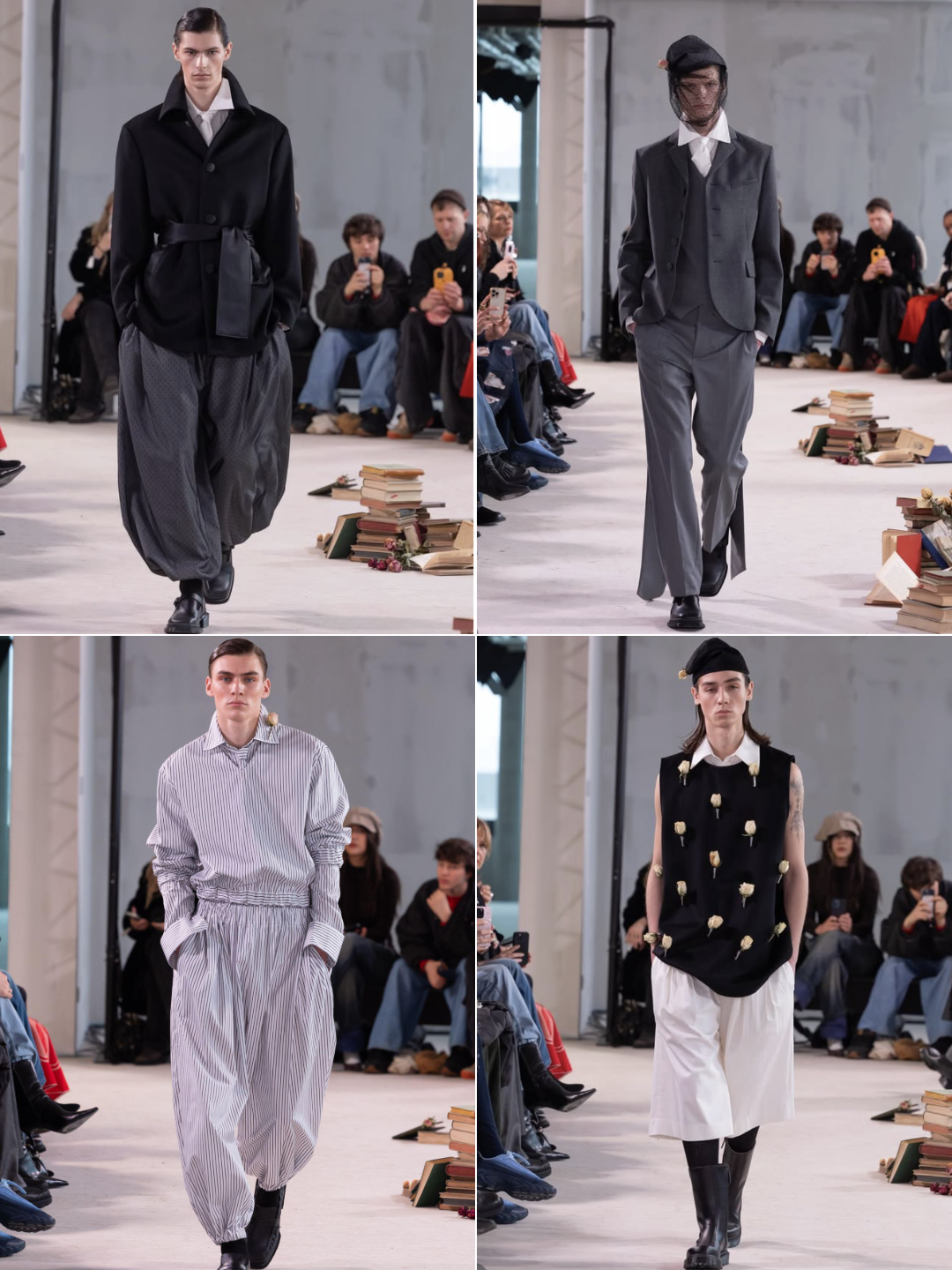
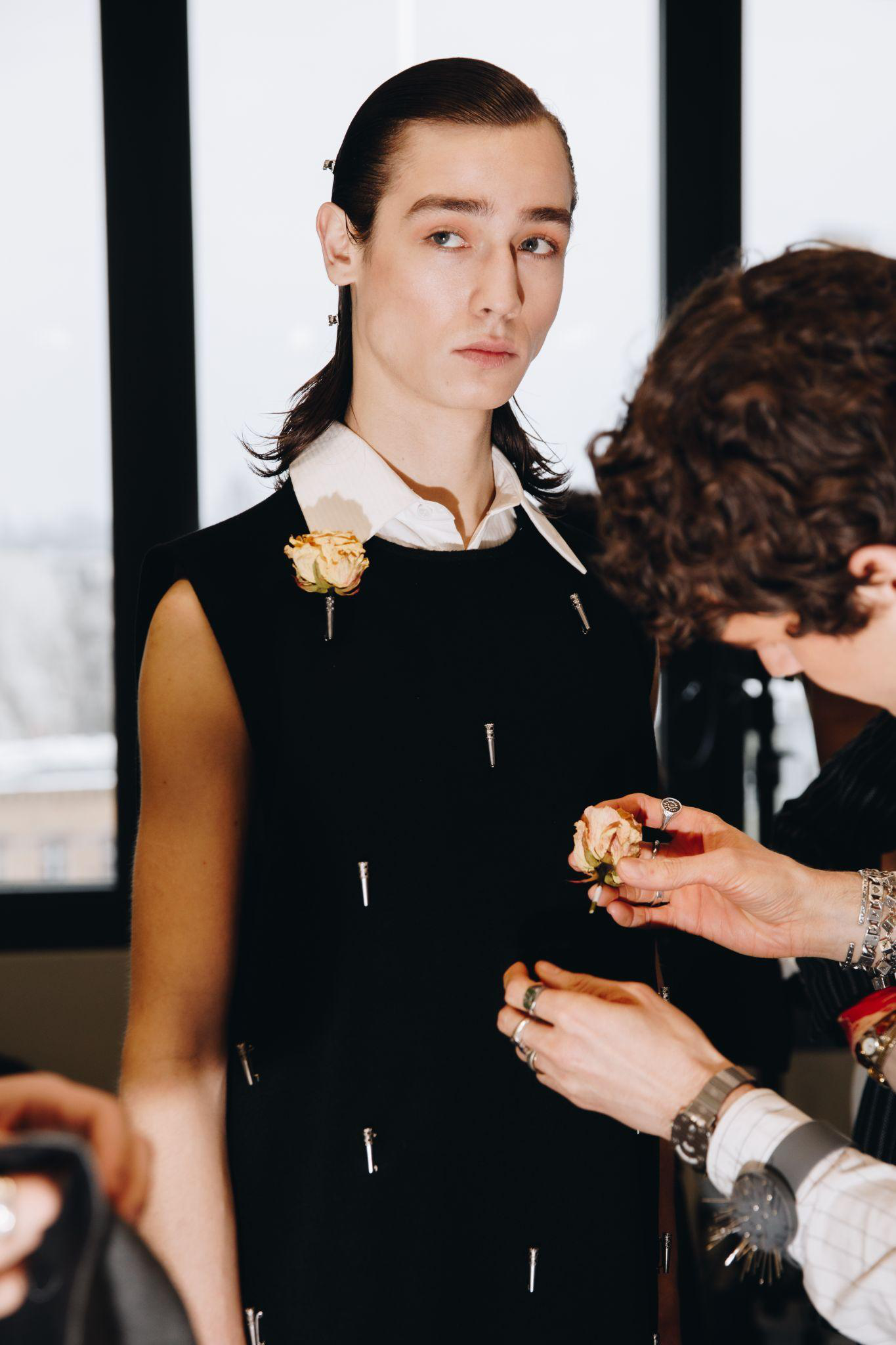
Other presentations looked back with a more critical eye. Mario Kleine, designer of the Cologne-founded brand MARKE, brought historical elements back to the runway to draw parallels with the current moment. Kleine’s collection, The Owl, suggests that reflection can guide our understanding of present conditions as they unfold in real time - and perhaps even derail historical trajectories before they fully repeat themselves. Specifically, Kleine comments on the fast “circulation of misinformation” in the digital age, “the privileging of aesthetics and content over knowledge, and the prioritization of capitalism over community,” the press release explains. He does so by integrating references to the pre-Enlightenment Rococo period: opulence embodied through oversized proportions and luxurious materials, including merino wool and duchess silk, alongside fleetingness depicted in opaque tulles, veils, and dried flowers. Yet Enlightenment, achieved through reflection, co-dominates the collection in slim silhouettes, structured collars, clean white-and-blue vertical stripes, classical architectural menswear tailoring, and muted neutrals.
In Berlin, the past seeps out of the city’s walls, meeting BFW A/W26 designers face-to-face. Given the current heightened political tension worldwide, the rapidly rising presence of AI, and a fragile global economy, the future feels uncertain. Perhaps it’s this uncertainty that sends us looking back for answers about the future and to explore the hopes and fears we have for it. This season’s BFW collections visit the past not like a museum of untouchable displays, but rather like one where visitors actively engage with and reshape the exhibition for tomorrow’s visitors - an impulse that resonated globally, launching Berlin onto the radar of the international fashion community.
related posts
Fashion Weeks
Julien Fournié AW 23-24 Haute Couture 'First Shield'