Between Earth and Light: Marion Vidal’s Précieux Bambou
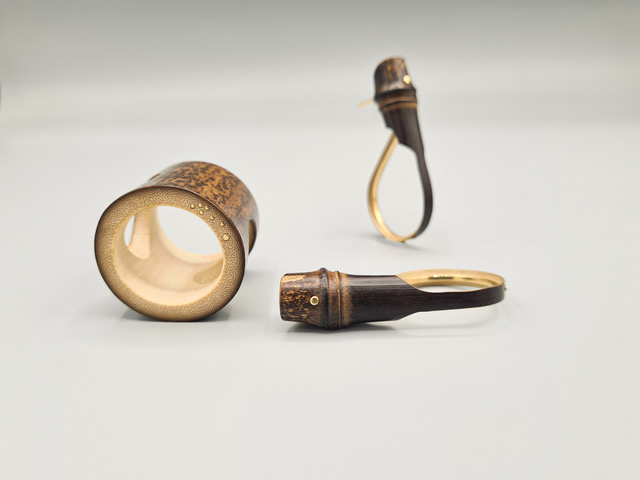
In Japan, bamboo transcends being a mere plant; it is sacred. Supple as wind, yet strong as metal, it carries within it a quiet symbolism of strength, youth, and longevity. It bends without breaking, grows with quiet determination, and reaches instinctively toward the light.
It is within this space, between الأرض and sky, matter and myth, that Marion Vidal situates Précieux Bambou.
During her 2025 artistic research residency at Villa Kujoyama in Kyoto, Vidal approached bamboo not simply as a material, but as a living territory of creation. Immersing herself in its rhythms, its growth, and its cultural resonance, she reveals its singularity; allowing it to unfold into a sculptural language that is at once precise and instinctive.
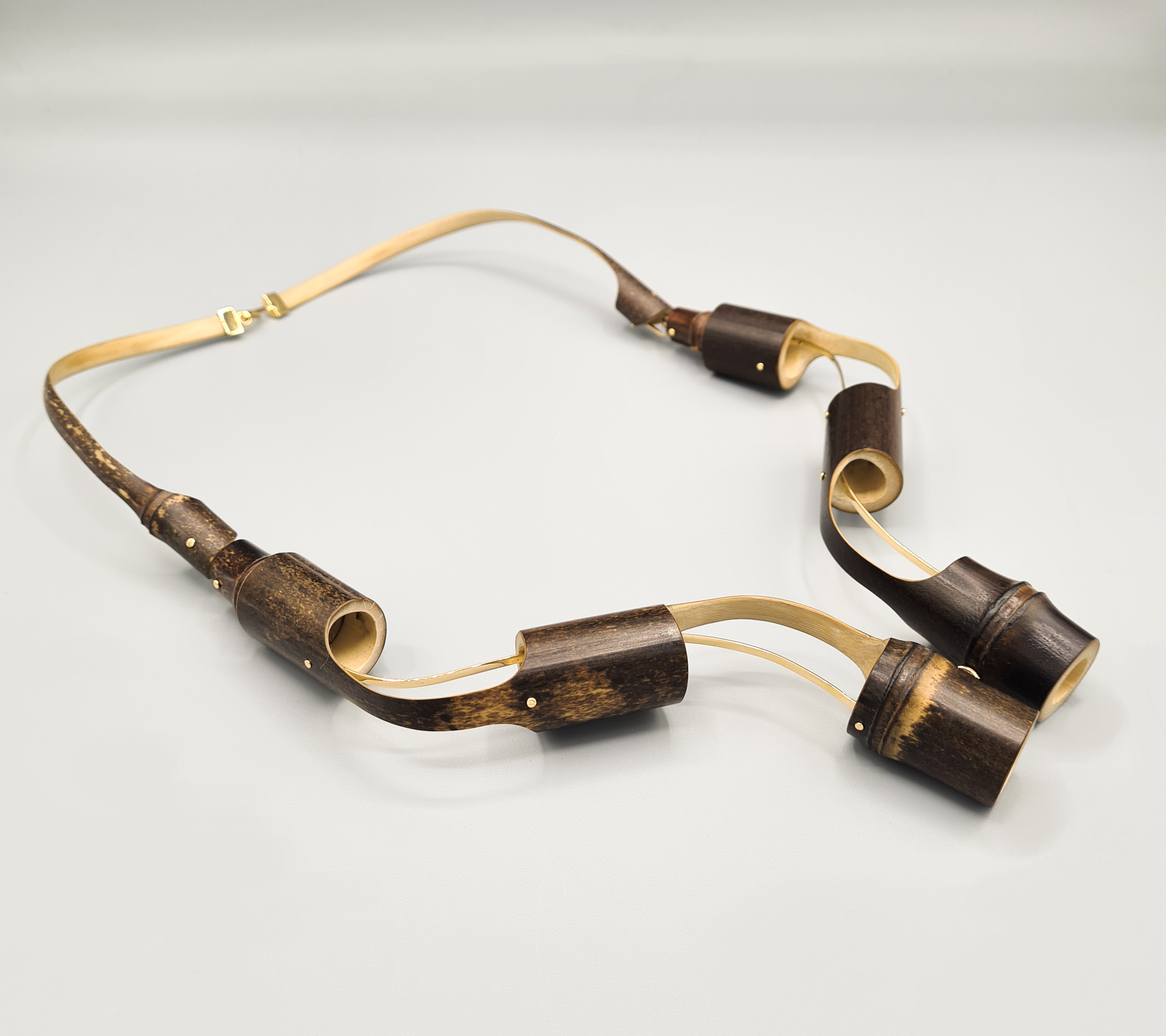
The collection, presented in collaboration with Galerie MiniMasterpiece, is conceived as an archipelago of forms; eight distinct jewellery typologies, autonomous yet intimately connected. Like fragments of a larger constellation, each piece exists in dialogue with the others, forming a quiet, cohesive whole.
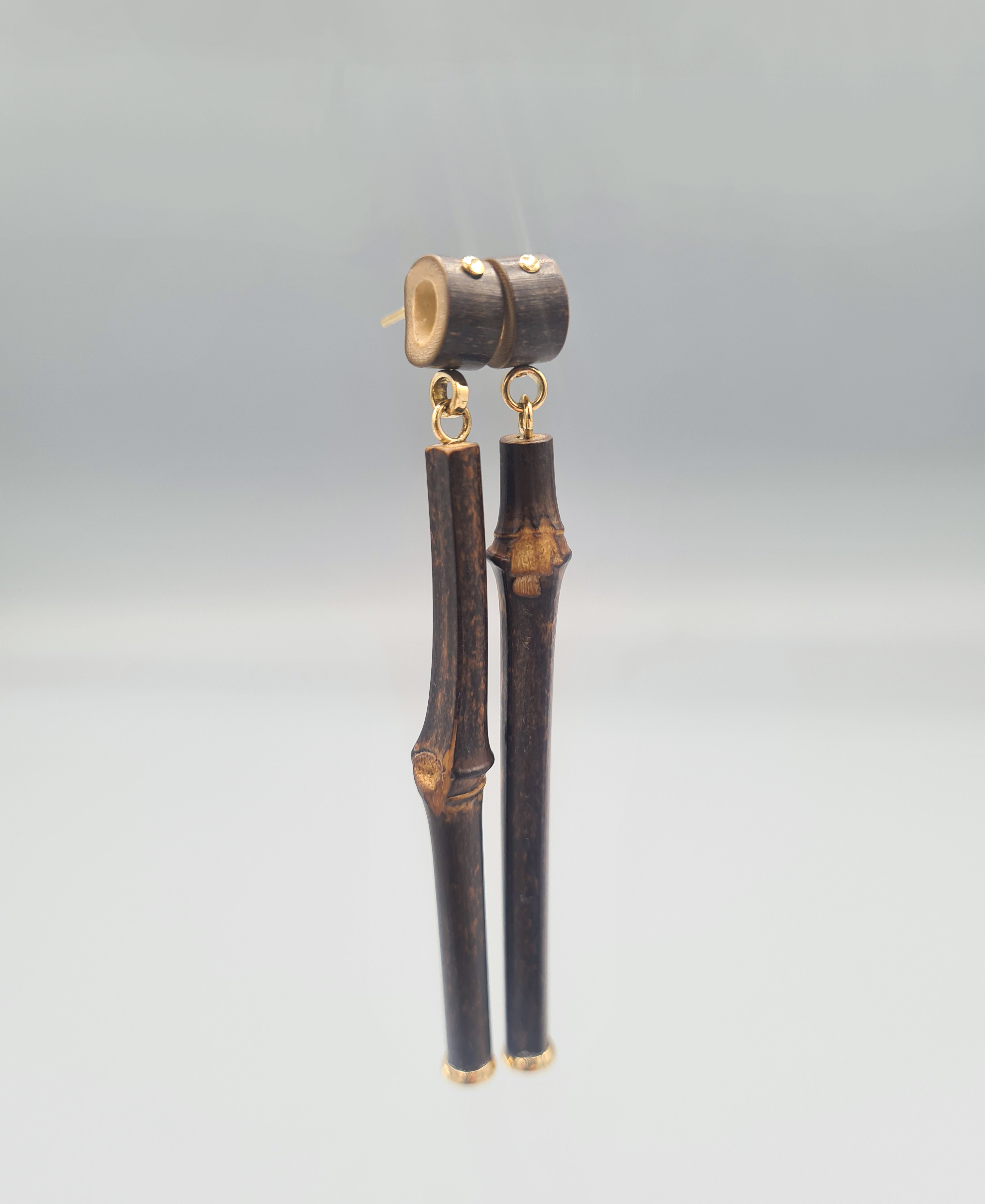
By choosing bamboo, an unexpected presence within the realm of fine jewellery, Vidal redefines the very notion of preciousness. She composes with its rapid growth, its link between earth and sky, its textures, nodes, and subtle irregularities. The organic freedom of the material meets a disciplined, minimalist line, resulting in a delicate tension between control and release.
Sculpted between geometric rigour and natural impulse, bamboo becomes the foundation for compositions of curved and linear forms, punctuated by glimmers of yellow gold. Here, gold does not impose; it breathes. It acts as a rhythm, a pause, a point of light that reveals rather than dominates. Like the light that guides bamboo in its upward growth, gold lifts it from the ground to the body, transforming it into something intimate, luminous, and deeply sensorial.
Suspended between sculpture and adornment, Précieux Bambou echoes the ancient Japanese tale of the bamboo cutter and Kaguya-hime; the princess of light. A presence born from nature, shaped by light, and carrying within it the lingering shadow of myth.

Tanja Beljanski: How did living and working in Japan shape your creative process? Were there particular moments or places that influenced the direction of this collection?
Marion Vidal: This collection is entirely informed by my research. I went to Japan already knowing that it would become my first project upon returning.
Living in Japan for five months, in residence at Villa Kujoyama, and dedicating that time exclusively to bamboo, was an extraordinary experience. It meant immersing myself in a country where the senses are constantly awakened and where nature plays a central role. It was an intense and deeply transformative moment in my creative process.
Leaving behind my usual habits and forming new ones in such a context was, in itself, disruptive; in the most constructive sense. Being surrounded by French artists at the villa, while also engaging with Japanese artists and craftspeople, created a dialogue that was both stimulating and enriching.
I spent those months observing bamboo in every possible way; its growth, its presence in Japanese history and everyday life, its varieties, its seasonal transformations. There is something almost animal-like about it when it emerges from the ground; its speed, its texture, its vitality.
Working alongside artisans, particularly Tanabe Chikuunsai IV in Osaka, was equally formative. Their precision, their discipline, and their pursuit of perfection deeply resonated with me. I found myself pushing further, continuing until I reached the highest level I could attain.
Those five months are impossible to summarise fully. I have tried to translate them into jewellery.
Tanja Beljanski: What first drew you to this material, and how did your understanding of its cultural and symbolic significance evolve during your stay?
Marion Vidal: I have always been drawn to materials that are not expected in jewellery. As with ceramics, I find it compelling to introduce elements that challenge traditional perceptions of what is considered precious.
Bamboo carries a striking duality. It is both light and strong, familiar yet complex. Working with a material from the plant world is something I find deeply moving.
Its characteristics are remarkable; its rapid growth, its environmental impact, its strength, which can rival that of steel. It is, in many ways, a material of the future.
But beyond its physical qualities, bamboo holds a deep cultural presence in Japan. Through my research, I came to understand not only its technical possibilities, but also its symbolic dimension—its role in rituals, in craftsmanship, and in daily life.
Material is always central to my work. It is often where everything begins. My apprenticeship with bamboo allowed me to create in harmony with it, and that experience remains inseparable from my approach.
Tanja Beljanski: You chose a material not traditionally associated with “precious jewellery.” What were the challenges and opportunities of working with bamboo alongside gold, and how do you balance organic forms with minimalist design?
Marion Vidal: From the beginning, I have been interested in introducing unexpected materials into jewellery. In fine jewellery, this creates a particularly compelling dialogue—between what is traditionally considered precious and what is not.
In Japan, bamboo itself is regarded as a precious material. Each piece is selected for its individuality; for the beauty of its surface, the rhythm of its nodes. That notion of preciousness fascinates me.
At the same time, I feel a strong need to rethink the quantity of materials we use, and their environmental impact. Bamboo allows me to create volume with minimal material.
I am also exploring how it might partially replace metal. Bamboo is dense, substantial, and incredibly versatile.
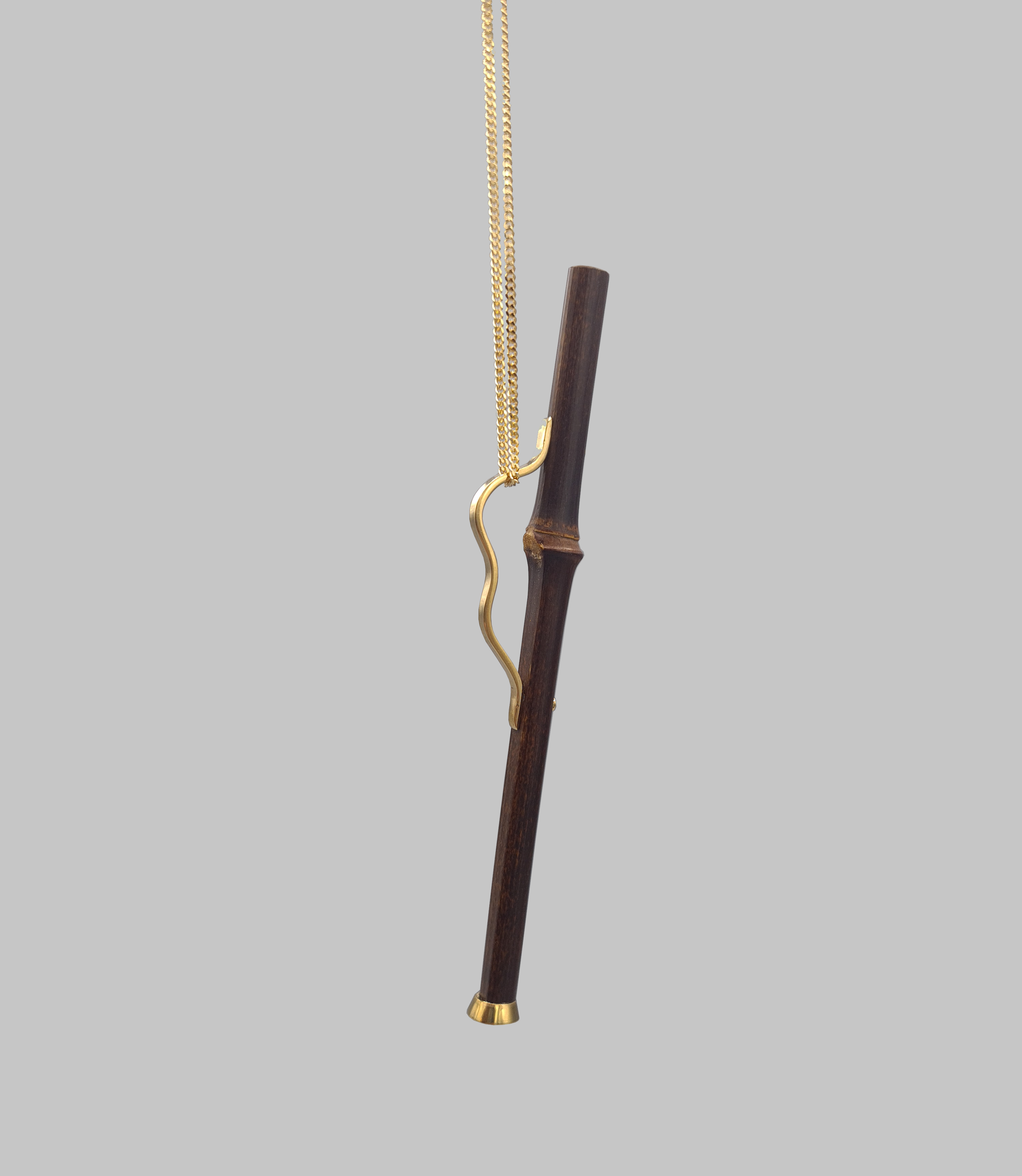
The relationship between bamboo and gold is essential. Gold does not dominate; it reveals. It highlights the nodes, the fibres, the texture, and the natural softness of bamboo. There is a quiet balance, almost a dialogue, between the two.
Tanja Beljanski: The collection is described as an “archipelago of forms.” How do you approach harmony between the pieces, and what experience do you want the wearer to have?
Marion Vidal: I conceive of a collection as a constellation, as a family of forms that exist together in harmony. Each piece has its own identity, yet they remain connected. Like individuals within a shared space, they evolve independently while maintaining a common language.
There is also a sensory dimension. Bamboo against the skin feels alive; dense, soft, and subtly powerful.
What matters most to me is the relationship that forms between the object and the person who wears it. When someone makes a piece their own, when they inhabit it in their own way—that is when the jewellery truly comes to life.
Bamboo adds an emotional layer to that connection. It carries something instinctive, almost intimate.
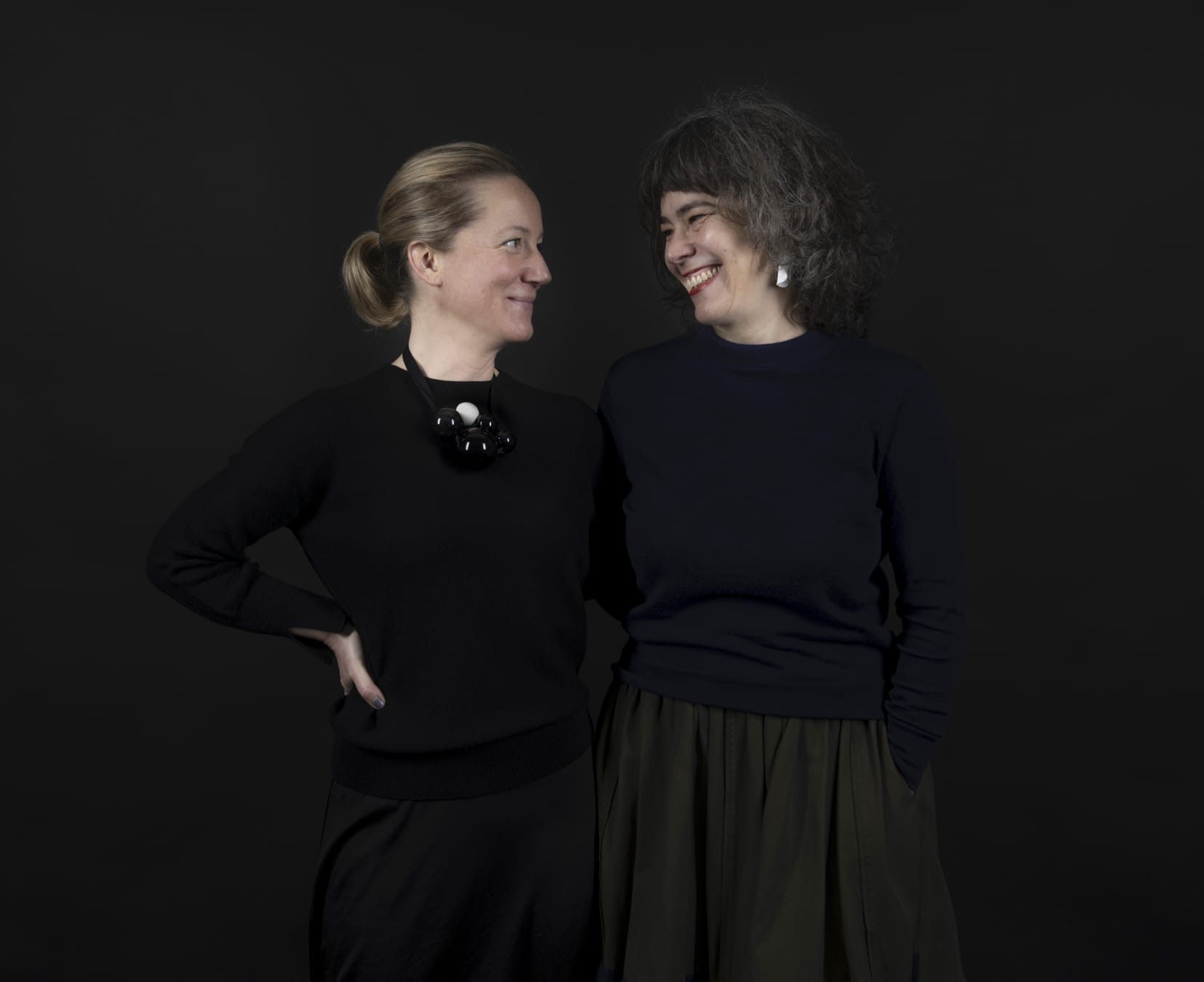
Tanja Beljanski: This exhibition marks your first collaboration with Galerie MiniMasterpiece. How did this partnership come about, and how did it influence the collection?
Marion Vidal: Esther de Beaucé, founder of Galerie MiniMasterpiece, and I had been considering a collaboration for some time. When my research project at Villa Kujoyama was confirmed, it felt like the right moment.
I proposed creating a collection of bamboo jewellery specifically for her gallery upon my return. We remained in dialogue throughout my time in Japan.
Designing for a gallery context, in collaboration with Galerie MiniMasterpiece, offered a different perspective. It differs from creating for my own brand or for other houses, yet the essence of the creative process remains unchanged. It was a deeply enriching experience.
Experience the Précieux Bambou collection in person and shop at Galerie MiniMasterpiece.
related posts

.jpg)