Dimitris Dassios and the Art of Fashion as Performance
Few designers working today blur the boundaries between fashion, theatre, and cultural storytelling with the same intensity as Dimitris Dassios. The founder of Dassios Athens has built a singular visual language shaped by Greek heritage, opera, antique craftsmanship, and cinematic imagination. Before establishing his name in fashion, Dassios studied political science and pursued careers in acting and classical singing, experiences that continue to inform the emotional depth and theatrical atmosphere of his collections.
Recognised for his handcrafted jackets, intricate embellishments, and unconventional use of antique textiles, the Greek designer approaches clothing as a living narrative. Historical references, artisanal fragments, and contemporary materials coexist in garments that feel deeply personal while resonating with an international audience. His presentations, often staged with the precision of a theatrical production, reveal a creator equally invested in storytelling, movement, and visual emotion.
In conversation with L’Officiel Arabia, Dimitris Dassios reflects on his artistic journey, the influence of opera and cinema, and the way Greek culture continues to shape his evolving creative world.
Tanja Beljanski: Your journey into fashion is remarkably layered, beginning with studies in political science before evolving into a career in acting and classical singing at the Greek National Opera. How have these seemingly contrasting disciplines shaped your perspective on fashion as both an intellectual and emotional form of expression?
Dimitris Dassios: My interest in fashion and art began in early childhood through making clothes and drawing. My family pushed me toward studying political science, something that didn’t truly express who I was, so I searched for myself through different forms of art. I became an actor and an opera singer while, at the same time, creating jewellery as a hobby. The next step was exhibiting these jewellery pieces in galleries and museums. That’s when I joined the Designers Association and participated in the 1st Greek Fashion Week, while also working at the National Opera. Success came very quickly. My jewellery collections were acquired by the legendary fashion icon Maria Louisa Poymalliou, while my first denim jackets were presented at international trade fairs in Milan and Paris and were bought by renowned boutiques around the world. That’s how my career and international journey in fashion began.
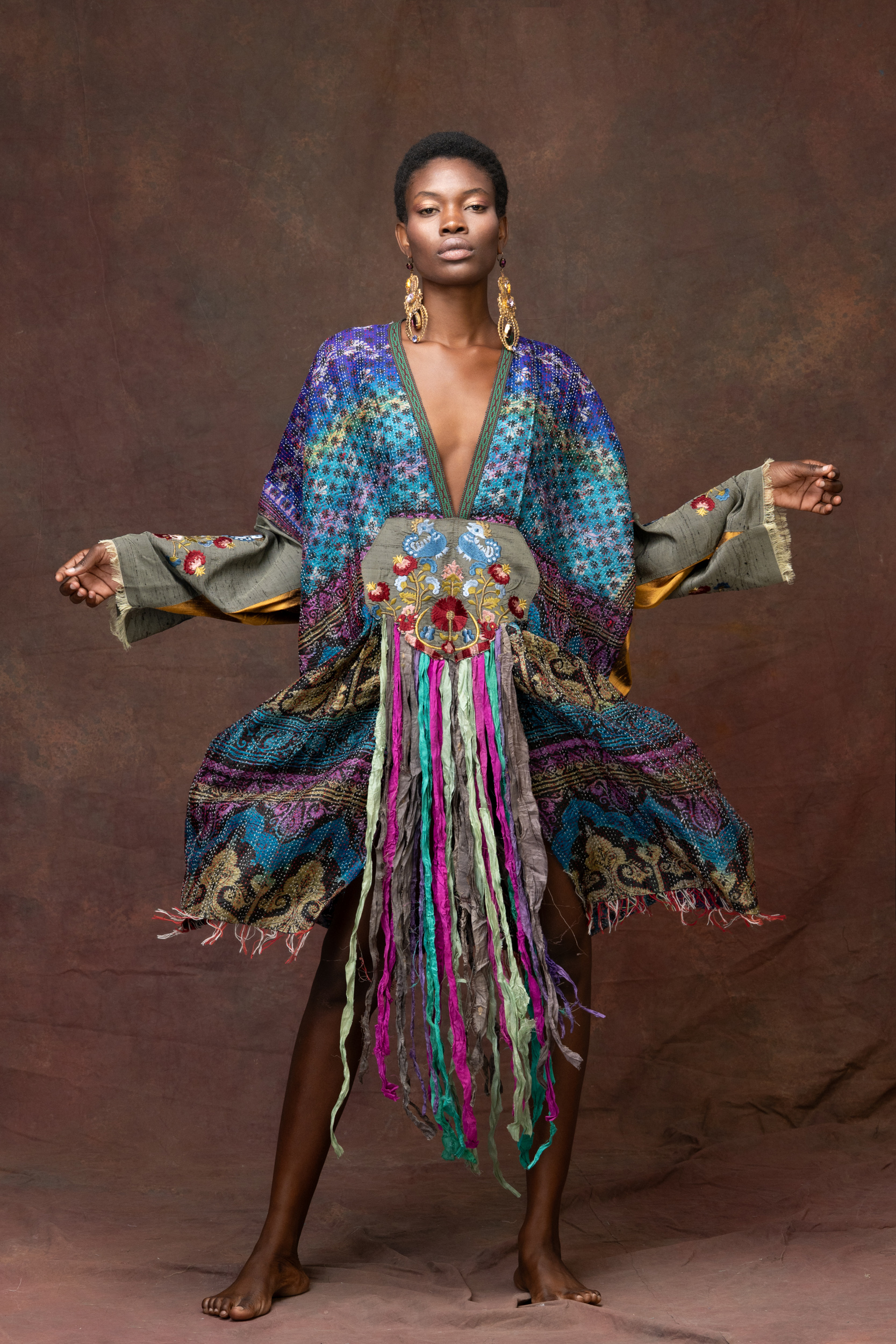
Having built a parallel career on stage, your work carries an unmistakable sense of drama and presence. To what extent does your experience in theatre and opera inform the way you construct a garment? Do you approach design as a form of performance or character creation?
My deep knowledge of historical costume, and, of course, theatrical costume, provides me with elements that I translate into contemporary materials with the aim of creating everyday garments. A touch of theatre and history applied to modern clothing makes it unique and distinctive. I use history to create a result for the future.
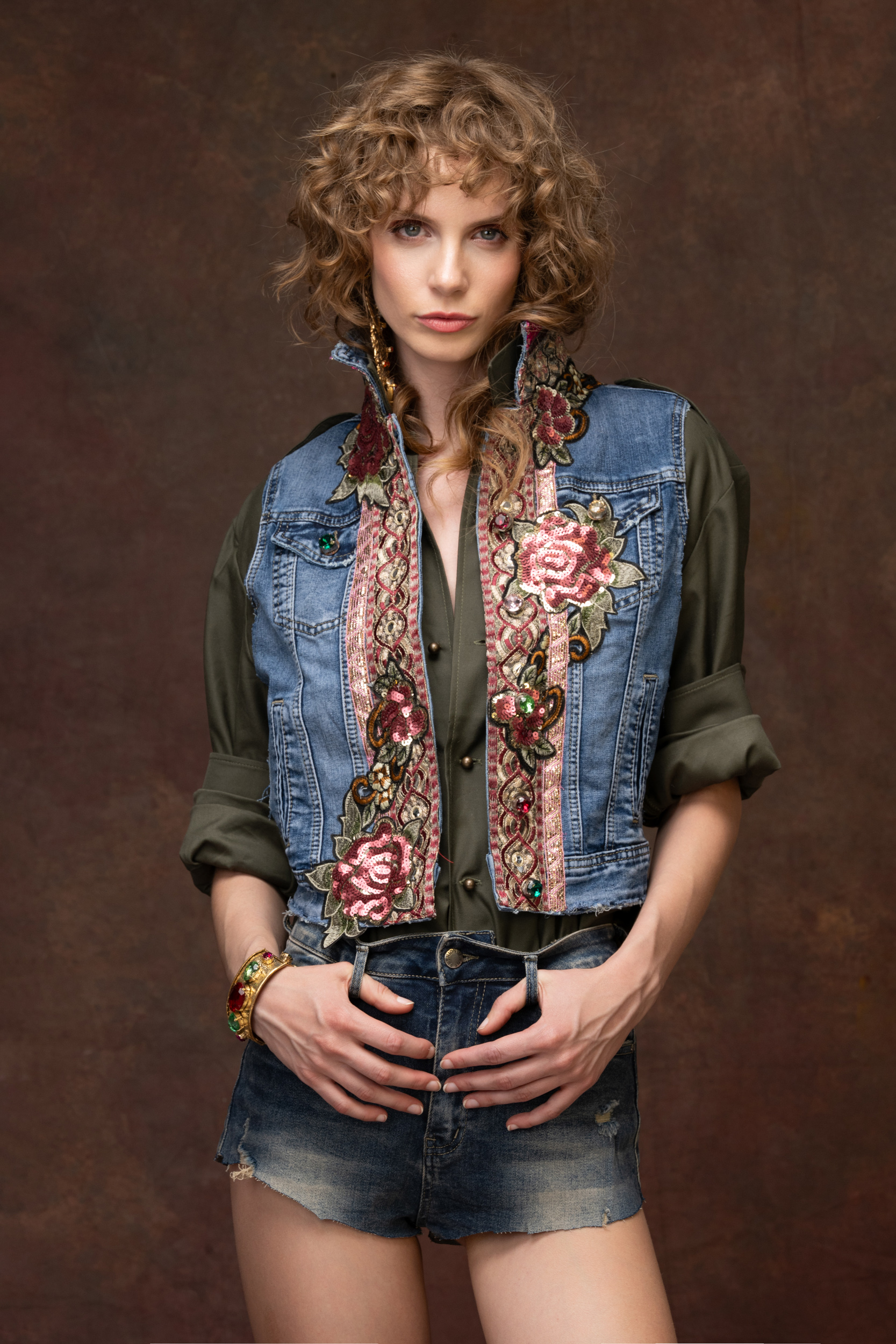
Your creations are deeply rooted in craftsmanship, often incorporating antique textiles, embroidery, and one-of-a-kind artisanal elements. Could you walk us through your creative process, from the moment you encounter a material or cultural reference to the final sculptural form of a Dassios piece?
I have always been fascinated by handcrafted elements, and I deeply love the idea of recycling them into something contemporary that gives them a new life. I am not afraid to combine antique handcrafted elements—which inspire me greatly—with modern materials such as denim, leather, vinyl, etc., in order to create a personal result.
When I find an antique element that fascinates and impresses me, I immediately visualise how I will use it in a dynamic everyday garment.
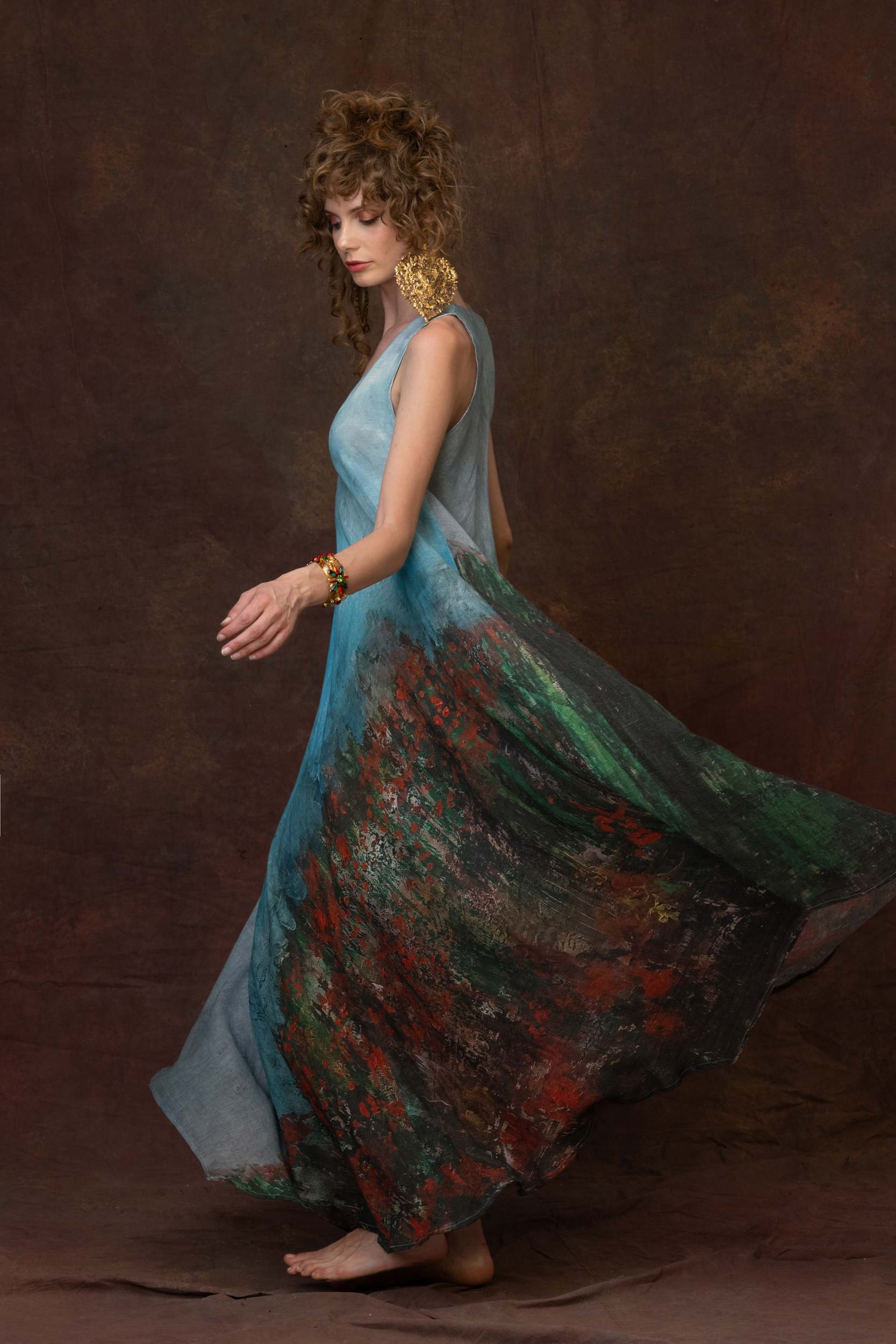
Greek heritage is a powerful undercurrent in your work, yet it is never presented in a literal or folkloric way. How do you reinterpret the richness of Greek culture and tradition to create something that feels both authentic and relevant to a global, contemporary audience?
As I mentioned before, my knowledge of historical costume gives me this flexibility. I believe that every creator should express their national identity through the outcome of their work. Greek tradition offers an immense wealth of references, and this challenges me to use it and introduce it to an international audience in a completely new way, transforming it from folklore into something contemporary. After all, all great designers have drawn inspiration from their own national traditions, as well as from those of other cultures.
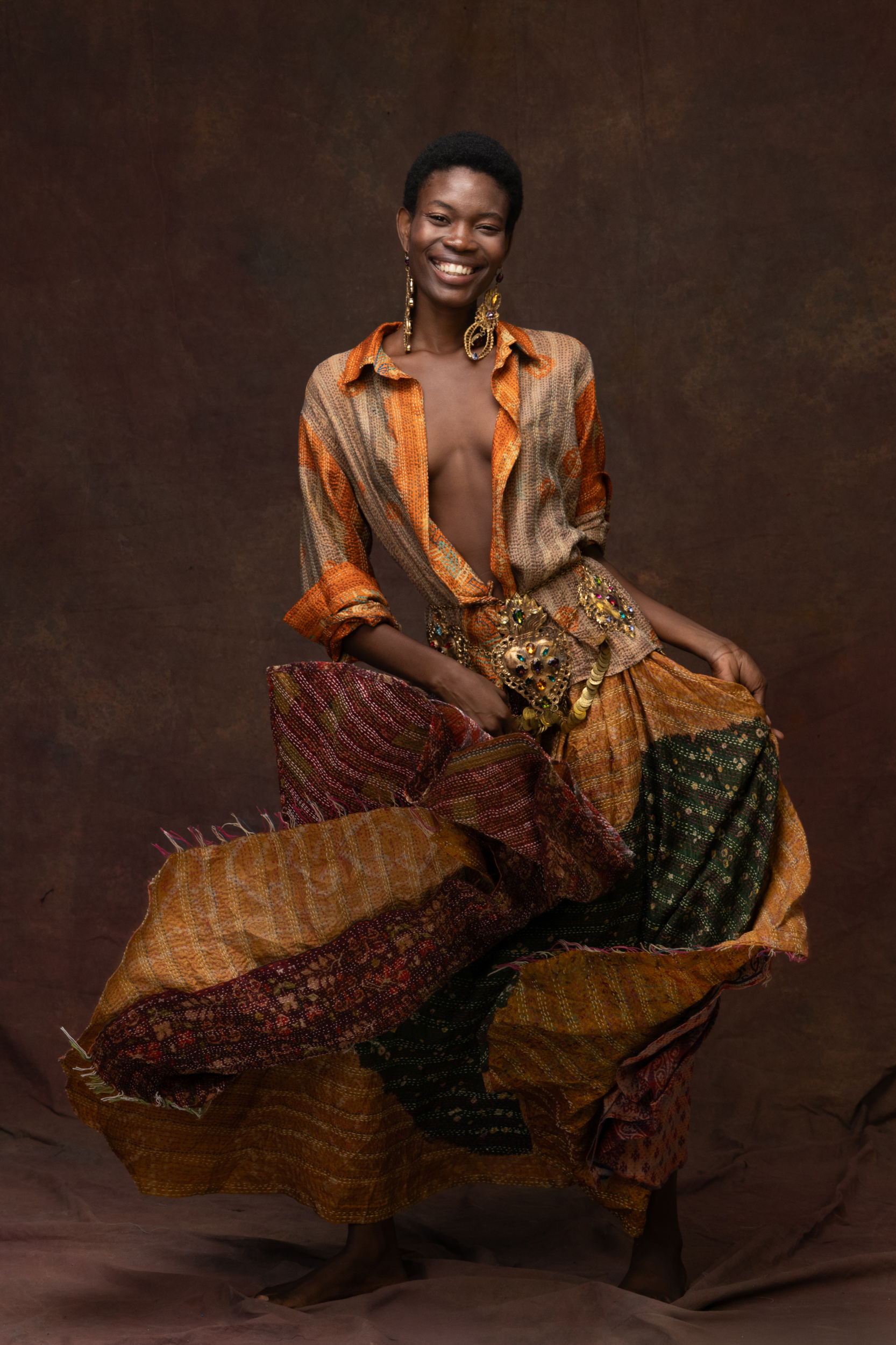
Your catwalk presentations have been described as avant-garde and intellectually charged, often transcending the traditional format of a fashion show. How important is narrative, staging, and atmosphere in your presentations, and do you consider them an extension of your artistic identity beyond the garments themselves?
For me, a fashion show is a performance built around a concept. I always handle the art direction myself, fully understanding the original idea so that it is supported by the appropriate music, lighting, movement, makeup, and hairstyling. It is part of my multi-artist nature, and I feel very fulfilled when I can tell a story and move the audience within a ten-minute fashion show. However, all of this must serve the fashion vision I have and primarily showcase the garments in a distinctive way.
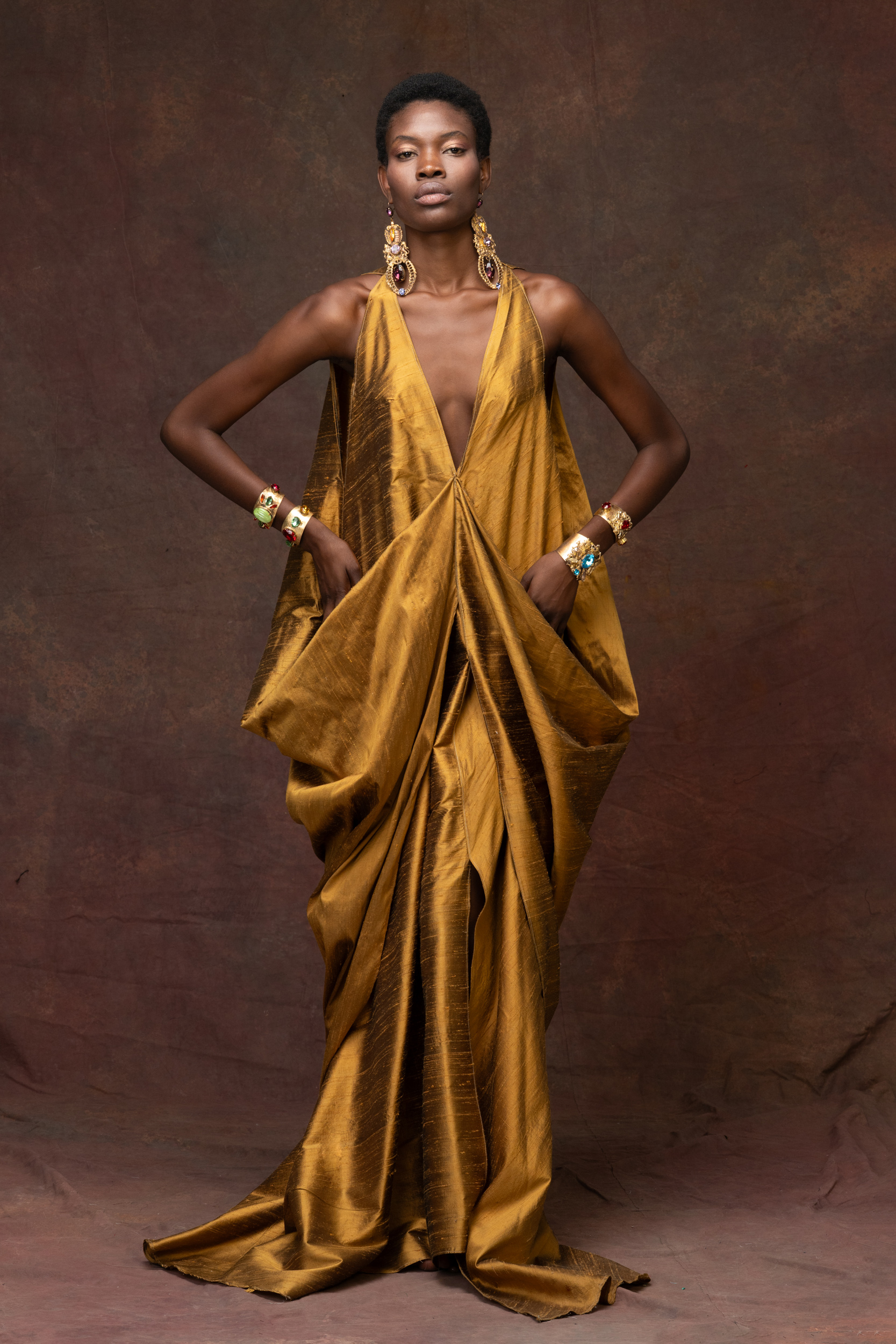
Your universe draws from a wide spectrum of influences: cinema, theatre, travel, and the decorative arts, often blending cultures and time periods into a single piece. Which artistic or cinematic references have most profoundly shaped your aesthetic, and how do these inspirations continue to evolve within your work today?
From a very young age, I had a strong interest in the arts, especially cinema. During my teenage years, I watched films by all the great creators—I was obsessed. I consider Luchino Visconti my mental and aesthetic mentor. His multi-artist personality and deep political consciousness, expressed through his films and theatrical work, have always been a profound influence on my later life and creative path.





.jpg)