Flowwow is now Udora
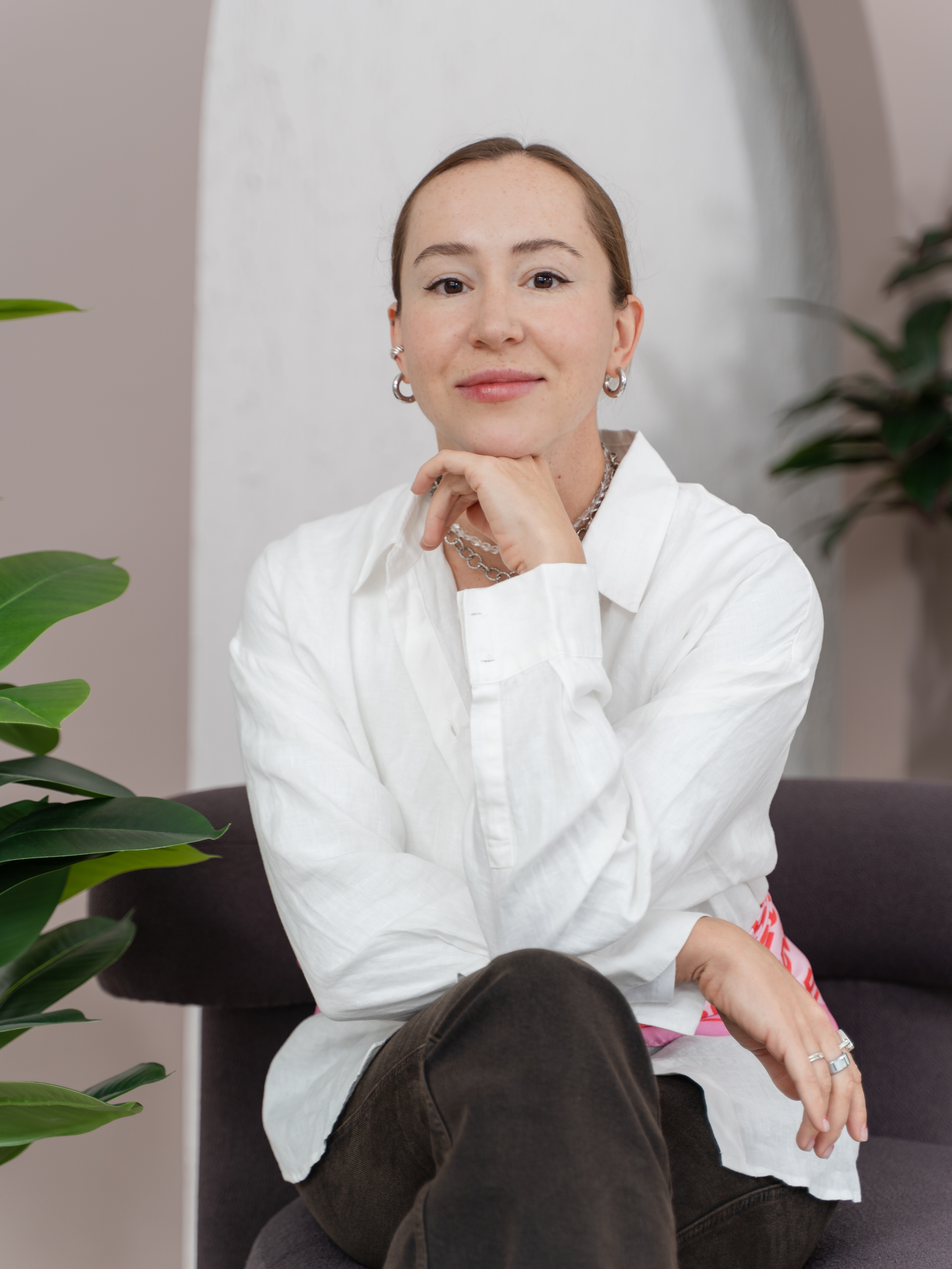
L'Officiel UK: Rebrands often signal a deeper evolution beyond identity. What does the transition from Flowwow to Udora represent at the level of vision, ambition, and cultural positioning?
Irina Tatarinova: The transition from Flowwow to Udora marks the next chapter in our journey as a global gifting platform. After ten years of growth, it reflects a stronger focus on the markets we serve, with more localized products, new capabilities, and technology that helps people discover meaningful gifts in a way that feels relevant to each region. Being a UAE-based business has shaped our understanding of how important local traditions and cultural nuances are in the way people give and celebrate, which is why localization remains at the core of how we build the experience — from the assortment to how gifting feels in each market.
It also reflects a new stage of growth and expansion for the company. We’re already present in more than 50 countries, including markets across the UK, Spain, Brazil, Turkey, and more. And we’re continuing to invest in the markets where we already operate, strengthening our presence there, while our expansion into Saudi Arabia is already underway, with further international growth ahead as part of our long-term plans. The focus is not only on scaling geographically, but also on deepening what we already do in each market as we grow.
At the same time, what has always defined us remains unchanged. We believe in the warm touch that turns a virtual message into a real connection, and in helping people express care in a way that feels tangible and meaningful, no matter where they are.
Udora arrives at a moment when digital commerce is increasingly defined by lifestyle and emotional value. How does the new identity reposition the brand within the global premium gifting and floral ecosystem?
What really defines our position is how rooted it is in local makers and local moments. We work with thousands of florists, confectioners and artisan sellers across more than 50 countries, including over 400 in the UAE alone. They all remain independent businesses — nothing about how they work changes when they join the platform. What changes is the reach. We give them the ability to go beyond their immediate neighbourhood and connect with a much wider audience, while still staying completely true to their craft and identity.
And for the customer, it still feels very local. If you’re sending a gift, you’re not just choosing something from a global catalogue — you’re choosing from real local makers in the place where the gift is actually going. That’s what keeps it personal.
The assortment itself is also shaped entirely by the market: by culture, by occasions, by how people actually give in that place. So it never feels standardised or “global” in that sense. And that’s really how we see our role in the ecosystem — very local at its core, but connected across markets.
Udora carries a distinct tonal and aesthetic departure from Flowwow. What inspired the name, and how does it reflect the brand’s next chapter in design, storytelling, and emotional resonance?
The name Udora comes from the Greek word eudora, meaning “good gift”. It connects back to the very beginning of the company — when the idea first came from our founder Slava Bogdan’s personal experience of trying to send a gift to his mother while he was abroad and realising how difficult the process was.
Flowwow started as a flower delivery platform and over time became a gifting marketplace across more than 50 countries, so flowers no longer fully described what the business had become. That’s when the brand took its next step and relaunched as Udora.
At the core, the mission stayed the same. The idea of warm touch, turning digital messages into real human connections. What evolved was the way we express it. The design, messaging framework and brand language developed with the new stage of the brand, while keeping the same sense of connection. Gifting remained the core, but the expression became more flexible across different markets and cultures.
The creative direction was built around the idea that every gift is a unique combination of moment, sender and recipient. This thinking led to the kaleidoscope concept, which reflects the emotional variety behind every interaction on the platform.
As the brand expands across Europe, the UK, and the GCC, how does Udora aim to balance global scalability with the intimacy and craft expected in luxury gifting cultures?
As we expand across Europe, the UK, and the GCC, the key for us is to keep a consistent brand experience while making sure it still feels local in each market.
We’ve always approached this through a clear umbrella strategy. There is one core story behind the rebrand, and then it naturally adapts depending on the audience and the region. The way we communicate with customers is different from how we speak to sellers or partners, because their expectations are not the same.
For sellers and partners, it’s about continuity and trust, knowing the platform remains a stable place where they can grow their business. For customers, it’s about keeping the experience seamless and familiar, even as the brand evolves around them.
On the creative side, the system is built to allow that flexibility from the start. We work with one visual language, but it leaves space for local expression — through colour, photography, and how people and moments are represented, so it always feels natural to the culture it lives in.
We don’t apply one communication or visual approach everywhere. Everything is adapted market by market, depending on culture, traditions, and what actually matters for each audience, while staying within one consistent brand system. We’re also becoming more flexible on the product side, with new features and capabilities that reflect our values, our mission, and the different ways people give and connect across markets.
Beyond a new name and identity, what subtle yet meaningful shifts should customers and partner boutiques expect in how Udora curates, delivers, and elevates the gifting experience?
Beyond the new name and identity, the shifts are really about making the experience more personalised and more locally relevant. One of the key developments is expanded and more locally tailored categories. We shape the assortment around each market — from perfumes and curated gift sets in the UAE to beverages and gourmet selections in Spain, as well as our own greeting cards and children’s gifting kits in the UK. It’s about reflecting how gifting actually looks in each place.
Personalisation is also becoming more central, supported by data, machine learning and AI tools that help people discover more relevant gifts based on the occasion, the recipient and past behaviour, making the experience feel more intuitive.
It’s less about changing the essence of the platform and more about making the experience feel easier, more relevant and more personal.




.JPG)