Form, Memory, and the Poetics of the Body: Ozanne Princen
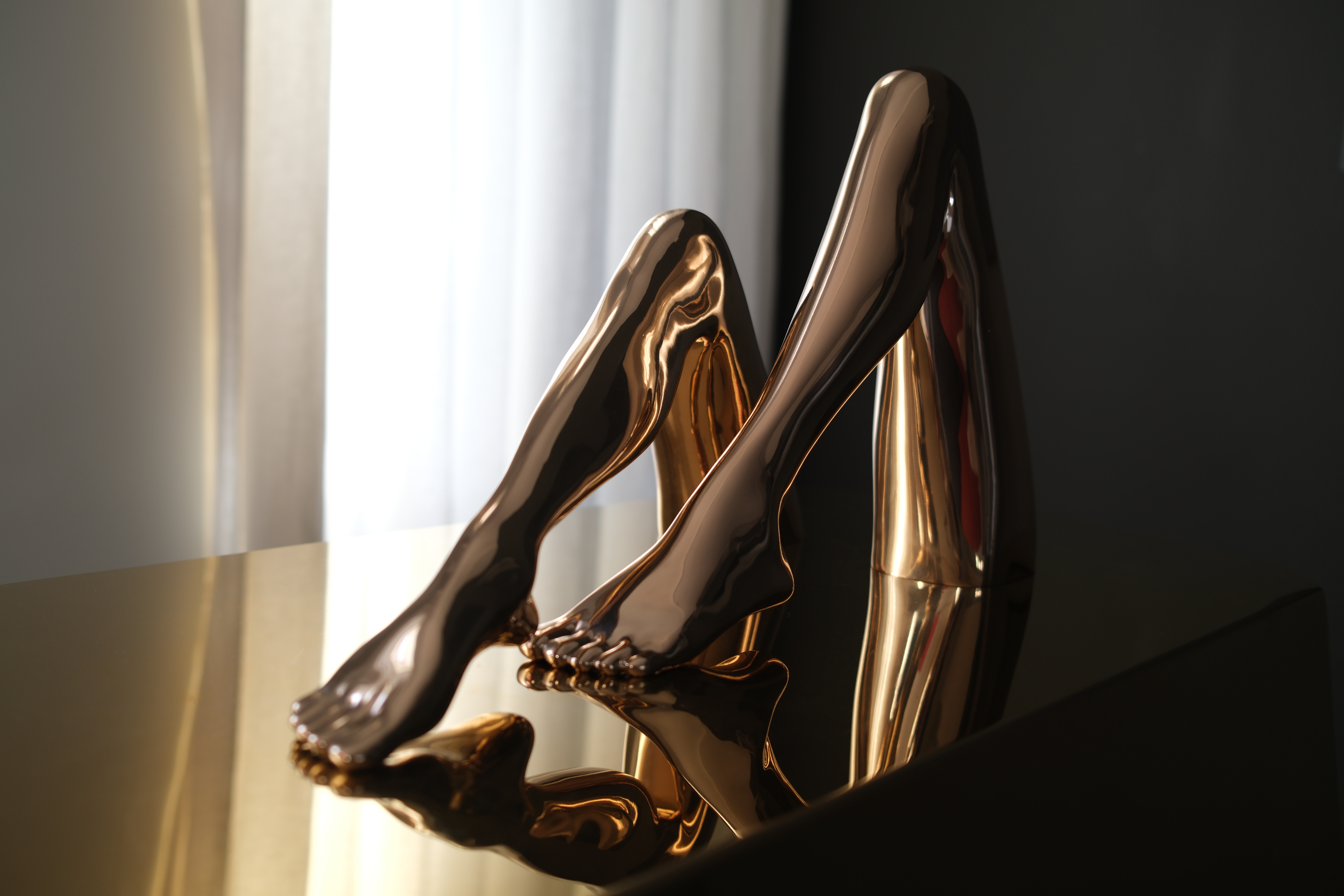
This interview with sculptor Ozanne Princen explores a practice rooted in the delicate balance between movement and stillness, transience and permanence. Working primarily in bronze, Princen transforms fleeting bodily gestures into enduring sculptural forms, capturing moments that exist just before or just after motion; where presence feels most heightened and alive. Her work does not aim to freeze movement, but rather to preserve its emotional residue, allowing gesture to continue resonating beyond time.

Central to her visual language is the recurring motif of the leg; a form she approaches not as a fragment of limitation, but as an entry point into a broader meditation on the body. Through its structure, tension, and elegance, the leg becomes a distilled expression of balance, direction, and quiet strength. In isolating this element, Princen reveals how a single part of the body can evoke a complete narrative, inviting viewers to complete the image through their own perception.
Across series such as Silhouettes Éternelles and Counterpoise, she examines suspension, stillness, and equilibrium, creating works that feel both grounded and weightless. Her approach to feminine presence resists definition, instead emerging through sensation, restraint, and subtle internal force.
Through the ancient process of lost-wax casting, Princen embraces transformation, loss, and reappearance as integral to meaning. Each sculpture becomes a record not only of form, but of time, touch, and intention. In her work, what is felt often arrives before what is understood, opening space for instinctive recognition and emotional resonance.
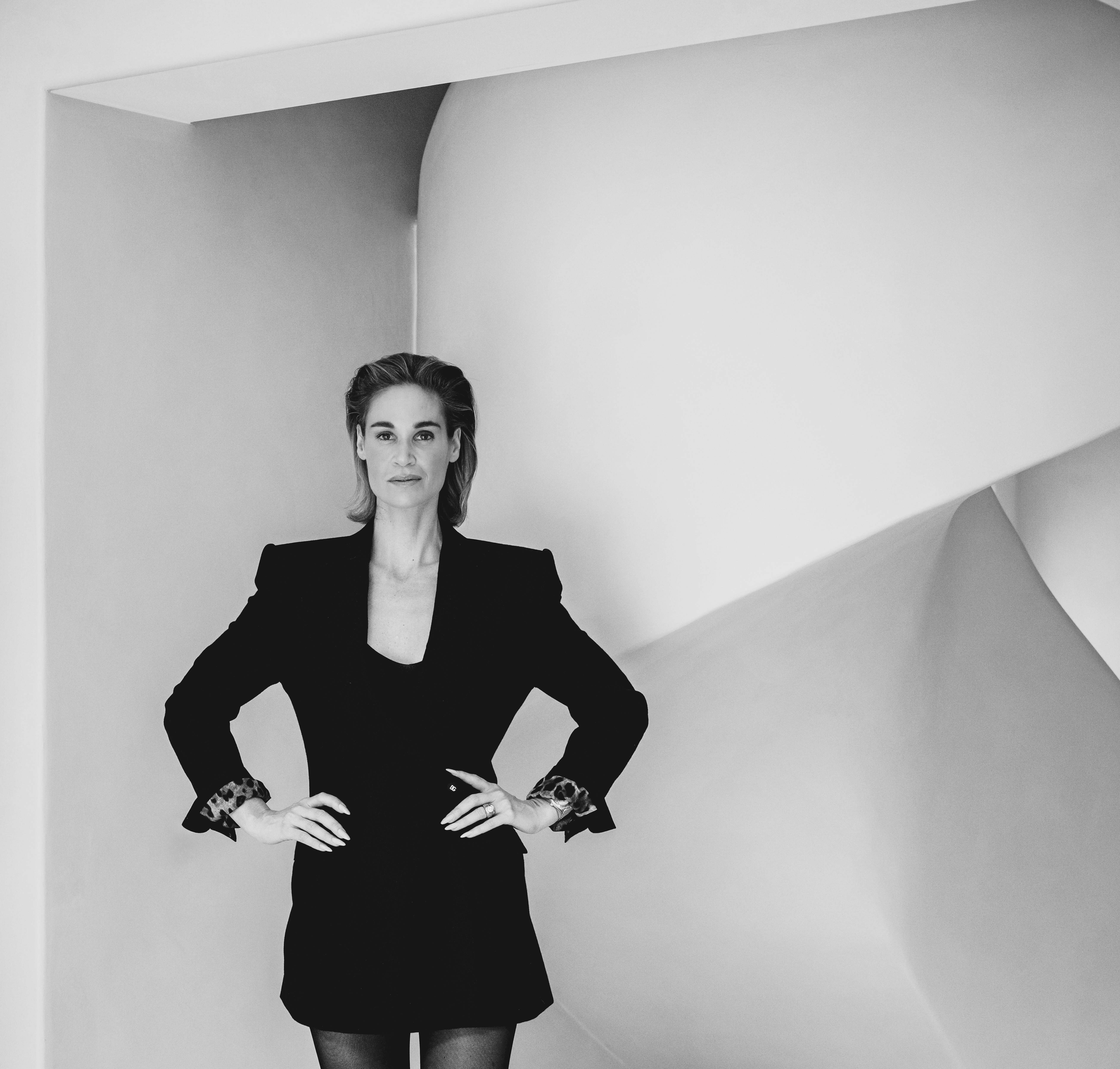
Tanja Beljanski: Your sculptures transform fleeting gestures into lasting bronze forms. What draws you to the tension between movement and permanence in your practice?
Ozanne Princen: I’m drawn to the moment just before or just after movement; when the body holds a trace of what has passed, or anticipates what is about to come. That in-between state feels the most alive to me. Bronze, by nature, suggests permanence. Yet I use it to capture something inherently transient. That contrast creates a quiet tension; a dialogue between what is fleeting and what endures. My work is not about freezing movement, but about preserving its memory. I’m interested in how a gesture can continue to resonate, even when it no longer unfolds in time.
The leg is a striking and recurring motif in your work. What does this form allow you to express that other parts of the body cannot?
The leg appears as a recurring motif in my work because it carries a unique duality; it is both structural and expressive. It supports the body, initiates movement, and yet can stand alone as a sculptural line. There is a natural elegance in its elongation, its tension, its quiet strength. I don’t see it as a limitation, but rather as a lens. My practice is not confined to the leg; it is simply one entry point into a broader exploration of the body, of gesture, and of presence. I’m interested in how a fragment can hold the essence of the whole, how a single form can suggest an entire narrative.
For me, it’s about distillation; reducing the body to what feels essential, and allowing that essence to resonate beyond its literal form.
.png)
In Silhouettes Éternelles and Counterpoise, you explore both suspension and stillness. How do these contrasting states reflect your perspective on the body and feminine presence?
In Silhouettes Éternelles and Counterpoise, I explore a tension between suspension and stillness; a moment where the body seems to exist just outside of time. That space interests me because it allows presence to emerge in a more subtle, almost internal way. Feminine presence, in my work, is not something I define explicitly. It is not about representation, but about sensation. It reveals itself through balance, through softness within strength, through a quiet form of control that doesn’t need to assert itself. There is a certain restraint, a contained energy; something poised, but never static. I’m drawn to that ambiguity: where the body feels both grounded and weightless, vulnerable yet composed. By isolating and refining form, I try to move away from the literal and toward something more intuitive. The feminine then becomes less about the body itself, and more about a presence; something that is felt before it is understood.
The lost-wax casting technique is both ancient and intimate. How does this process influence the emotional or physical qualities of your final pieces?
The lost-wax casting process is deeply tied to the way I think about making. It is an ancient technique, but also an incredibly intimate one: every piece passes through multiple hands, through fire, through time. What I value most is the artisanal dimension of the process. The dialogue with the atelier, the precision of each gesture, the patience it requires; it brings a sense of care and intention into the work that cannot be rushed.
There is also something powerful in the transformation itself. The original form disappears in order to give way to the final piece. That act of loss and reappearance carries an emotional weight that remains embedded in the sculpture. In the end, the material holds more than just form; it carries the trace of the process, of the hands, of the time invested.
Your sculptures are often described as being “felt before understood.” How do you approach creating work that resonates on such an instinctive, sensory level?
I try not to over-define the work. For me, it begins with an intuitive response; a memory, a sensation, a rhythm, a line that feels right before it is fully articulated. I’m interested in creating space for interpretation, rather than directing it. When a piece is reduced to its essential form, it allows the viewer to project their own perception onto it. That’s where the connection happens; not through explanation, but through recognition. Something shifts, even if it cannot be immediately named. If the work is felt before it is understood, it means it has reached a more instinctive level. And that, for me, is where it becomes most meaningful.