It doesn’t begin with a statement, but with a shift. Something in the air changes—subtle, almost imperceptible, yet impossible to ignore. Eu vent de vous by Sabé Masson unfolds in this space between presence and absence, where a fleeting encounter leaves a lasting trace.
Built as an oriental woody chypre, the composition moves through contrasts that never clash. Amber is soft but grounded, woods and resins bring depth without weight, while iris introduces a cool, almost luminous clarity. The fragrance holds tension without resolving it, remaining suspended, fluid, and quietly precise.
There is no single focal point. Instead, it evolves as a continuous movement, where each note appears, recedes, and returns in a different light. What begins as a fleeting impression gradually reveals structure, transforming lightness into something more persistent, more intimate.
Notes
Eu vent de vous by Sabé Masson opens with a luminous contrast. Bergamot introduces a crisp, vibrant brightness, while cardamom adds a warm, aromatic edge that gives the opening both clarity and depth.
The heart unfolds with quiet complexity. Iris emerges with a cool, powdery refinement, balanced by the resinous richness of tolu balm, opoponax, and benzoin. The composition remains fluid, with each element blending seamlessly into the next without ever dominating.
In the base, the fragrance deepens into a more intimate dimension. Patchouli provides structure and a subtle earthiness, while vanilla and labdanum bring a smooth, enveloping warmth. Amber lingers softly on the skin, creating a trail that is persistent yet understated.
Packaging
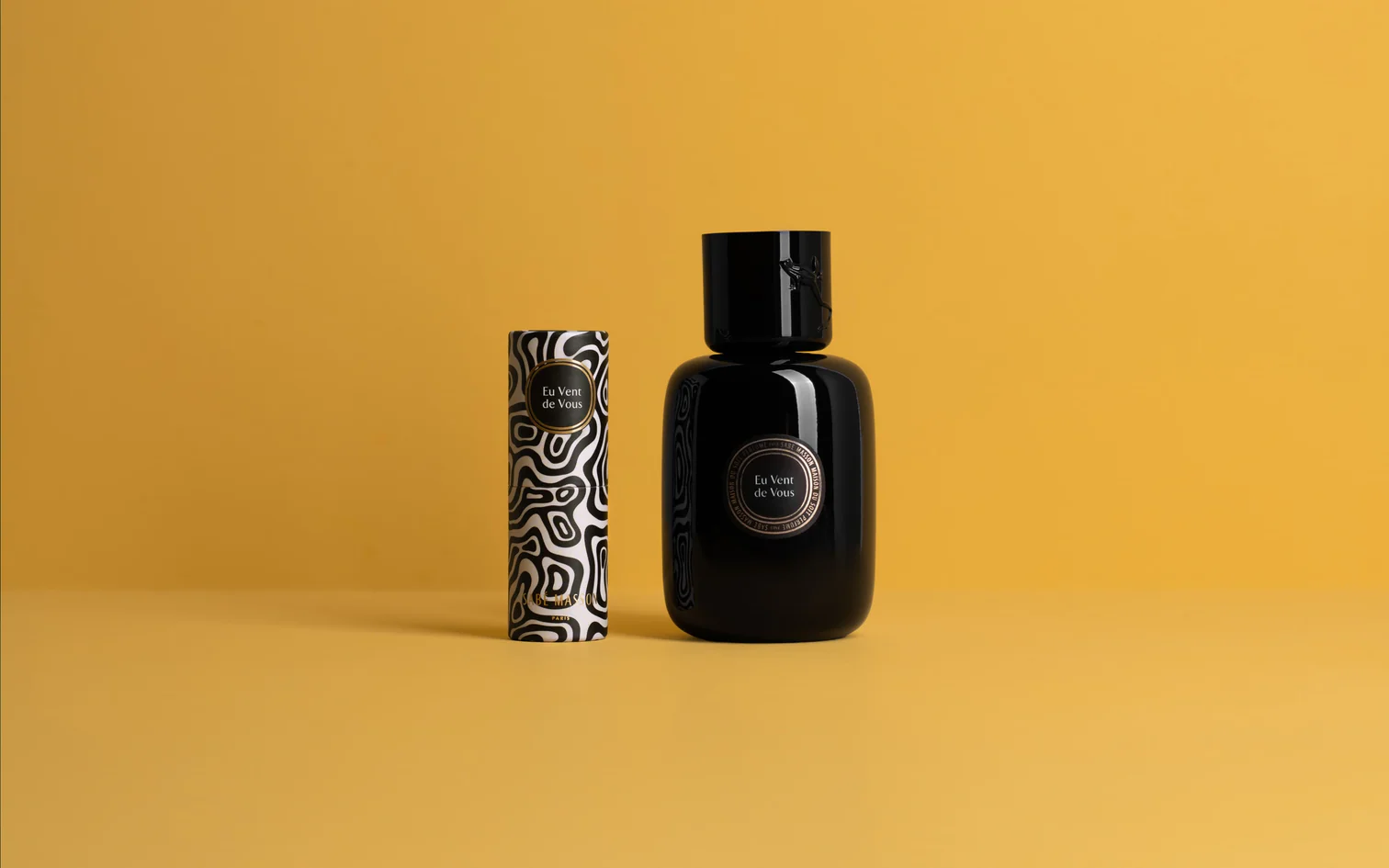
The design mirrors the fragrance’s identity. A deep black bottle, defined by rounded proportions and a glossy finish, stands in sharp contrast against a luminous, almost solar background.
The label, circular and precise, reinforces a sense of quiet formality, while the sculptural detail on the cap introduces a subtle element of movement—an unexpected gesture within an otherwise controlled aesthetic.
Minimal yet deliberate, the object does not seek to attract attention through excess. Instead, it relies on contrast, proportion, and restraint.

.jpg)