“For 107 years, Bentleys have been the most incredibly complete cars - effortless performance, outstanding comfort, exquisite British handcraftsmanship using the best natural materials, and a soundtrack with soul. Our new Torcal sets extraordinary benchmarks in every area that matters.” With these words Bentley’s Chairman and CEO, Dr. Frank-Steffen Walliser, has revealed one of the most significant new Bentleys in the company’s long history.
The all-new Torcal is a Bentley first and foremost. In every aspect of its design, technology, craftsmanship, materials and sustainability it is a template for future Bentleys, regardless of powertrain.

Confident, progressive design

Led by Design Director Robin Page, the in-house design team at Crewe has created a low, sleek SUV that introduces a bold new design language, rooted in Bentley’s DNA.
“When we design a Bentley, we consider how people naturally perceive an object. You don’t experience a car all at once. There is a hierarchy to what you see and understand, which we describe through four ‘reads’” comments Robin.
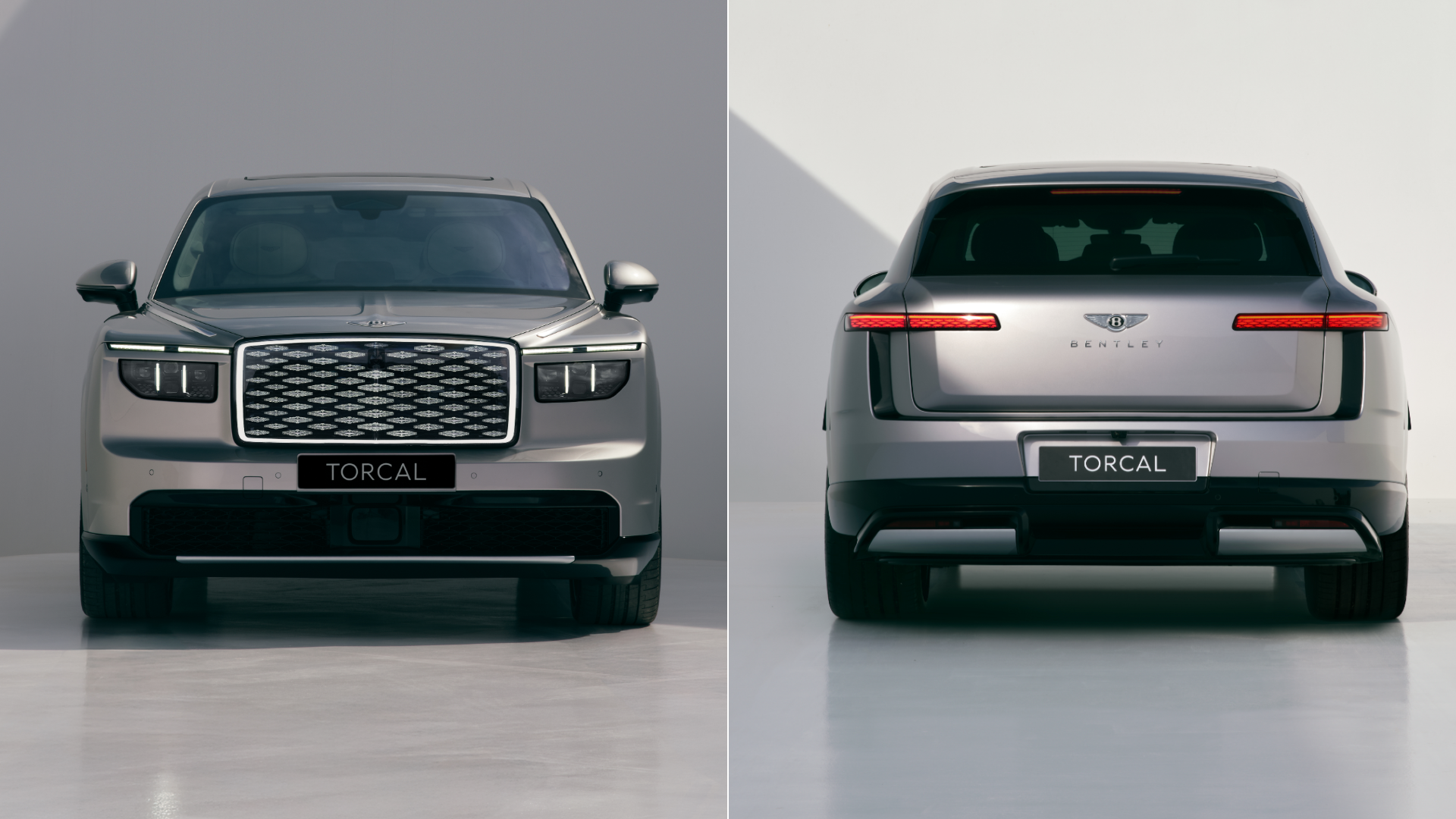
The first read is proportion. Torcal’s long wheelbase, short overhangs and proud frontal aspect create a powerful stance and embody ‘upright elegance’, one of Bentley’s guiding design principles. Combined with the principle of an ‘endless bonnet’, these elements emphasise the car’s length, presence and unmistakable Bentley character.
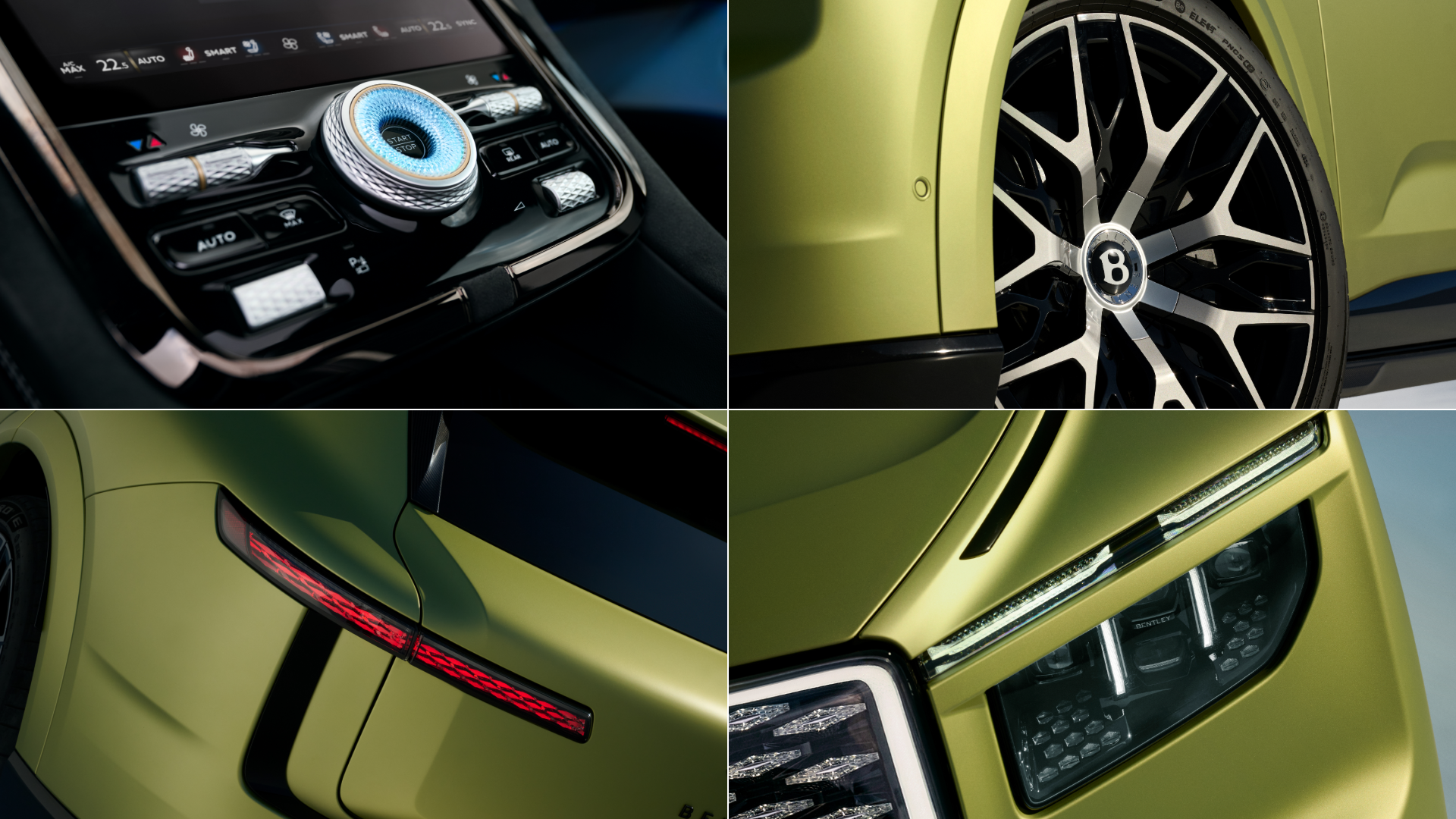

The second read focuses on the car’s graphical elements, establishing identity and expression, particularly through the face. Echoes of iconic Bentleys, notably the Continental T, are reinterpreted through advanced lighting technology and a distinctive illuminated diamond grille. At the rear, clean, uncluttered graphics create the ‘prestigious shield’, a design principle first explored with the EXP 15 Concept Car.
The third read is surface language – the sculpture, volumes and the way light interacts with the car as the viewer moves around it. The Torcal deliberately reduces unnecessary lines, allowing its surfaces and proportions to create emotion and character.
This is most evident in the powerful rear haunches. The cabin tapers towards the rear, allowing the body to build over the rear wheels and creating what the design team describes as the ‘resting beast’ – a sense of strength and energy contained within the sculpture.
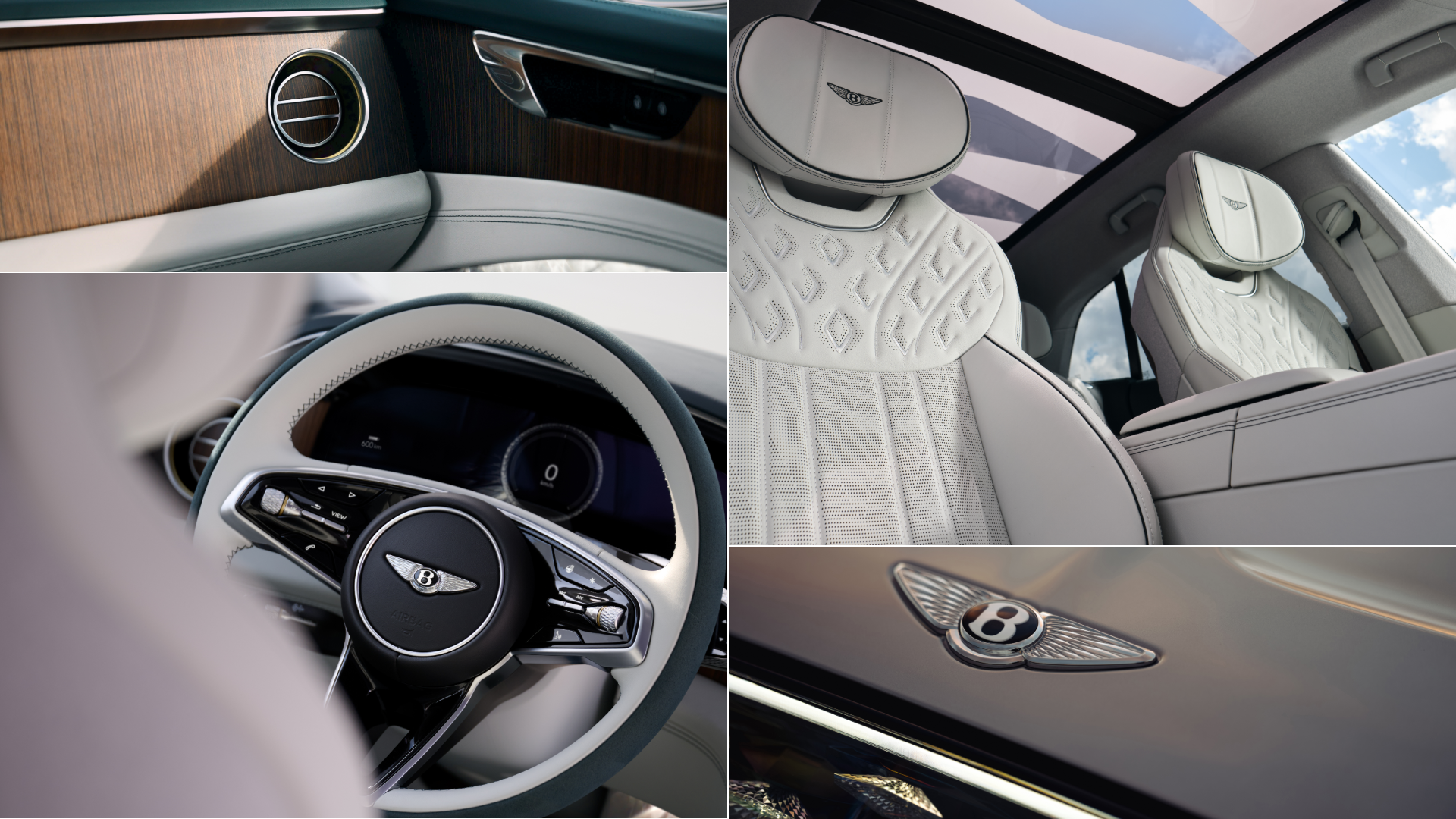
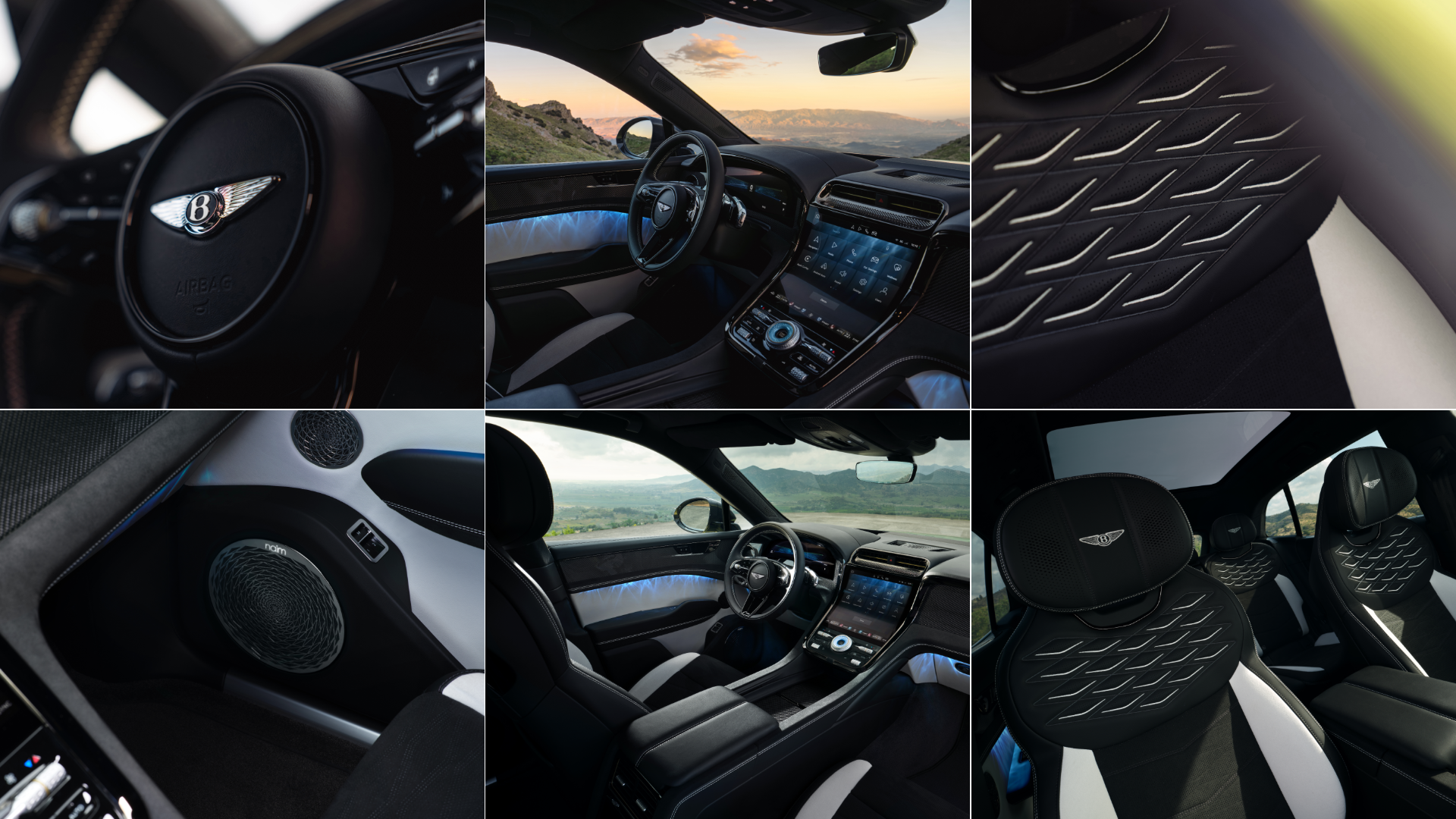
The fourth read is detail, revealing another layer of craftsmanship as occupants get closer to the car. The diamond pattern becomes a recurring thread throughout the Torcal, sometimes clearly expressed and elsewhere abstracted into surfaces, textures and patterns.
The same philosophy continues inside. The dashboard architecture remains inspired by the Bentley wings creating symmetry, power and balance, whilst bold sheer surfaces give authentic materials including leather, wool, veneer and aluminium space to breathe.
Knurled controls and reinterpreted bullseye air vents celebrate Bentley’s ‘magical fusion’ of craft and technology. Physical controls remain within the centre console and steering wheel, providing tactility for functions occupants naturally want to touch.
The design of the Torcal’s seats is all new and packed with technology. The standard seats include 16-way adjustment, heating, ventilation, adjustable bolsters and a new massage function.
Bentley’s recent and innovative Postural Adjust and Smart Seat Climate systems are included as options, maximising seat comfort over long distances by continuously adjusting the seat’s shape to subtly alter pressure distribution, and by adjusting heating and ventilation to control the occupant’s temperature to a desired setpoint. For the dedicated Wellness Seat Specification, the massage system now extends from the squab into the cushion, meaning legs as well as back and shoulders can be massaged.
To the rear, the three-occupant seat introduces a power fold system for the first time in a Bentley.
Five wheel designs in multiple finishes are offered at launch. The core car is offered with a 21” wheel as standard, with the S coming with a ten-twin-spoke 22” design as standard. Three further optional 22” wheels are then available, including a dedicated aerodynamically focused option while 21” and 22” tyres are available with summer and winter treads and compounds, with a 22” all-season tyre completing the range.
The Torcal is also the first Bentley to feature Bentley’s redesigned and modernised emblem, revealed last year.
Performance: true to Bentley’s lineage
The first Bentley with a fully electric powertrain, Torcal delivers performance in a way that will be familiar to Bentley owners of any era, combining effortless power with precision. Delivering up to 888 PS, with the highest torque of any Bentley ever made – 1,350 Nm – Torcal can accelerate from 0-60 mph in 2.8 seconds (0-100 km/h in 2.9 secs), yet the driving experience is always accessible, progressive and sophisticated. This level of performance was a conscious choice by the R&D team responsible, with knowledge that most customers find acceleration more extreme than this to be an uncomfortable experience.
The car features a pair of powerful permanent magnet synchronous motors. Both are dry sump designs and filled with oil for life. While the front motor has an open differential, the rear motor has a locking differential with a multi-plate clutch on each output shaft.
The high voltage battery consists of 192 lithium-ion pouch cells in series, running at 800V nominal, with a total net capacity of 113 kWh. The battery is covered by a 100,000 mile, 10-year warranty.
Fully active suspension – for the first time on a Bentley – and adaptive two-valve dampers deliver a true ‘magic carpet’ ride, while allowing a choice of chassis tune for each driving mode. Each damper can be actively and independently raised or lowered instantaneously, reacting to both road and driver inputs for maximum ride comfort and body control. The system negates the need for anti-roll bars, using the reactive dampers to provide infinitely adjustable anti-roll torque. Agility is further increased by the fitment of electronic All Wheel Steering as standard, using rear steering angles up to five degrees to reduce the turning circle to 11.1 metres.
Braking is provided by an iron braking system, with 420 mm front discs and 370 mm rears. Customers may also upgrade to a Carbon Silicon Carbide (CSiC) ceramic system, with 440 mm front discs (jointly the largest in the world with other Bentleys) paired with 410 mm rears. Both options are available with black, red or grey calipers, with three additional colours available through Mulliner.
Relaxing, long-distance journeys, agile, exhilarating handling and off-road composure are all within the Torcal’s wide-ranging capabilities. The Torcal is ultimately as comfortable as a Flying Spur, and as dynamic as a Continental GT Speed. The Torcal’s broad bandwidth allows for different characters and personalities, easily accessible via the four different curation modes.
Year-round usability
The Torcal, which measures five metres in length, is the shortest four-door in the model line-up yet offers exceptional interior space, with a 460 litre boot supplemented by a 90 litre front storage area. A turning circle of 11.1 metres makes it highly manoeuvrable in urban environments, while the range of up to 375 miles / 600 km makes long distance travel effortless and uninterrupted. Equally important, the Torcal can be charged from 10-80% in just under 20 minutes at 400 kW, meaning 100 miles (161 km) of range can be added in just seven minutes.
The latest ADAS technologies provide both advanced driving and parking features to make the driving experience easier and more intuitive. A set of 25 radars, sensors and cameras around the car provide it with all the data it needs to interact with its surroundings. For example, the car is constantly scanning its environment, meaning that if an obstacle is encountered on a narrow road, the car is capable of automatically reversing to a point it’s already identified to allow the obstacle to pass. The car has assistance systems for towing, garage and parallel parking, helping to avoid damage to wheel rims, and remote parking via App – while precise parking manoeuvres can also be ‘trained’ into the car. Four radar-controlled powered doors can self-open and close, adding another layer of convenience helping interactions with the Torcal feel more effortless and considered. Closing of the doors can be initiated by the respective passenger putting on their seat belt or via the main touchscreen, while the driver can close their door by applying pressure to the brake pedal.
A new Frosted Diamond switchable-glass sunroof brings greater flexibility to the cabin experience, allowing customers to tailor light and atmosphere in a way that feels both practical and luxurious.
Handcrafted soundscape
The propulsive beat of a powerful engine has been a constant in Bentley history from the very first 3 Litre of 1919 to the present day. The effect is both highly emotive and part of an important feedback loop between driver and machine. The Torcal’s development team aimed to create a similarly powerful sound connection, beyond mere electronic imitation. They discovered that the rhythm of a Bentley V8 was central to its appeal, and used real instruments - including drums, viola and bass guitar – to create the Bentley Dynamic Symphony, complete with subtle variations and tiny imperfections.
From resting pulse to full-throttle acceleration, the Torcal’s human-generated soundtrack provides aural feedback to the driver, underscoring the sense of connection and feedback, rather than simply imitating an engine note. The potent, powerful, low frequency sound is calibrated in response to driver torque demand and vehicle speed. This improves the sensory feedback in connection to the vehicle behaviour and provides a predictable driver feedback to aid consistent and confident vehicle control. The volume of the Dynamic Symphony increases when the car is in Sport mode and can also be turned off completely if silence is preferred.
Other auditory control responses include the sound of the direction indicators, from a recording (taken in Bentley’s upholstery workshops) of a hammer striking a leather surface. Even the touchscreen and digital assistant note has a human touch – literally – it’s taken from the sound of a crystal glass.
Beyond the propulsion and functional sounds, the Torcal is offered with two audio systems, starting with a 620W, 16-speaker system. Beyond that, in conjunction with Naim, the Torcal is available with a 1,780W, 28-speaker package that includes kinaesthetic seat shakers and front headrest speakers, along with Dolby Atmos 7.1.
Drive modes and comfort features – tailoring each journey
The Torcal’s choice of drive modes extends far beyond chassis and powertrain settings to create a fresh interpretation of luxury – shaping every journey around how the vehicle’s occupants want to feel. Four different Experience Modes bring light, sound, climate, air flow and digital information together in harmony, to support different moods, moments and states of mind.
Warm, dynamic and perfectly balanced, Bentley Mode blends comfort and craftsmanship, creating an environment that feels refined yet unmistakably driver focused. Meanwhile Comfort Mode creates a calmer environment with a minimum of distraction, encouraging a gentler pace with the option of a digital detox with all but the most essential information hidden to allow attention to move away from screens.
The most dynamic setting within the four modes is Sport. Here, the soundtrack becomes more immersive, visual cues become more focused and the ambience expressed in lighting and control response grows increasingly purposeful.
The fourth mode is called Refresh. As the name suggests, fresh-air circulation is increased, lighting becomes brighter and the atmosphere feels lighter, cleaner and more invigorating, recharging mind and spirit.
To further improve the user experience, additional focus has been towards ergonomics and ease of use. Curved OLED screens – unique to Bentley - give deeper blacks and more vibrant colours, improving the contrast and providing improved ergonomics to all areas of the screen.
Facial recognition allows easy driver identification to quickly and seamlessly load their user preferences including seat and steering wheel position, ADAS preferences and many more settings. The user’s mobile phone can also be configured to behave like the car’s key (aka Mobile Device Key), allowing full functionality and access rights.
To reduce the amount of time the driver has their eyes off the road, Bentley’s augmented reality head-up display projects information such as navigational instructions and on-road ADAS markers directly into the driver’s field of view and in aligned with turns or hazards respectively.
Modern materials, sustainably sourced
For generations, Bentley has set the benchmark for interior craftsmanship in the finest materials. The Torcal extends the palette of choice, introducing innovative materials, sustainable thinking and meticulous attention to detail that together redefine automotive luxury.
Merino wool has long been celebrated for its softness, warmth and natural elegance in the world of fashion, but has hitherto lacked the durability required for an automotive interior. Now, in collaboration with Fox Brothers, a Somerset firm that has been weaving fine wool fabrics since the 18th century, Bentley’s Colour, Materials and Finish team has developed the world's first 100% Merino wool automotive fabric, bringing a new dimension of warmth and comfort to the interior. It is the first automotive wool fabric to achieve certification by the Responsible Wool Standard (RWS).
A new finish developed for Torcal, Ombré Walnut by Mulliner, is formed from up to 1,000 individually selected layers of sustainably sourced walnut off-cuts and craft (recycled) paper, carefully pressed together and then sliced to less than a millimetre in thickness. Four distinct walnut shades flow naturally from deep black through dark smoke and light smoke, creating a striking expression of sustainable modern luxury rooted in traditional craftsmanship.
Another finish to make its debut, Sunburst Aluminium by Mulliner, reinterprets the engine-turned aluminium dashboards of Bentleys past. Its tactile, precision, three-way brush pattern shows the precision and attention to detail of Bentley craftsmanship in a fresh light.
For a stunning interior colour palette, 15 different shades of olive tan leather – including the new hues of Teal, Terra and Glaze – are joined by 15 matching shades of Dinamica, and the pure Merino wool in five colours. Six wood veneer options are supplemented by two technical finishes and six Piano finishes (Black, Gravity Grey, Linen, Teal, Imperial Blue and Cricket Ball).
Two models at launch: core and S
The Torcal launches with two distinct models – the core car, and a more sporting S version. The core Torcal model will launch with 821 PS and 1,194 Nm peak torque, capable of accelerating to 60 mph from a standstill in 3.3 secs (0-100 km/h in 3.4 secs) and reaching a top speed of 155 mph (250 km/h). The S version goes further, with 888 PS and 1,350 Nm when Launch Control is active, delivering a 2.8 second sprint to 60 mph (0-100 km/h in 2.9 secs) and a top speed of 162 mph (260 km/h).
The Torcal comes as standard with satin silver brightware, a single tone colour split and Open Pore Crown Cut Walnut. The Torcal S matches the additional performance available with a suite of visual changes for a more sporting aesthetic, including:
- Black exterior brightware and mirror caps
- Dark rear lamps
- A rear diffuser, together with sports sills and front bumper strakes
- Red brake calipers
- S fender badges, together with black Bentley wings badges
- A dedicated S colour split, quilt and stitch pattern
- Sports pedals
- Piano black veneer as standard
Illuminated treadplates and dynamic ‘waterfall’ mood lighting
.jpg)