Leading with Resilience: An Interview with Shahnaz Hamade, Founder & CEO of Harmonie Consulting
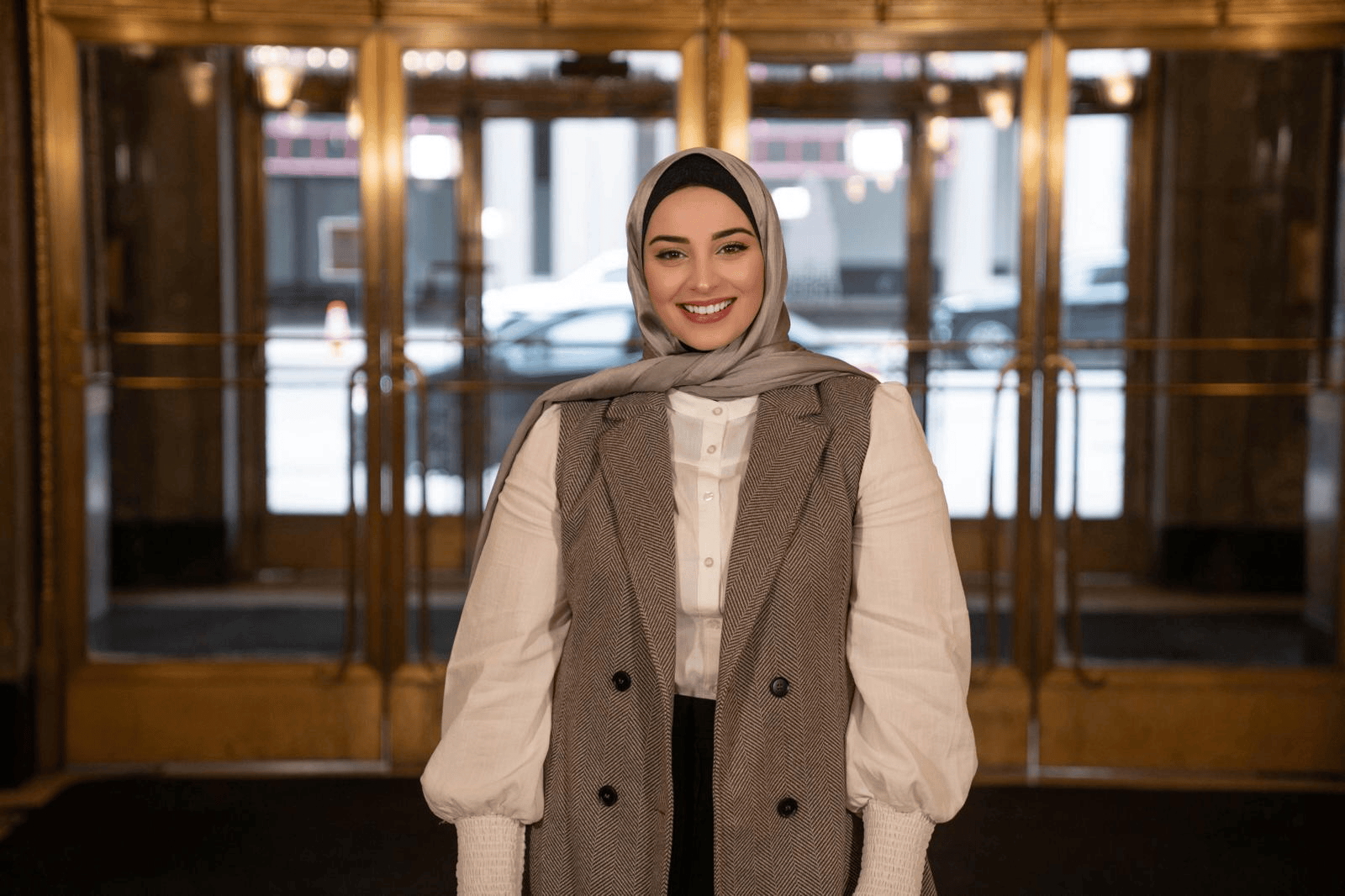
Shahnaz Hamade is the Founder and CEO of Harmonie Consulting, an executive coaching practice dedicated to helping Arab women leaders build real resilience and sustainable leadership without burning out or sacrificing their identity. Based in Dearborn, Michigan, she serves clients across the Gulf, Levant, North Africa, and the Arab diaspora.
Tanja Beljanski: Many Arab women leaders are balancing demanding careers, family responsibilities, and societal expectations. What are the most common factors contributing to burnout among high-achieving women today, and how can they recognise the warning signs before reaching a breaking point?
Shahnaz Hamade: The most honest answer I can give is this: burnout in high-achieving Arab women is rarely about working too much. It’s about giving too much of yourself to too many things simultaneously and believing that your worth depends on doing all of it flawlessly.
We are raised in cultures that celebrate sacrifice. The woman who does everything. The mother who gives endlessly. The leader who is always available. These are presented as virtues. And they are, until they’re not. Until the giving has been so relentless that there’s nothing left to give from.
The most common contributors I see in my clients are three things working together. First, the impossibility of the standard, being excellent at work, present at home, gracious in community, and composed through all of it. Second, the silence around struggle. Many of my clients are the first woman in a leadership role in their family or their organisation. There’s no one ahead of them to say this is hard, and that’s normal. So they assume that hardship means they’re failing. Third, the loss of self. When you’ve been performing every role for long enough, you genuinely forget who you are underneath all of it.
The warning signs come before the collapse. Waking up exhausted before the day begins. A growing cynicism about work that used to light you up. Physical symptoms, headaches, tension, disrupted sleep that don’t have a medical explanation. A shortness with the people you love most. A quiet, persistent feeling that you’re disappearing.
The most important thing I can say is: these are not signs of weakness. They are intelligent signals from a body and a mind that are asking to be heard. The question is whether you’ll listen before the crisis forces you to.
You often speak about resilience as a leadership strength rather than simply the ability to endure challenges. How can women leaders build resilience in a way that supports long-term wellbeing rather than constant self-sacrifice?
Because endurance and resilience are not the same thing and confusing them is costing women their health.
Endurance says: keep going no matter what the cost. Resilience says: I know how to absorb difficulty, process it honestly, and come back to myself intact.
One version burns you down. The other builds you up.
The resilience I coach is rooted in three things. The first is nervous system regulation, the ability to bring yourself back to a grounded state when pressure is high. This isn’t meditation for its own sake. It’s a practical leadership skill. A leader who is regulated makes better decisions, communicates more clearly, and holds space for her team without transferring her stress onto them.
The second is clarity, knowing your values, your non-negotiable, what you’re actually building and why. When that clarity exists, you can filter the noise. You stop spending energy on things that don’t align with what actually matters to you. And that conservation of energy is itself a form of resilience.
The third is allowing. Allowing yourself to feel the difficulty, not just manage it. Allowing yourself to need support, not just provide it. Allowing yourself to be human in a role that often demands you perform as something more than human.
Sustainable resilience is not about becoming harder. It’s about becoming more honest with yourself, about yourself. And that honesty, over time, is what makes you unshakeable in the ways that actually count.
In many cultures, particularly within the Arab world, leaders are often expected to be constantly available. How can women establish healthy boundaries without feeling guilty or being perceived as less committed to their roles?
Let me reframe this, because I think the question itself reveals the problem.
We have collectively decided that availability equals commitment. That being reachable at midnight is evidence of dedication. That saying yes to everything proves you care. None of this is true. But we have lived inside this belief for so long that it feels like fact.
Here is what I know from working with Arab women leaders across the Gulf and beyond: the most respected leaders are not the most available ones. They are the clearest ones. The ones whose boundaries are so grounded in values that people trust them, precisely because they don’t bend arbitrarily.
When a leader says I am not available after 8pm unless it is a genuine emergency, and here is how to reach me if that is the case and she holds that line consistently, she is not communicating disinterest. She is communicating that she is someone who means what she says. That is a profoundly powerful signal.
The guilt, though, that I will not dismiss lightly. The guilt is real. It’s culturally embedded. In Arab culture especially, saying no can feel like a rejection of relationship, not just a decline of a request. I understand that.
But I want to ask the women reading this: the boundary you are afraid to set is the cost of not setting it landing only on you? Because in my experience, it always lands on everyone around you eventually. The partner who gets a depleted version of you at the end of every day. The children who get the leftovers of your attention. The team that works under a leader who is physically present but emotionally running on empty.
Protecting your energy isn’t selfish. It’s leadership.
Work-life balance remains an ongoing challenge for senior executives. What practical strategies have you found most effective in helping women leaders create space for both professional success and personal fulfilment?
I’ll be honest: I’ve stopped using the phrase “work-life balance” with my clients. Not because the need isn’t real, it absolutely is but because “balance” implies a static equilibrium that doesn’t exist in the life of a senior leader. Some seasons will be heavier professionally. Others will require more of you personally. The goal isn’t equal weight. The goal is conscious choice.
What I coach instead is what I call intentional rhythm, knowing what you need to feel human, protecting it ruthlessly, and adjusting as life changes without abandoning it entirely.
In practice, there are a few strategies I come back to consistently.
The first is what I call a non-negotiable anchor. One thing just one, that you will protect every week no matter what. A morning walk. A dinner with no phones. A call with a friend who knew you before your title. This anchor matters not because of what it is, but because of what it does: it reminds you that you exist outside of your work. That is not a small thing.
The second is ending the work day on purpose. Not just stopping when you’re too tired to continue, but actually marking the transition. A ritual that closes one chapter and opens another. This signals to your nervous system and to the people in your life that you are present now.
The third is auditing your commitments once a quarter. Asking honestly: what am I doing out of genuine choice, and what am I doing out of fear, obligation, or habit? This is where the most significant recoveries of time and energy happen.
And the fourth which most women resist is receiving. Accepting help. Delegating. Saying I don’t have to do this alone. This one changes everything, and it is the hardest for high-achieving women, because independence has been a survival skill and a point of pride for so long.
Many successful women struggle with the pressure to meet external expectations while staying true to themselves. How can leaders redefine success on their own terms and lead more authentically?
By asking a question most of us were never given permission to ask: What do I actually want?
Not what my family wants for me. Not what my culture has defined as the appropriate shape of a successful woman. Not what my title demands or my peers are chasing. What do I want? What kind of life am I building? What kind of leader do I want to be?
For many of my clients, brilliant, accomplished, high-achieving women this question produces a long silence. Because they have been so focused on performing the expectations around them that they have genuinely lost touch with their own desires.
Authenticity isn’t a personality trait. It’s a practice. And it starts with knowing yourself your values, your edges, your vision with enough clarity that you can make decisions from the inside out, rather than always responding to what the outside world is asking of you.
Redefining success doesn’t mean rejecting your culture or your family or your faith. For Arab women especially, identity is deeply relational. Who we are is inseparable from who we belong to. I understand that. What I am talking about is holding both your roots and your own voice without one erasing the other.
The leaders I’ve watched do this most beautifully are the ones who stop competing with external benchmarks and start measuring themselves against their own. Am I growing? Am I honest? Am I showing up for the things that matter most to me? Am I proud of the way I’m living, not just the things I’ve achieved?
That is a different kind of success. And in my experience, it is the only kind that lasts.
As conversations around mental health and wellbeing become more prominent in the workplace, what role do you believe senior women leaders play in creating healthier organisational cultures for future generations?
An enormous one. And most of them are underestimating it.
Here is what I know: culture in any organisation moves in the direction of what leadership makes acceptable. Not what they put in policies. Not what they say in town halls. What they actually do, and what they allow others to see.
When a senior woman leader says openly, I am taking a day to recover. I have a therapy appointment. I am not available this evening because I need to rest, she is not just taking care of herself. She is giving every woman below her in that organisation permission to do the same. She is rewriting the story of what a successful professional woman looks like. She is dismantling, quietly and powerfully, the myth that strength means never struggling.
That is legacy.
In the Arab world, we are at a genuinely significant cultural moment. The conversation around mental health is opening, slowly in some spaces carefully, but it is opening. Senior women leaders are uniquely positioned to shape what that conversation becomes in the workplace. Whether it becomes a real culture shift or another corporate initiative that lives on a poster.
What I ask of the leaders I work with is this: you do not have to share everything. You do not have to perform vulnerability as a brand strategy. But be honest enough, in the moments that matter, that the people watching you know that wellbeing is real and valued here.
Because the next generation of Arab women leaders is watching. They are watching what you protect and what you sacrifice. They are taking notes on what it actually costs to lead at the level you’re leading at. And what you model now will become the norm they either inherit or have to fight to change.
Choose what you want to pass on with intention.
Learn more at harmonieconsulting.net or connect at [email protected]







.png)