Memoirs from Paris SS27: 5+1 shows to remember
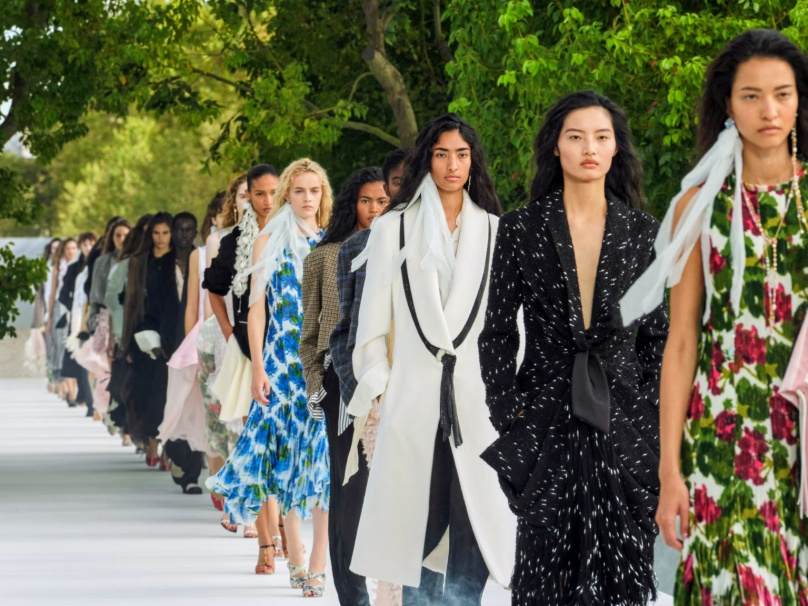
At the end of every fashion week, impressions fade and analysis starts. For nine days, Paris offered us spectacle. Outfits that seemed ideal for an overheated city, hovering cars and a golden farewell. Some designers found convincing ways forward. Others appeared more comfortable revisiting familiar territory. Perhaps that was the defining characteristic of the season. Spring/Summer 2027 was a revealing portrait of an industry negotiating its own identity.
The identity crisis
Fashion has spent years between extremes. Minimalism or maximalism? For a moment, quiet luxury seemed to be the answer. After a decade though, it began to feel like a uniform. Nobody questions its elegance, however, it seems less interesting than ever before. Paris suggested that designers are now searching for a way to move on. Each house dealt with it differently, yet the goal was mutual. To make fashion relevant again.
Chanel: Forever young
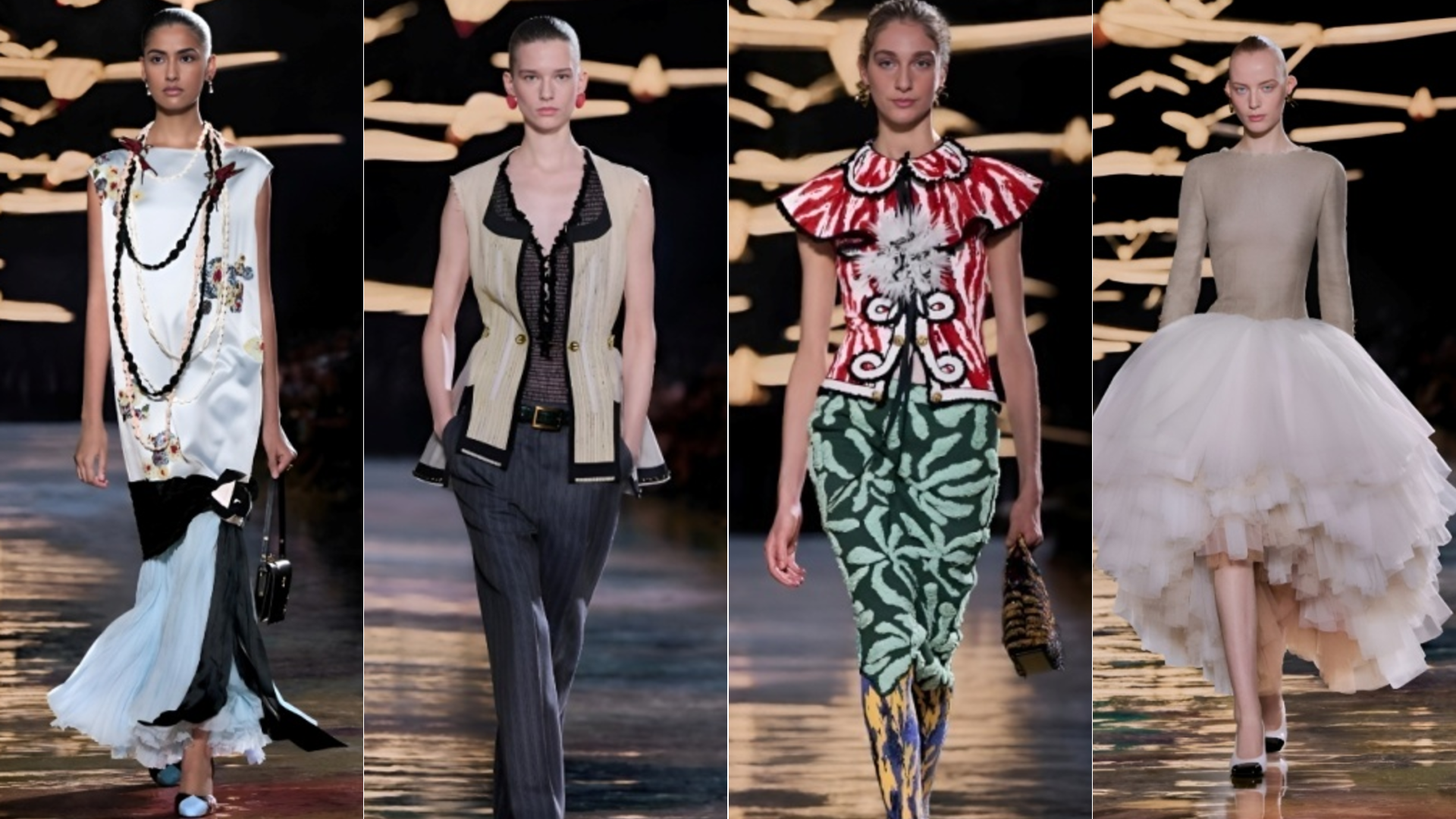
At Chanel, the most interesting question is how to prevent legacy from becoming predictable. Matthieu Blazy’s Spring/Summer 2027 collection, presented beneath a spectacular installation of illuminated birds, approached the Chanel vocabulary with a willingness to disrupt its polish. Tweed appeared in unexpected animal patterns with frayed edges. Transparent fabrics, embellished knits and fluid silhouettes softened formality. The beloved pencil skirt, the tailored jacket and the two-tone shoe maintained their leading role. The appearance of Gabrielle Chanel’s original 2.55 handbag created a meaningful connection between the founder’s radical ideas and Blazy’s contemporary approach to dressing.
Blazy understands that a fashion house remains culturally relevant when its codes can accommodate contradiction, humour and change. Through his eyes, Chanel has enough history to provide substance and enough courage to reimagine its future. His creations are distinctively Chanel but fresh, modern and playful. They are the clothes we all wish to wear. At a heritage house, familiarity is both an asset and a trap. So far, Blazy managed not to fall in it.
Dior: A garden of lightness
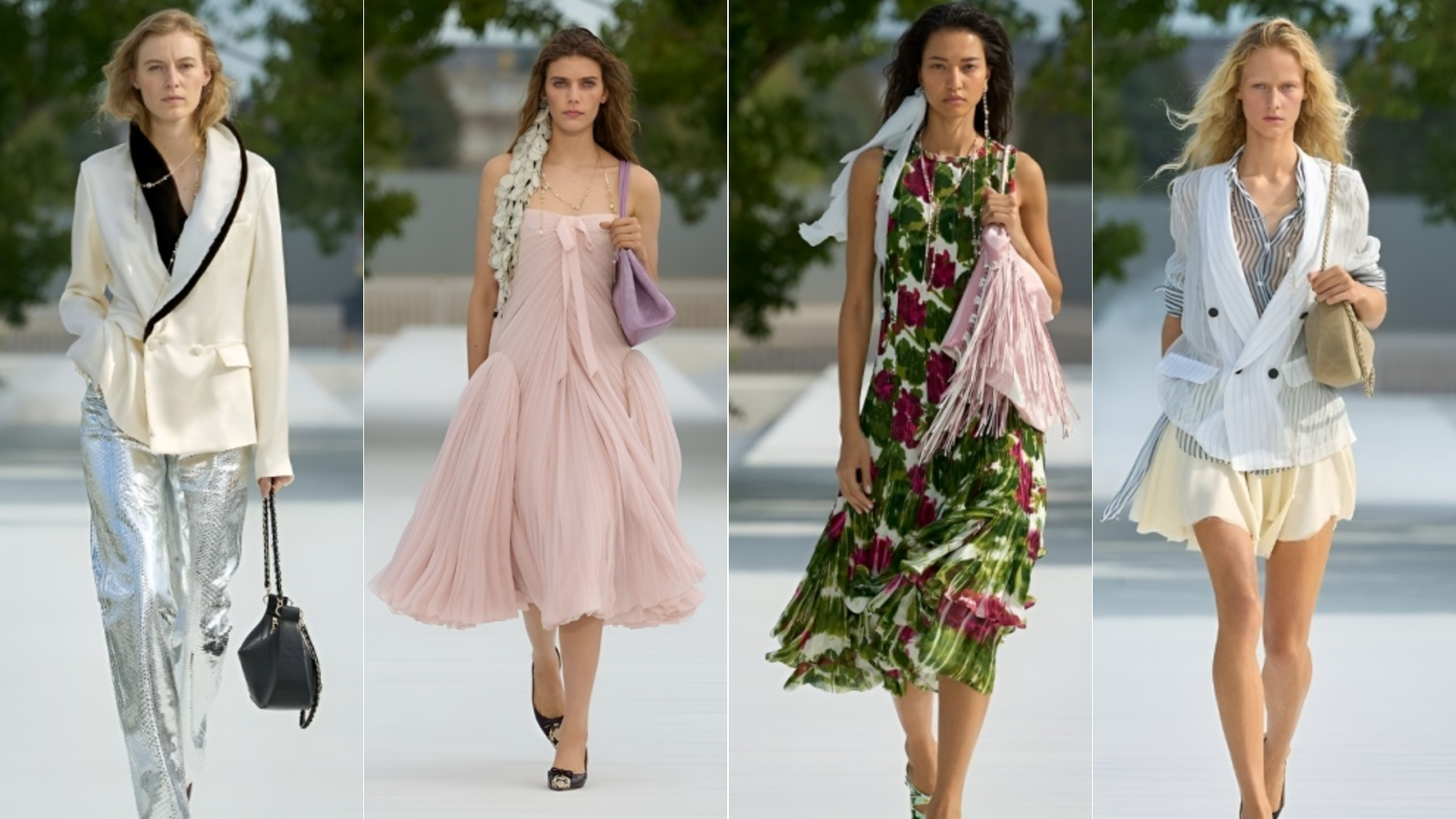
For Spring 2027, Jonathan Anderson “blessed” Dior with romanticism and positivity. The Bar jacket and the full skirt remained recognizable yet they softened through translucent chiffon, fluid tailoring and layers that seemed to move independently. Rather than abandoning Dior’s femininity, Anderson explored what it might become when relieved of its traditional weight. Classic tweeds appeared as delicate prints on sheer fabrics, structured jackets dissolved into ribbon-like constructions and pastel floral embellishments introduced sculptural quality.
Dior must serve a woman whose wardrobe can move between professional commitments, public appearances and more informal moments. And Anderson has to deliver. The collection also resonated with the increasingly urgent question of how clothing responds to a changing climate. Light fabrics, breathable layers and adaptable silhouettes suggested a form of luxury defined by ease. Anderson’s achievement was to make Dior lighter in appearance and state which elements of its heritage deserve to endure unchanged.
Hermès: Breezy en français
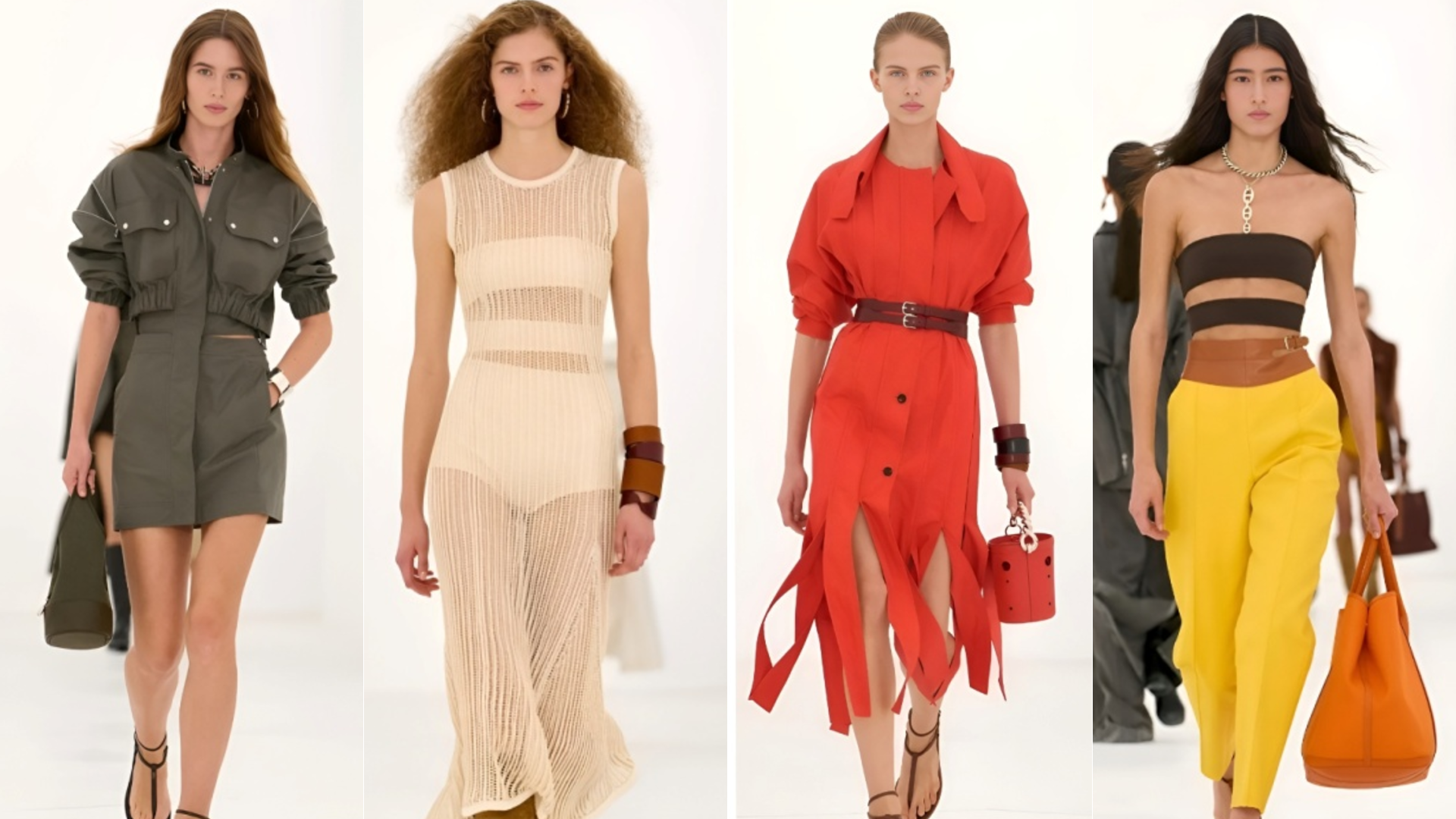
Another collection that was driven by climate change was that of Hermès. For Spring/Summer 2027, Nadège Vanhée seems to have a light breeze in mind. Something that cannot be held or touched but is essential. Open-knit dresses, translucent layers and carefully ventilated leather allowed the body to emerge through the fabric and relaxed proportions gave the silhouettes room to move. The collection is a wardrobe that retains Hermès’ characteristic discipline without becoming rigid, combining sensuality with a distinctly functional approach to dressing.
Leather, one of Hermès signatures, is stripped of its expected heaviness and used strategically. Fine perforations, narrow strips and openwork arrangements introduce ventilation and transparency, allowing the material to behave in ways that challenge its conventional associations. Jackets crafted from exceptionally lightweight calfskin acquire an almost paper-like quality and silk pongee gives outerwear the fluidity of fabric caught in a breeze. Orange and grey balanced intensity with elegance. It was, without any doubt, one of the best moments of Paris Fashion Week. As always.
Saint Laurent: The golden goodbye
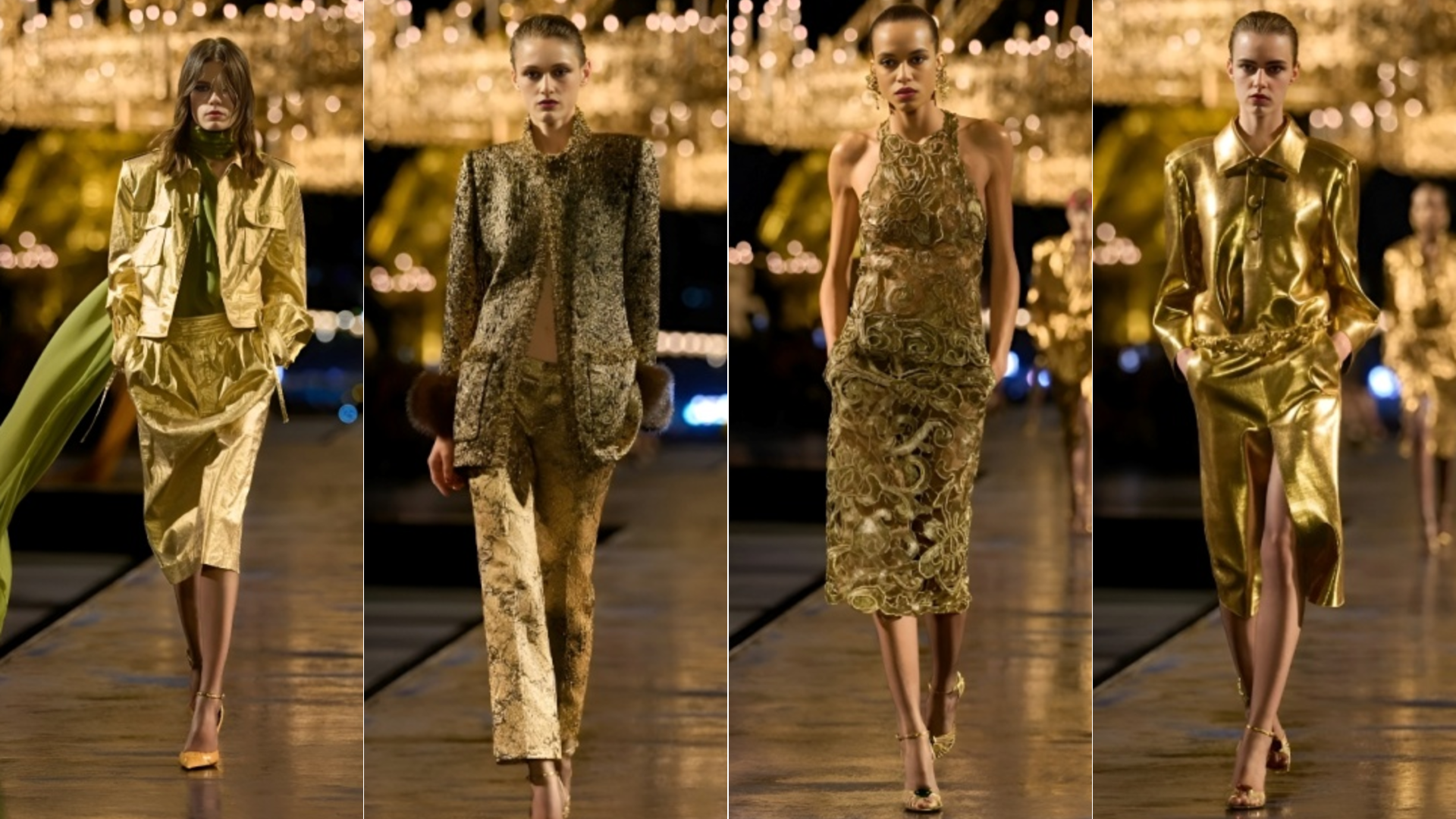
Gold became more than a colour at Saint Laurent’s Spring/Summer 2027 show. It served the power of fashion to create spectacle and the end of a creative chapter that had shaped the Parisian label for a decade. Anthony Vaccarello presented a collection beneath the Eiffel Tower that seemed to announce his departure. Ten days later, Kering officially confirmed that the designer was leaving the house, turning what had initially appeared to be an elaborate farewell.
The contrast between darkness and brilliance framed a collection built around metallic surfaces and rich textures. Safari jackets and trench coats appeared in metallic cotton and crumpled finishes. Wrap skirts, low-slung slip dresses and sharply tailored jackets reinforced the collection’s confident proportions. Cropped jackets and trousers in brocade introduced a more decorative approach to daywear. Gold was never expressed through a single fabric or finish. Lamé, organza, guipure lace, jacquard and mousseline each captured or softened the light differently. Some pieces leaned towards polished. Others suggested aged metal, amber or cognac. In the last part, black emitted mystery and lust. But we were still dazzled by gold. It was 100% Saint Laurent. But kissed by Goldfinger.
Dries Van Noten: The debut was an unexpected winner
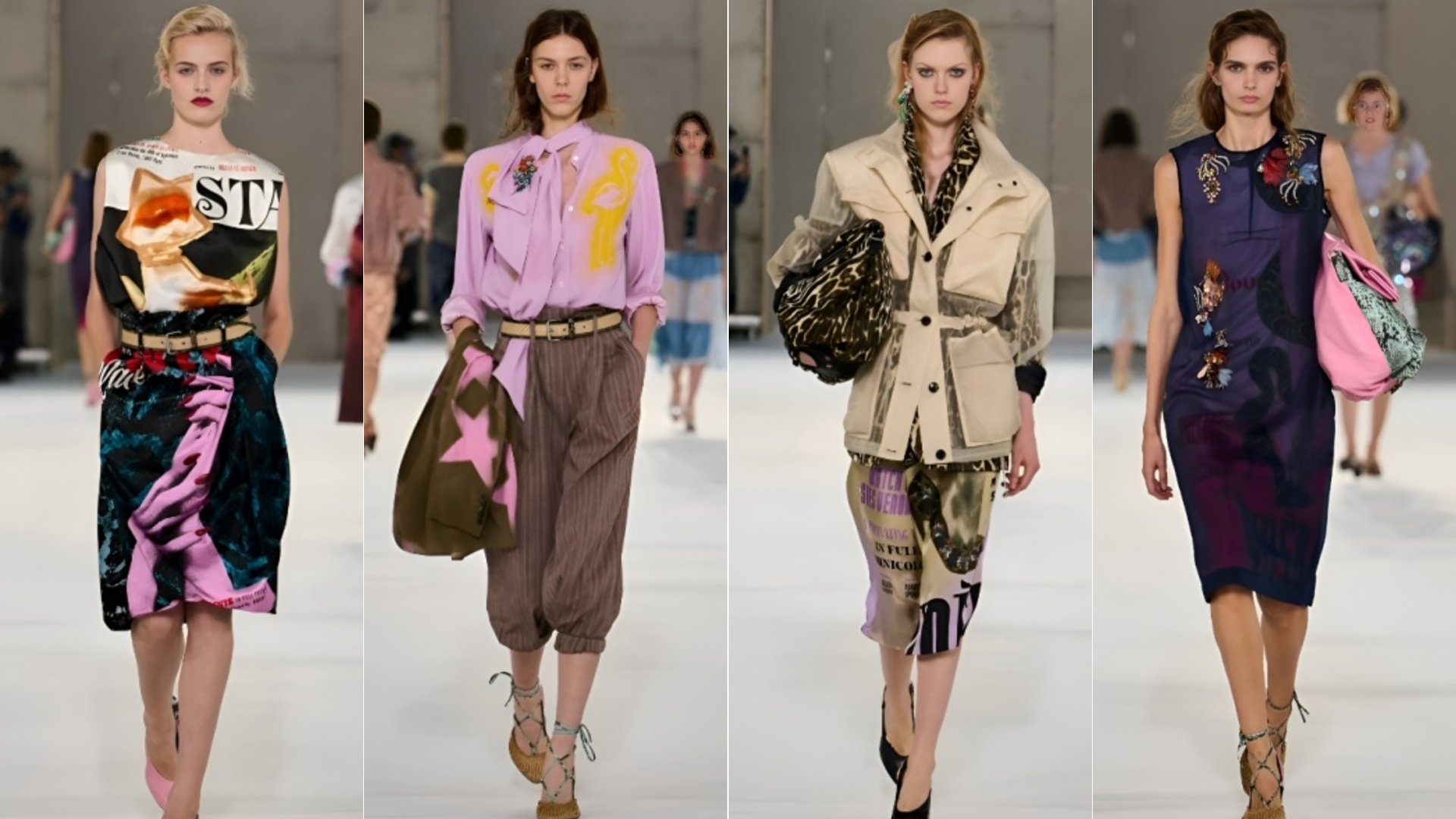
Fashion houses built around a singular creative vision face a difficult question when their founder steps away. How can a new designer preserve what makes the label distinctive? At Dries Van Noten, Julian Klausner answered in his own words. Or, his own clothes to be more precise. For Spring/Summer 2027, he turned to cinema and the dramatic personalities of vintage film posters. The concept takes shape through fictional film titles that become graphic motifs. Lightweight trench coats, relaxed dresses, pullovers and skirts were the tools of expression, both theatrical and functional.
Klausner's approach to styling is equally important. His looks resist the polished uniformity of conventional luxury dressing. A cropped jacket can be layered over a patchwork dress and a printed T-shirt. An embroidered blazer can meet a button-down shirt, a patterned skirt and multiple strands of beads. These combinations depend on contrast, allowing different textures, references and proportions to coexist.
The styling acknowledges that elegance does not necessarily require precision in every detail. A shrunken T-shirt beneath a floral dress or a single glove introduces an element of disruption. Pumps are feminine while loafers offer an alternative for less formal moments. Large, soft handbags are carried close to the body, complementing the relaxed proportions of the clothes. Glam can be integrated into daily dressing rather than reserved for special occasions. Dries Van Noten’s woman is not playing a single role. Yet, she steals the show.
Louis Vuitton: The sci-fi finale
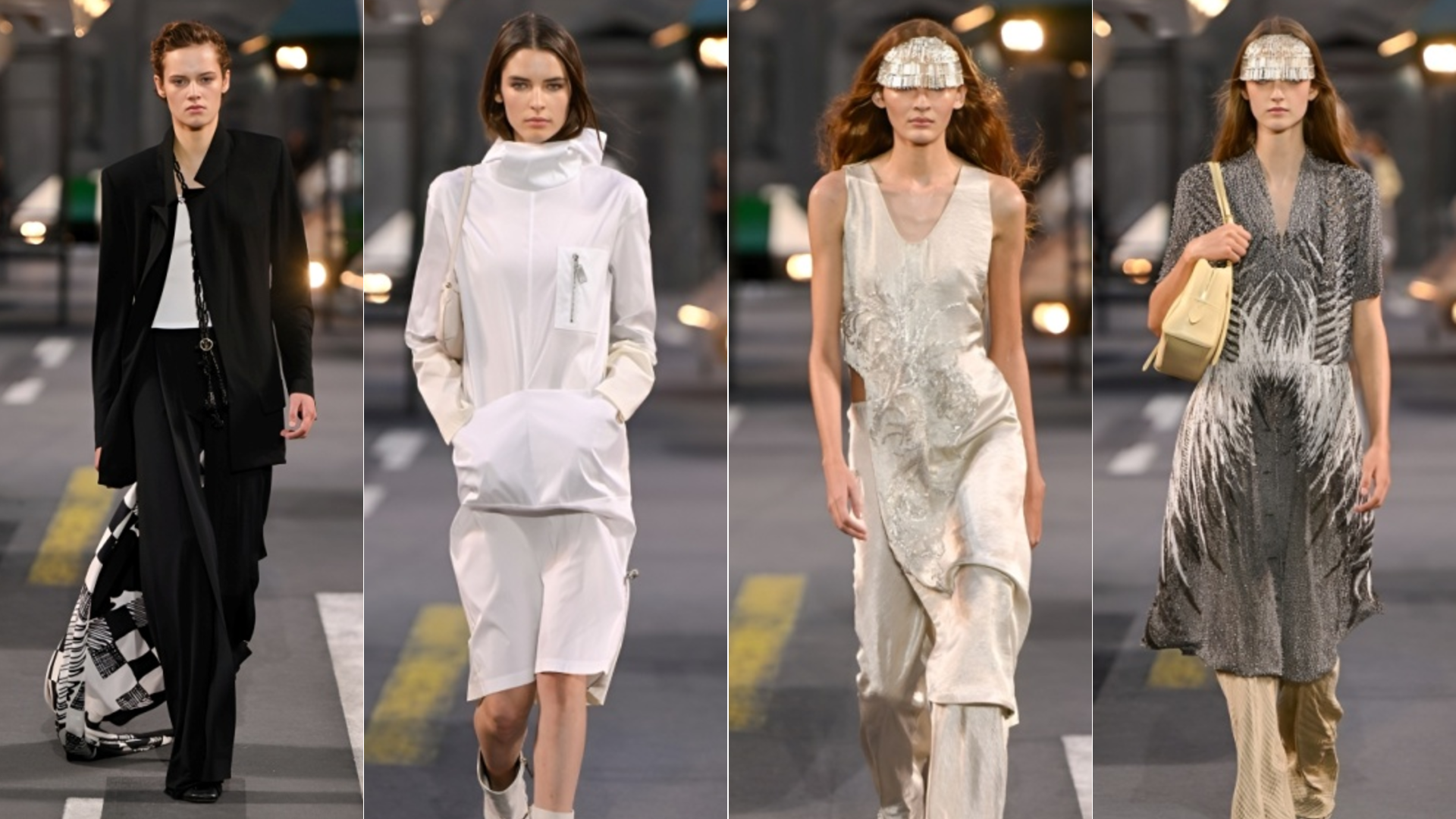
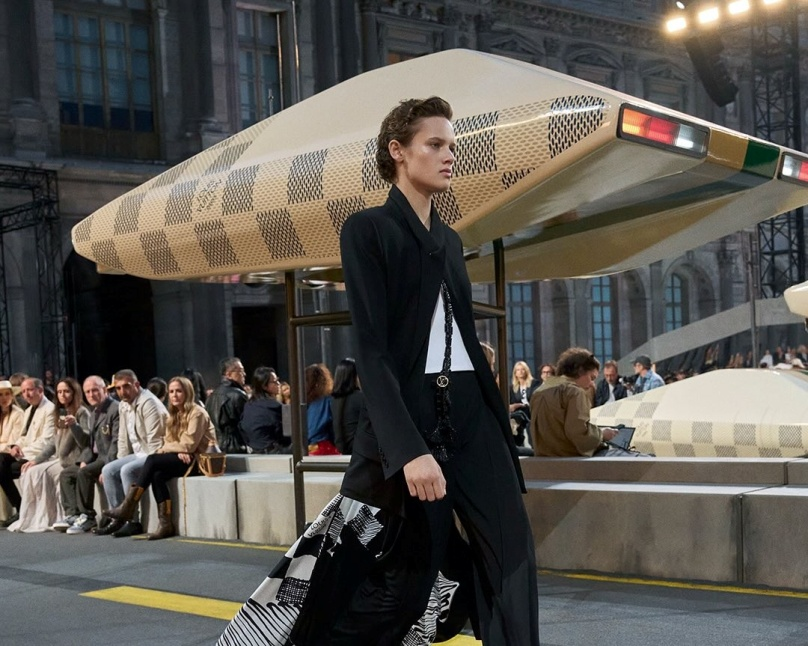
The future has long been a source of fascination for Nicolas Ghesquière. For Spring/Summer 2027, the Louis Vuitton creative director approached it from a practical perspective. Instead of dressing women for an imaginary world of tomorrow, he considered how clothing might respond to the reality of the present. The show transformed one of Paris’s most historic settings into a surreal urban landscape with suspended cars, illuminated details and the house’s Damier motif establishing an atmosphere somewhere between retro-futurist cinema and an alternative vision of city life.
Ghesquière established a contrast between the fantasy of technological progress and the tangible needs of the people moving through contemporary cities. Translucent white dresses, fluid V-necks and delicate knitwear introduced a sense of ease. Silk skirts and softly fitted layers suggested clothes designed to work together. Tailoring provided another opportunity to challenge convention. Coats with upturned lapels were paired with fluid silk trousers. A black waistcoat demonstrated how a small alteration in the way a garment is worn can change its entire appearance. The closing black trouser suit, finished with a trailing printed carré scarf, brought structure and fluidity together.
There were echoes of the 1960s space-age aesthetic with a pinch of the streamlined attitude of 1990s dressing. Neither reference though awakened our nostalgia. The futuristic setting provided the fantasy, the future, however, was here already.