Milan Changes Its Wardrobe

“Milan looks like Dubai,” a friend told me during Milan Fashion Week. And, for a moment, it did. Between roaring cars — many of them bearing Dubai plates — and a new, unapologetic display of luxury, the city seemed to be living through a transformation of its own. Vogue World opened the week with its spectacular celebration of fashion, while Italy’s tax regime — including the flat-tax scheme for new residents with high foreign income — has contributed to Milan’s growing appeal among wealthy international residents. The city felt crowded, vibrant and intensely lived-in, with luxury more visible than ever. Milan, once famously suspicious of ostentation, seemed to have changed its relationship with wealth — and perhaps with itself.
But the most interesting transformation was happening inside the fashion shows.
Across the Spring/Summer 2027 collections, a new vision of femininity emerged: increasingly independent, audacious, and self-defined, yet still deeply connected to romance, sensuality, and elegance. Designers approached this transformation from very different directions — through lingerie and tailoring, flowers and leather, heritage and experimentation — but repeatedly returned to the same idea: the woman of today is no longer defined by a single aesthetic code.
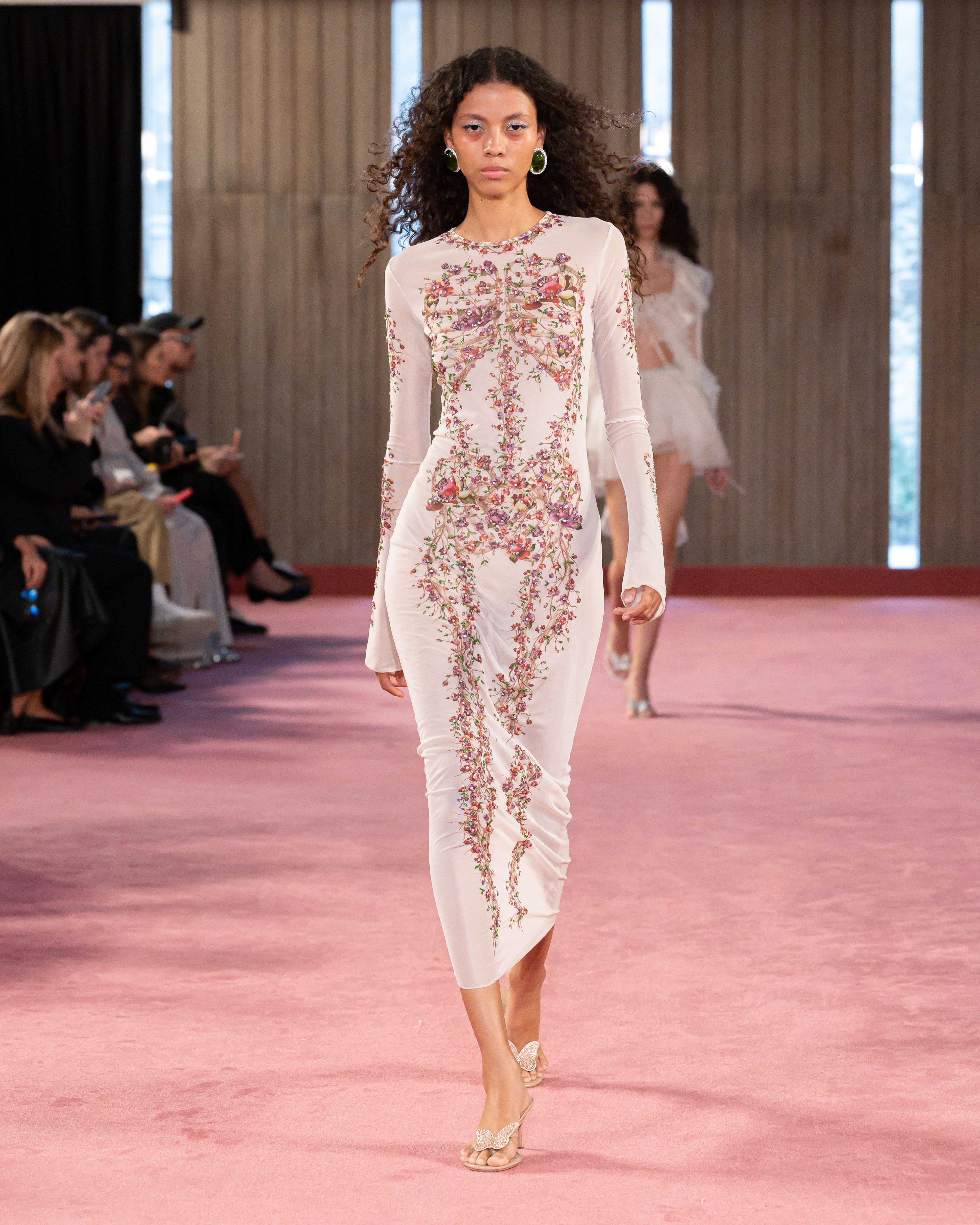
At Blumarine, David Koma looked to California and its ingénue: the girl suspended between the beach and the boudoir. Dusty pastels softened long plumetis robes, baby-doll dresses, peasant silhouettes, organza and tulle, while jersey bodies with swimsuit-inspired cut-outs, varsity tops and satin bombers introduced a more athletic energy. Pacific flowers, transparent sequins and sculptural roses reinforced the dialogue between softness and sensuality. It is romanticism with attitude.

Aquazzura travelled further west, to the lush landscapes of Hawaii. Inspired by David LaChapelle’s photographs of Maui and Kauai, Edgardo Osorio translated tropical exuberance into raffia bags, sandals and wedges. Cactus green, tropical blue, sun peach and watermelon formed an intensely vivid palette. Flowers, feathers and even miniature vegetables appeared as decorative motifs, turning accessories into joyful objects. Here, femininity is playful, colourful and completely unafraid of pleasure.
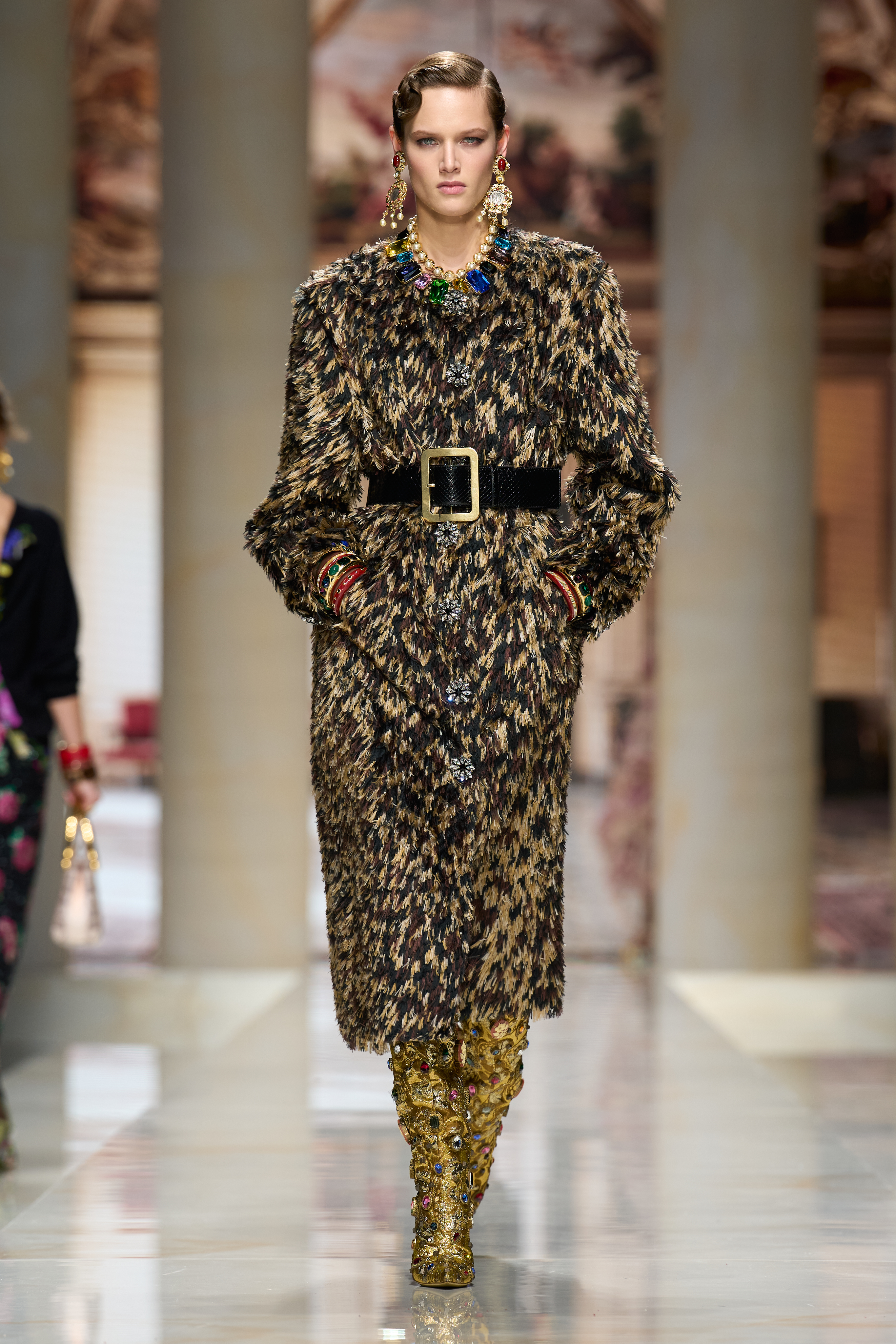
Dolce&Gabbana offered a particularly beautiful reading of Sicilian heritage with Stravaganza Siciliana, bringing the atmosphere of the family palazzo into a contemporary wardrobe. Lace, brocade, damask, and inherited jewellery become part of a rich visual language, where the past is constantly reinterpreted. Pastel lace meets leopard, lingerie appears beneath tailoring, while pearls, cameos, coral, and talismans add depth and character. The leopard, deeply connected to Sicilian imagery, introduces sensuality and a touch of theatricality. It is a collection where elegance feels instinctive, opulence feels natural, and tradition acquires a distinctly modern attitude. There is also a wonderful sense of freedom in the way different eras, fabrics, and references are allowed to coexist, creating silhouettes that feel richly layered without losing their contemporary energy. The result is sumptuous yet never static, with a distinctly Italian sense of drama that feels effortless rather than excessive. It is precisely this balance between memory and modernity, opulence and attitude, that gives the collection its unmistakable character.
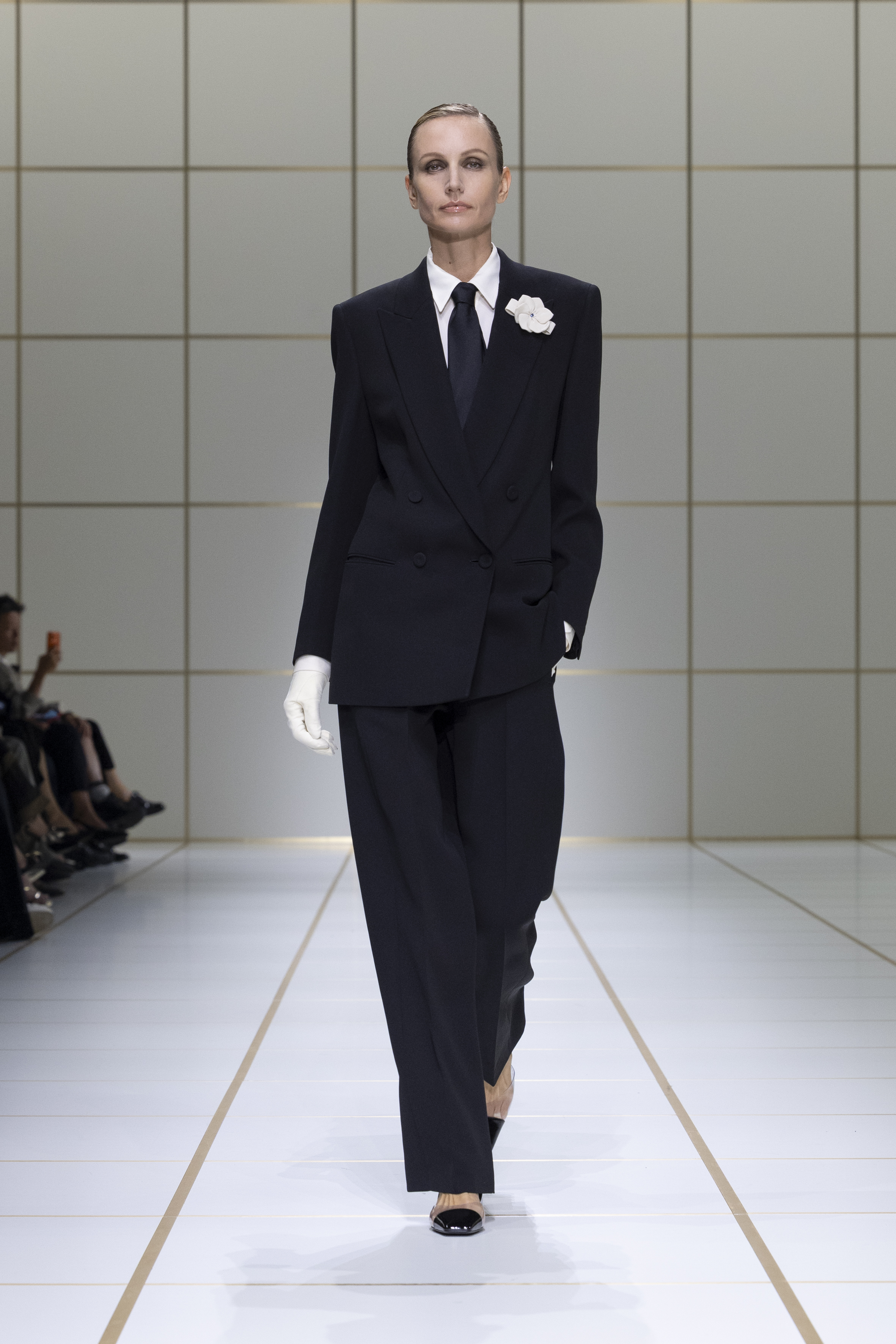
Giorgio Armani, meanwhile, proposes transformation through refinement. Evoluzione is built on the idea that style can change while remaining faithful to its essence. Proportions and attitudes are redefined through a sharp graphic language. Menswear-inspired jackets become elongated and fluid, while tailoring alternates with lines that follow the body without constraining it.
The palette is deliberately essential: ivory, black, and gold. Black brings depth and rigour, ivory luminosity, while gold introduces flashes of energy. Sharp shoulders and rhythmic geometries subtly recall the Eighties, but without nostalgia. Metallic glimmers and the butterfly motif reinforce the idea of metamorphosis. Loafers, high-heeled sandals, and flat neoprene boots accompany the transition from day to evening.
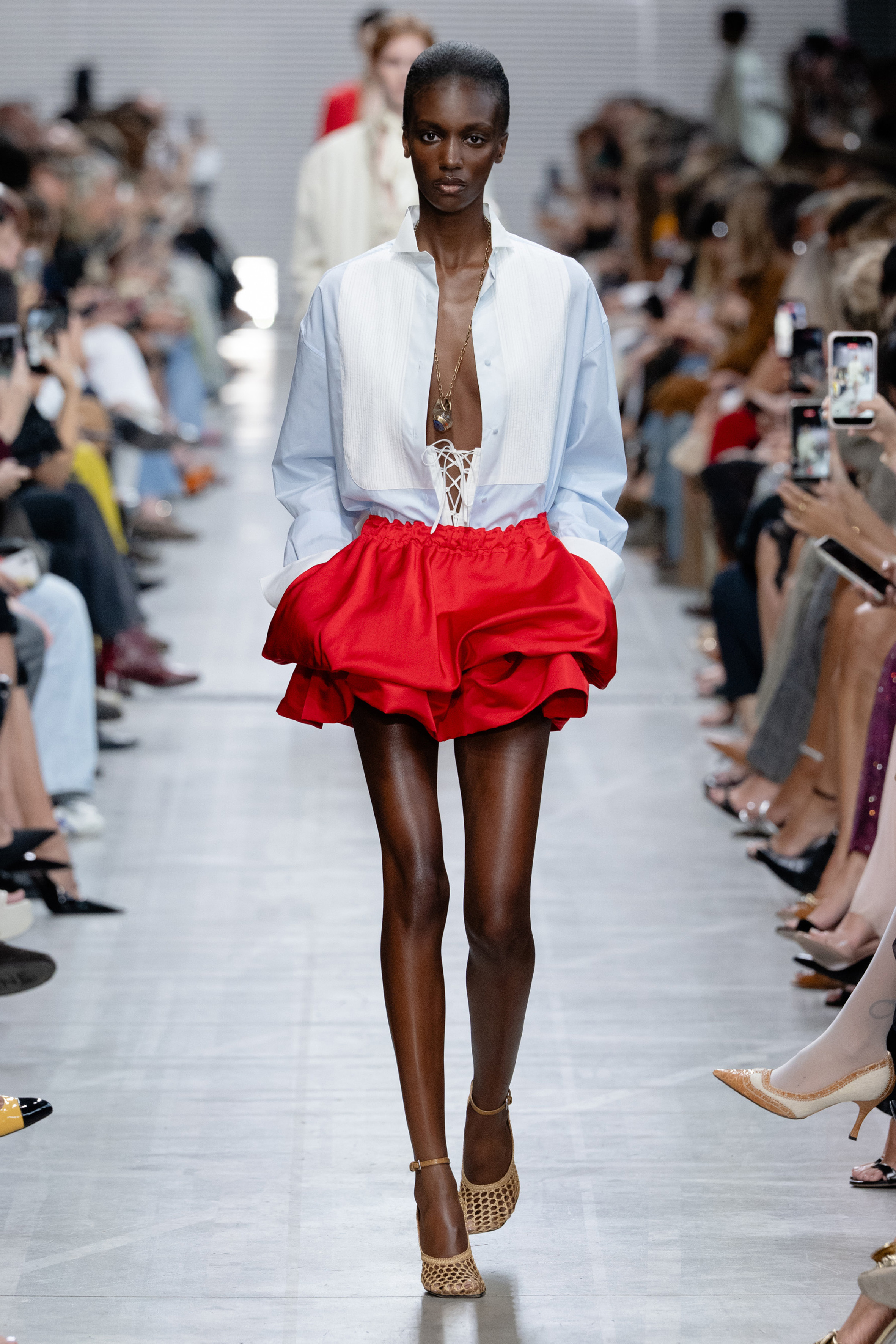
At Ermanno Scervino, femininity becomes a journey. Pirates, galleons, Yellow Submarine, tropical shores, and electric guitars create an imaginary voyage where materials appear weathered by salt, wind, and sunlight. White becomes chalk and sea foam; blue moves from denim to ultramarine and aquamarine; earthy tones recall sand, straw, hemp, and shell.
The pirate jacket is worn with a duchesse miniskirt, jeans, or leather shorts. Beneath sheer trenches and organza storm capes emerges a mermaid-like figure in transparent knitwear, sculptural corsets, and lace petticoats. Masculine and feminine become complementary languages rather than opposites.
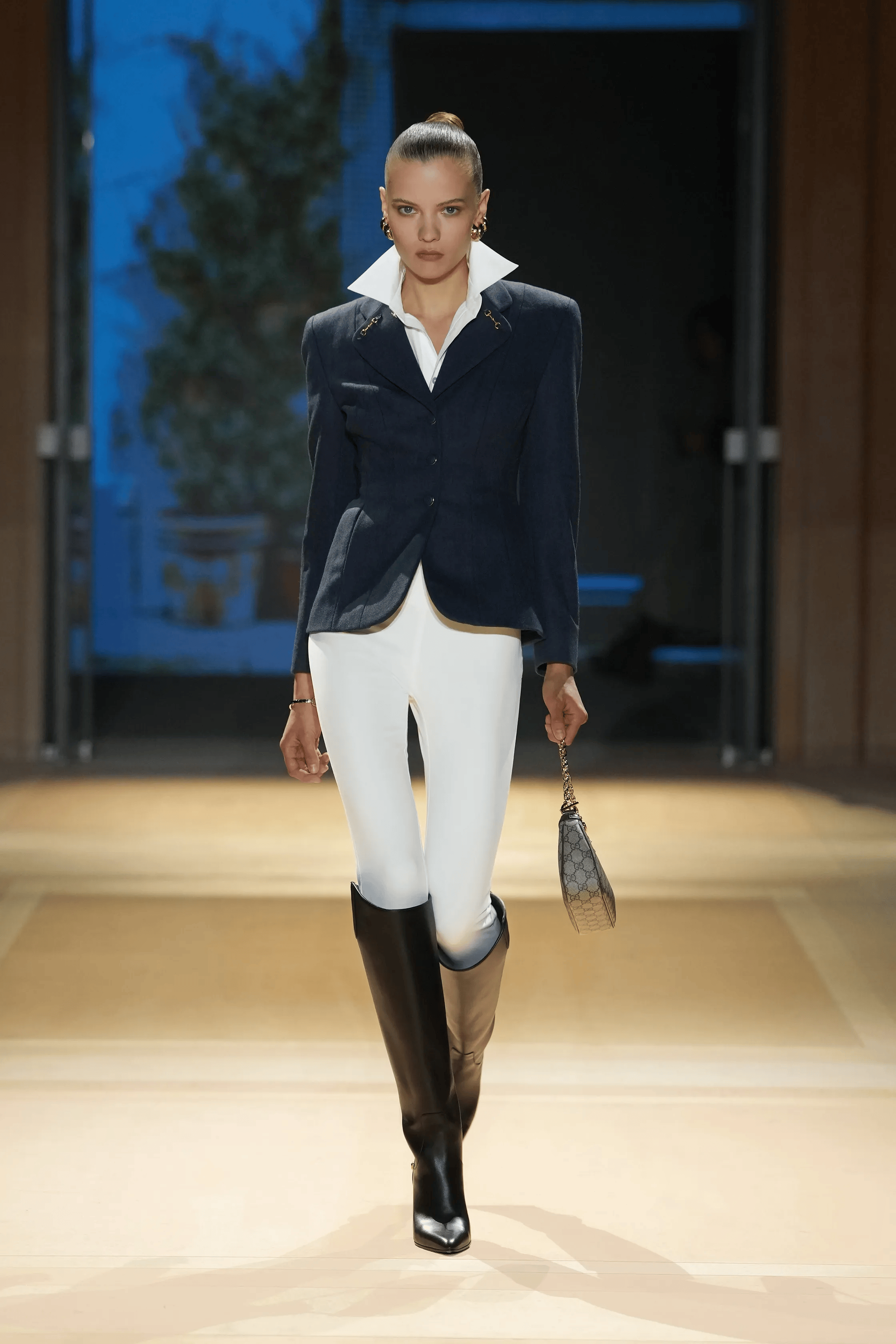
Gucci, under Demna, shifted from the nightlife energy of his previous shows towards the daylight, everyday world of the Store Show. Tailoring, prep, and Ivy League references shaped the menswear, while the women’s collection moved through strong shoulders, office dressing, and Eighties and Nineties influences. Pleated tartan skirts, voluminous jackets, and chain jewellery were followed by asymmetrical evening gowns — draped, fitted, sparkling, or rigorously black and white. The reworked horsebit and bamboo motifs appeared across belts, trousers, pockets, and outerwear, giving familiar Gucci codes a new attitude. But perhaps the most significant aspect was the sense that this was a collection genuinely designed for everyone: different personalities, wardrobes, and moments could find their place within it. From polished tailoring to relaxed separates and from daytime dressing to evening glamour, Gucci presented fashion as something to inhabit rather than simply admire — inclusive in spirit, versatile in expression, and open to individual interpretation.
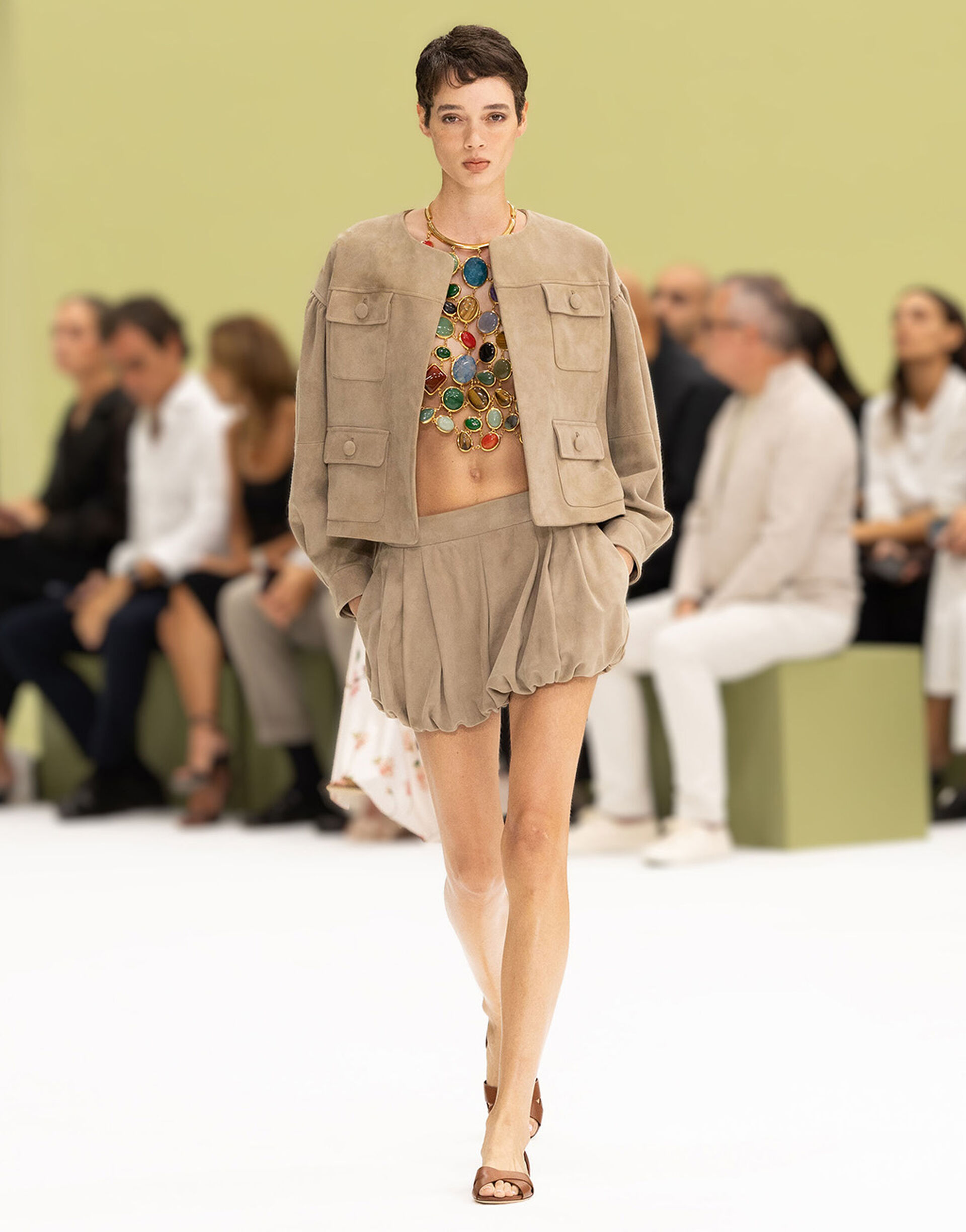
At Luisa Spagnoli, romance returns to the garden. Inspired by the geometry of the Italian garden, the collection balances nature with human design. Pareo skirts wrap around the hips, while couture-inspired dresses look towards Audrey Hepburn in Sabrina. Flowers bloom across prints and draped minidresses. White, pink, turquoise, orange, and sky blue meet beige, brown, ochre, and rust, with flashes of sunny yellow. The effect is luminous, graceful, and distinctly feminine.
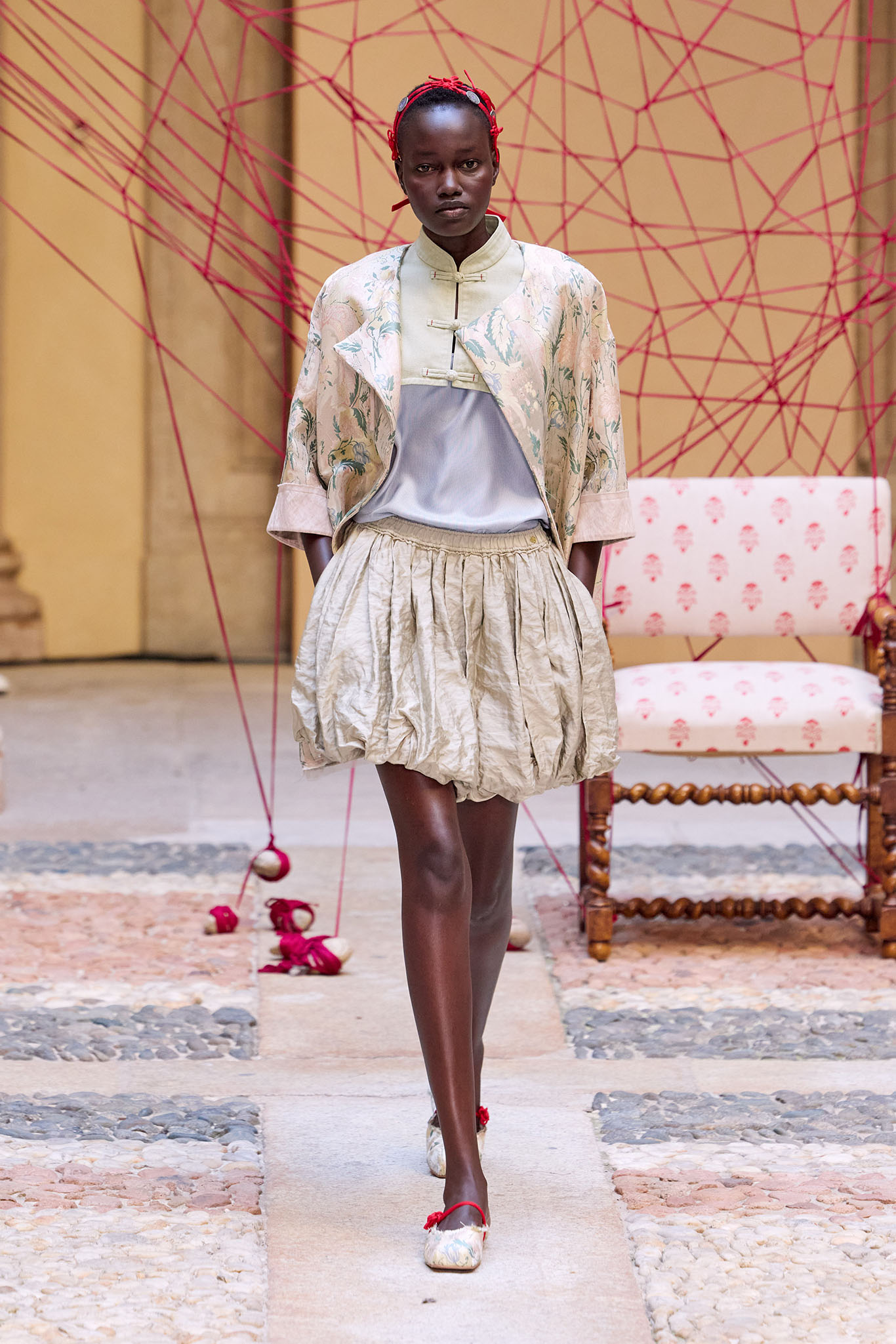
HUI Milano offers another perspective on transformation. The Fan Code takes the Chinese circular fan as its starting point, using it to explore memory, cultural transmission, and contemporary identity. The collection looks to the Miao women of Guizhou, whose weaving, embroidery, dyeing, and sewing preserve cultural knowledge while allowing it to evolve. Printed silk, translucent materials, and structured fabrics create a language of contrasts — transparency and coverage, softness and construction, movement and rigour.
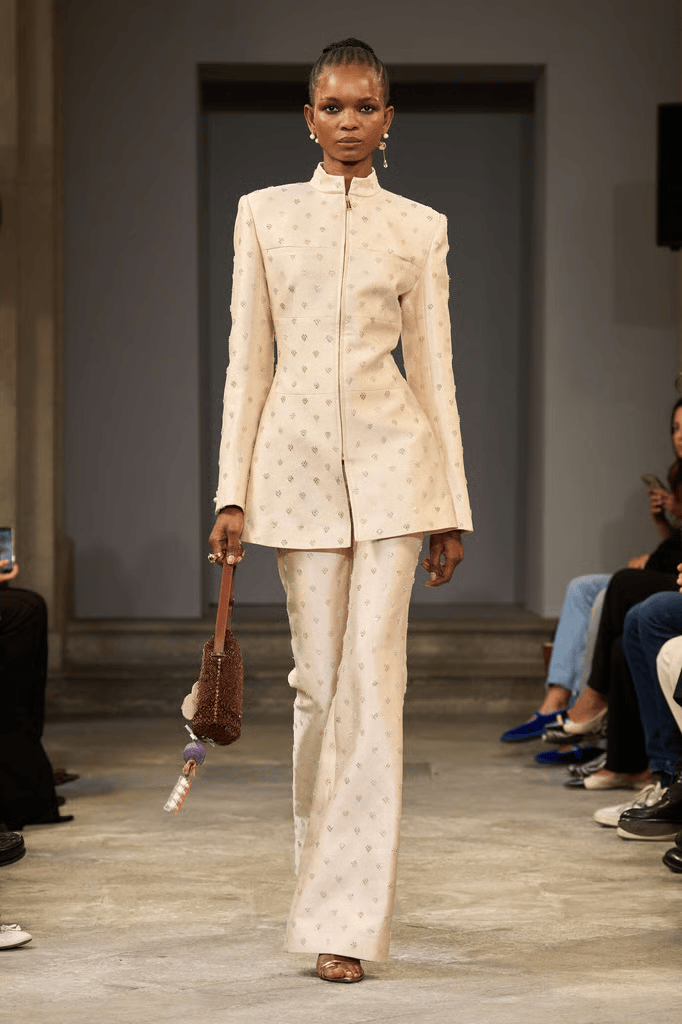
This dialogue between heritage and transformation continues with Sirivannavari and Soul of an Empire. Inspired by Jaipur’s architecture, art, and craftsmanship, the collection looks at what survives when a civilisation changes: memory, knowledge, artisanal practice, and cultural identity. India becomes the starting point for a contemporary wardrobe rather than a historical reconstruction.
The palette combines soft pastels and Indian-inspired spice tones with metallics, while embroidery, mirror work, and artisanal details bring the richness of Jaipur into the collection. Sharp tailoring is contrasted with fluid draping, while the Thai chong kraben is reinterpreted through the volume of the Indian dhoti trousers. The result is a balance between structure and movement, tradition and independence.
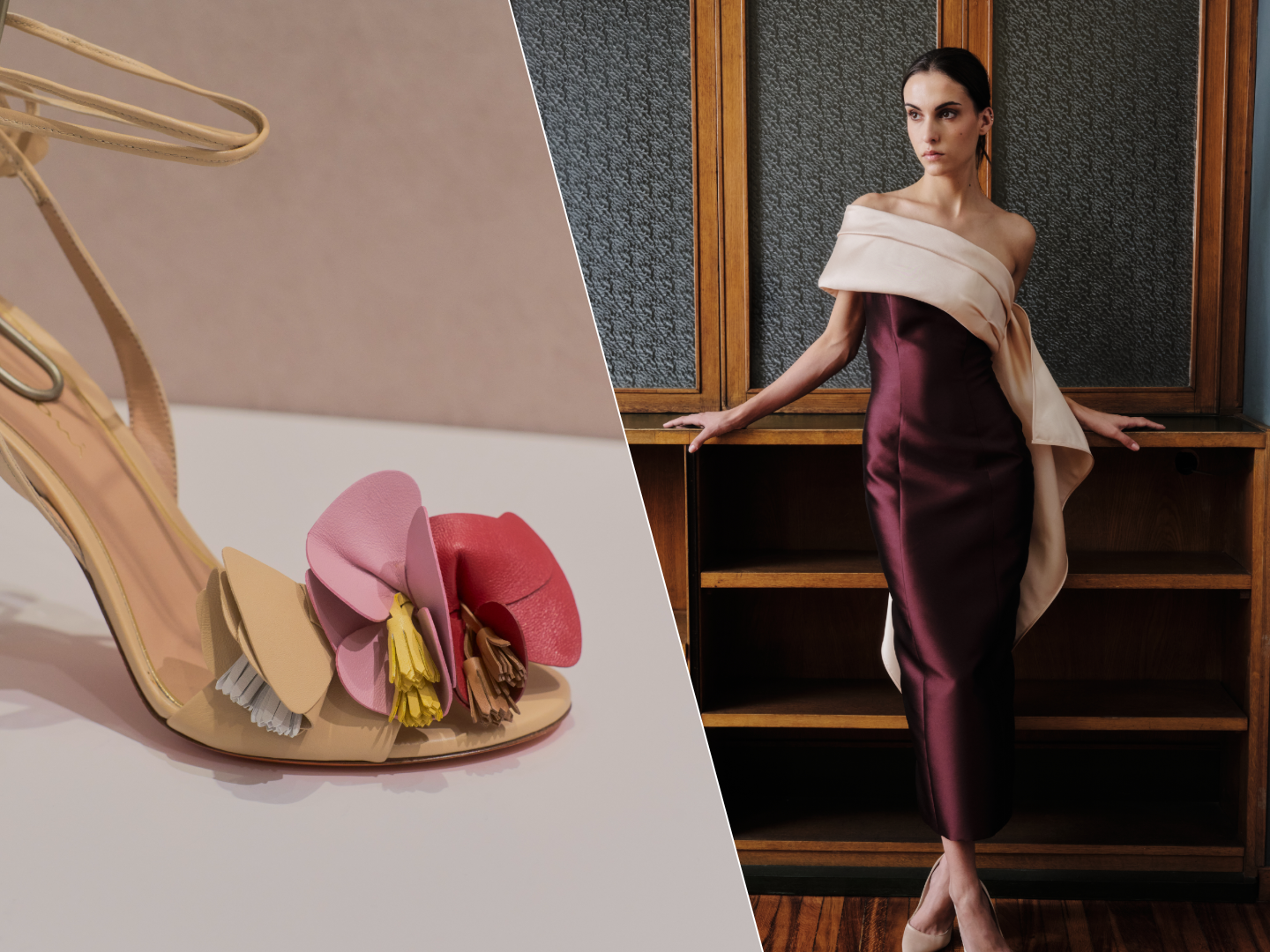
Santoni presents The Art of Encounter, a collection built around the meeting of different worlds: the Maison’s heritage and a new, more personal expression of femininity. The connection with the Marche becomes tangible in the Papavero family, where the region’s poppy is transformed into sculptural flowers, crafted petal by petal in Nappa leather and suede. The Odette mule plays with softly padded knots, while the elegant Sibille pump is joined by the more relaxed Weekender loafer and Off-Duty sneaker. Craftsmanship also meets personal expression through One Live, Santoni’s signature personalisation concept, which allows shoes to be reinterpreted through interchangeable tassels. Across the collection, tradition never feels static: it becomes something that can be touched, transformed, and made personal.
And then there is Antonio Riva, whose The Velvet Night, offers an illuminating counterpoint to this broader conversation. Inspired by the Roaring Twenties and classic cinema, Riva works with long, fluid silhouettes, fringes, and a palette of burgundy, black, powder pink, and gold. Velvet, Mikado, and embroidery create an intimate sense of luxury. Most importantly, the collection recalls the social transformation of the 1920s, when women began claiming greater freedom and independence. Romance here becomes a language of emancipation.
And perhaps this is the real story Milan told this season.
Romanticism has not disappeared; it has evolved. Across the Spring/Summer 2027 collections, it emerges through softness, colour, floral motifs, delicate fabrics and sensual details, but is increasingly balanced by sharper tailoring, structured silhouettes, leather, transparency and sporty influences. The result is a femininity that feels more confident, versatile, and independent, without losing its sense of elegance and allure.
The woman of Summer 2027 does not have to choose between being romantic and being independent, because she can be both.
And if Milan looked like Dubai outside the shows, inside its Fashion Week it looked like something perhaps more significant: a fashion system changing its idea of what a woman can be.
related posts
Fashion Weeks
Mark Fast Autumn/Winter 2023 Collection
Fashion Weeks
#MFW: DIESEL Fall/Winter 2024