Milan Men’s Fashion Week FW 2026–27
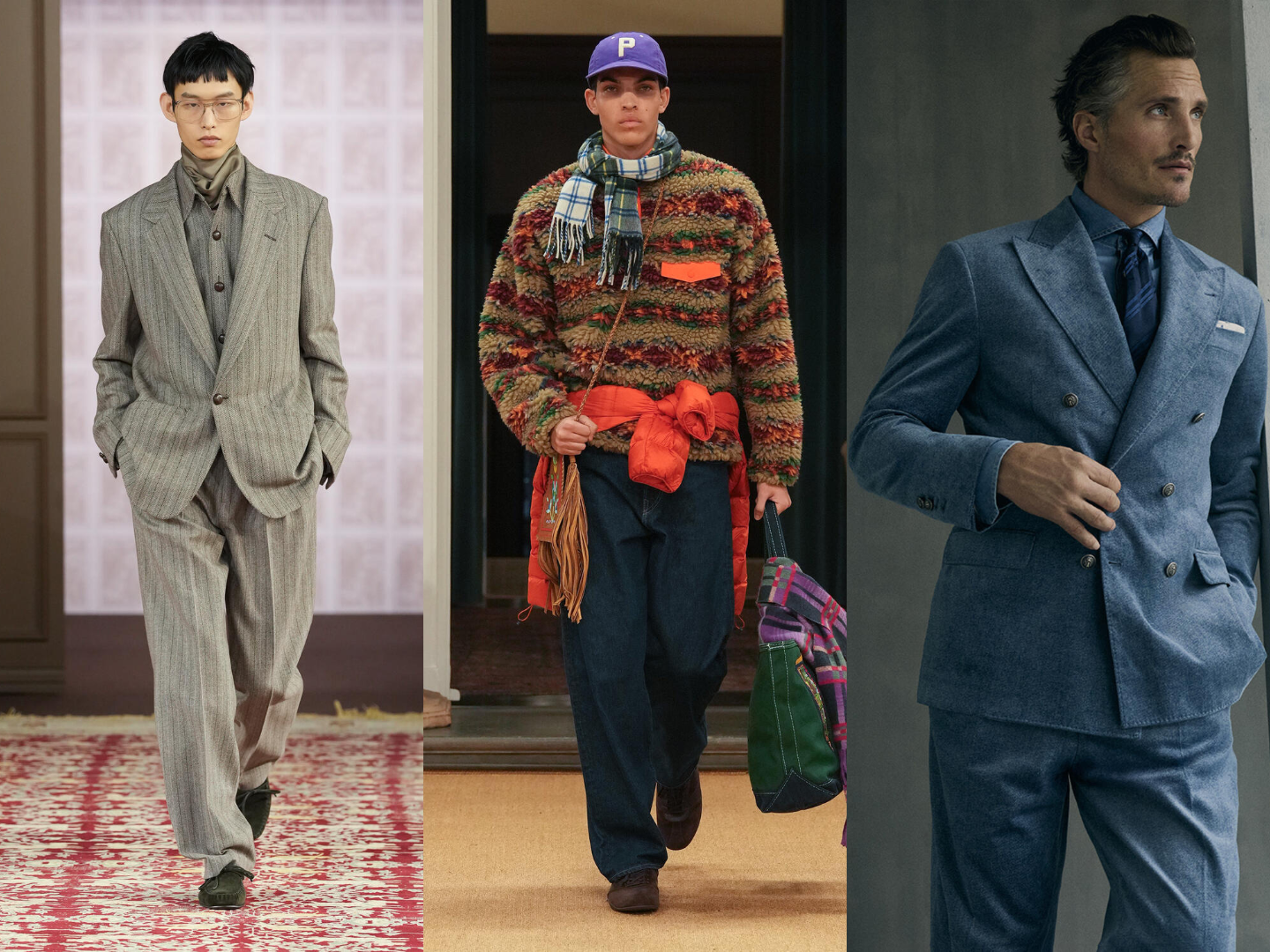
Milan Men’s Fashion Week for Fall–Winter 2026–27 unfolded as a season defined less by spectacle than by substance. Across runways and presentations, designers shifted attention from overt statement-making toward a deeper investigation of memory, material intelligence, emotional identity and the evolving codes of masculinity. Rather than chasing novelty or visual noise, the collections demonstrated a collective instinct toward permanence, tactility and personal meaning, a response to a cultural moment increasingly shaped by instability, technological acceleration and a renewed desire for authenticity.
The emotional core of the week emerged clearly at Zegna, where Alessandro Sartori staged a meditation on inheritance and continuity. Drawing from a personal archive of suits once worn by his father Giuseppe, Sartori transformed the runway into a lived domestic environment populated by family furniture and four generations of garments. Clothing became a form of biography: wearable heirlooms rather than consumable objects. The collection moved from sleek uniformity toward playful historical references, unexpected colour accents and material experimentation, creating emotionally charged characters that felt closer to collectors than consumers. Sartori’s vision reinforced Zegna’s ability to translate private memory into shared cultural language, resonating strongly with VIC clients while remaining legible to a broader audience.
Heritage was reinterpreted through a transatlantic lens at Ralph Lauren, whose return to Milan with Polo and Purple Label marked only the house’s third menswear runway in the city this century. Presented under the internal codename “Rolling Thunder,” the show staged a dialogue between youthful eclecticism and cultivated sophistication. Polo delivered playful mash-ups of gorpcore, vintage sportswear, western accents and relaxed tailoring, while Purple Label countered with composed elegance, adventurous luxury and layered sartorial codes. The juxtaposition revealed the breadth of Lauren’s universe and its generational elasticity, reaffirming the brand’s ability to remain culturally relevant without sacrificing identity.
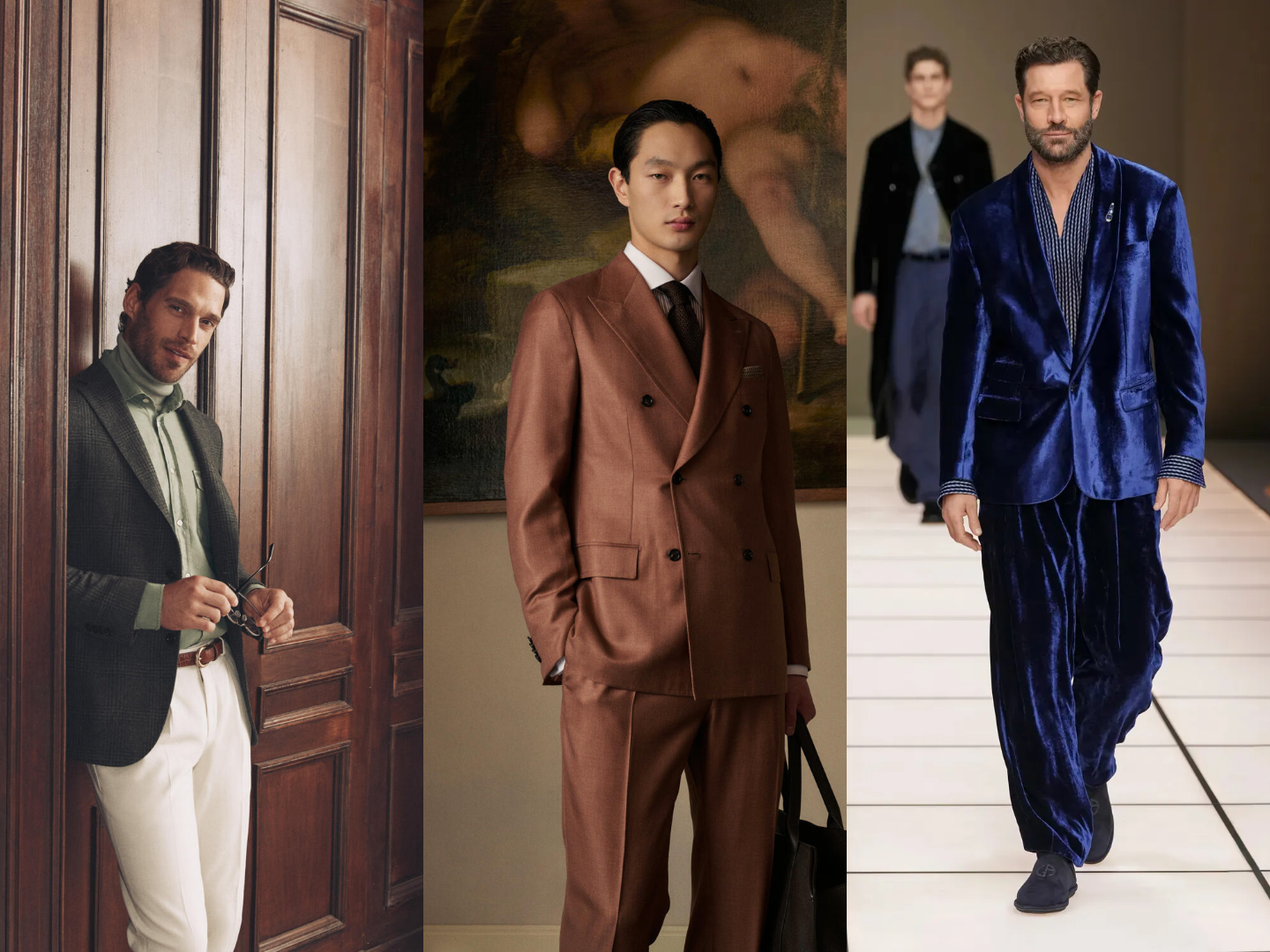
Nature and tactility shaped the narrative at Brunello Cucinelli, where the contemporary explorer emerged as a refined archetype. Tailoring softened through lightly structured blazers and relaxed trousers, balanced by the return of the tie and elevated outerwear defined by double-breasted coats and technical-luxury fabrics. A palette of deep neutrals and rich hues animated tactile tweeds, Donegal weaves, shearling and suede, while knitwear assumed a central role in balancing rustic texture with noble yarns. The collection articulated a masculine ideal rooted in restraint, functionality and understated elegance: luxury expressed through comfort and material authenticity rather than display.
Milan’s quieter elegance was distilled at Boglioli, where soft tailoring, fluid silhouettes and refined material research translated the city’s iconic districts into a contemporary wardrobe faithful to the brand’s DNA. Muted tones of mauve, browns and chocolate tones enriched garment-dyed cashmere jackets, mouliné knits and lightweight flannel suits. Archival references subtly met western-inflected corduroy outerwear, expressing a dialogue between tradition and evolving identity. The result was an exercise in effortless Italian sophistication anchored in craftsmanship rather than styling theatrics.
At Brioni, the Fall–Winter 2026–27 collection unfolded as an imaginary grand tour of Italy, translating the Maison’s most cherished landscapes into a refined all-day wardrobe. Exclusive fabrics –vicuña, silk, cashmere and signature double weaves– were rendered in a palette inspired by Rome’s warm stone hues, punctuated by jewel tones and architectural greys. Formal and casual codes intertwined seamlessly, from tailored suits softened by field jackets to luxury performance pieces in the Mountain Capsule. The collection articulated a modern vision of power dressing defined by magnetic understatement and confident versatility.
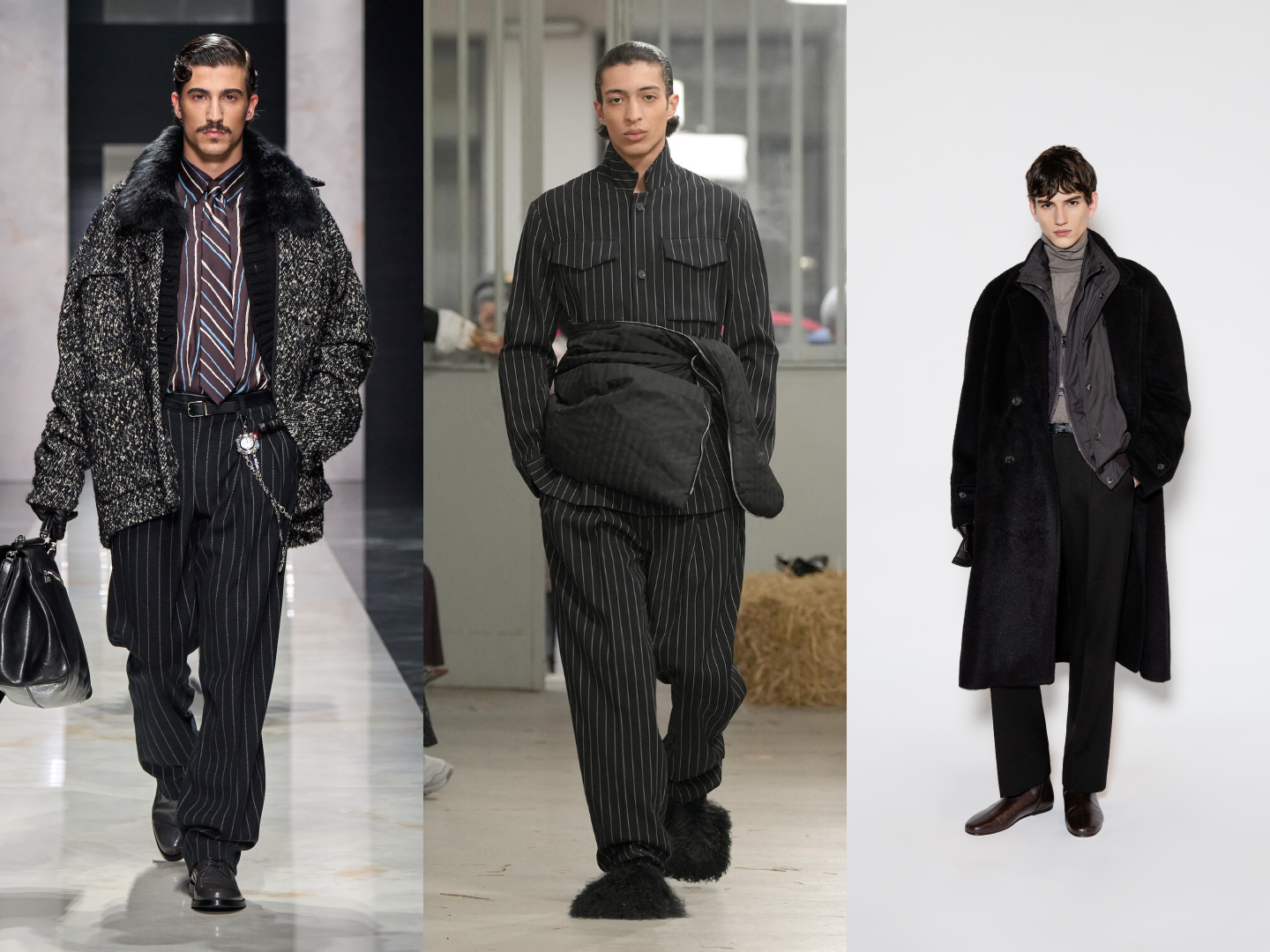
One of the most emotionally layered statements came from Dolce & Gabbana, whose Il Ritratto dell’Uomo unfolded as a living gallery of contemporary male identities. Layering became the narrative engine: tailoring intersected with lounge silhouettes, shearling enveloped daywear, and military references softened into sensual volumes. Casting amplified plurality, presenting elegant gentlemen alongside rebellious dandies and Mediterranean sensualists. Rather than framing diversity as a concept, the collection embodied it visually and materially, grounding expressive freedom in artisanal technique and nuanced texture.
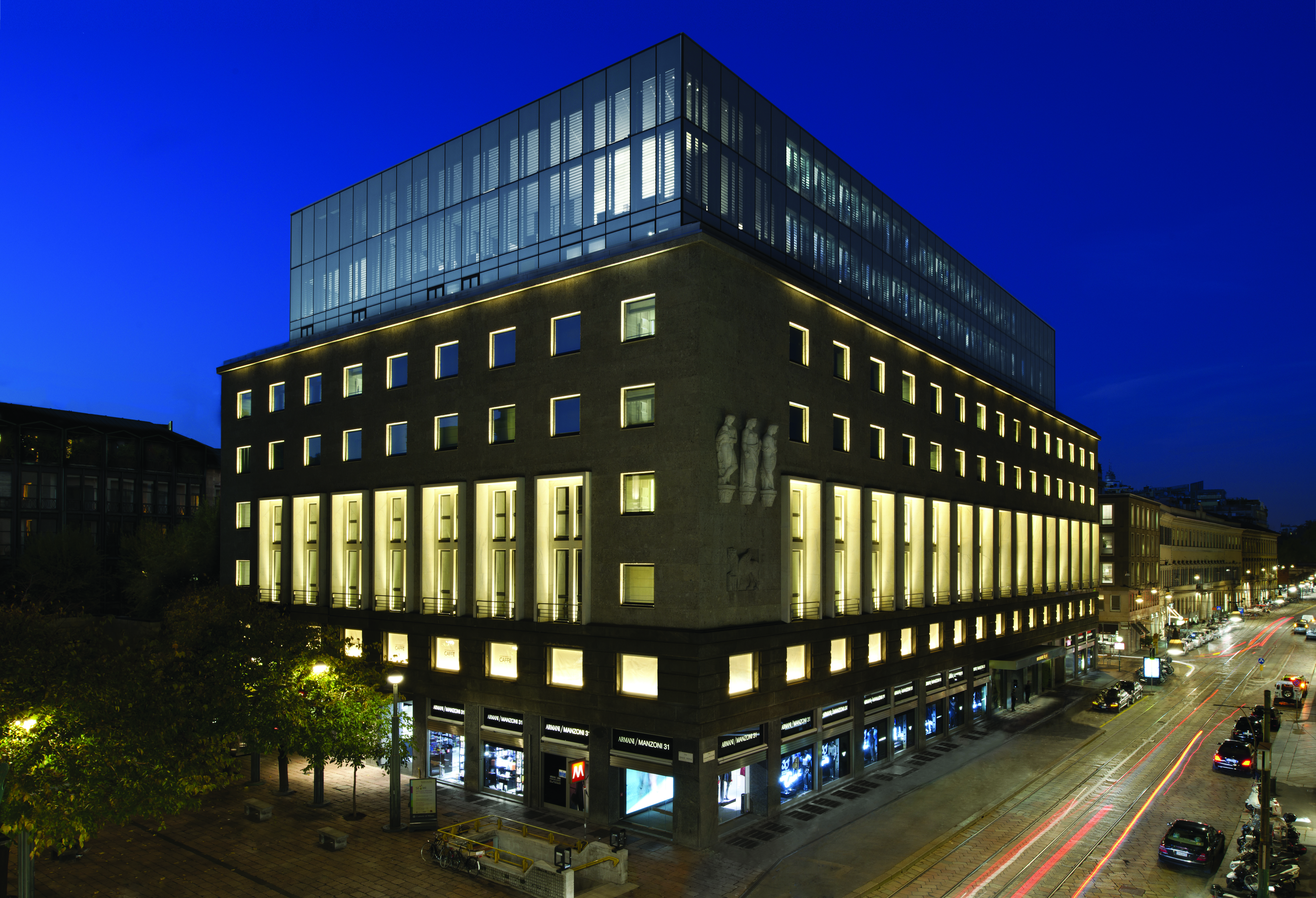
A quieter yet conceptually rigorous statement emerged at Giorgio Armani, where the notion of Cangiante iridescence as a condition rather than an effect– became a meditation on continuity and transformation. Leo Dell’Orco’s debut translated four decades alongside Armani into a personal yet faithful evolution of the house language. Colour surfaced discreetly through accents of olive, amethyst and lapis set against a disciplined palette of greys, beiges and deep blues. Velvets, crêpes and chenille caught the light with restrained luminosity, balanced by brushed cashmeres, felted wools and supple leathers. Fluid silhouettes, relaxed volumes and tactile knitwear moved with the body rather than shaping it, reinforcing Armani’s enduring dialogue between elegance, ease and modernity. The collection spoke softly yet with remarkable clarity, privileging permanence over effect.
Cultural hybridity animated Setchu, where Satoshi Kuwata presented his third runway within his new Milan atelier. Inspired by fishing traditions and a journey to Greenland, the Japanese-born designer blended Arctic landscapes with Japanese craftsmanship, creating innovative textiles such as silk-wool jacquards reminiscent of seal skin. Samurai-inflected duffle coats met banker suits with rock-star ease, while hooded northern garments paired with woven southern footwear. The collection balanced technical experimentation, poetic storytelling and cultural synthesis with quiet confidence.
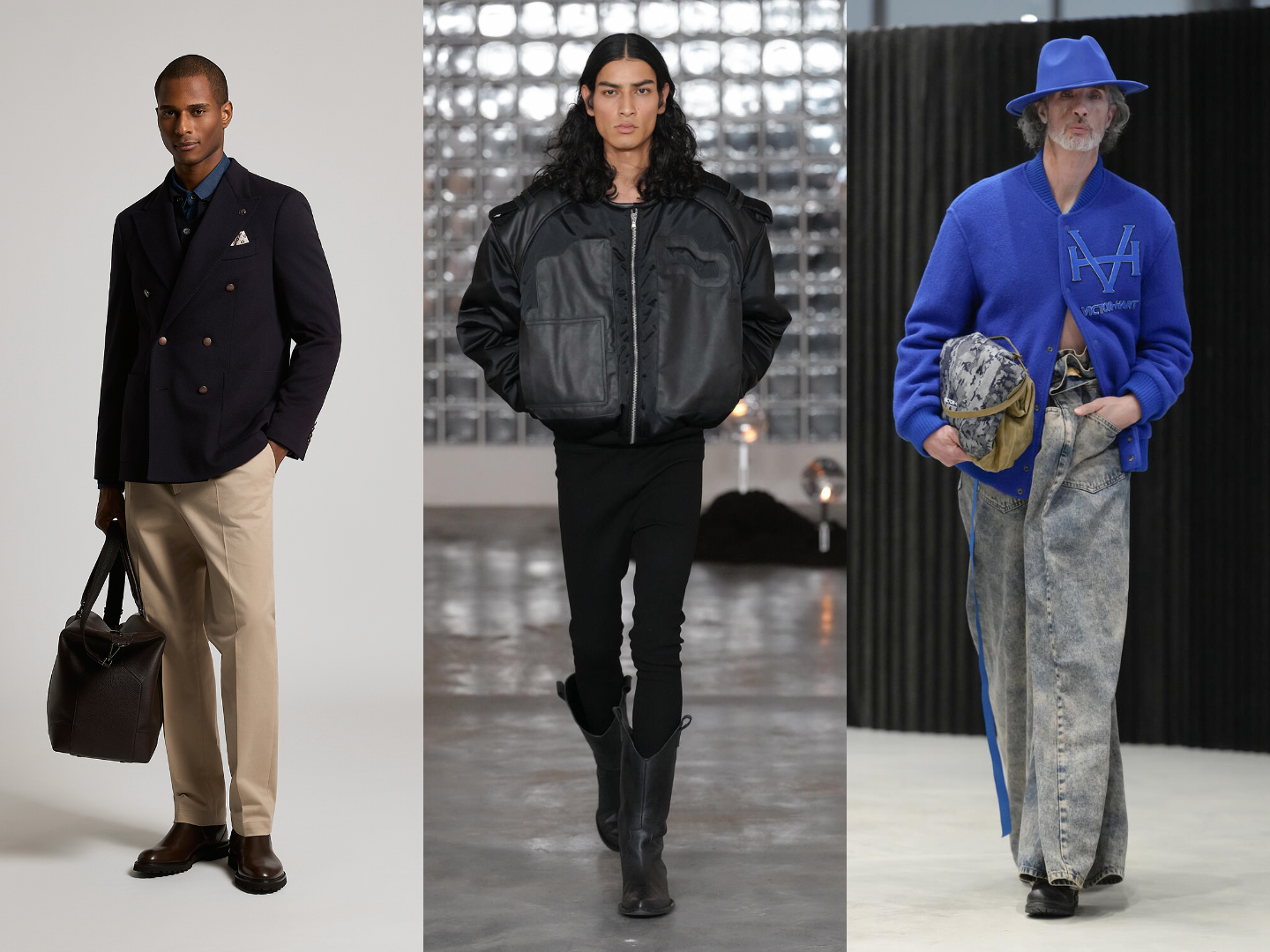
Classic refinement met contemporary restraint at Corneliani, where Stefano Gaudioso Tramonte staged the collection within a Renaissance courtyard framed by an AI-generated film reinterpreting cinematic icons. The setting mirrored the wardrobe’s dialogue between heritage and modernity. Windowpane trench coats, softly structured mohair overcoats, quilted shearling vests and brushed suede blazers articulated a language of lightness and comfort without sacrificing sartorial precision. A palette of mauve, mud, light grey and chocolate allowed texture and proportion to carry the narrative rather than surface effect. Anchored in the house’s tailoring heritage, the collection proposed a relaxed vision of the modern gentleman: refined yet pragmatic, adaptable to shifting urban rhythms and contemporary lifestyles. It was a study in measured evolution, where craftsmanship remained visible but never demonstrative.
A more contemplative dimension emerged at Peserico, whose Autumn/Winter 2026 collection, Observers of the Infinite, treated the act of looking upward not as escapism but as cognitive recalibration. The sky became a metaphor for order, movement and human awareness, while the earth remained the stabilising anchor. The palette followed an atmospheric logic: mineral greys, horizon blues and nocturnal burgundies were softened by luminous beiges, crystallised greens and precise white accents that functioned as visual orientation rather than decoration. Materiality drove the narrative: textured knitwear with Nordic jacquards, lightened tailoring, renewed denim and enveloping outerwear shaped by Italian textile excellence and conscious sourcing. The result was a wardrobe grounded in precision, sensory depth and quiet discipline, reinforcing Peserico’s ability to translate abstraction into wearable coherence.
Milan’s openness to experimental energy was reinforced by emerging voices. Domenico Orefice made a magnetic runway debut with a dark, theatrical wardrobe aimed at nocturnal romantics, merging distressed leather, oversized silhouettes and piratical references into a language of poetic rebellion. Victor Hart transformed denim into sculptural ceremony, elevating workwear through jacquard constructions, painterly treatments and expressive casting. Both designers demonstrated Milan’s capacity to absorb disruptive creativity without diluting its craft-centric identity.
Memory emerged as a poetic axis at Qasimi, where garments became emotional vessels. Asymmetric layering, shifting lapels and modular volumes translated remembrance into wearable form, while a collaboration with artist Dala Nasser infused textiles with natural dyes and charcoal rubbings. The result positioned clothing as something to be kept, repaired and lived within, a counterpoint to disposability and trend-driven obsolescence.
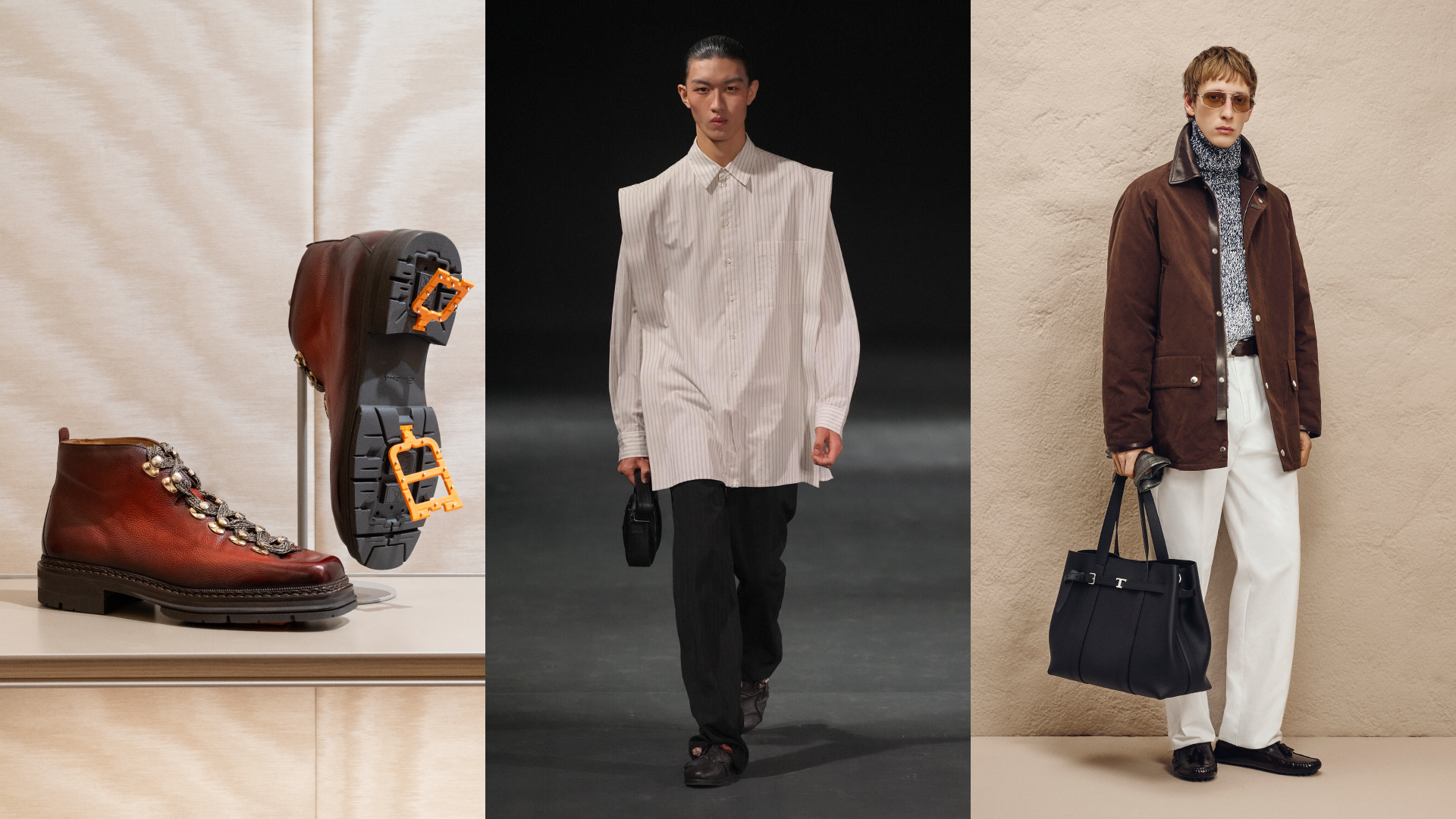
Accessories and material mastery anchored the season’s technical intelligence. Santoni pushed footwear into alpine innovation with the Karl Ice boot and reversible sole engineered for icy terrain, while bespoke crocodile hikers reinforced its authority where engineering precision meets aesthetic excellence. Tod’s positioned the Winter Gommino as the season’s defining cold-weather boot, staging live craftsmanship inside Villa Necchi and highlighting ultra-soft Pashmy leather across ready-to-wear, reaffirming its leadership in tactile luxury.
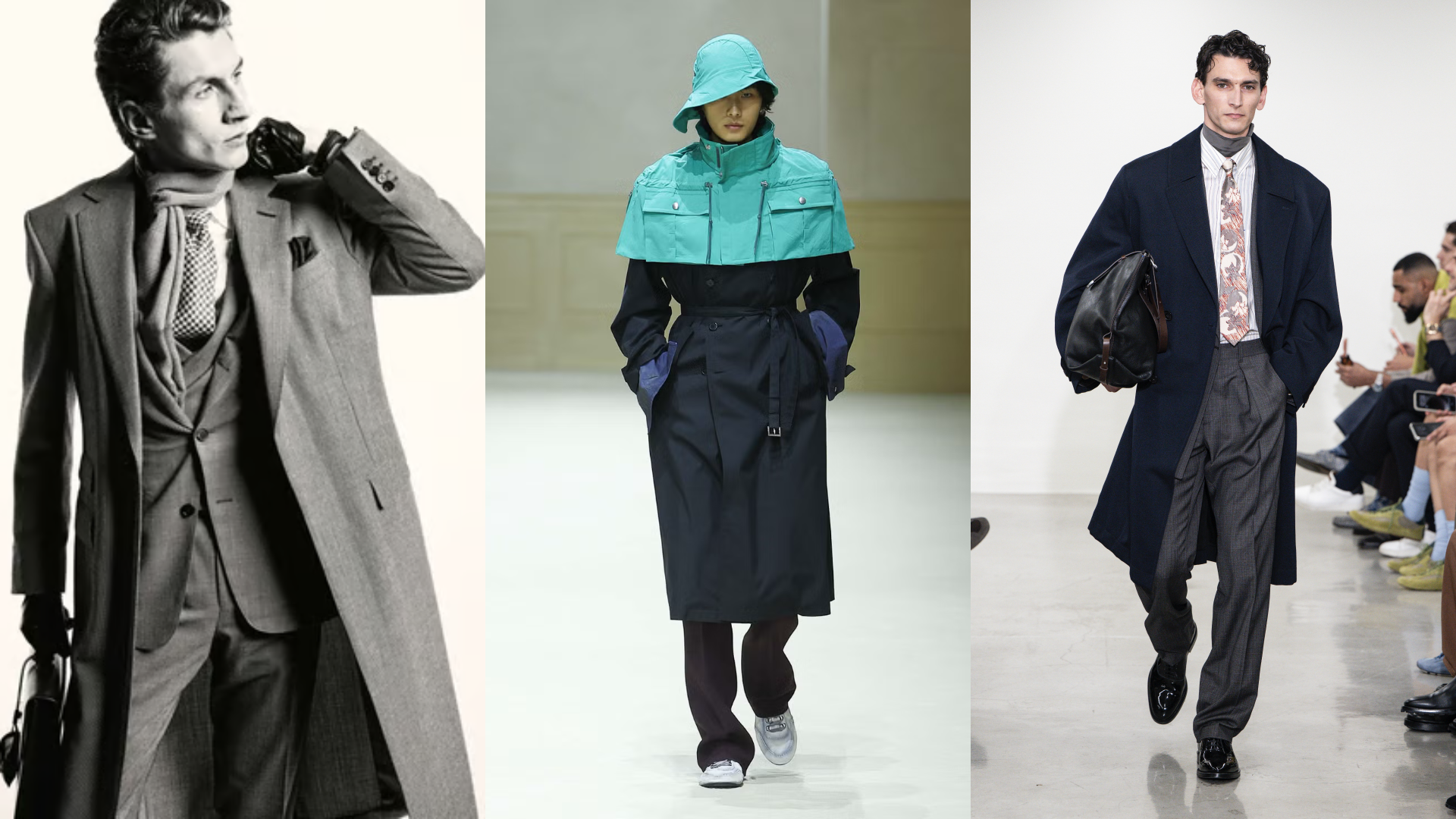
Material intelligence also defined the week’s quieter yet influential presentations, particularly at Dunhill, where Creative Director Simon Holloway continued to refine the house’s contemporary identity through a deeply narrative approach. Drawing inspiration from Anthony Armstrong-Jones, Lord Snowdon, Holloway explored the tension between aristocratic discipline and unguarded artistic expression, translating a film-noir vision of 1960s London into a wardrobe charged with subtle intrigue and restraint. Tonal gradients of grey structured precise tailoring in superfine wool-cashmere flannels, evolving into textured tweeds, suede and leather accents as the palette deepened. Motoring-inspired outerwear referenced the house’s historic relationship with performance and engineering, while refined leather goods and sculptural accessories reinforced dunhill’s lineage as a maker of functional luxury objects. Rather than overt theatricality, the collection conveyed a quietly cinematic masculinity controlled, layered and psychologically rich– demonstrating how British heritage codes can be reactivated through contemporary sensitivity and material sophistication.
At Prada, Miuccia Prada and Raf Simons continued their long-term investigation into how clothing absorbs memory, culture and human experience without becoming nostalgic. Staged within the raw architectural clarity of Fondazione Prada’s Deposito, the collection proposed elongated silhouettes and reduced constructions that revealed complexity beneath apparent simplicity. Collaged prints referenced antiquity, Renaissance fragments and modern graphic language, creating a layered visual dialogue that felt intellectual yet emotionally accessible. The designers approached evolution not as rupture but as accumulation, allowing past codes to surface quietly within precise tailoring and relaxed proportions attuned to the body. The result was a wardrobe that privileged intelligence, care and cultural literacy over spectacle, reaffirming Prada’s role as a compass for thoughtful modernity within the Milan system. In a season increasingly oriented toward tactility and permanence, Prada articulated how memory can function as a shared contemporary language rather than a retreat into archive.
Taken together, the Fall–Winter 2026–27 season articulated a clear shift in menswear: masculinity is no longer defined by rigidity or dominance, but by emotional nuance, tactile pleasure and cultural intelligence. Tailoring softened without losing authority; utility became poetic; luxury migrated from visibility to intimacy. Designers proposed wardrobes meant to age, accumulate meaning and evolve alongside the wearer.
Milan reaffirmed its singular position as the capital of product culture, a city where craftsmanship, material research, emotional literacy and intellectual design converge. Rather than chasing immediacy, the season offered something more durable: a renewed confidence in the intelligence of making, the dignity of restraint and the quiet power of clothes that endure beyond the moment.
"Beyond Milan, the season found an intimate counterpoint in Paul Smith’s Autumn/Winter 2026 show, staged as a salon-style show that felt grounded, joyful and quietly personal. Celebrating the brand’s heritage of tailoring and its instinct for “magpie dressing,” the collection reimagined archival silhouettes through deconstructed details, Harris Tweed textures, and a refined autumnal palette punctuated by playful prints. Artistic references to Jean Cocteau, layered sartorial motifs and trompe-l’oeil set design created moments of discovery rather than grand gestures, reinforcing Paul Smith’s enduring dialogue between craftsmanship, storytelling and everyday beauty. The intimacy of the presentation echoed the broader season’s return to authenticity, tactility and emotional connection."
related posts
Fashion Weeks
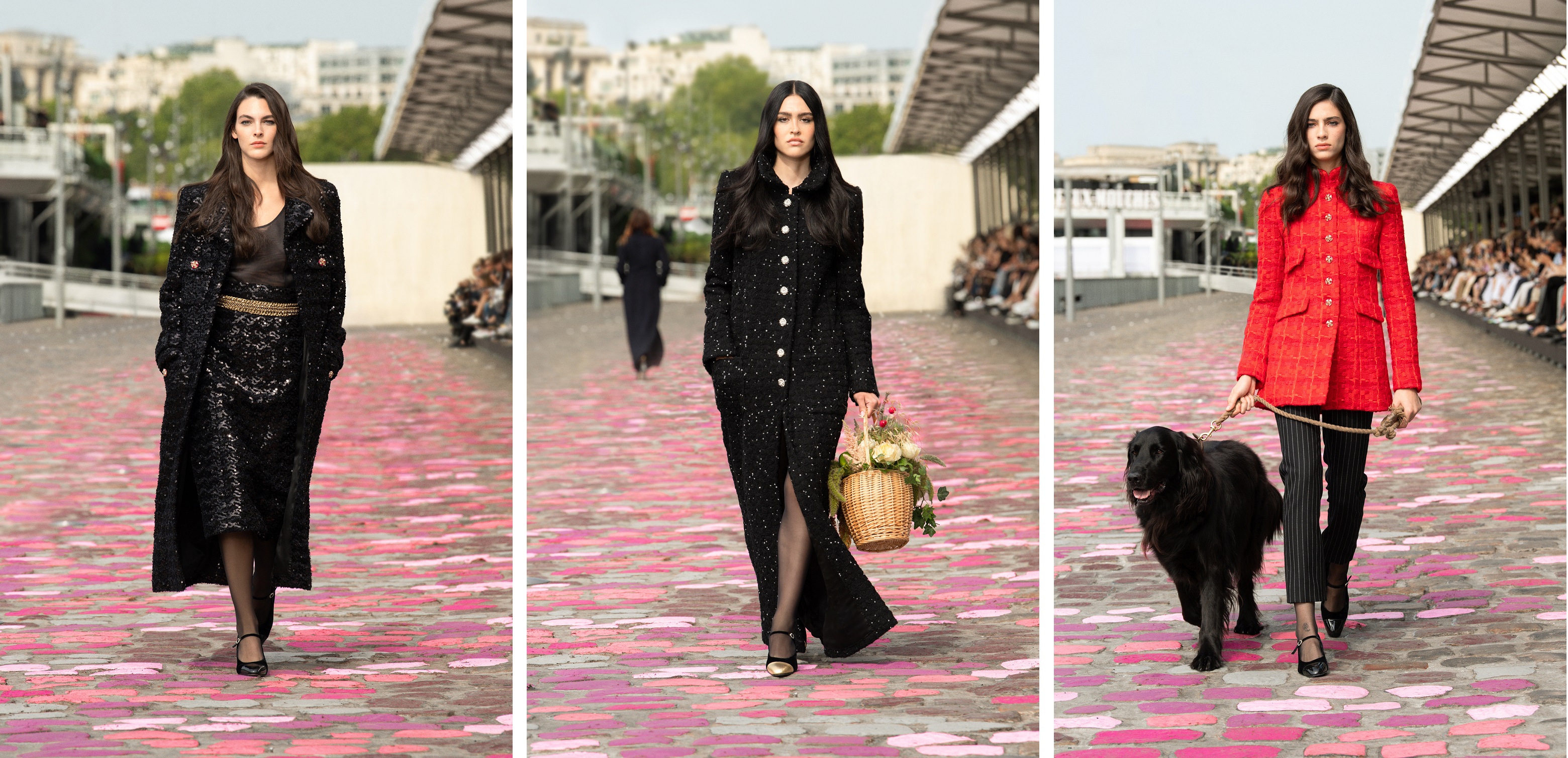
CHANEL F/W 23-24 Haute Couture Collection
Fashion Weeks
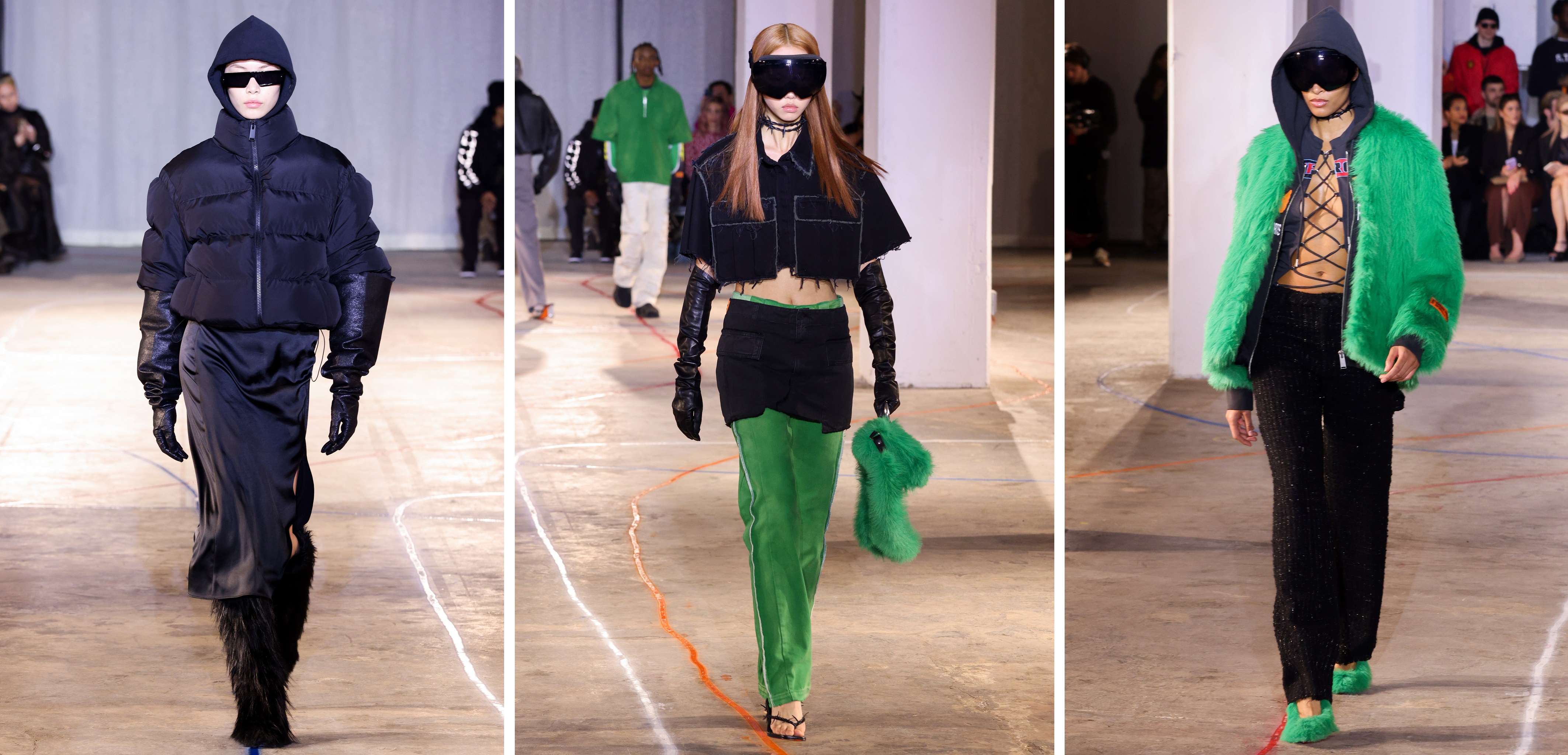
Heron Preston FW23: Anything Goes

.jpeg)
.jpg)
