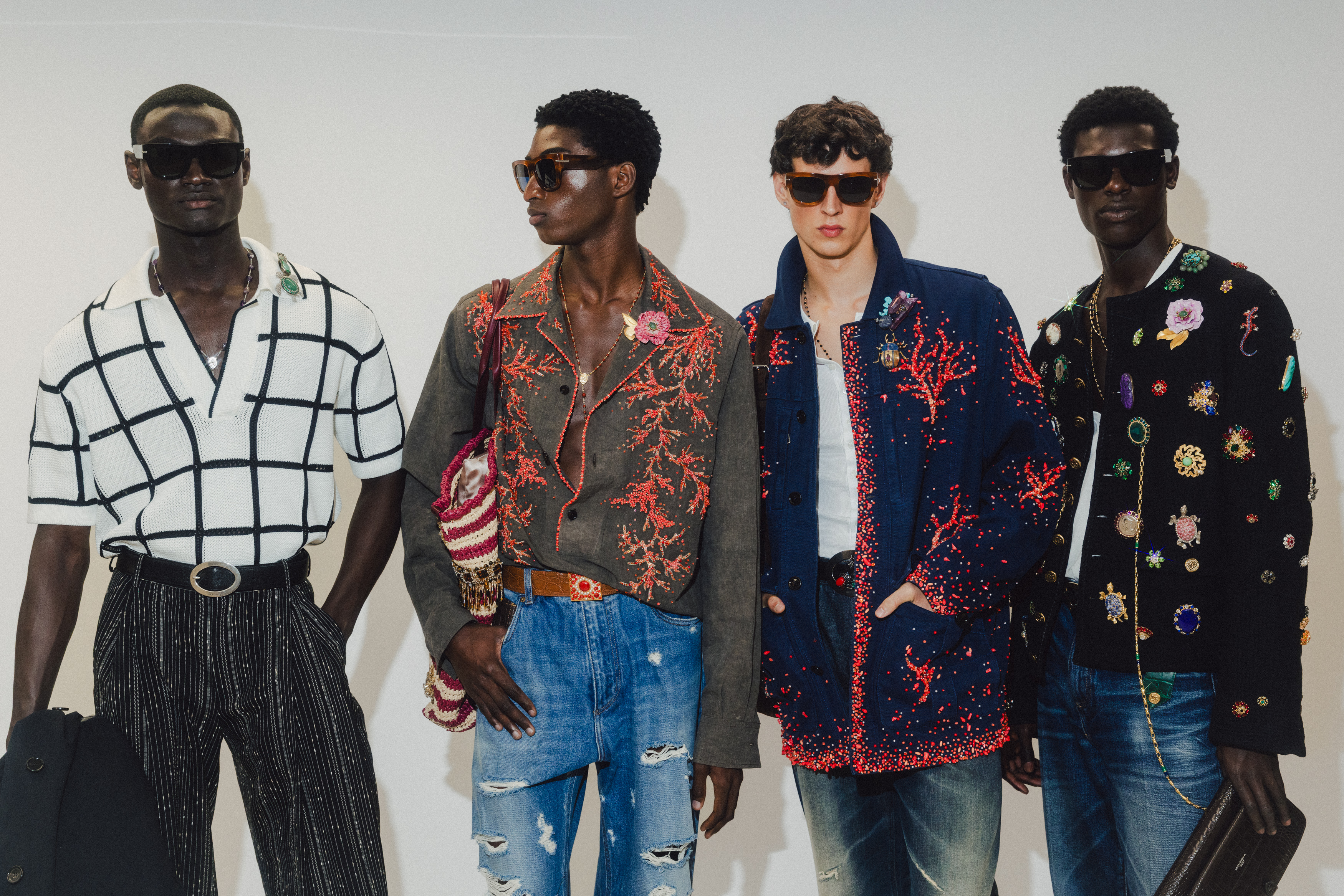
If there was one defining message to emerge from Milan Men’s Fashion Week Spring/Summer 2027, it was that fashion is rediscovering the value of authenticity. Across the runways, designers moved away from spectacle and excess, embracing instead a more nuanced vision of luxury built upon craftsmanship, cultural identity, personal expression, and ease. Whether inspired by the Mediterranean, British eccentricity, contemporary minimalism, or artisanal heritage, the season offered a compelling portrait of menswear entering a new era, one where refinement is measured not by opulence, but by intention.
Rather than presenting radically different narratives, many of Milan’s leading houses appeared to engage in a common conversation. They explored what it means to dress today, how tailoring can evolve without losing its essence, and how clothing can remain relevant in a world increasingly shaped by mobility, individuality, and changing notions of masculinity.
Dolce & Gabbana: Sicily as Origin and Inspiration
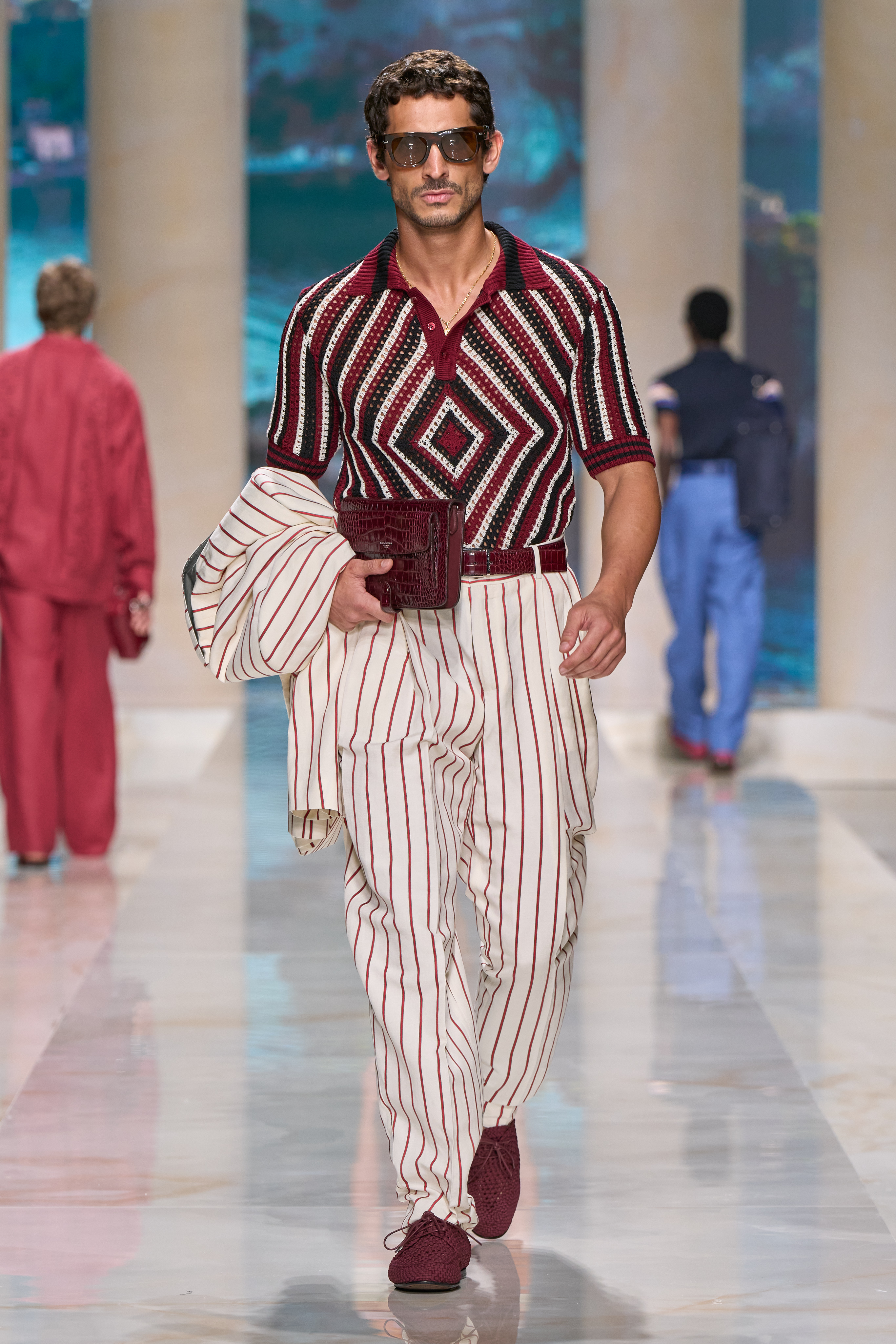
For Dolce & Gabbana, Spring/Summer 2027 represented a return to the source. Titled Vacanze Siciliane, the collection transformed Sicily from a geographical location into an emotional and cultural landscape. The island became both the point of departure and the destination, embodying the values that have always defined the house: sensuality, craftsmanship, heritage, and beauty.
The designers revisited the layered identity of Sicily through a wardrobe that moved effortlessly between tradition and leisure. Tailoring was softened and deconstructed, while lightweight cottons, linen jackets, crochet knitwear, woven suede, and silk swimwear created an atmosphere of relaxed sophistication. The collection's colour palette echoed the island itself: shades of limestone and sand, turquoise waters, pistachio green, and the pastel tones of Sicilian granita.
What made the collection particularly successful was its ability to communicate place without falling into nostalgia. Sicily appeared not as a memory but as a living source of inspiration. The result was a wardrobe designed for movement, travel, and summer living, yet deeply rooted in identity.
Prada: The Power of Clarity
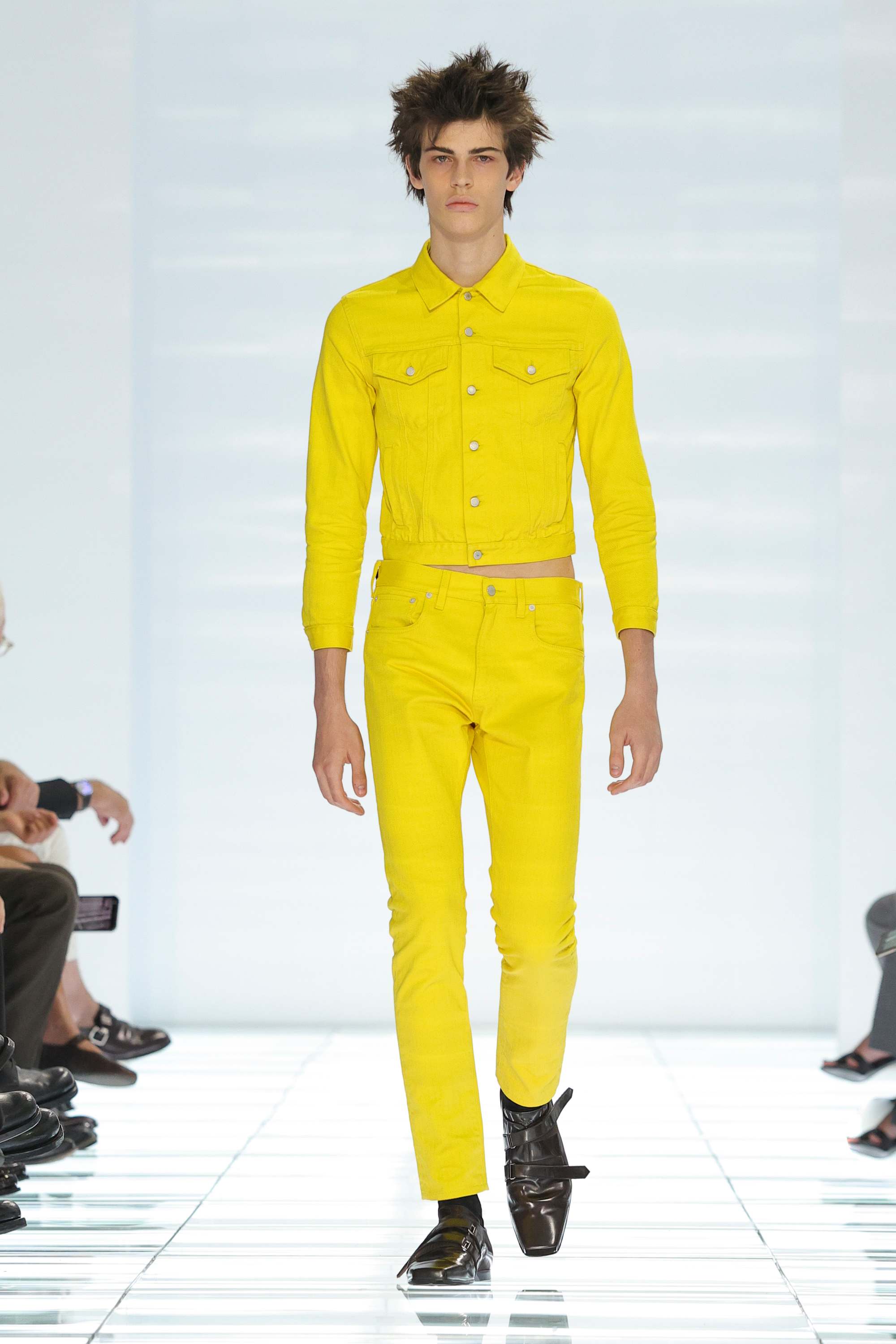
If Dolce & Gabbana celebrated abundance, Prada proposed the opposite. Under the title Clarity, Miuccia Prada and Raf Simons presented one of the season's most intellectually rigorous collections. Their focus was not reduction for its own sake but the pursuit of essence: the deliberate removal of anything unnecessary in order to reveal meaning.
The designers revisited some of fashion's most familiar garments: jeans, denim jackets, T-shirts, and straightforward outerwear. Stripped of embellishment and excess, these pieces became almost architectural in their precision. The silhouette remained linear and controlled, creating a sense of discipline that contrasted sharply with the season's broader tendency toward fluidity.
Yet the collection never felt cold. Instead, Prada proposed a radical idea: that contemporary luxury may lie in concentration rather than accumulation. The house suggested that innovation does not necessarily require inventing something new, but rather reconsidering something already known from a different perspective.
In an industry increasingly driven by visual noise, Clarity emerged as one of the strongest statements of the season.
Giorgio Armani: The Mediterranean as a State of Exchange
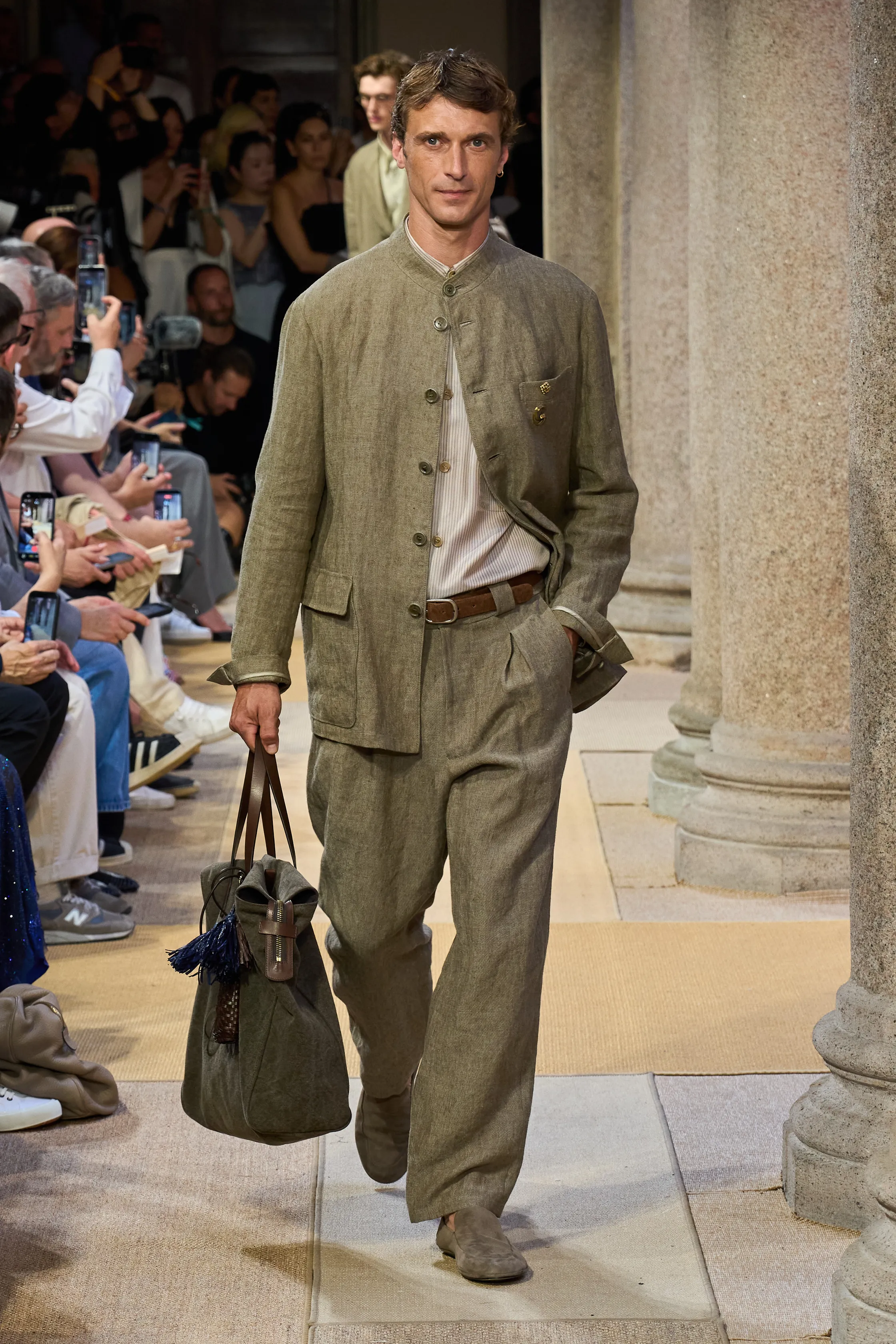
Few designers understand elegance as profoundly as Giorgio Armani. For Spring/Summer 2027, the house presented Mediterranean Market, a collection inspired by the Mediterranean not simply as a place, but as a crossroads of cultures, stories, and influences.
Designed by Leo Dell'Orco, the menswear collection imagined a world shaped by travel and encounter. Safari jackets, elongated proportions, slim trousers, and flowing shirts created silhouettes that felt simultaneously cosmopolitan and rooted. Linen, cotton, shantung, and natural fibres reinforced the collection's tactile dimension, while colours reflected the landscapes of the Mediterranean: sun-bleached whites, spice tones, cobalt blues, earthy neutrals, and muted golds.
The collection's greatest strength lay in its subtlety. Armani avoided overt references and instead created an atmosphere. Everything appeared softened by sunlight and time, suggesting a vision of luxury connected to memory, craftsmanship, and lived experience.
The result was an elegant reminder that true sophistication often resides in restraint.
Paul Smith: Tailoring for Real Life
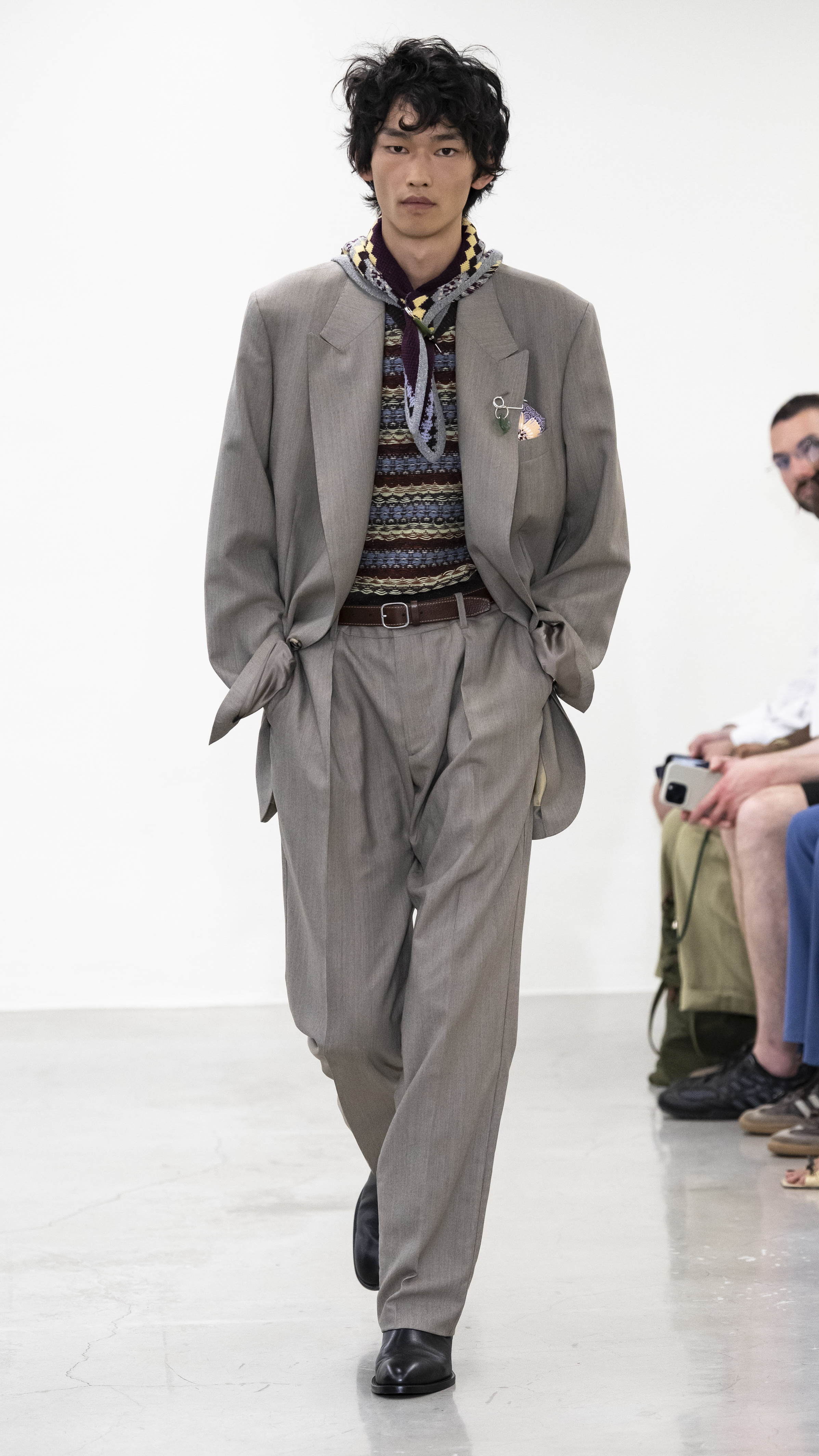
Paul Smith approached Spring/Summer 2027 from a deeply personal perspective. Titled Suits in Unsuitable Situations, the collection explored the idea that tailoring should not be confined to formal occasions but integrated into everyday life.
Inspired by memories of his grandfather standing in the sea wearing a suit and by his own experience helping a Tuscan farmer while dressed in white linen, Smith challenged conventional ideas about formality. The collection reimagined tailoring as something dynamic, imperfect, and human.
Unlined jackets, soft silhouettes, tropical Scottish weaves, mouliné seersucker, and printed silk habutai created an effortless fluidity. The details were equally important: colourful internal construction, hand-worked stitching, loosened ties, rolled cuffs, and flashes of unexpected colour introduced a sense of playfulness without sacrificing elegance.
The collection demonstrated one of the season's most significant shifts: tailoring is no longer about imposing structure. Instead, it is about adapting to life as it unfolds.
Missoni: Summer as a Way of Life
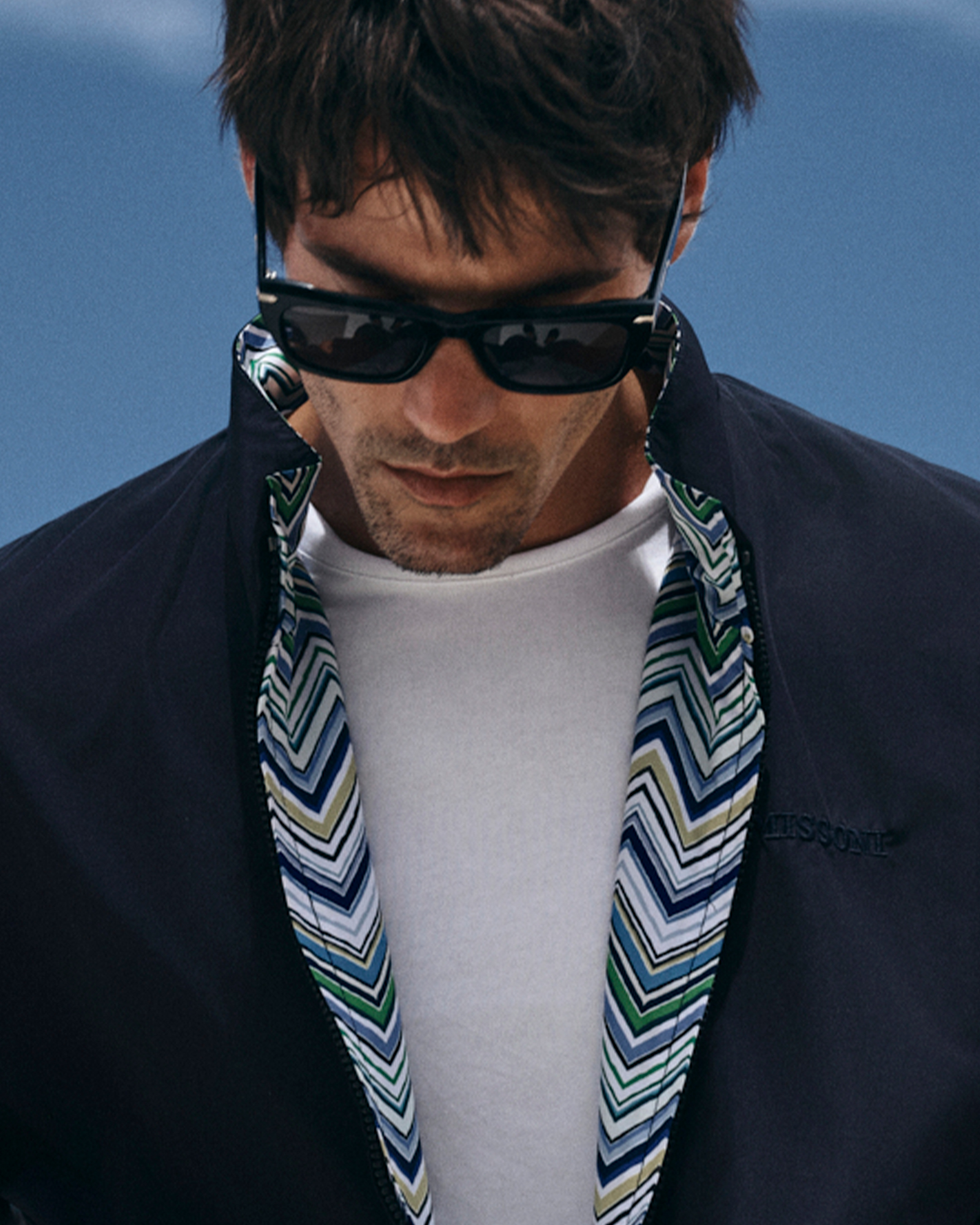
At Missoni, Creative Director Alberto Caliri continued his effort to create what he describes as a unified "Missoni system." For Spring/Summer 2027 and Resort 2027, that vision manifested through a celebration of spontaneity, colour, and movement.
The collection revolved around what the brand calls "Missonism"—its unique language of geometry, colour, and rhythm. Women's looks combined knitwear, denim, flowing dresses, and layered separates, while the menswear wardrobe embraced blousons, bermuda shorts, polos, shirts, swimwear, and lightweight knits. Blues, whites, and earthy tones dominated the palette, reinforcing the collection's holiday-inspired mood.
What distinguished Missoni was its refusal to separate vacation dressing from everyday life. Summer appeared not as a destination but as an attitude that could be carried into the city. The fluid silhouettes and relaxed combinations reflected a contemporary desire for freedom, ease, and personal interpretation.
In many ways, Missoni captured the emotional essence of the season better than any other brand.
Dunhill: British Sophistication Reimagined
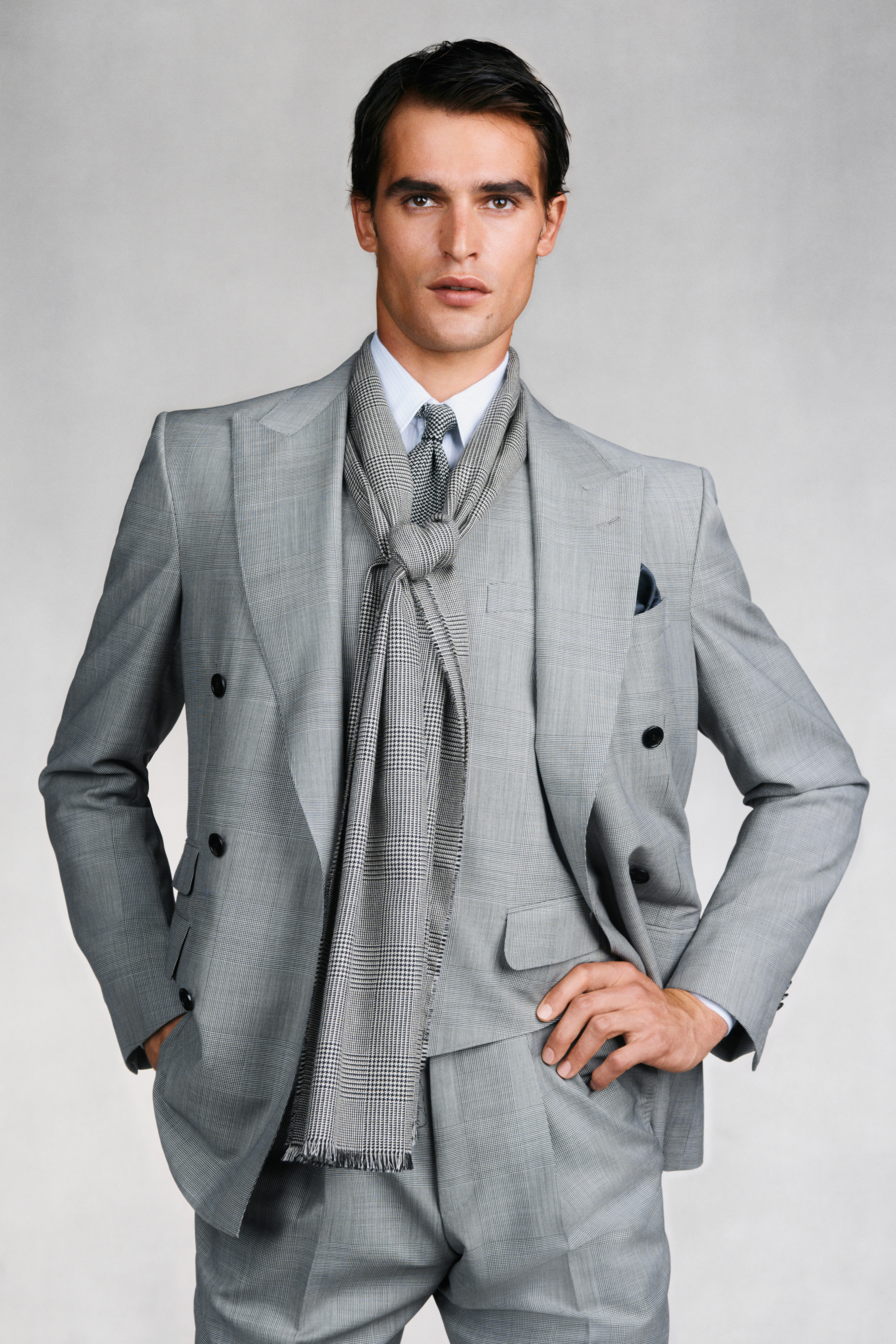
Simon Holloway's vision for Dunhill continued to evolve into one of the most compelling explorations of modern British elegance. For Spring/Summer 2027, he drew inspiration from iconic English figures such as Roger Moore, Lucian Freud, and Lord Snowdon, creating a collection that balanced precision with personality.
The wardrobe unfolded like a cinematic narrative, moving from yacht decks and summer opera evenings to dinners beneath changing skies. Navy blazers anchored the collection, complemented by gradient blue sporting jackets cut in exceptional fabrics woven in Huddersfield. Escorial wool reefer coats, kid mohair tailoring, linen suits, suede loafers, and refined leather accessories reinforced the house's commitment to craftsmanship.
What elevated the collection was its understanding of elegance as something lived rather than performed. Scarves were tied casually, jackets worn with ease, and eveningwear softened through silk dupioni and lightweight constructions. The result felt unmistakably British, yet entirely contemporary.
Brunello Cucinelli: Thought Is Free
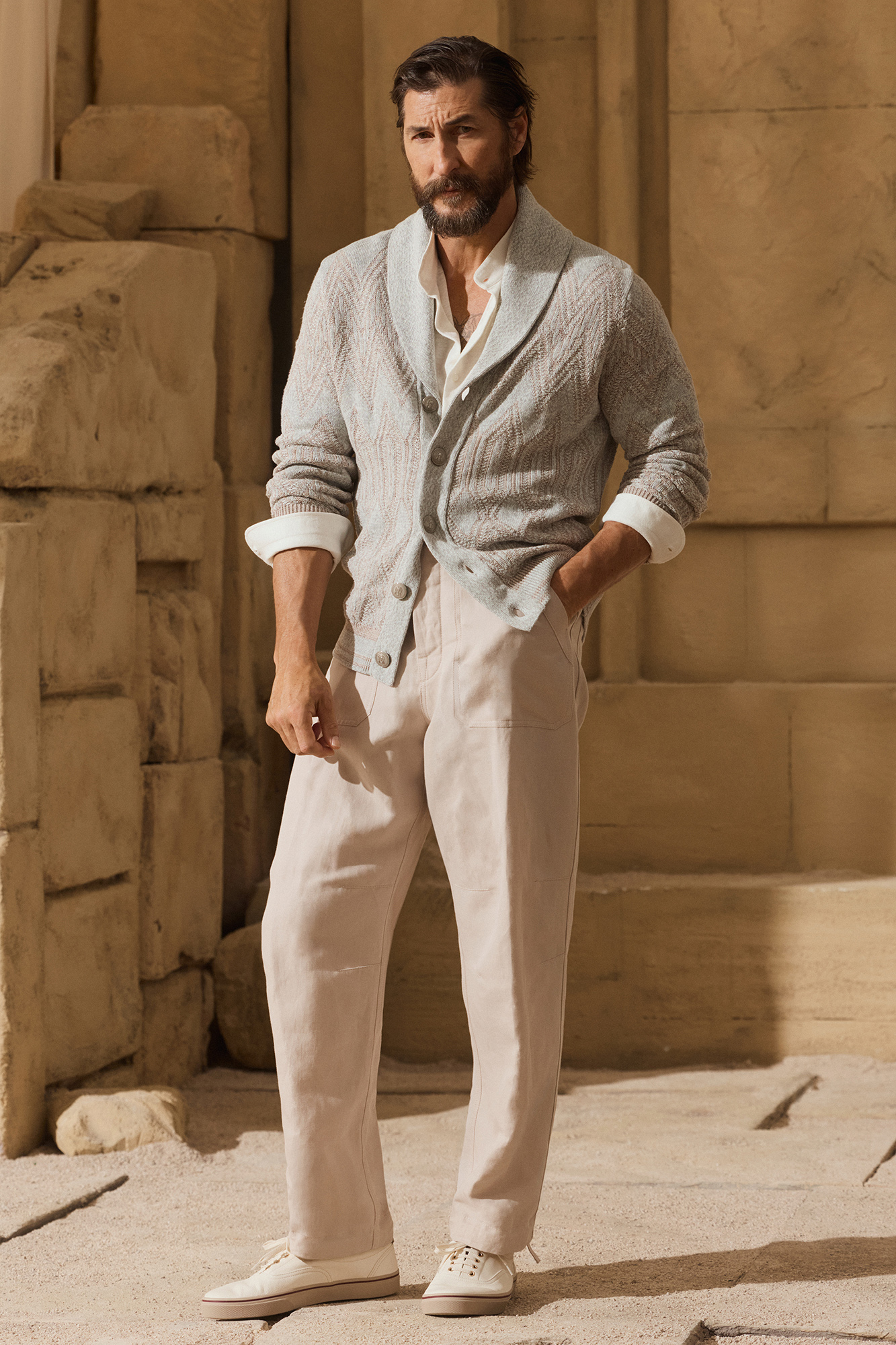
Brunello Cucinelli's collection carried one of the season's most compelling messages. Entitled Thought Is Free, it celebrated individuality and the freedom to transcend conventions.
The collection proposed a wardrobe for a contemporary man who refuses rigid categories. Tailored blazers were paired with worn denim, cargo trousers with ties, and relaxed tailoring with simple polos and T-shirts. Formality and informality coexisted naturally, reflecting the complexity of modern lifestyles.
The palette revolved around sophisticated neutrals, ivory, sand, tobacco, and leather, enriched by subtle accents of raspberry, apricot, powder blue, and aqua green. Washed linens, lightweight wools, soft suedes, and textured cottons created a sense of ease and authenticity.
What distinguished Cucinelli was its humanistic approach. The collection suggested that elegance is not about following rules but about developing the confidence to interpret them personally. In a luxury landscape often driven by trends, Thought Is Free felt refreshingly timeless.
Thom Browne: Cultivating Imagination
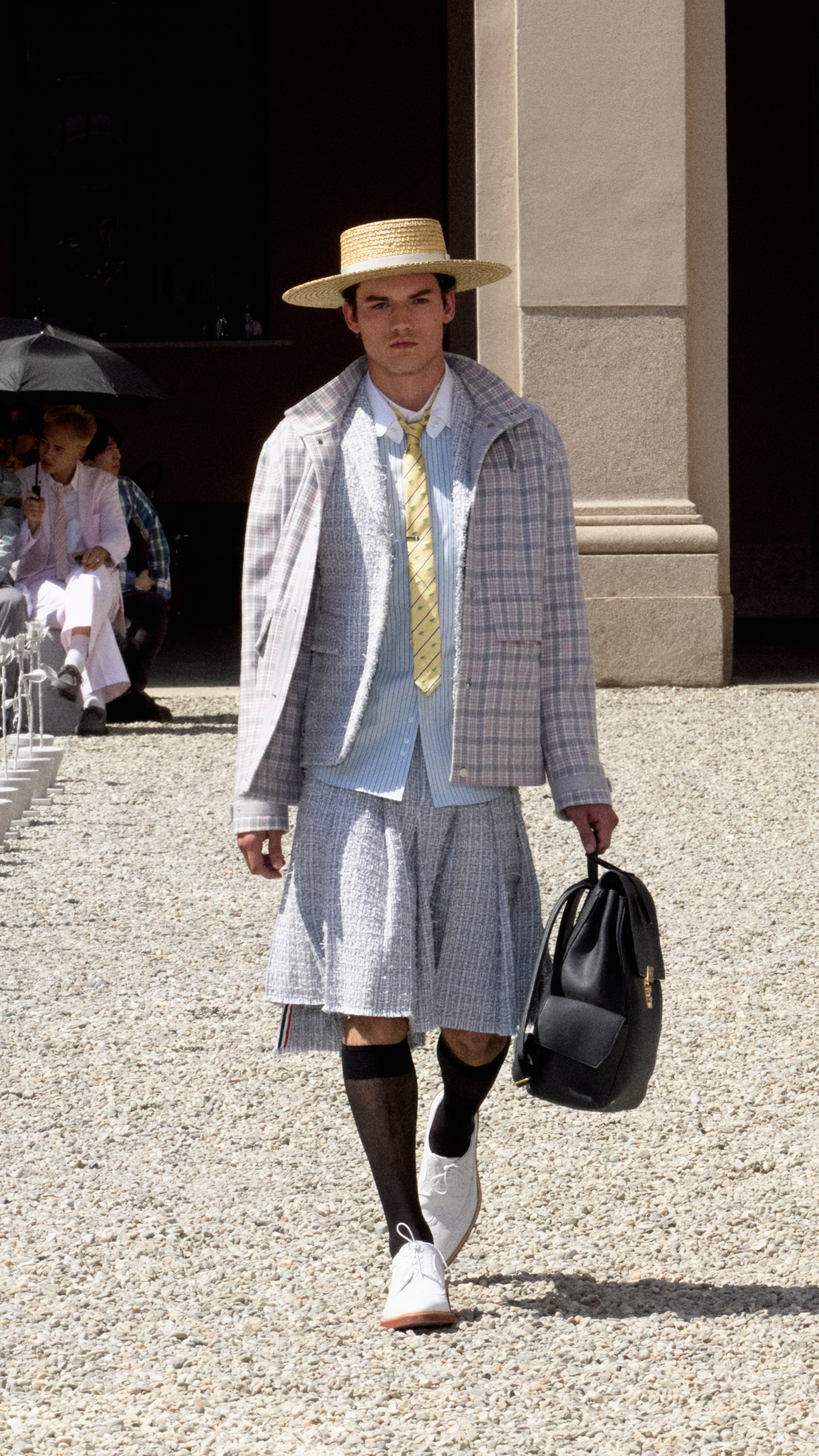
Returning to Milan for the first time since 2008, Thom Browne delivered one of the season's most memorable presentations. Set within Palazzo Serbelloni, the show transformed the venue into a meticulously arranged garden populated by hundreds of seersucker flowerpots.
Nature became the collection's central metaphor. Bumblebees, dragonflies, frogs, ants, and honeycomb motifs appeared through elaborate embroidery, appliqués, and artisanal embellishments. Yet beneath the fantasy remained Browne's unmistakable tailoring language.
Classic American prep was reimagined through lighter fabrics, unlined constructions, short-sleeved jackets, and airy silhouettes. Thom Browne's signature colors (grey, navy, white, and red) were joined by cheerful shades of yellow, green, pink, and sky blue.
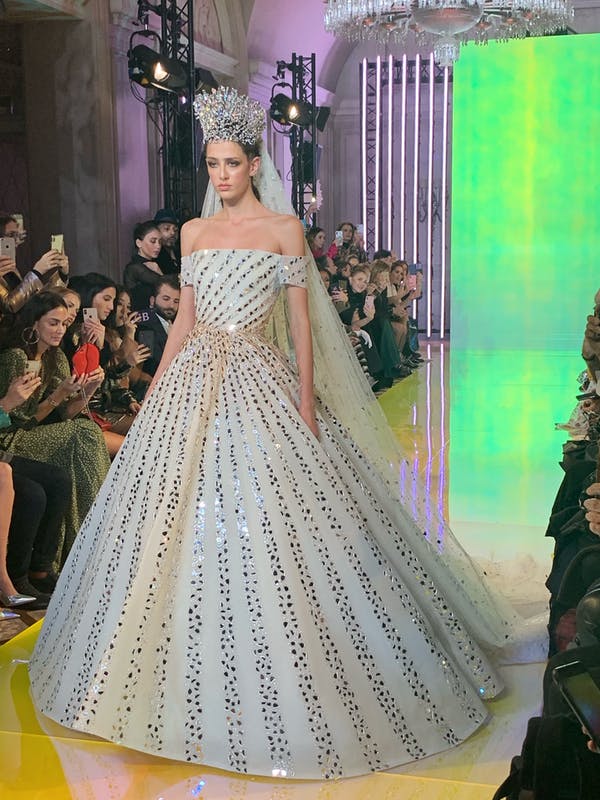
The collection culminated with an ethereal bride emerging beneath a hand-beaded tulle veil, a symbol of renewal and transformation. In a season largely focused on realism and restraint, Browne reminded fashion of its enduring capacity for storytelling and wonder.
The Season's Defining Themes
Across these six collections, several key themes emerged.
First, tailoring continued its transformation toward softness. Whether at Armani, Paul Smith, Dolce & Gabbana, or Dunhill, structure yielded to comfort without sacrificing sophistication.
Second, designers embraced cultural specificity. Sicily, the Mediterranean, British country-house elegance, and Missoni's seaside spirit all served as authentic points of reference rather than superficial themes.
Third, craftsmanship remained central, but its expression became quieter. Rather than overt displays of luxury, houses focused on exceptional fabrics, subtle details, and construction techniques that rewarded closer attention.
Finally, there was a renewed commitment to wearability. Fashion no longer sought to dominate the wearer. Instead, garments were designed to accompany real life, adapting to movement, travel, work, and leisure.
A New Definition of Luxury
Milan Men's Fashion Week Spring/Summer 2027 ultimately revealed a profound shift in contemporary menswear. Luxury is becoming less about excess and more about clarity. It is increasingly defined by authenticity, craftsmanship, and emotional resonance rather than status alone.
Whether through Prada's disciplined minimalism, Dolce & Gabbana's Mediterranean sensuality, Armani's poetic elegance, Paul Smith's playful tailoring, Missoni's carefree optimism, or Dunhill's refined British character, the season demonstrated that the future of menswear lies not in radical reinvention but in meaningful evolution.
In an era often defined by acceleration and distraction, Milan offered a powerful reminder that true style is not about shouting the loudest. It is about knowing exactly who you are and dressing accordingly.