Under the patronage of the Lebanese Ministry of Tourism, Joe Challita – the Guardian of Lebanese Fashion History, revives the nineteenth-century form of the Lebanese Tantour, bringing a lost language of dress back into contemporary fashion.
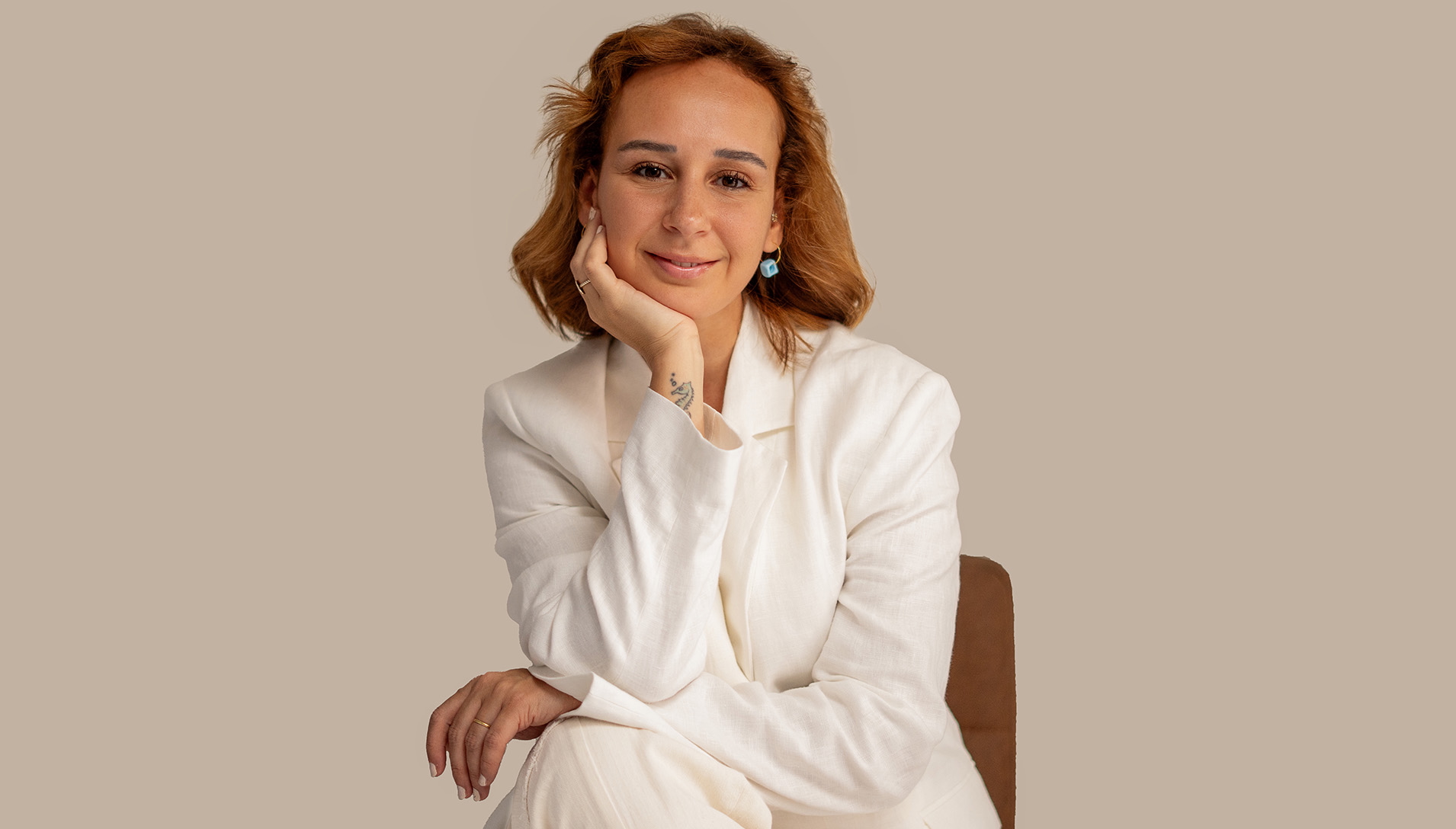
In Lebanon, heritage is often remembered through images long after the knowledge behind them begins to disappear. Joe Challita has spent years working in that space between image and evidence. Known in the Lebanese media as the “Guardian of Lebanese Fashion History,” he has built his practice around recovering, documenting and reintroducing the garments, techniques and objects that once defined Lebanese dress. The Tantour became one of his most visible revivals.
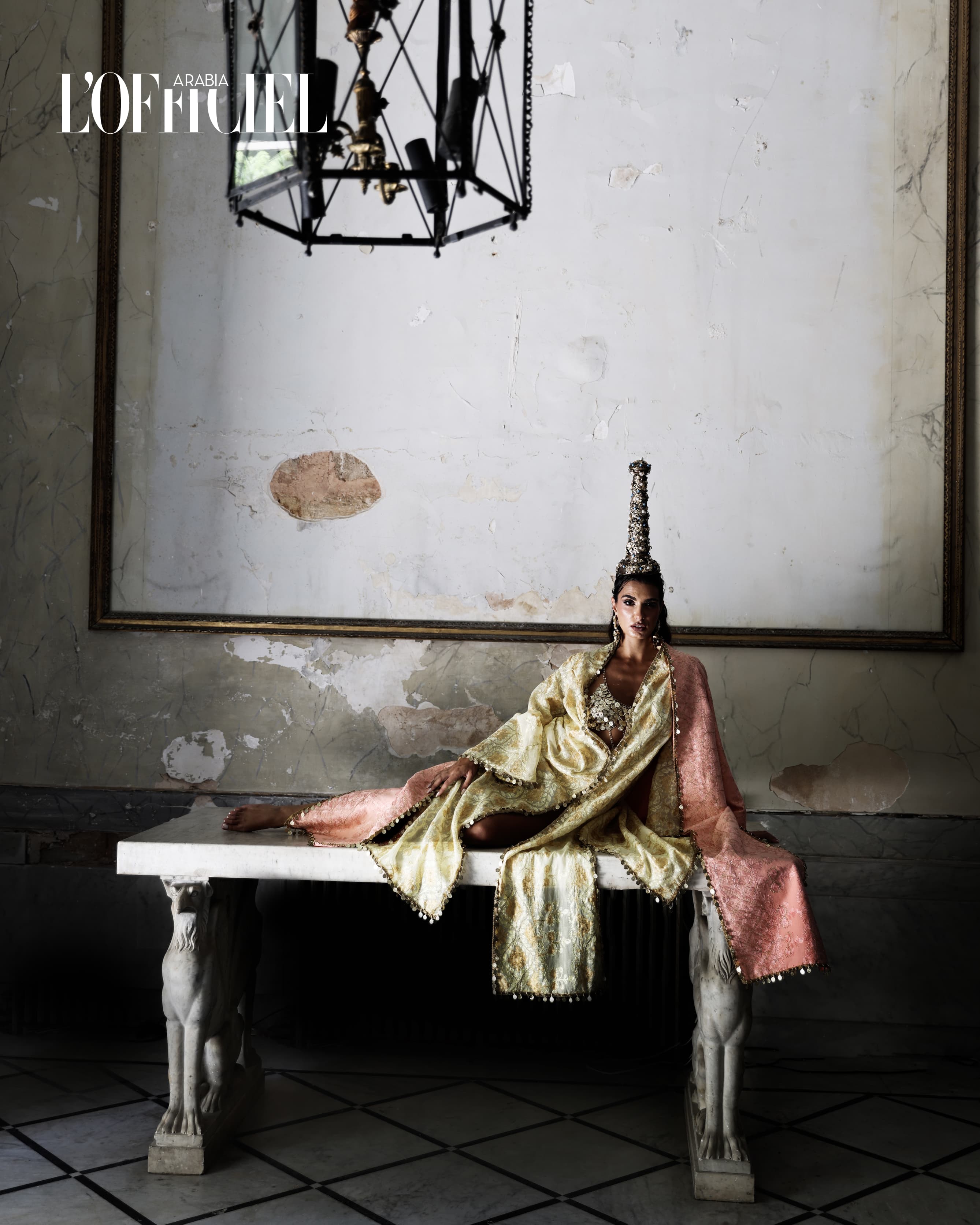
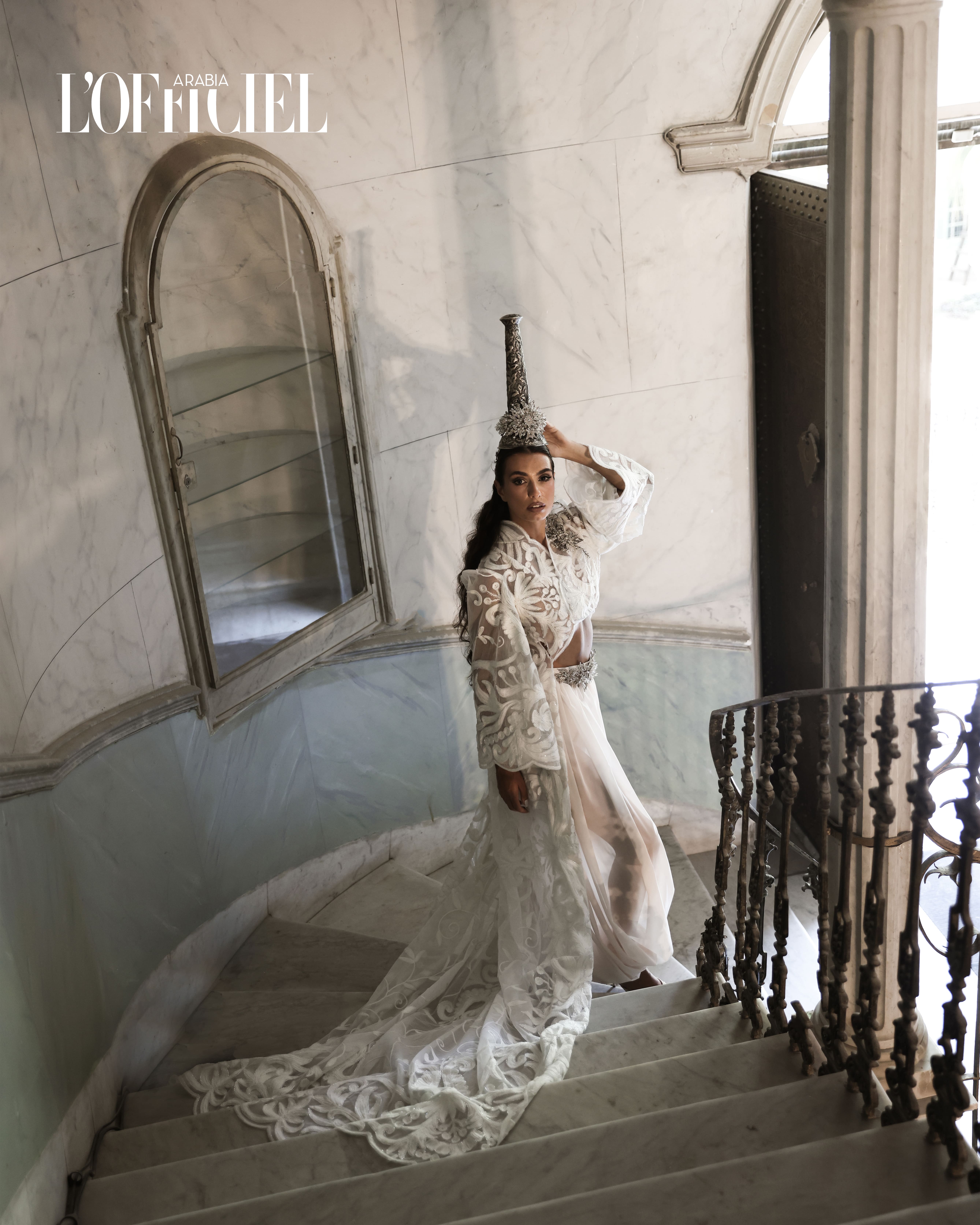
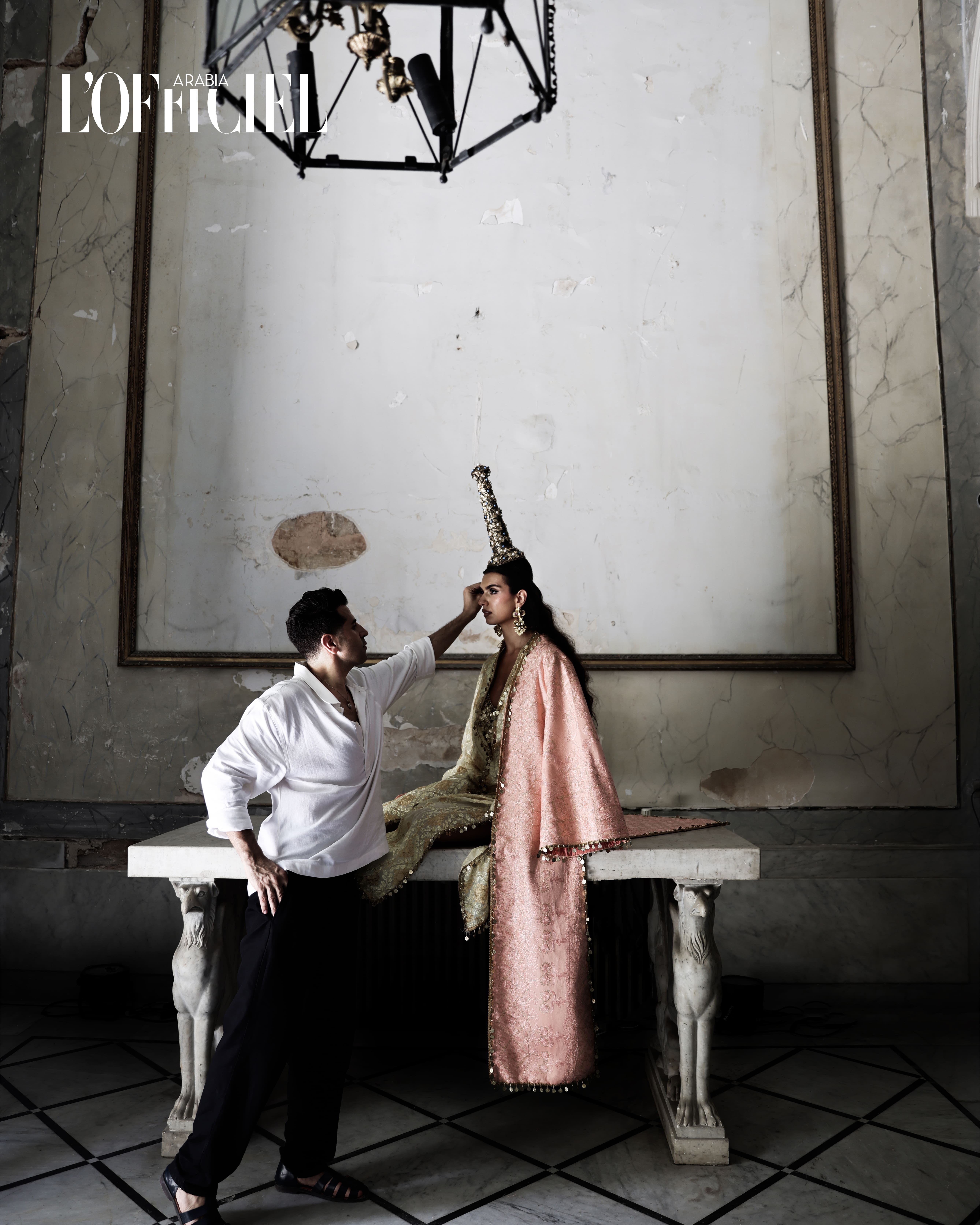
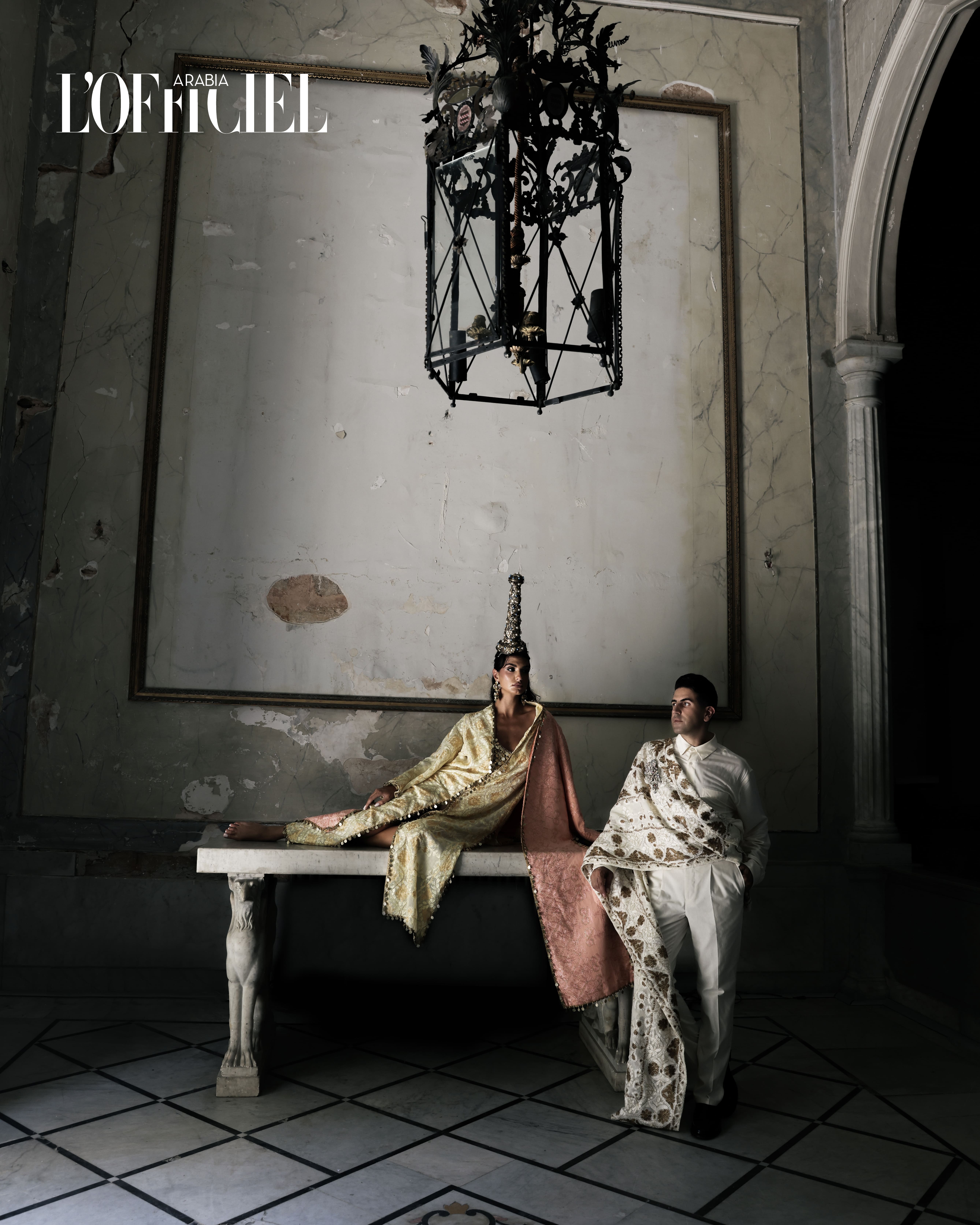
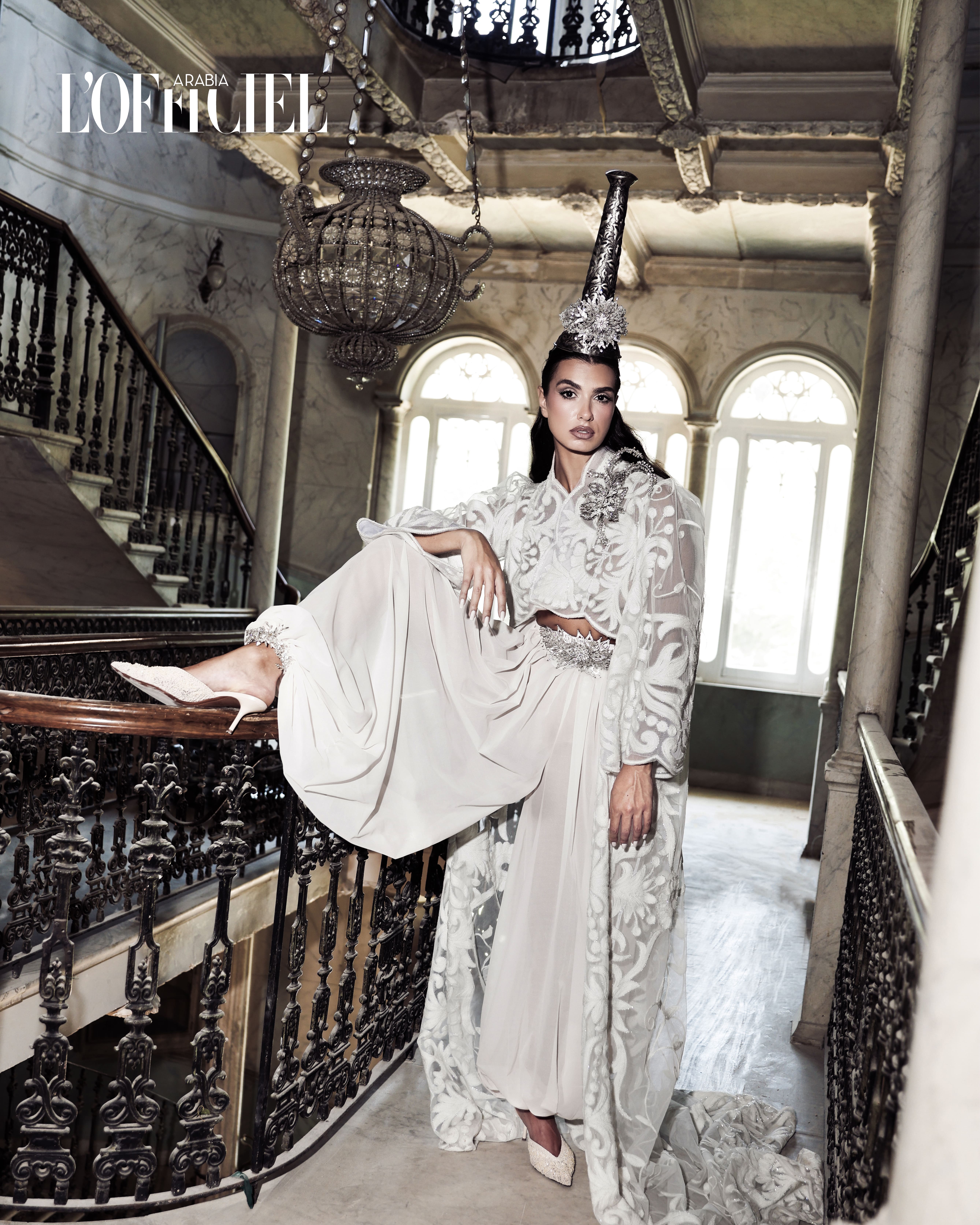
At Sursock Palace, the photographs begin like a dream of another Beirut. The model moves through the grand staircase in white, her silhouette extended by a towering metal Tantour. Elsewhere, she sits against the palace’s worn walls, wrapped in embroidered textiles.
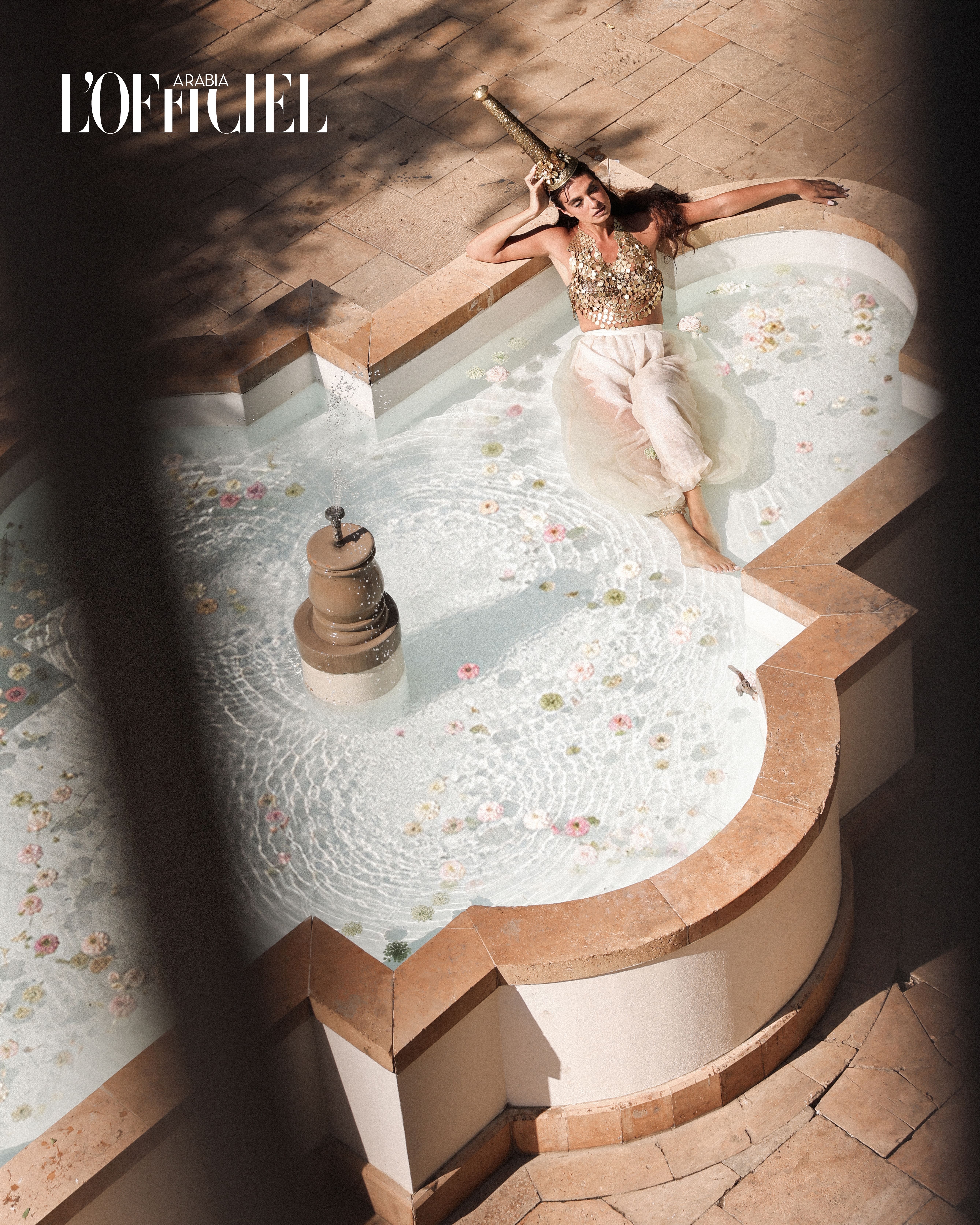
Then the fantasy becomes more intimate. At Liza Beirut, the model reclines in a fountain, surrounded by water and flowers, as though in the private bath of a Lebanese princess. The setting is contemporary, but the image seems to suspend time. This is not an attempt to reconstruct the nineteenth century literally. It is an invitation to imagine what Lebanese fashion might look like when its historical vocabulary is allowed to live again.
The Tantour conical headdress is one of the most recognisable forms associated with Lebanese traditional dress, yet its historical reality has become blurred by the versions encountered today. Historical photographs document women of Mount Lebanon wearing tall, rigid conical headpieces, while surviving examples point to metal construction and craftsmanship.
Commercial folkloric reproductions retained the silhouette while changing its material language. Cardboard, fabric and lightweight constructions could reproduce the effect of a tall cone, but not its physical presence or the information contained in its construction.
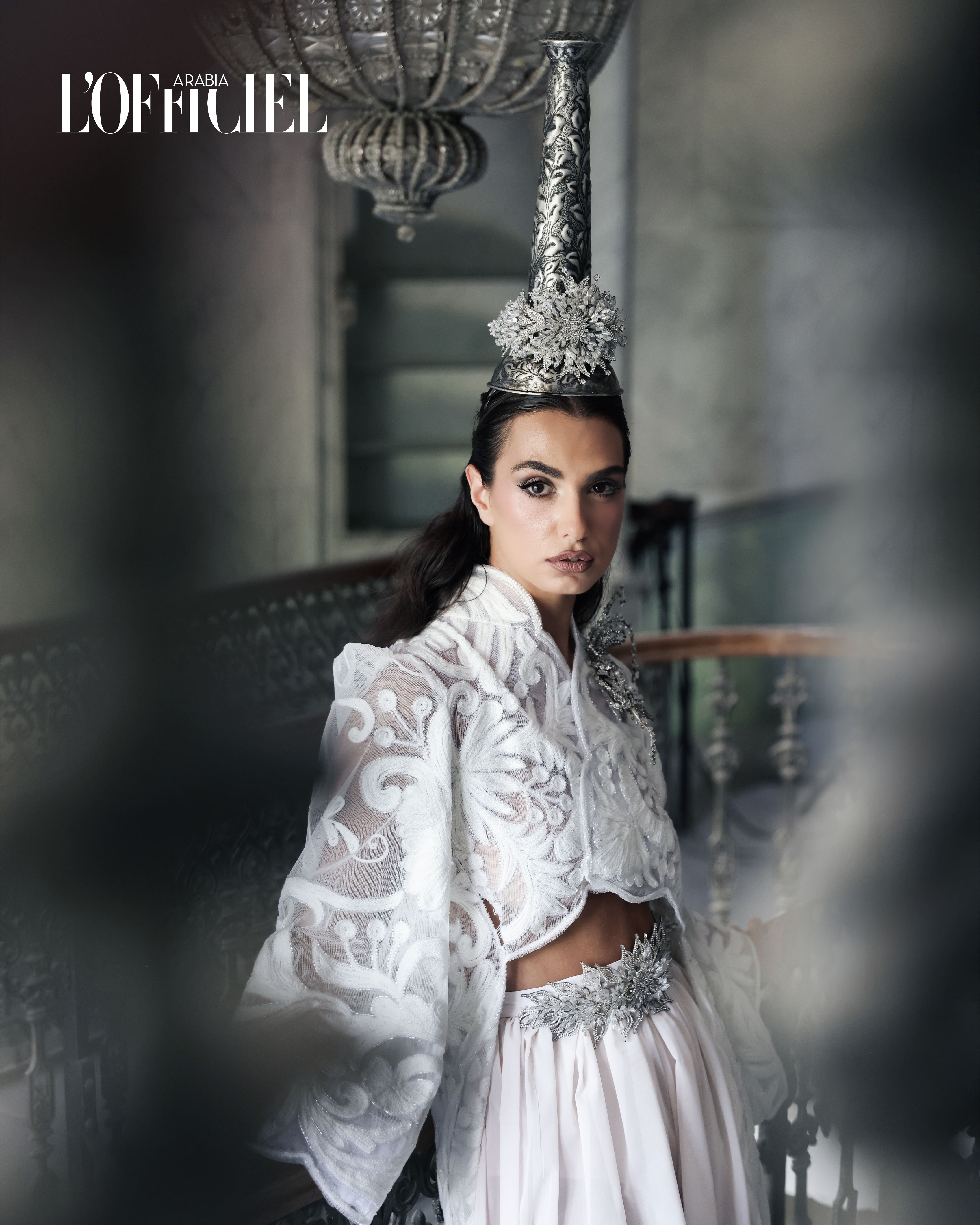
That distinction became central to Challita’s work. “Many people knew the word Tantour without necessarily knowing what the authentic historical Tantour actually looked like,” he says. “We had inherited the image, but not always the knowledge behind it.”
For Challita, reconstruction therefore begins with a simple principle: the aim is not to make something that merely looks Lebanese, but to recover the logic of the historical object. “There is a difference between making something Lebanese-looking and reconstructing Lebanese heritage.”
In 2023, Challita brought his reconstruction of the Tantour into contemporary fashion, when it appeared in Vogue Arabia. The moment mattered because it placed a distinctly Lebanese historical object within an international fashion conversation.
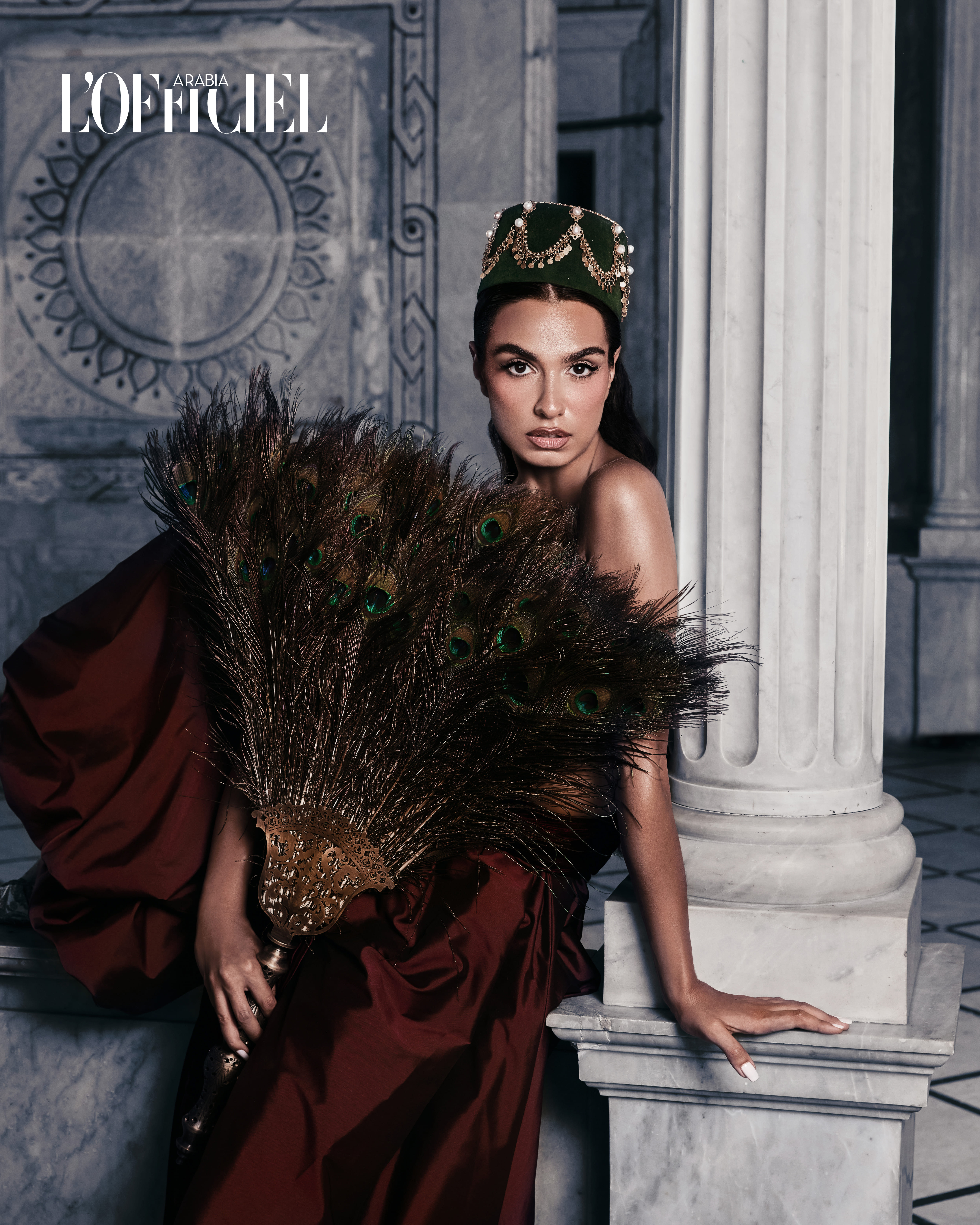
“I was incredibly happy because it meant that Lebanese folklore had entered the international fashion discourse,” he recalls. But the significance went beyond the publication. The appearance helped expose a gap in cultural memory: even among younger Lebanese generations, many people had encountered the name or commercial image of the Tantour without necessarily knowing its authentic historical form.
His answer was not nostalgia. It was material research.
Challita’s reconstruction is made in hand-chiseled copper, deliberately returning the object to the physical character of a metal headdress rather than imitating metal through costume materials.
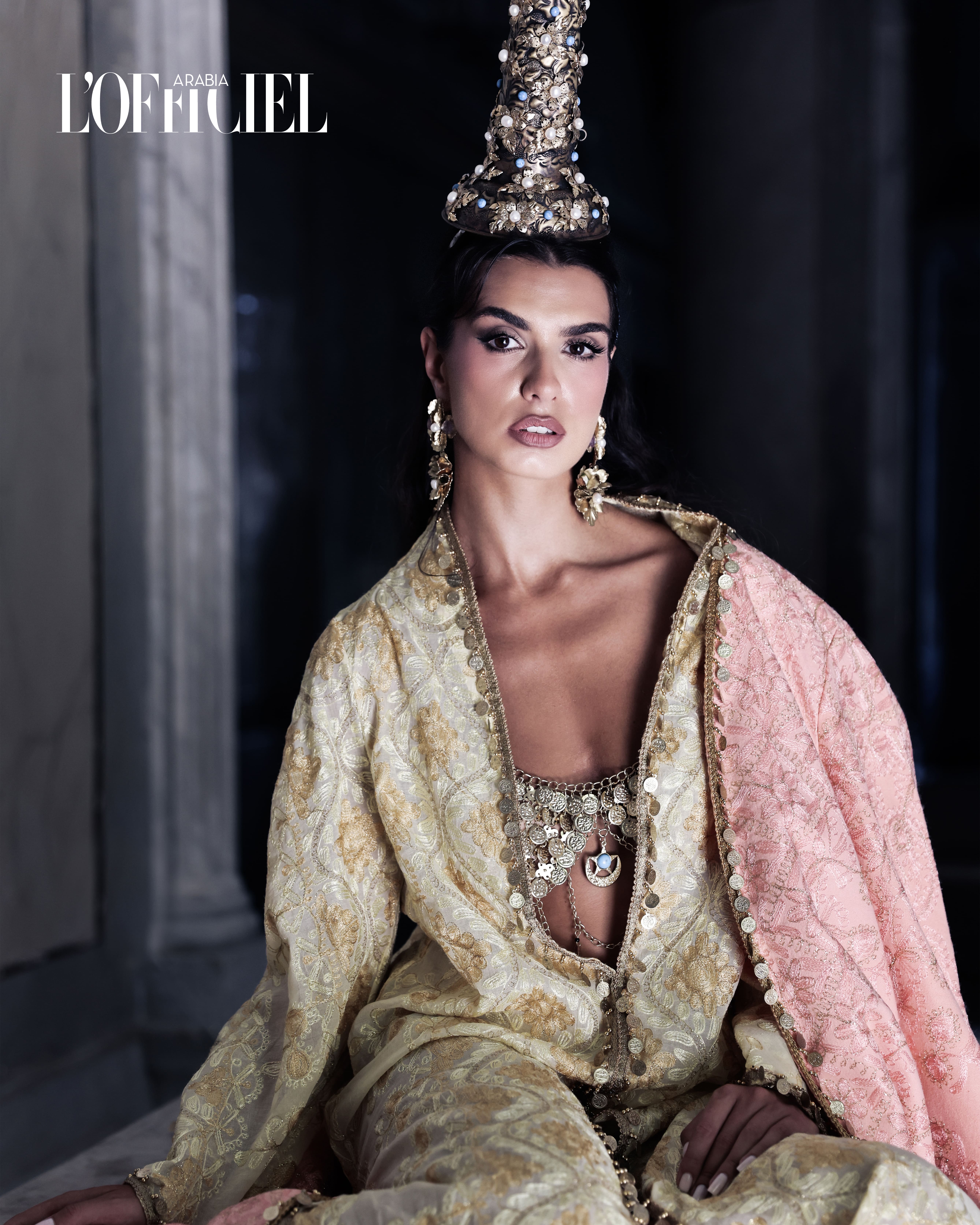
“I didn’t want the appearance of metal. I wanted the object to actually behave like a historical metal headdress.”
For him, material is historical evidence. Weight changes how a headdress sits on the body; surface records the maker’s hand; construction reveals technique. That information can disappear when a historical form is reduced to an image or commercial replica.
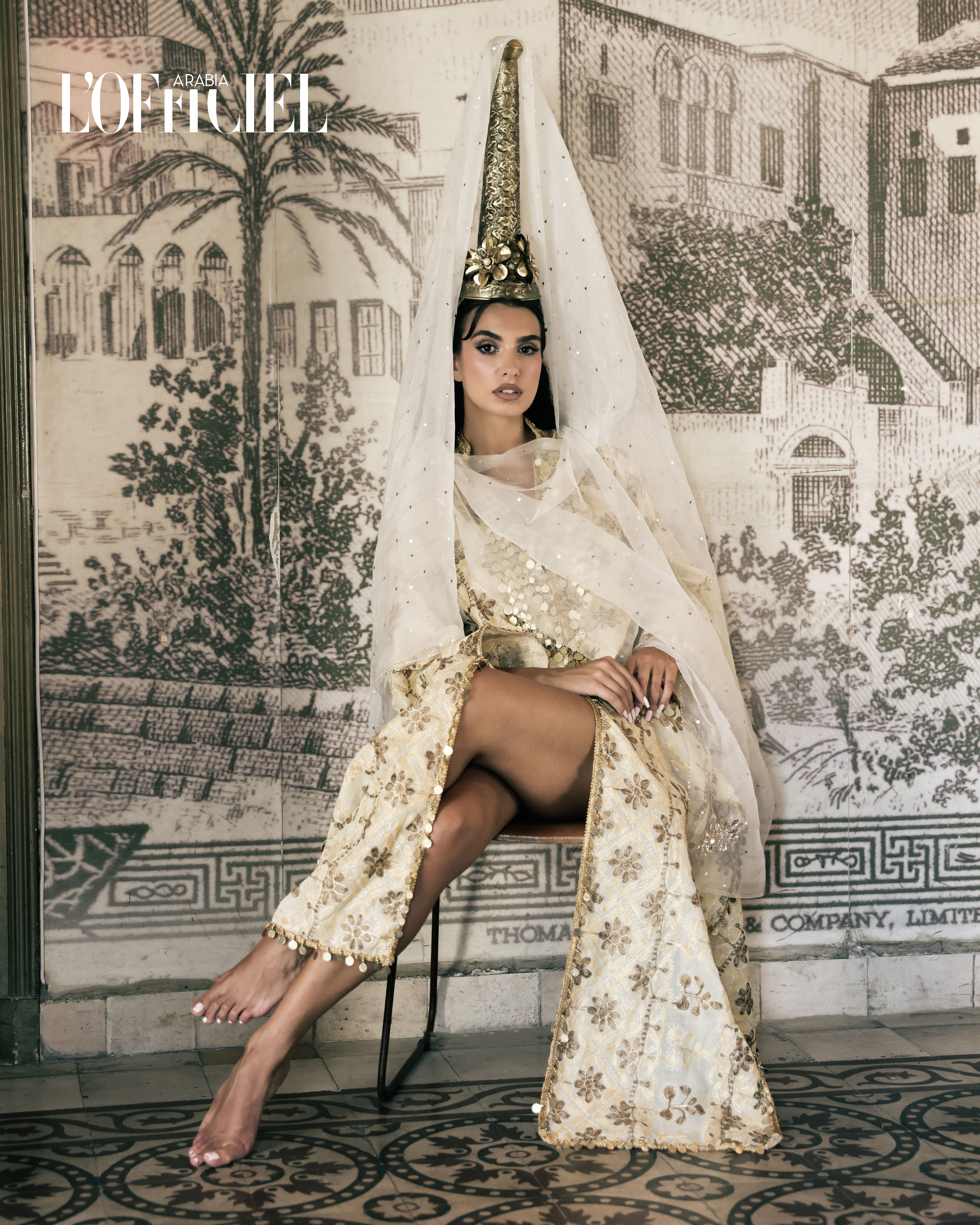
“When you remove the material, you can preserve the image while losing the object.”
This approach is central to Challita’s wider practice through Lebanese Fashion History, bringing research into dress, textiles, embroidery and craftsmanship into contemporary fashion discourse. His work has included the Tantour, Kubran, Lebanese embroidery traditions, Tyrian Purple and the medieval Maronite mummy textiles of Assi el-Hadath.
There is another distinction Challita is determined to make: historical Lebanese dress should not be confined to the category of “costume.”
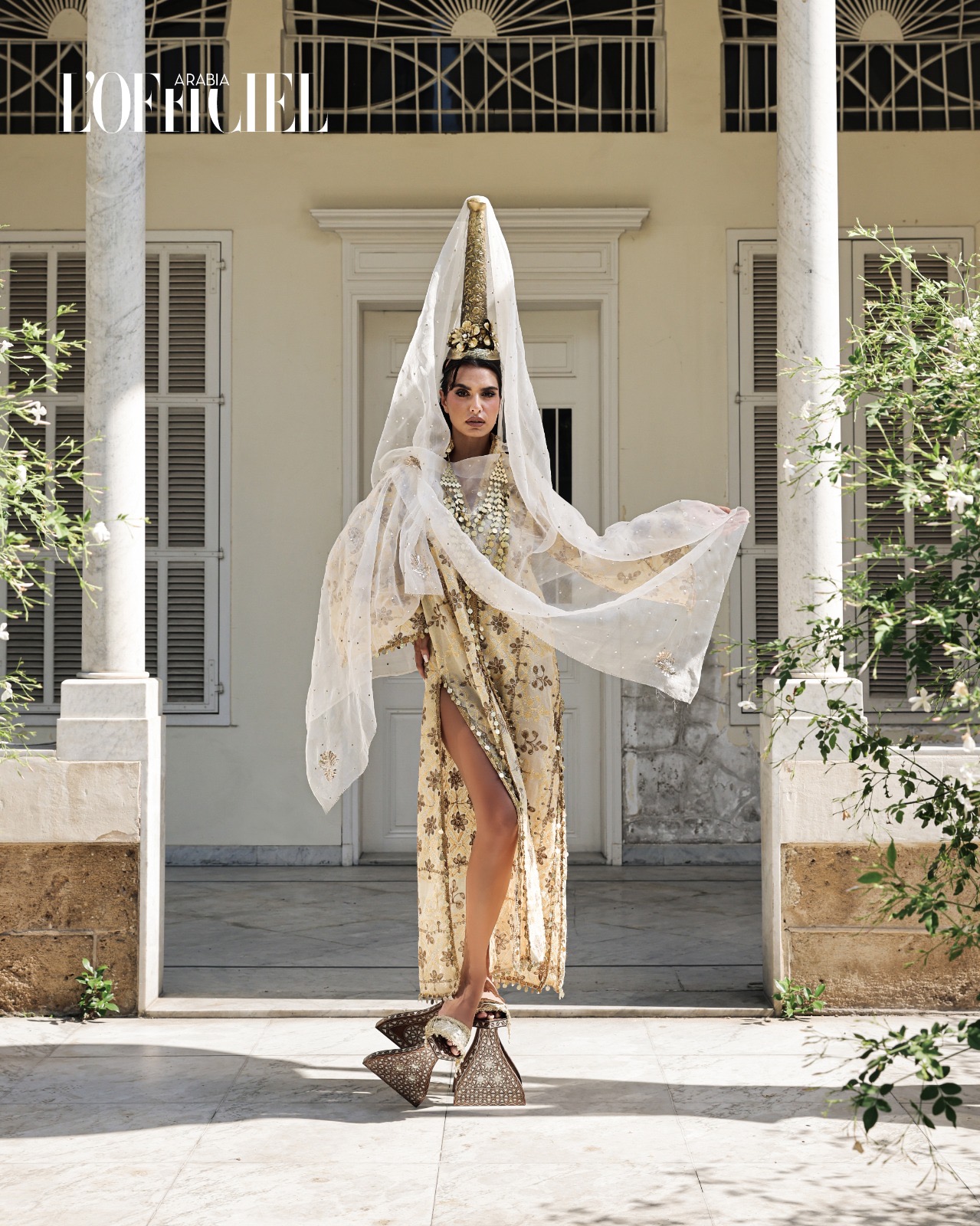
“For me, they are fashion.”
That philosophy explains the visual language of the new editorial. At Sursock Palace, the Tantour becomes architectural. The staircase amplifies its verticality; the palace gives it a language of grandeur. Against the historical backdrop, the model becomes almost a figure from a lost Beirut. In the fountain, the object becomes softer and more fantastical.
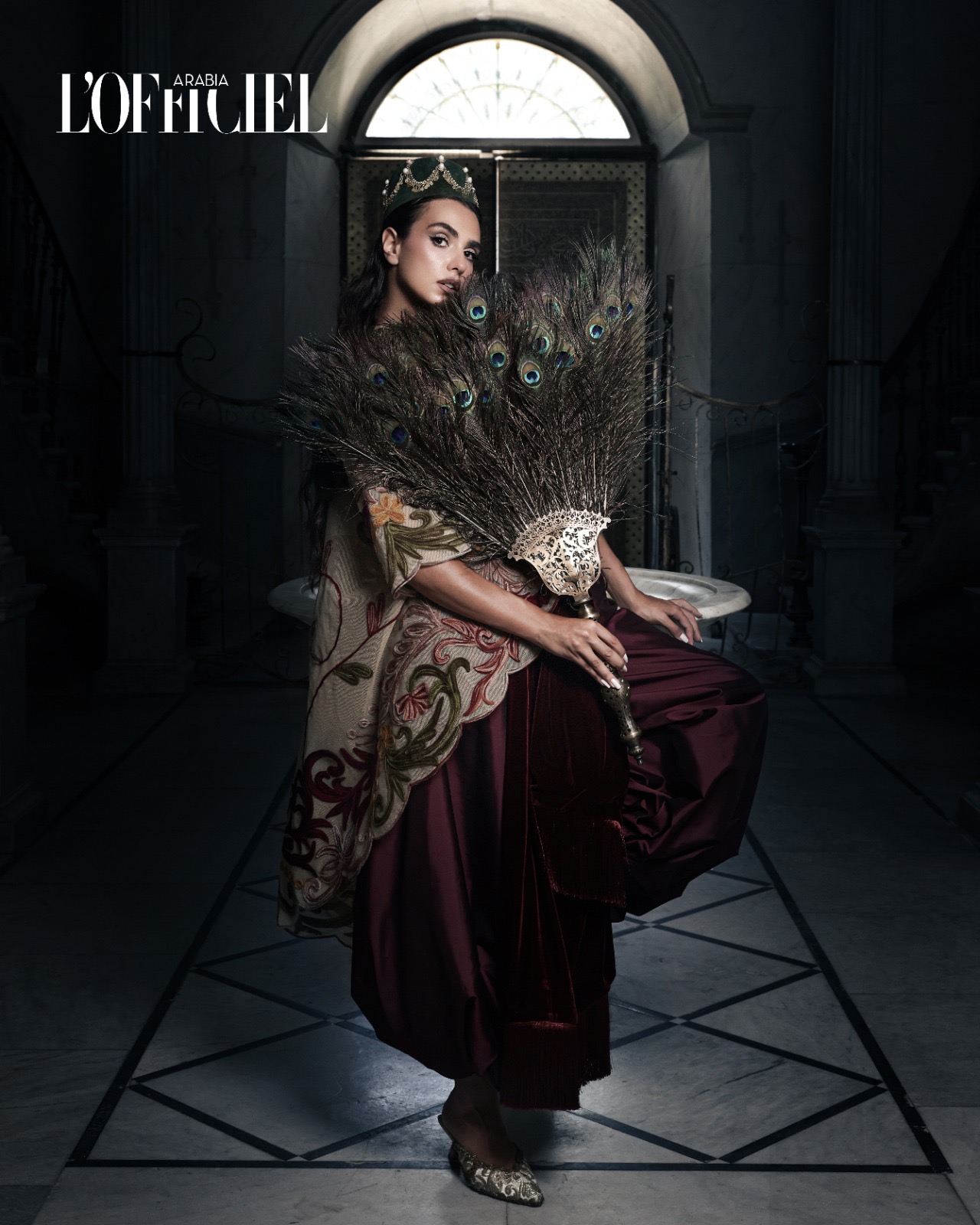
“I imagined it almost as a princess’s bath,” Challita says. “I wanted to imagine her moving, bathing, resting, existing. I wanted the woman to live with the garment rather than simply stand there wearing it.”
His work is driven by the belief that preservation requires documentation, research, reconstruction and the willingness to place heritage back into contemporary culture.
That responsibility has become increasingly urgent. Lebanon’s cultural memory has been fragmented by war, displacement, economic crisis and the loss of physical archives. Nostalgia is one of the country’s strongest visual languages; Challita insists that it be supported by knowledge.
His question is deceptively simple: What did people actually wear? How was it made? What materials were used? What did the silhouette communicate? And, when we bring it back, can we do so without changing what it was?
Back at Sursock Palace, the Tantour rises above the model like a piece of architecture. In the darker interiors, it becomes almost sculptural. In the fountain, it enters fantasy. Across the images, however, the object remains recognisable: tall, imposing and unmistakably Lebanese.
For Challita, that is the point. “I don’t want the Tantour to become a novelty. I want people to know what it was, how it was made and why it mattered.”
Preservation is not simply keeping an object behind glass. It is keeping its knowledge alive enough to be studied, understood and reinterpreted without losing its identity.
The Tantour has returned; not as a costume from a vanished Lebanon, but as an object with a history, a material language and a future. And for the Guardian of Lebanese Fashion History, that is what preservation ultimately means: giving heritage back its place in the living imagination of Lebanon.
TEAM CREDITS:
Creative Producer: @lebanesefashionhistory
Wardrobe: @joechallitacouture
Accessories: @etincelle_jewelry_accessories
Model: @marietherese.hanna
Photos: @khaldymoh
Makeup: @mhammadharb
Hair: @amer.moroo
Patronage: @ministryoftourism.lebanon
Location: @sursockpalace
Locaton: @lizabeirut
#tantour #lebanon