The Paris Diary: Identity in Every Stitch
Paris in the winter is a mood; a nostalgic blend of grey skies and the frantic, infectious energy of Haute Couture Week. There is a specific "fashion fever" that takes over the Champs-Élysées; a blur of familiar faces from the mastheads of global glossaries and digital icons whom I only ever seem to encounter in this beautiful, chaotic vacuum. But while the main calendar often focuses on the spectacle of the "New," my heart was set on a different narrative.
I returned to Paris this January as an ambassador of heritage. For me, fashion is hollow without roots. It becomes truly transcendental only when it carries the DNA of a nation. This is the raison d’être of L’Oriental Fashion Show, helmed by the visionary Hind Joudar. It is a bridge between the "Otherness" of the East and the prestige of the West.
Day One: Gilded Echoes at the Hôtel de Crillon
My journey began at the Hôtel de Crillon, a sanctuary of French art de vivre. Stepping into the Salon Marie-Antoinette, surrounded by gilded moldings and 18th-century opulence, the stage was set for a dialogue between two worlds.
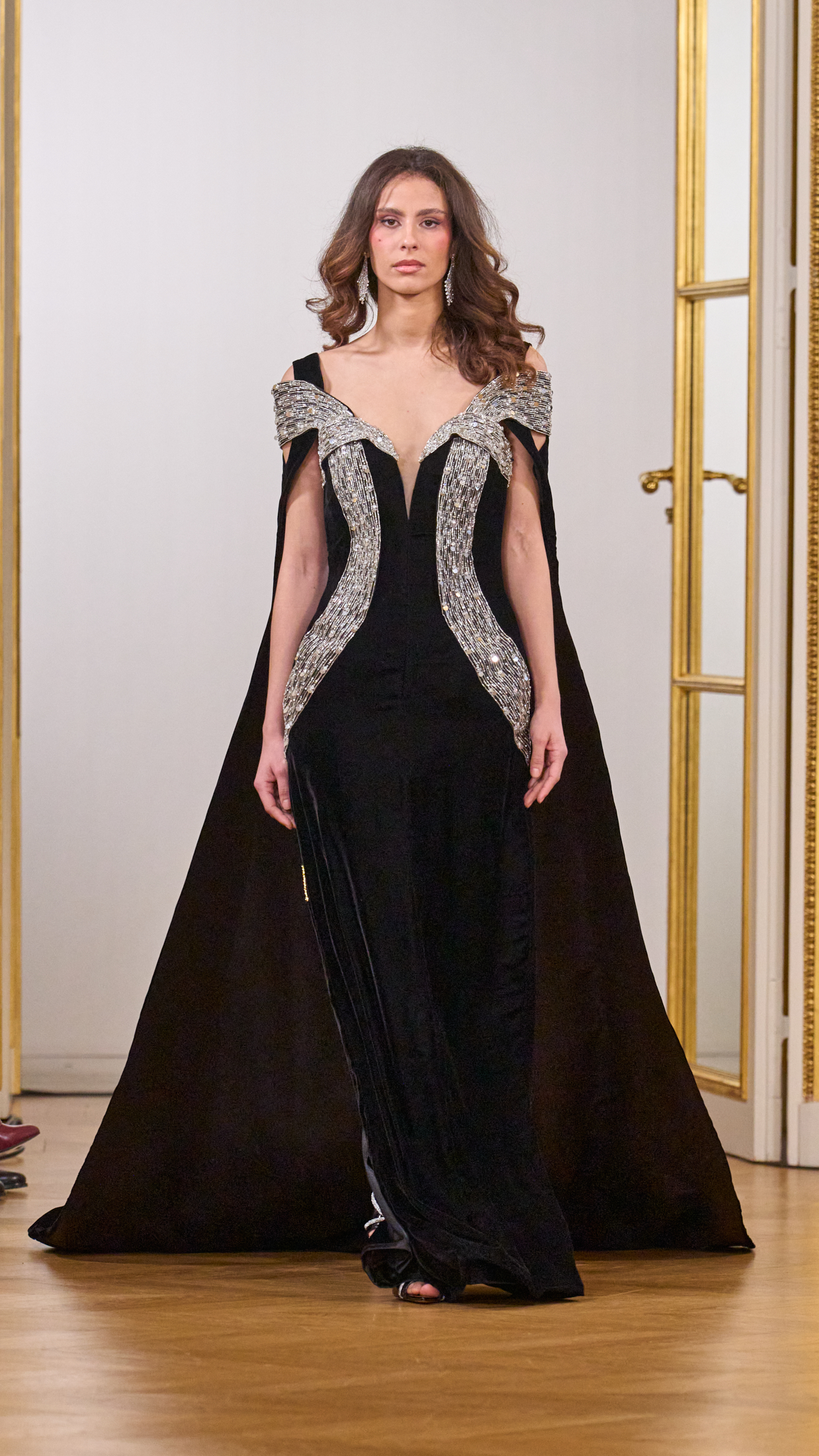
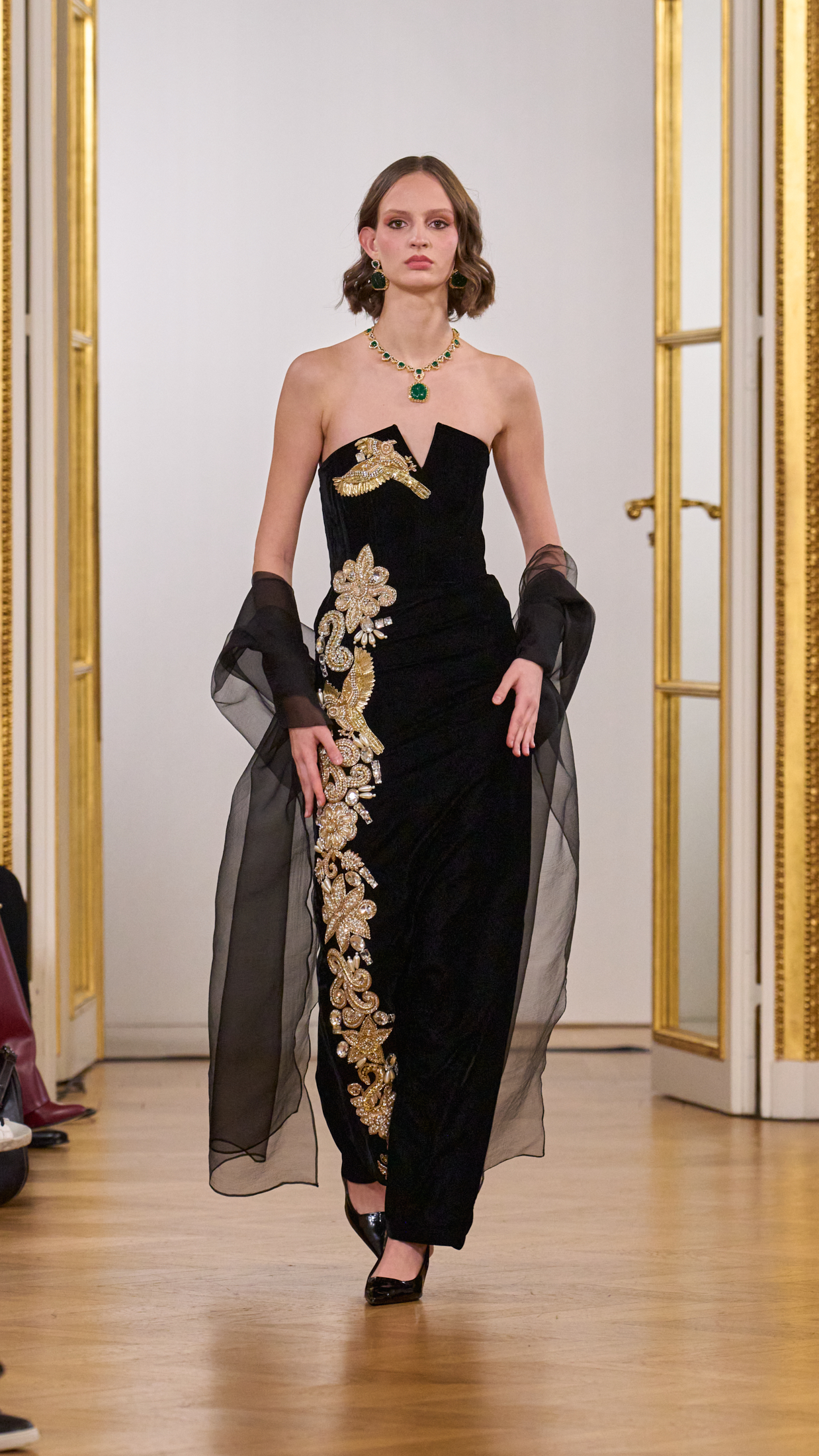
Yoland (Sultanat d’Oman)
The show opened with a brand I first discovered in Turkmenistan: Yoland by Tufool Abdallah. There is a profound power in seeing Sheikha Tufool bint Abdullah bin Ahmed bin Bakheet Al Shanfari bring Omani soul to a Parisian palace. Her Khayal collection was a masterclass in sophisticated restraint. Dominated by black—the color of ultimate elegance—the silhouettes whispered of the Dhofari identity. Inspired by the resilience of the frankincense tree and the ethereal rain lily, the garments moved with a natural softness that felt like a quiet revolution. It was traditional, yes, but undeniably modern.
Reesha Design by Shahad Al Sharood (Dubai/Iraq)
Then, the tempo shifted. The air turned electric as the iconic voice of Om Kalthoum filled the Crillon. Reesha transported us to the "Golden Era" of 1940s and 50s Cairo cinema. It was funky, whimsical, and unapologetically glamorous. Feathers danced on the runway in a celebration of freedom. Shahad Al Sharood is reviving the cinematic allure of the Orient for the modern woman. Watching the models glide by, I felt a surge of certainty: this is a designer destined for the global stage.
Day Two: Ancient Stones and Avant-Garde Dreams
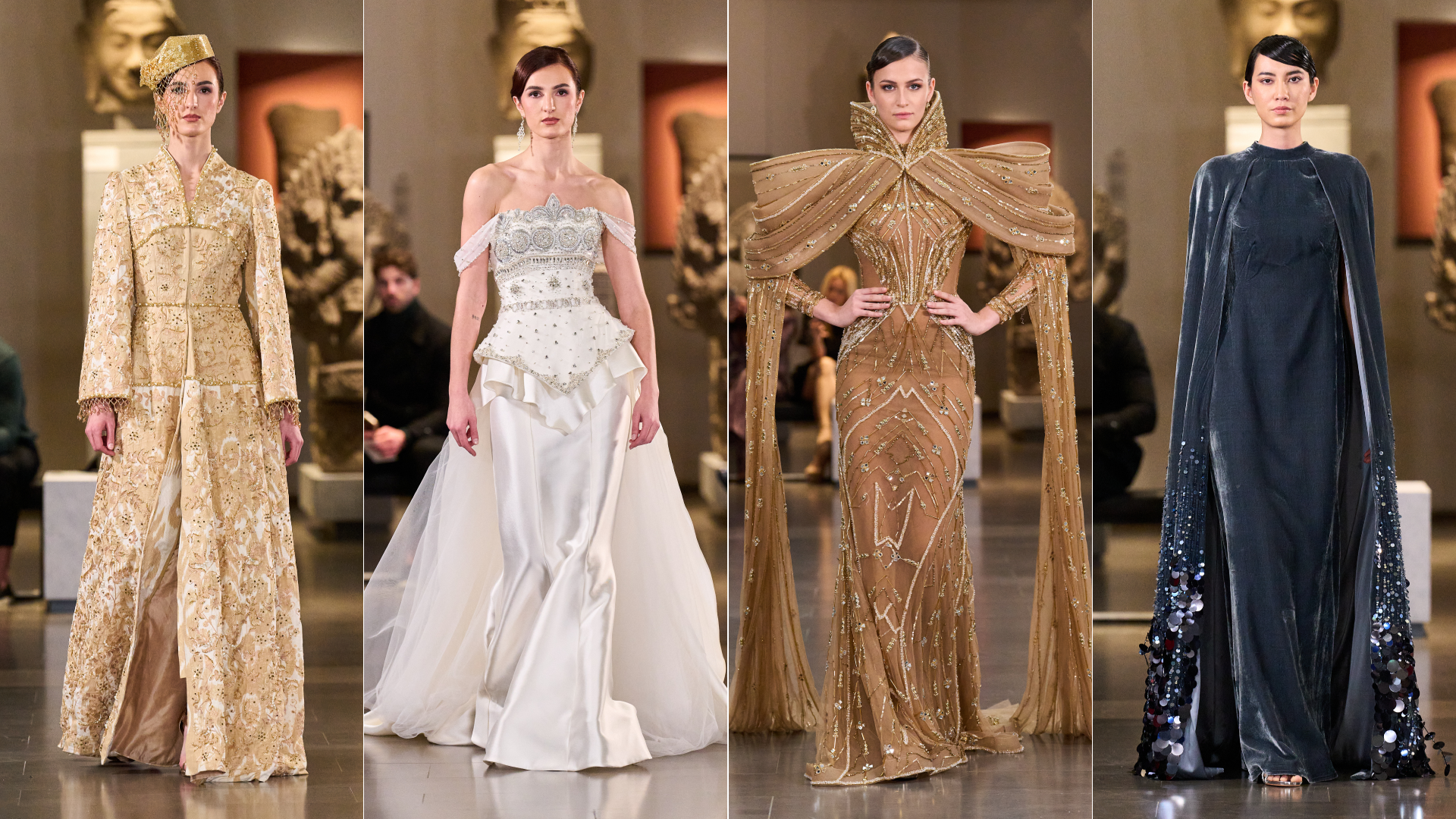
The second day moved to the Musée Guimet, the National Museum of Asian Arts. There is something hauntingly beautiful about watching contemporary couture unfold amidst ancient artifacts; it reminds us that we are all just a single stitch in a much longer tapestry.
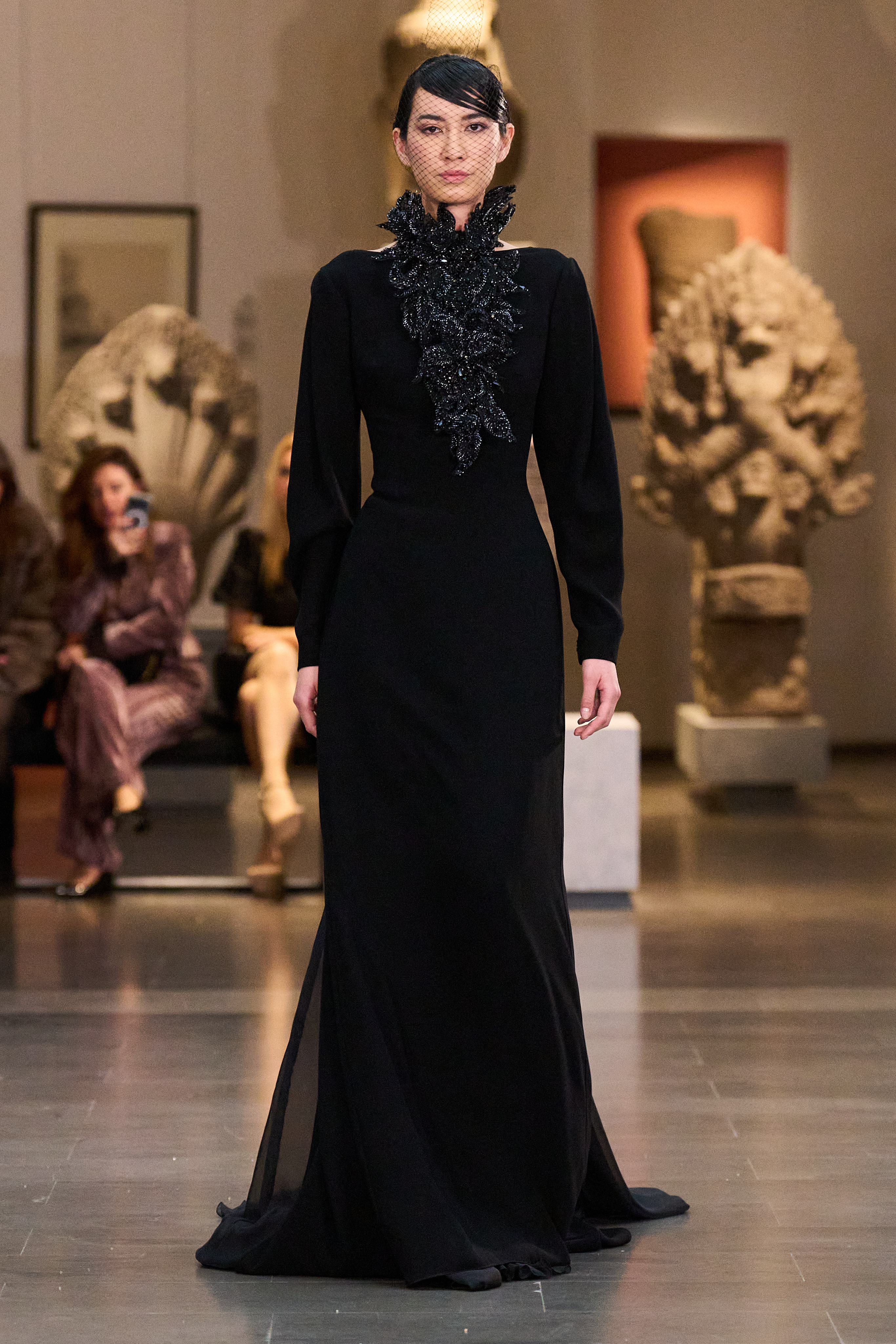
The Lebanese Architect: Bernard Jabbour
The highlight for me was Bernard Jabbour. In a world of "more is more," Bernard chose the path of the purist. His couture was structural, clean, and devastatingly elegant. There was a palpable sensibility in his work; a quiet message that subtlety is the highest form of sophistication. It was a moment of calm, structured beauty that spoke to the intellectual side of fashion.
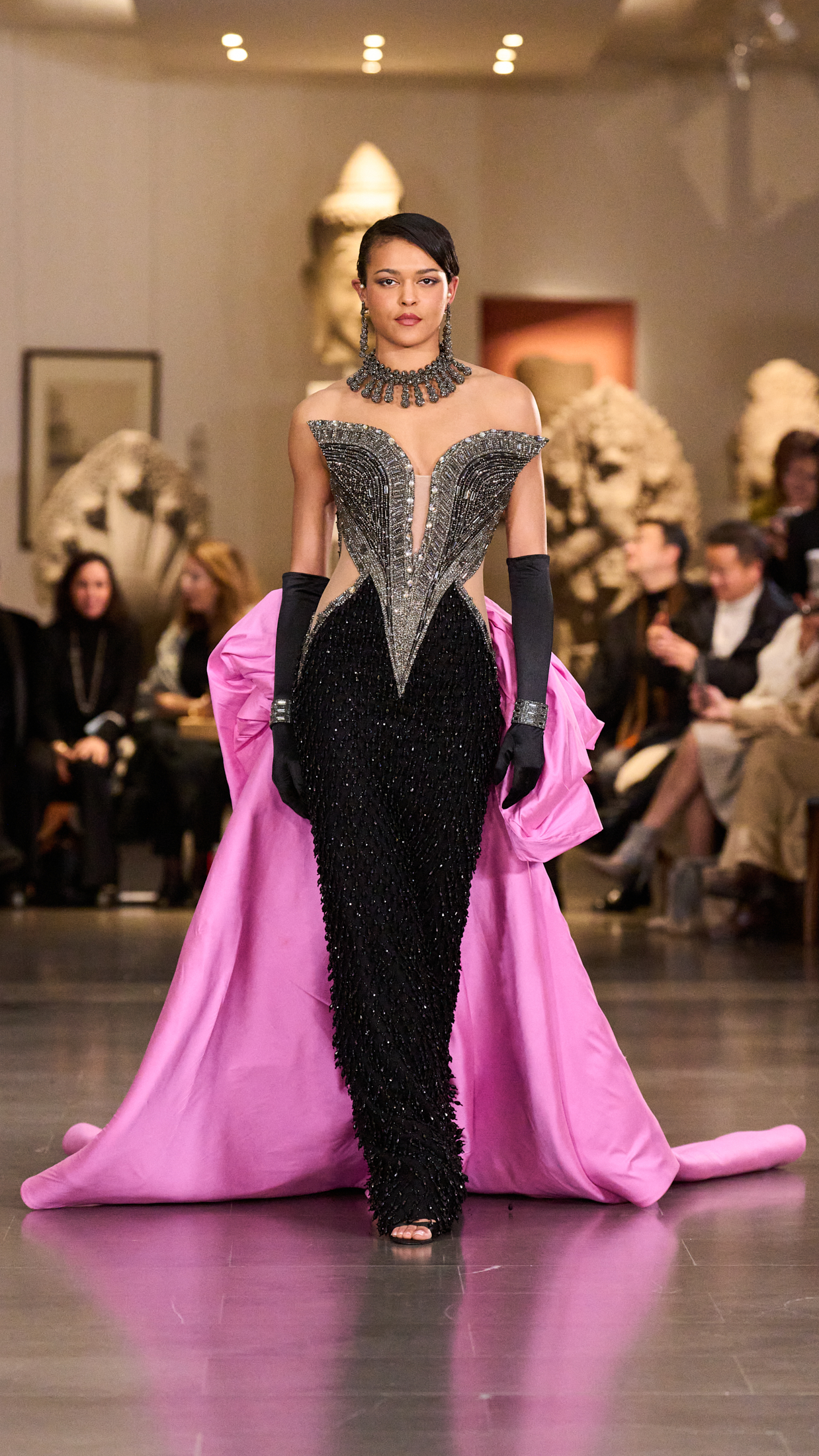
The Egyptian Extravaganza: Hany El Behairy
In sharp contrast came Hany El Behairy. If Bernard was a whisper, Hany was a joyous shout. It was theatrical, bold, and brilliantly "wild," echoing the iconic spirit of the Egyptian legend Sherihan. The collection was not for the faint-hearted but a sensory explosion of glitter, ruffles, and even sound. As the heavy pearls on his gowns clicked together with every step of the models, the clothing itself began to speak. It was a brilliant display of an artist letting his creative depth run wild.
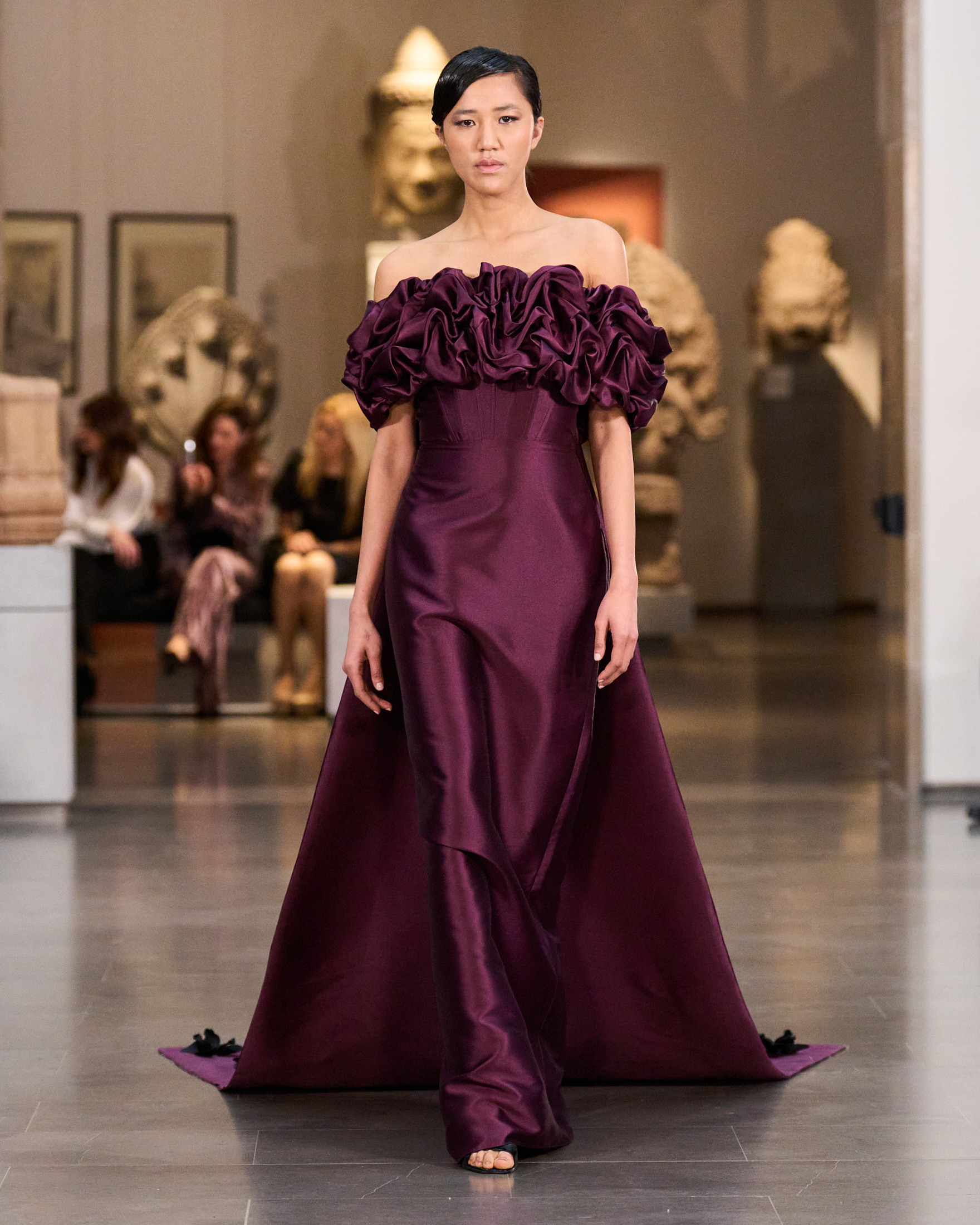
The Heart of the Craft: Reem Raddad (Jordan)
A particularly touching moment came during the show of Reem Raddad. Beyond the refined fusion of East and West in her designs, I was struck by the presence of her son. Behind the scenes, he spoke to me with such immense pride about his mother’s perfectionism—how she had scrapped a dress at the very last minute because it didn’t meet her exacting standards. To see that intergenerational support in the high-pressure wings of a Paris show gave the collection a soul that no runway could fully capture.
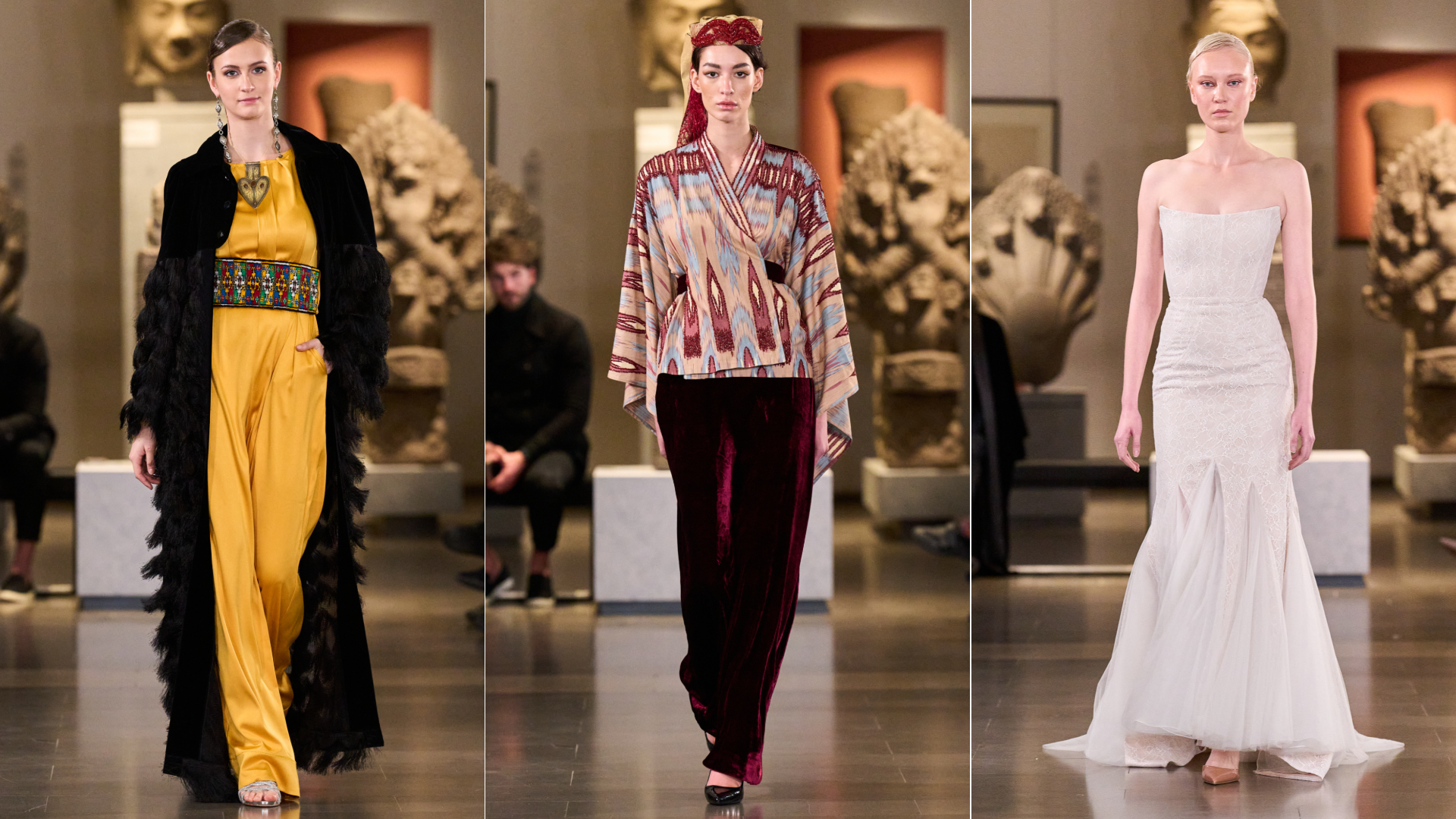
The Silk Road Connection Having attended Turkmenistan Fashion Week last year, seeing Golli again felt like a warm homecoming. Their impeccable tailoring bridges the gap between the exotic and the everyday. This was further elevated by the special collaboration between Gowher Gouvernet (Turkmenistan) and Claude Patrick (France). This Franco-Turkmen fusion was a visual testament to what happens when we stop seeing borders and start seeing beauty.
The Monochrome Mastery The day was rounded out by the monochrome sophistication of Anara Zakirli (Azerbaijan), who proved that a single shade of brown can contain a whole world of depth; the 90s nostalgia of Adiba (Kuwait); the traditional Uzbek textures of Miss Kamilla; and the convention-defying bridal work of Hiroshi Goto (Japan/Brazil).
As I stepped back out into the cool Paris air, I found myself reflecting on the true purpose of our industry. Why do we rush from show to show? What are we searching for?
L’Oriental Fashion Show provides the answer. Fashion is not just a garment but an expression of self. But through these designers, it becomes something more, like a connection to an identity. When you wear a piece that carries the weight of 7,000 years of history or the scent of a frankincense tree, you aren't just dressed; you are anchored. In the fleeting world of trends, these designers offer us the one thing that never goes out of style; and that is the knowledge of who we are.
We don't just walk the runway; we walk with our ancestors. And that is the most beautiful fashion statement of all.

.jpeg)