.jpg)
There are few places where art feels as alive as it does in La Biennale di Venezia. Every two years, Venice transforms into a global stage for cultural dialogue, where artists, collectors, and visionaries gather to experience contemporary art at its most ambitious. Against the city’s labyrinth of canals, historic palazzos, and ever-changing reflections, creativity takes on a different kind of permanence,one that exists between memory and imagination.
This year, L'Officiel Arabia was invited by celebrated artist Wallace Chan to experience one of the Biennale’s most captivating presentations: Vessels of Other Worlds.
.jpg)
Marking both an artistic milestone and his 70th birthday, the exhibition unveils Chan’s most ambitious body of work to date,an extraordinary exploration of transformation, memory, and materiality. Known internationally for redefining the boundaries of jewellery through his pioneering techniques, Chan now extends his vision into monumental sculpture, presenting titanium vessels that appear both futuristic and timeless.
Set within Venice, a city inseparable from water and reflection, the exhibition feels especially resonant. The sculptures rise like silent guardians,monolithic yet deeply intimate,inviting viewers to step closer and engage not only with form, but with the ideas they contain. L’Officiel Arabia had the rare opportunity to meet and interview Wallace Chan in person.
For Wallace Chan, age itself is not a defining threshold, but a continuation of movement.
“I do not see seventy as an ending or a turning point. It is simply another stage of progress,another opportunity to keep learning and to keep creating.”
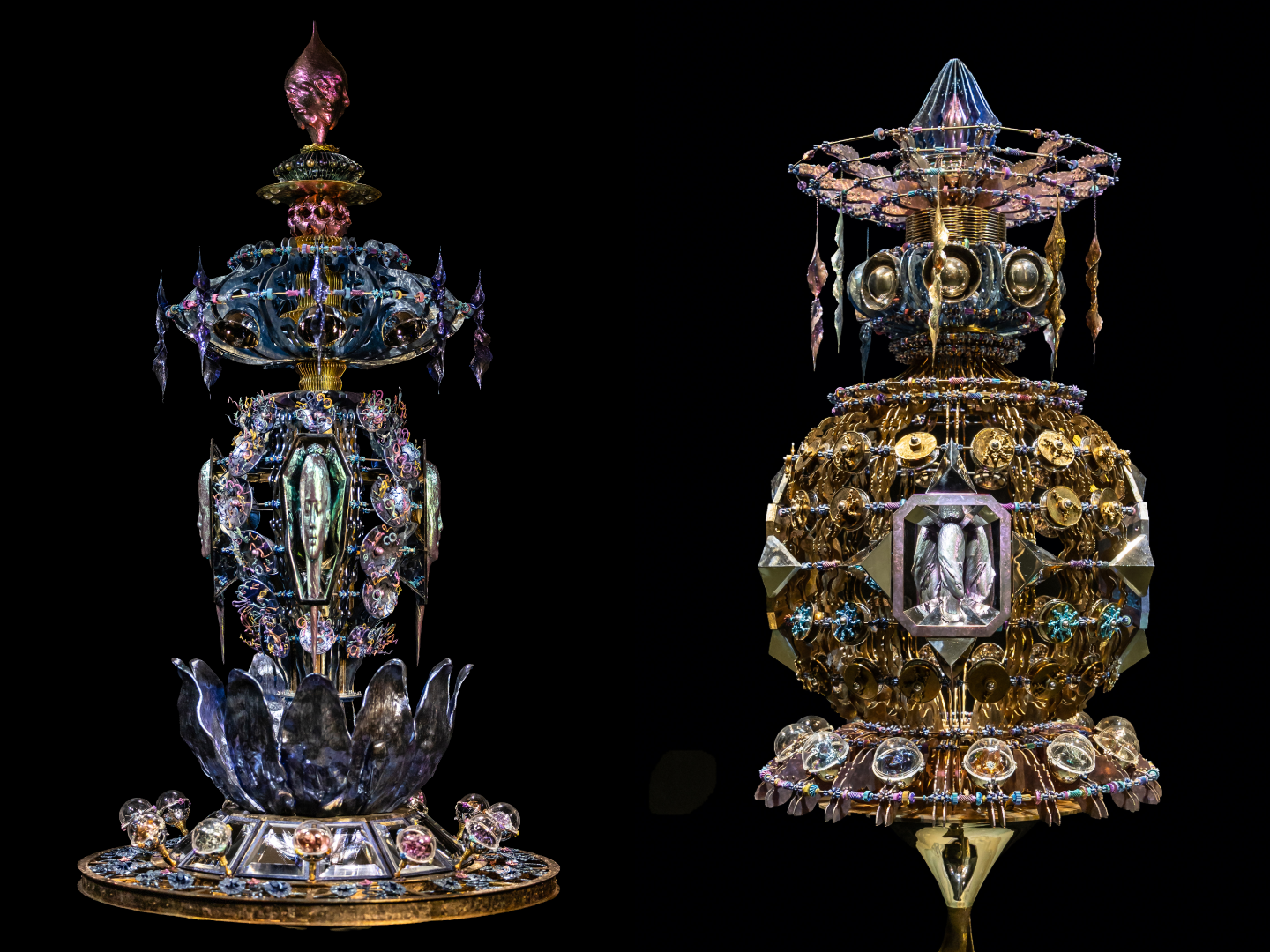
That philosophy is woven throughout Vessels of Other Worlds, where titanium becomes more than a medium; it becomes a symbol of permanence. Chosen for its strength, resilience, and extraordinary memory, the material reflects Chan’s enduring fascination with pushing artistic and technical boundaries.
“Titanium is the material closest to eternity. It remembers every force placed upon it, much like memory itself.”
Long celebrated for his mastery of gemstone carving and the revolutionary Wallace Cut, Chan’s move from the intimate scale of jewellery to monumental sculpture feels both natural and profound. Yet, despite the dramatic change in scale, his attention to light, reflection, and emotional intimacy remains unchanged.
As he explains, the principles that once shaped miniature masterpieces continue to inform works several metres high.
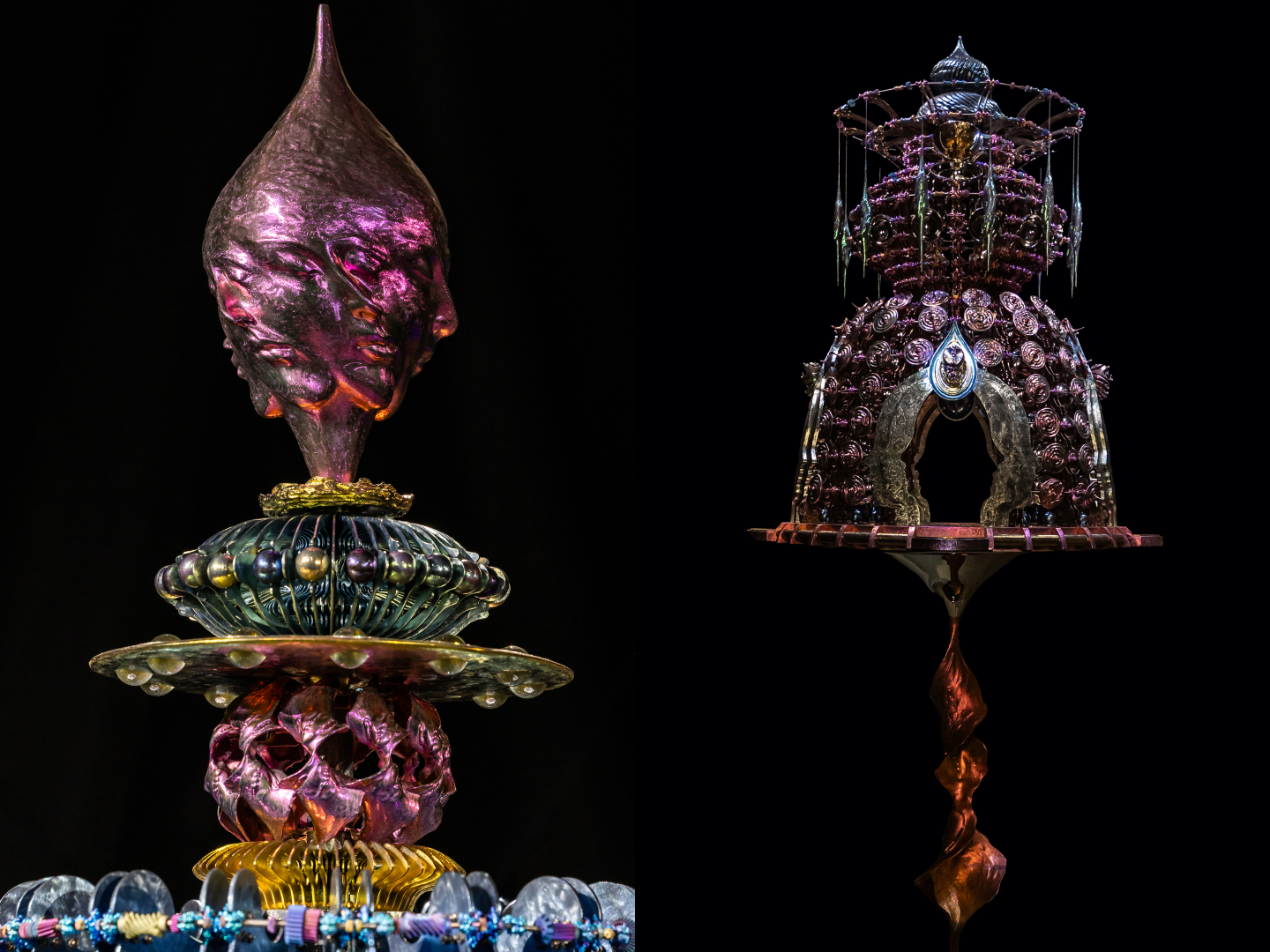
“Whether in a jewel or a sculpture, my goal is the same,to create something that invites the viewer inward, into a space of reflection and discovery.”
Venice itself plays a central role in this dialogue. Like Chan’s native Shanghai, it is a city defined by water, transformation, and movement. The connection between these two aquatic worlds becomes a subtle undercurrent within the exhibition, shaping both the sculptures’ fluid forms and their spiritual atmosphere.
During our conversation, Chan also reflected on one of the most transformative periods of his life: six months spent in monkhood, during which he relinquished all material possessions. That experience, he explained, profoundly altered his understanding of creation, presence, and purpose.
.jpg)
.jpg)
.jpg)
.jpg)
.jpg)
.jpg)
The influence is evident. There is a quiet spirituality embedded in his work,an invitation to pause, to contemplate, and to engage with something beyond the visible.
At La Biennale di Venezia, where art often seeks to challenge perception, Wallace Chan offers something rarer: a sense of stillness. Vessels of Other Worlds is not simply an exhibition, but a meditation on time, transformation, and what remains.In a city built on water and memory, his sculptures feel perfectly at home,bridging East and West, jewellery and monument, material and spirit.For L’Officiel Arabia, witnessing this dialogue firsthand was more than a visit to the Biennale. It was an encounter with an artist who continues to redefine what is possible, proving that true innovation lies not only in invention, but in the courage to imagine beyond form.
related posts
Art & Culture
FAME: Andy Warhol in AlUla

Art & Culture
Laurent Pernot at the Saint Laurent Rive Droite