White Light, New Energy
Black and white. A flower seen through an X-ray. Found fashion images and negatives. These fragments became the visual starting point for John Richmond’s Spring/Summer 2027 collection, WHITE LIGHT WHITE HEAT.
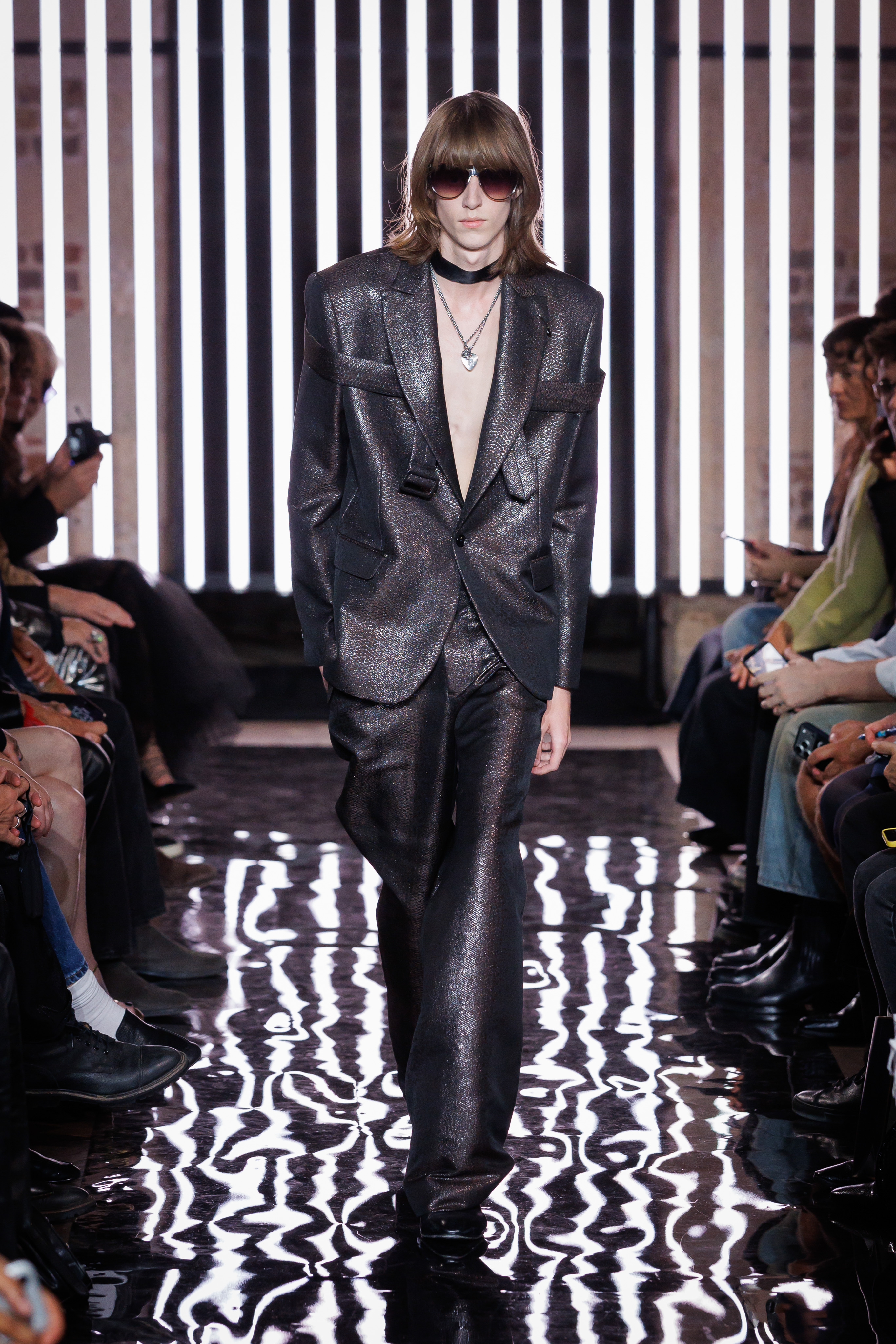
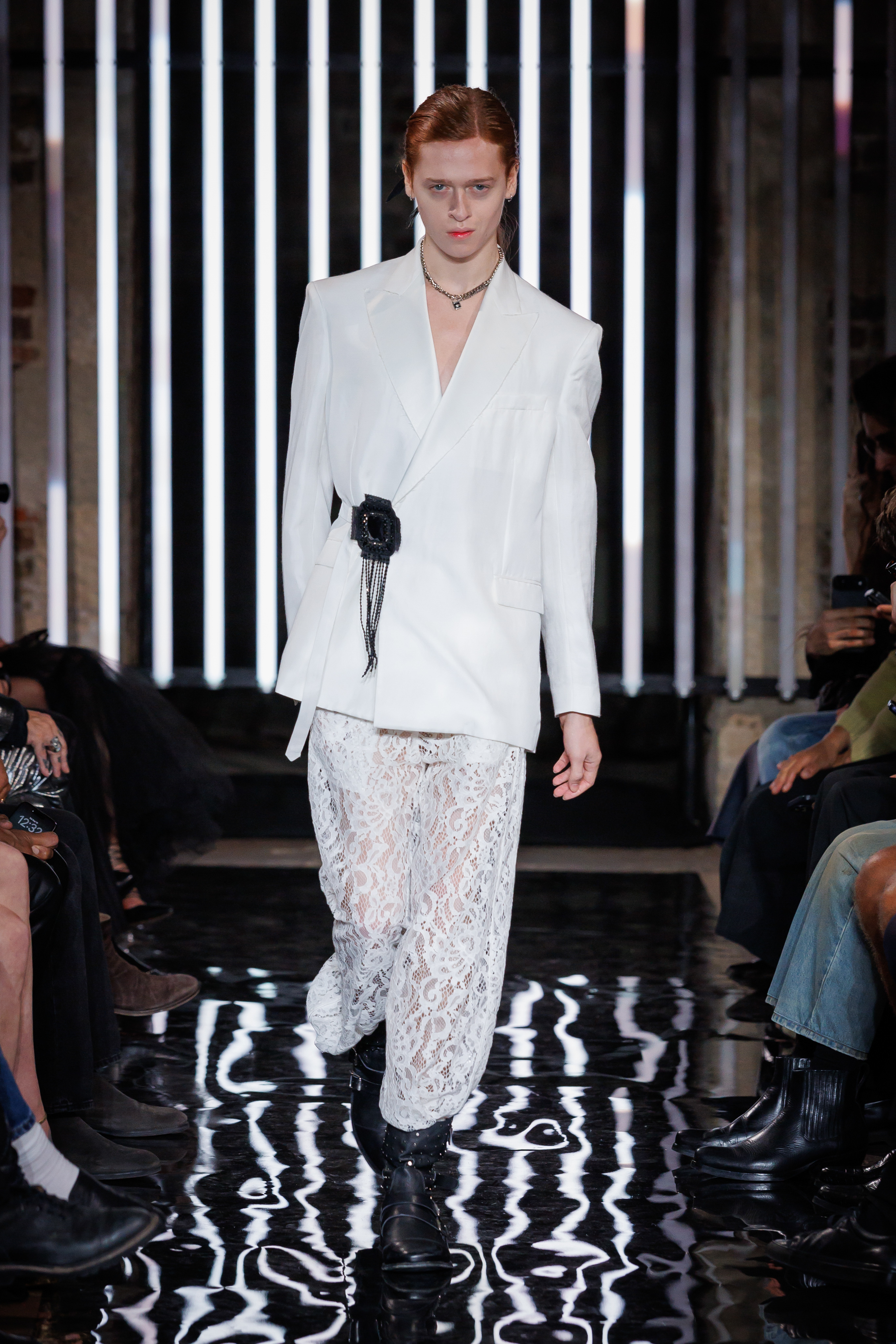
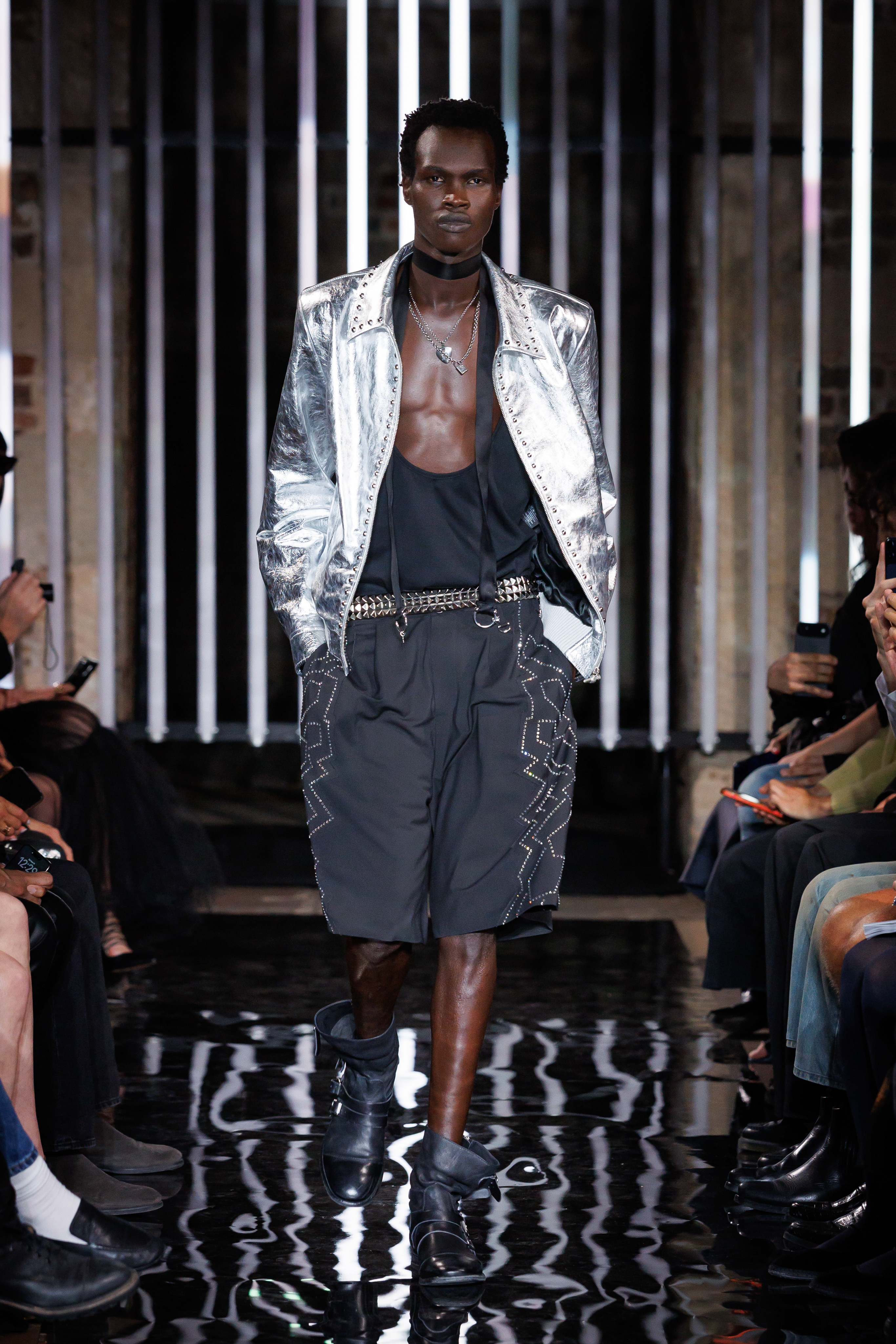
Presented as a co-ed collection, the show returned to the designer’s familiar territory — but with the codes rearranged. Tailoring remained the backbone, although it rarely behaved conventionally. Jackets appeared elongated or softly structured, while tailored shorts interrupted the expected proportions of a suit. Elsewhere, jackets were worn against bare skin, allowing the architecture of the garment to become more visible rather than hiding it beneath layers.
Richmond has always understood the power of a jacket, but here tailoring becomes less about formality and more about attitude. The suit is stripped of some of its traditional restraint: shirts disappear, necklines plunge, skin becomes part of the silhouette. The result is a wardrobe that moves easily between precision and exposure, evening-wear and streetwear, masculine codes and unapologetic sensuality.
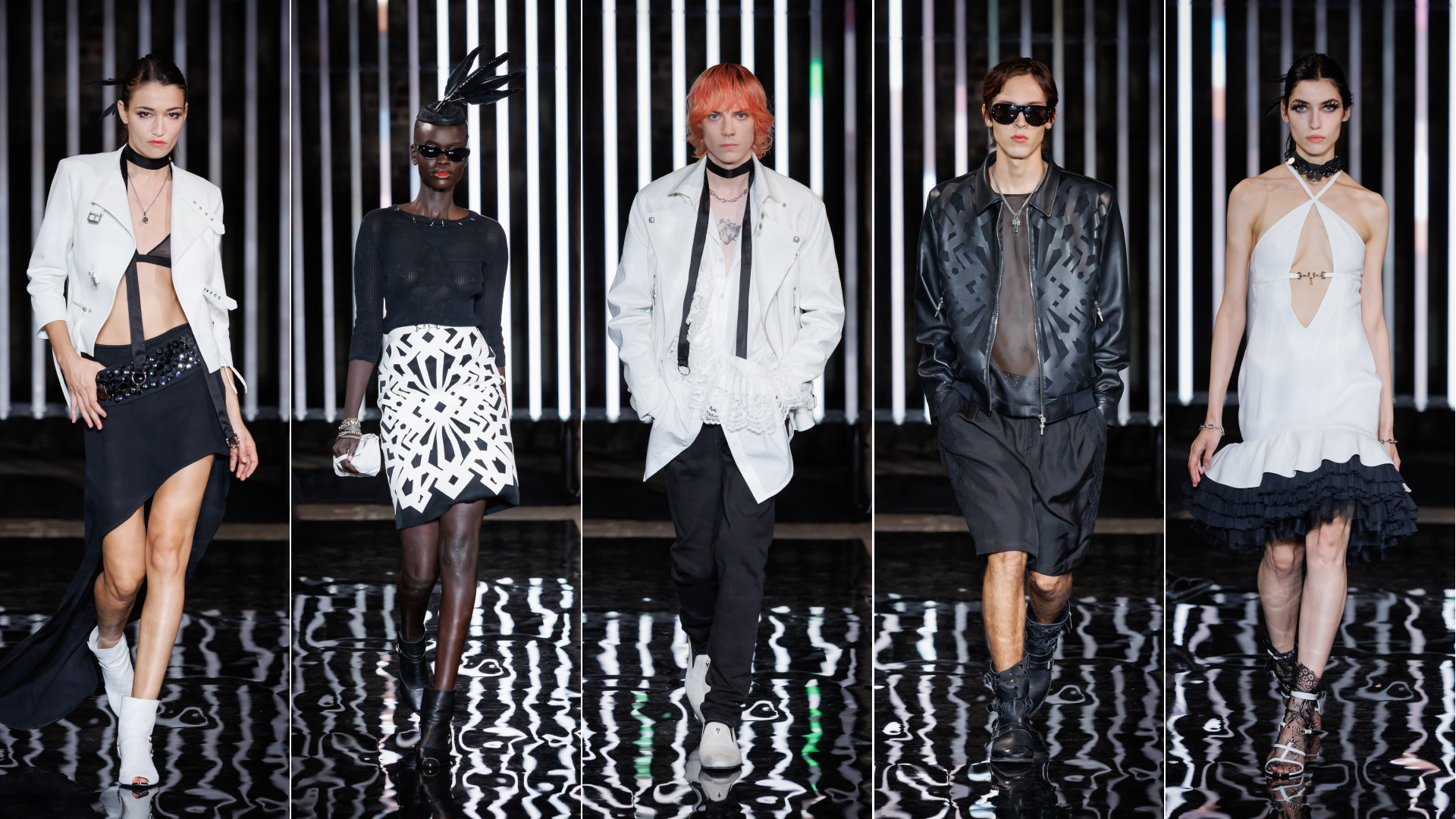
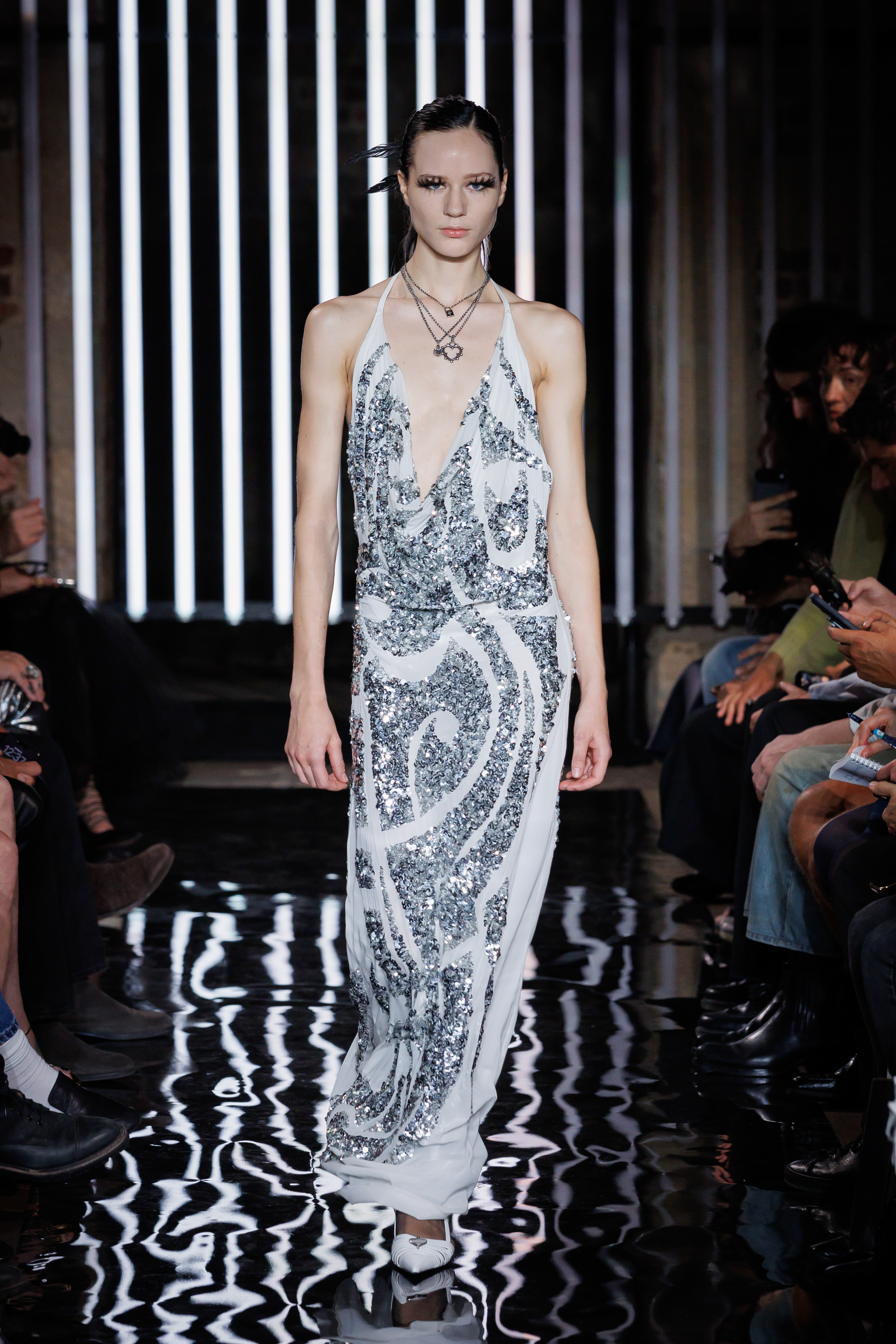
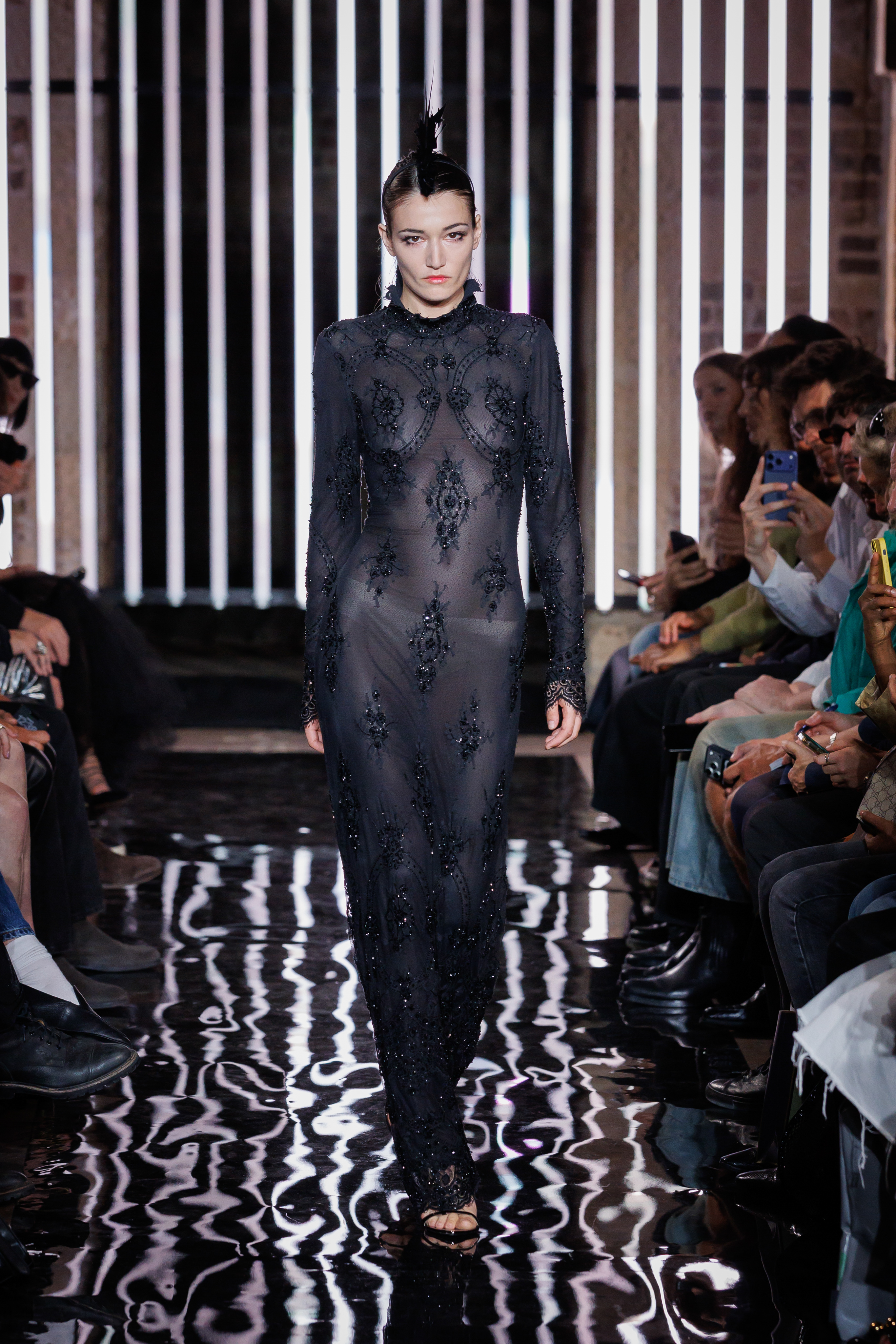
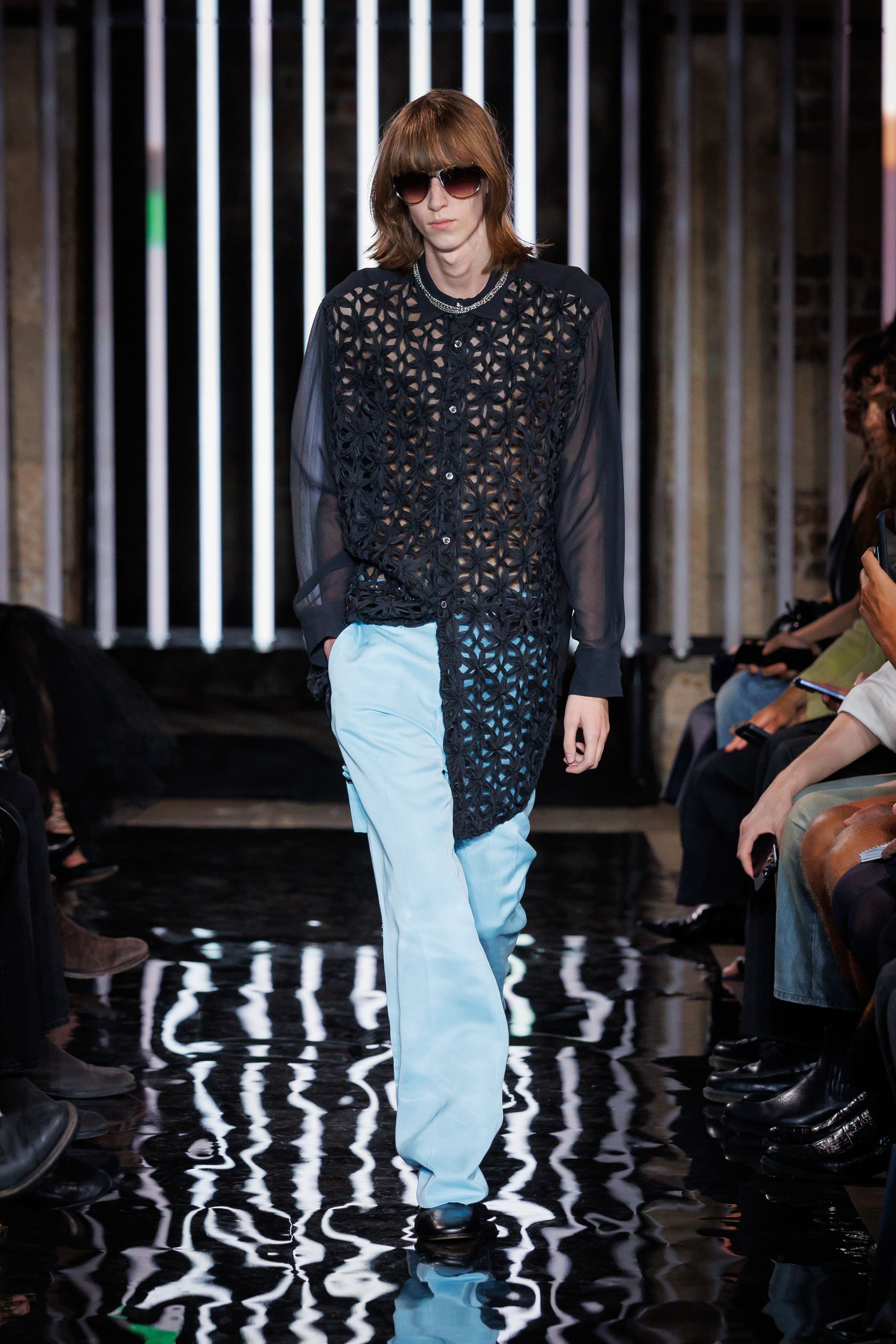
The contrast is not limited to black and white. Leather and distressed denim bring weight and abrasion; chiffon and lace introduce transparency and softness. Floral motifs and more romantic surfaces sit alongside biker jackets and tougher outerwear, creating the kind of friction that has become central to Richmond’s vocabulary.
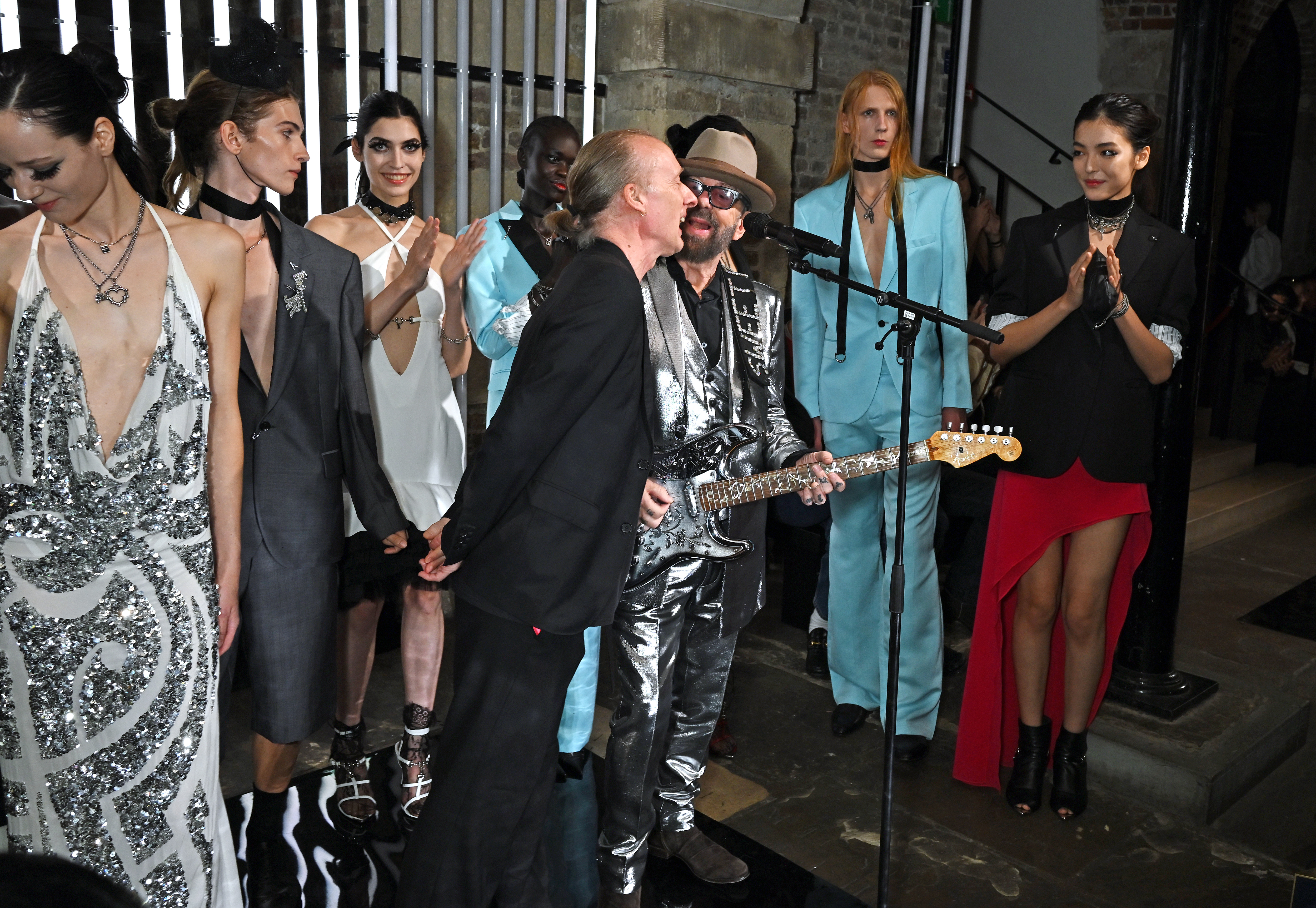
Even colour is used sparingly, which makes its appearance more powerful. Icy turquoise, silver and flashes of brighter colour cut through the dominant monochrome palette, functioning almost like light against a dark surface. The effect is less about decoration than interruption — a sudden change of temperature within an otherwise controlled visual field.
“I just add and add and add and see where it goes,” Richmond tells me. “I’m not strict about staying within the boundaries of its starting point.”
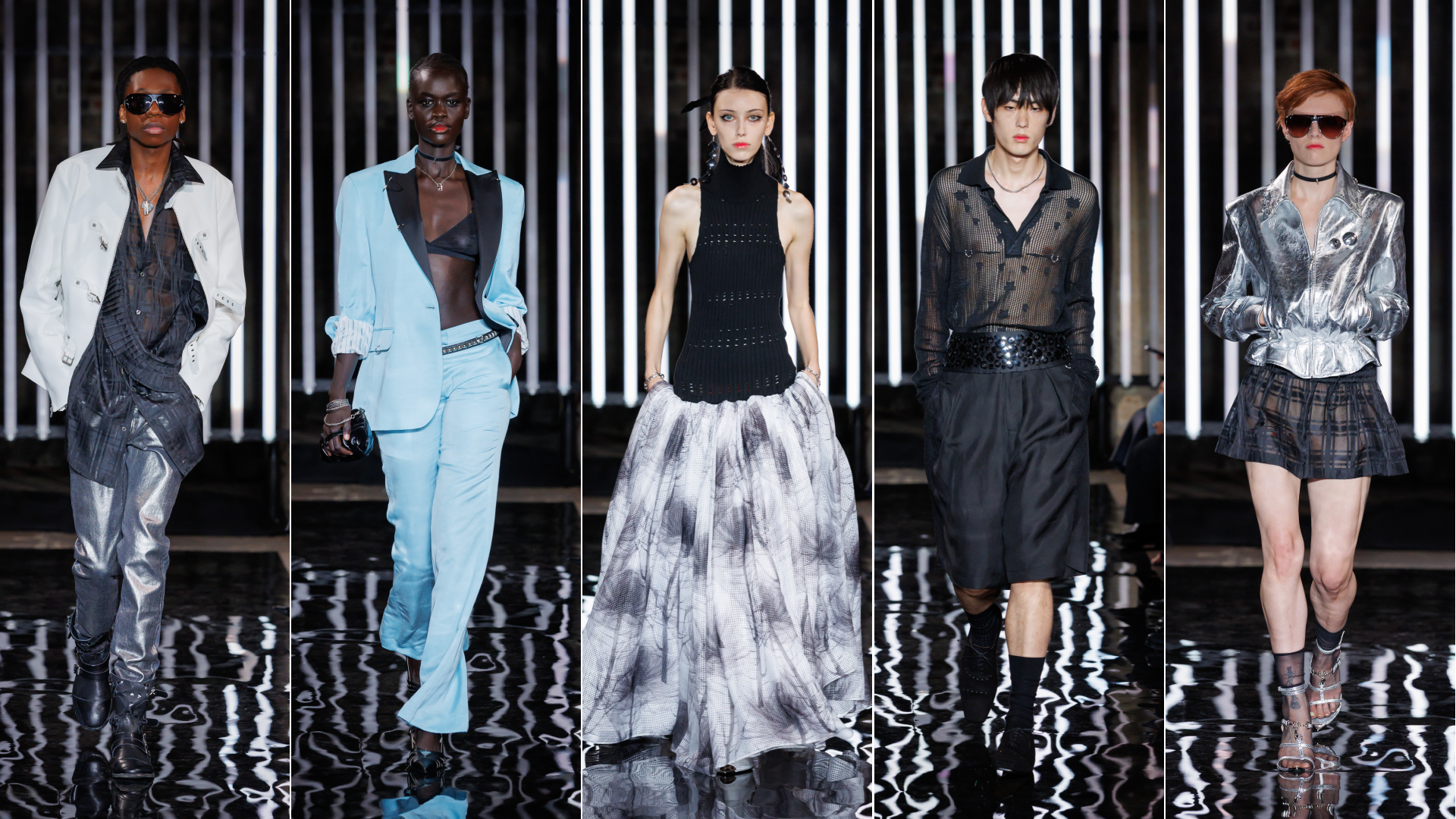
That instinct is visible in the collection. The initial black-and-white imagery does not translate literally into monochrome clothing; instead, it becomes a broader exercise in contrast. Opaque and transparent surfaces sit together. Structured tailoring meets fluid fabric. Hard leather is placed against exposed skin. The collection constantly moves between containment and release.
This tension also gives Richmond’s womenswear its particular character. Lace, chiffon and floral elements introduce a more romantic register, but they are rarely allowed to become conventionally delicate. A sheer fabric can reveal rather than conceal; a floral surface can sit against leather; a feminine silhouette can carry the attitude of a biker jacket. The effect is closer to a punk romance than traditional prettiness; a femininity with its own resistance.
The menswear follows a similar logic. Tailored jackets are paired with long or abbreviated shorts, open shirts and bare torsos, while leather trousers, sheer tops and metallic surfaces push classic menswear towards something more sensual and nocturnal. Rather than constructing separate identities for men and women, Richmond allows the same materials and attitudes to travel between them.
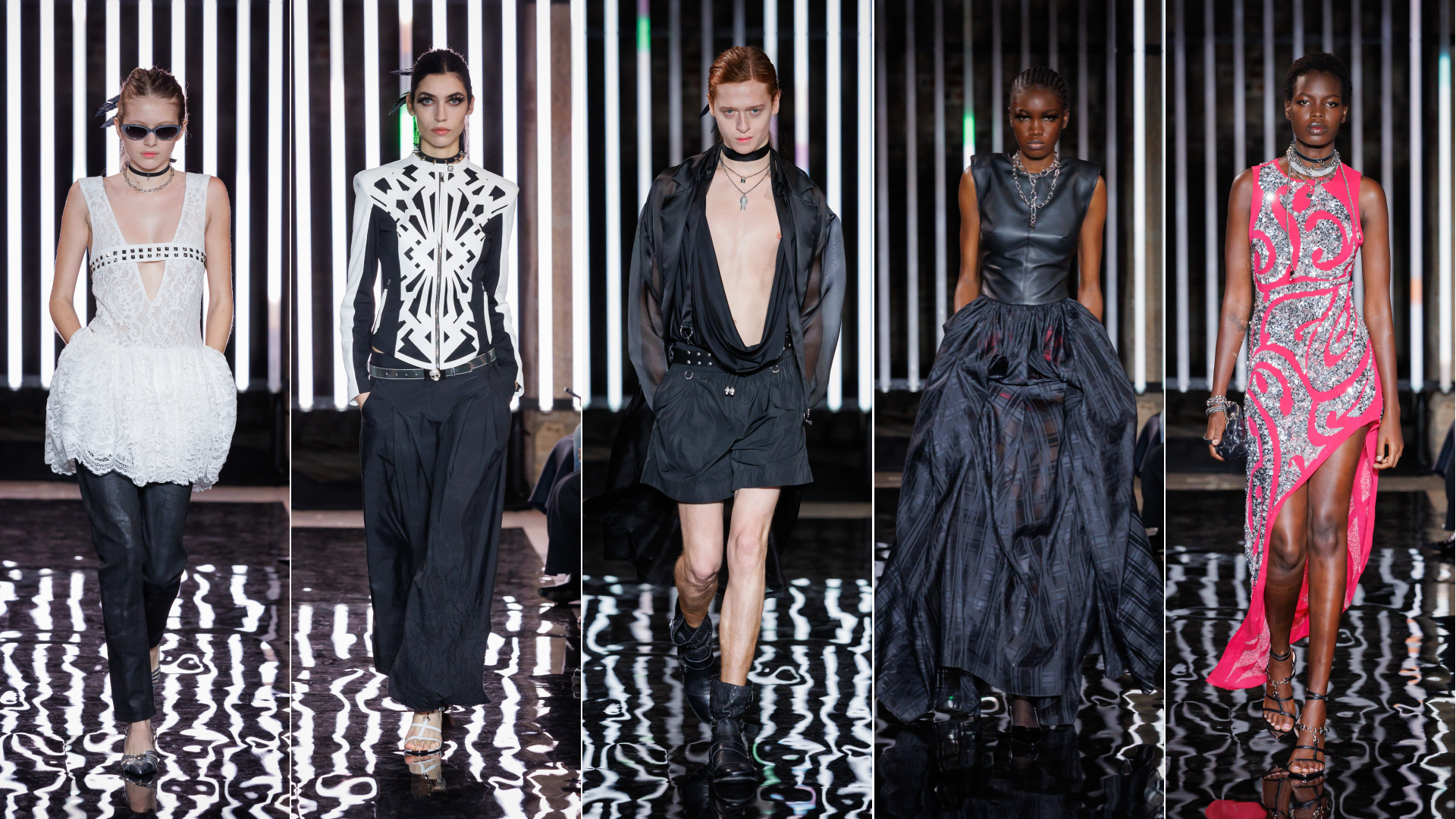
It is this fluidity that keeps the collection from becoming a retrospective of Richmond’s most familiar signatures. The references may be recognisable, but the proportions and combinations keep shifting.
“I think what I do probably is a repetition of my own history, but the new version,” he says. “Constantly finding new ways to say the same thing.”
There is something particularly compelling about that admission. In an industry obsessed with reinvention, Richmond makes a case for evolution through refinement. A signature does not necessarily become stagnant simply because it remains recognisable. It can deepen through repetition, provided the designer continues to question how those codes can be expressed.
His own definition of the subversive is telling: “Looking different but not obvious.”
The clothes understand that distinction. Their provocation is rarely dependent on novelty alone. It comes through proportion, exposure and the collision of materials. A suit becomes provocative when the shirt disappears. A delicate fabric becomes tougher when paired with leather. A traditionally feminine floral becomes something else when placed within a darker, more architectural silhouette.
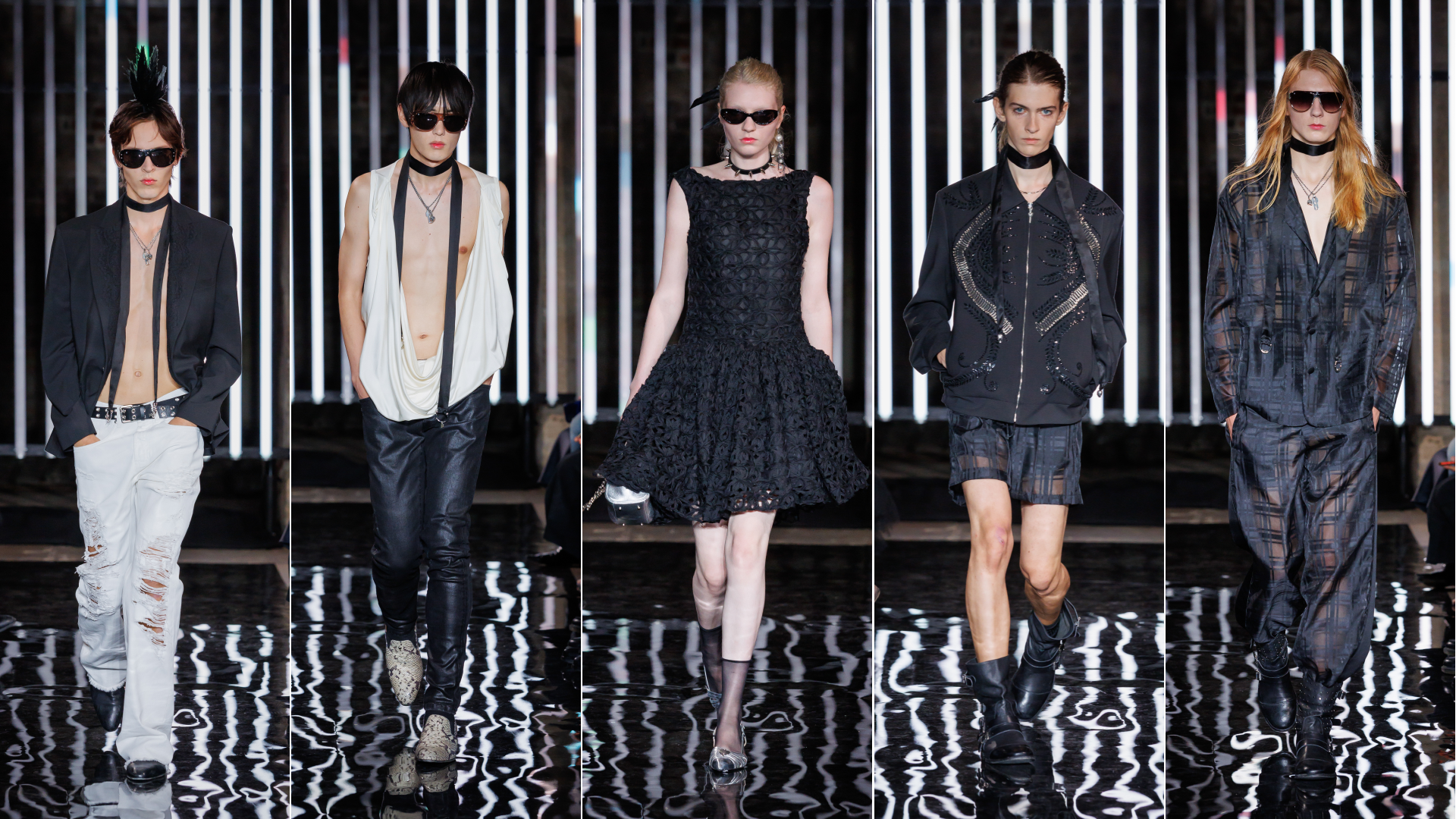
The body is central to all of it.
“I want the wearer to feel confident, sexy, special,” Richmond says.
The simplicity of the answer mirrors the directness of the clothes. Richmond is interested in what fashion does to a person once it leaves the runway. His garments sharpen presence. They expose and conceal strategically, creating tension around the body rather than simply decorating it.
That physicality feels especially appropriate for a designer returning to London, the city where much of his creative identity was formed. Richmond grew up in Manchester and moved to London to study fashion at Kingston, entering a creative landscape built around small, closely connected scenes.
The city he remembers is very different from the one that exists now.
“The scene in both cities was very small and focused,” he says. Today, social media has transformed the way people discover, communicate and participate in culture. “It’s too immediate.”
For fashion, that immediacy has changed not only how clothes are seen but how aesthetics are formed. Trends no longer need to travel through a particular city, club or community before becoming global. Richmond experienced the opposite kind of cultural circulation, when subcultures developed through physical proximity and distinct local identities.
Yet his work has never depended on preserving a particular moment in time. WHITE LIGHT WHITE HEAT takes familiar Richmond elements and places them in a new proportion; perhaps the clearest indication that his idea of continuity is not about looking backwards.
“Most days start with a clean sheet of paper,” he says. “I’m not doing the same as yesterday. This is a great feeling, very liberating.”
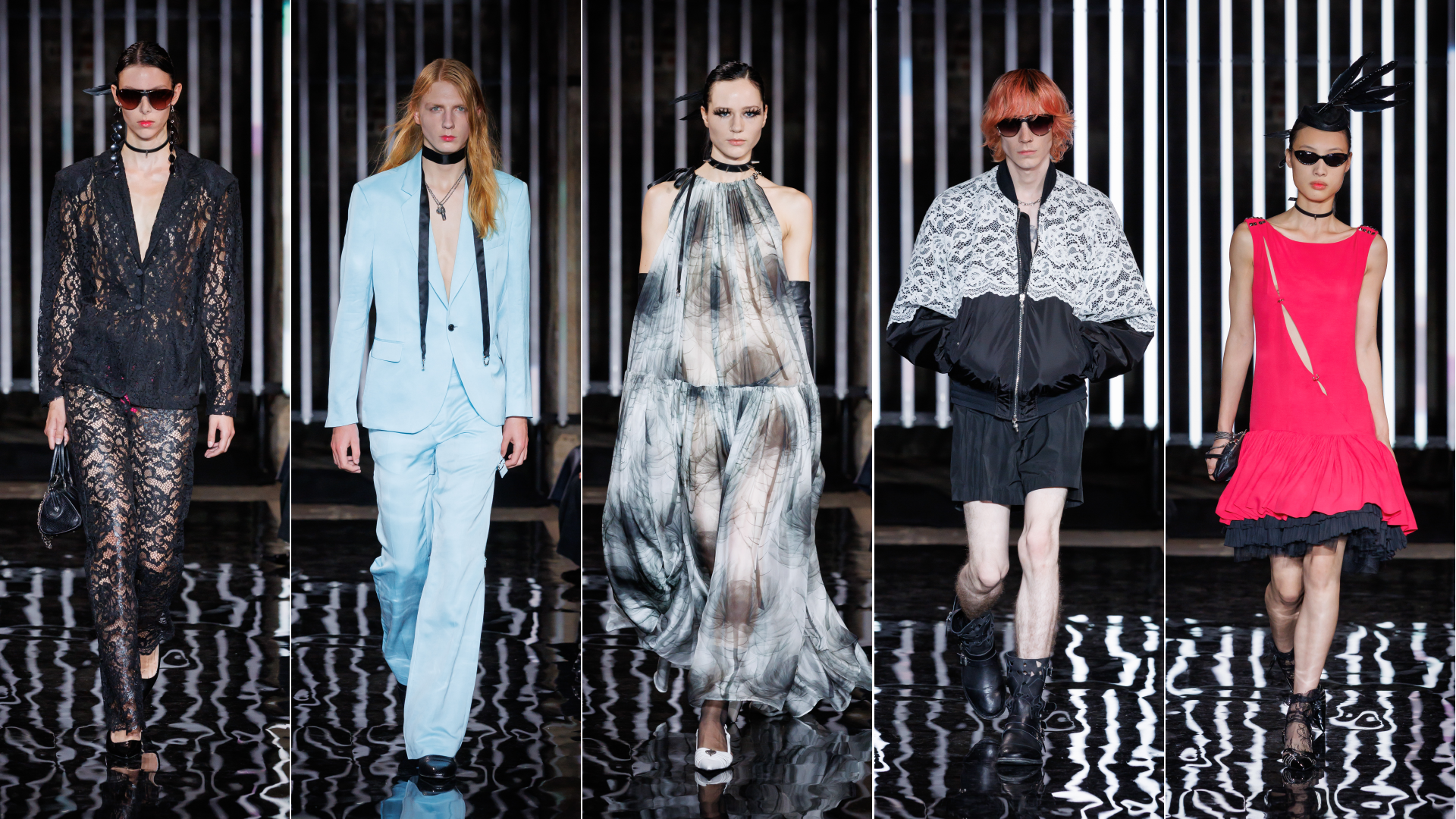
That sense of beginning again may be the most important detail in the collection. Beneath the leather, tailoring, lace, sheer fabrics and flashes of colour is a designer still treating fashion as an open field rather than a completed vocabulary.
His interests extend beyond clothing into shoes, jewellery, bags, sunglasses and furniture. The medium changes, but the impulse remains the same.
“I love designing,” Richmond says. “It’s satisfying and enjoyable and rewarding.”
And then, almost casually, he offers the line that seems to define the entire collection: “There’s so much left to do. I’ve hardly begun.”
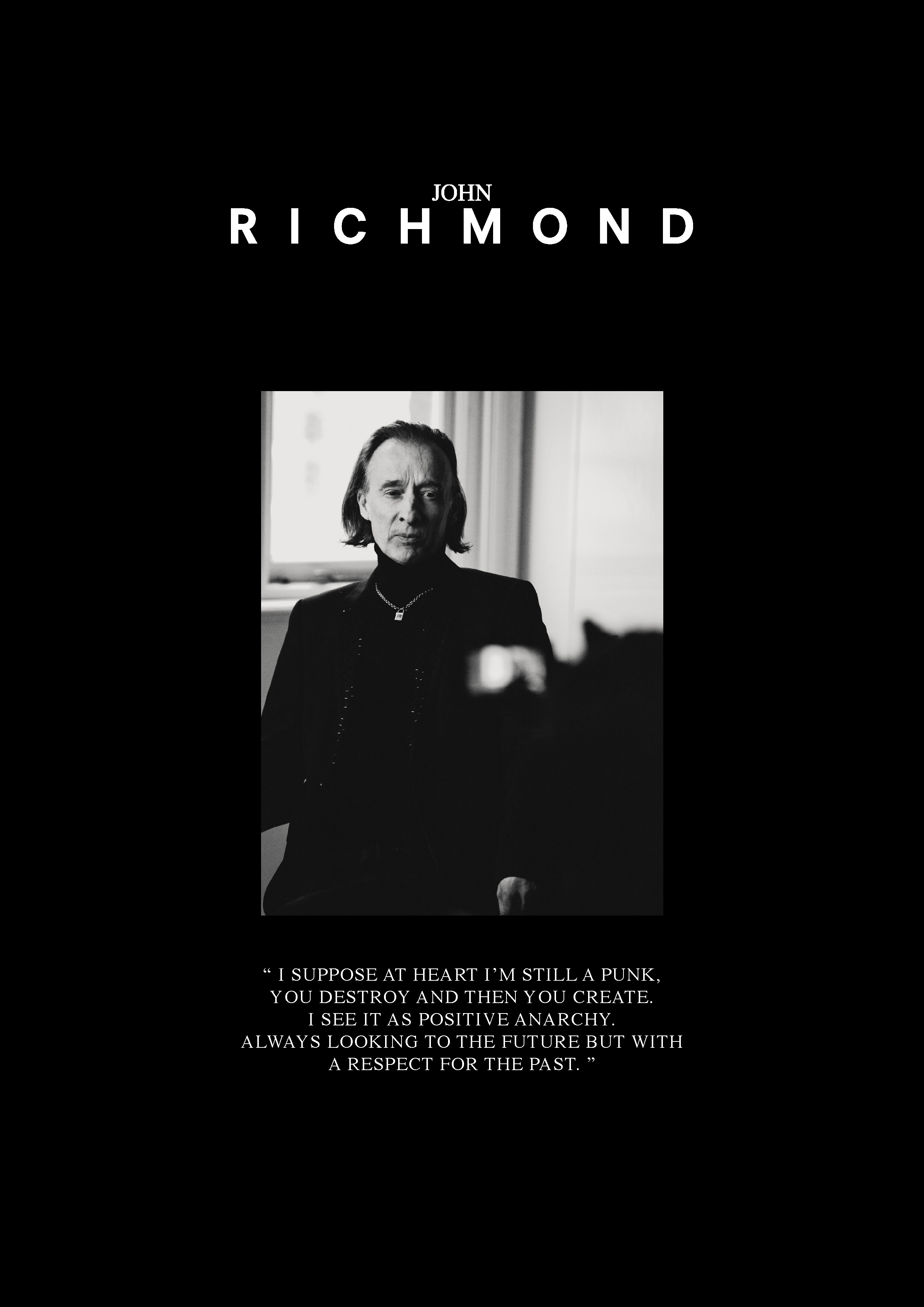
For a designer whose aesthetic has become part of the visual history of British fashion, that statement feels less like a conclusion than an invitation. WHITE LIGHT WHITE HEAT does not attempt to leave John Richmond’s past behind. It takes its most recognisable elements: tailoring, skin, leather, transparency, contrast and attitude and places them under a different light.
The codes remain. The proportions change. The story continues.
Photos: Courtesy of John Richmond
related posts
Fashion Weeks
#PFW: Rami Al Ali RTW Autumn/Winter 2023-2024 Collection
.JPG)
.jpg)