Why Healthy Skin Now Comes Before Makeup, According to Beauty Experts
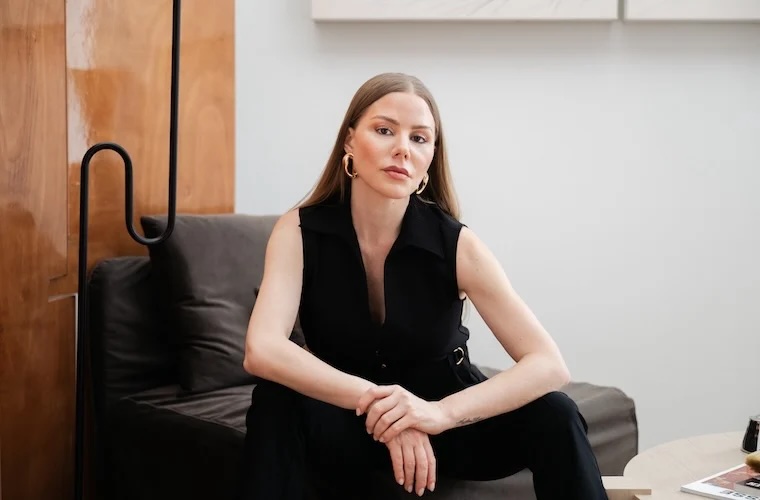
Over the last few years, the beauty experts we trust are moving the art of makeup slightly to the side, to focus on something more foundational: the canvas beneath it. Before contour, before glow drops, before any product promising to correct or transform, there’s your skin. And skin deserves to be understood before it is ever treated.
Founder of Studio Julie Lemke, Julie Lemke’s approach aligns with this shift in beauty conversation. She begins not with a client's stated concern, but with a more diagnostic question. "I am often less interested in what concern they want to treat," she says, "and more interested in understanding how their skin behaves."
It's a distinction that reframes the entire skincare conversation. Rather than treating pigmentation, redness or texture as isolated problems to be solved, Lemke looks at the skin as a functioning organ, one that’s built to protect, adapt and repair itself. When that system is working as it should, she explains, the skin becomes more resilient and better equipped to respond to whatever comes next, whether that's a professional treatment or a daily routine. Skip that foundation, and everything built on top of it becomes harder to sustain.

This is also where Lemke's philosophy diverges most sharply from the industry's obsession with visible fixes. Concerns that look entirely unrelated on the surface, she notes, often trace back to the same underlying imbalance, which means treating only what's visible can mean missing the actual cause entirely. Understanding the skin, in her view, has to come before treating it.
That same instinct for restraint shapes her thinking on routines. In a time of ever-expanding shelfies and ten-step regimens, Lemke's advice is almost countercultural: consistency beats complexity, every time. A well-formulated cleanser, targeted treatment, proper hydration and daily SPF, done every day without fail, will outperform an elaborate routine that changes by the week.
It's a philosophy rooted in patience; collagen takes time to build, pigmentation improves only across multiple cycles of skin renewal, and barrier repair is gradual by nature. For Lemke, forcing rapid results usually means working against the skin's own rhythms rather than with them, which is precisely why, in her treatment room, the operative question is never what a client wants, but what their skin actually needs. Sometimes that calls for active resurfacing or stimulation. More often, she says, it means calming, repairing and strengthening first.


It also means challenging one of skincare's most persistent myths: that intensity equals results. Push skin beyond what it can handle, Lemke cautions, and it tends to respond with more reactivity and inflammation, not less. Real progress, in her view, comes from balancing challenge with recovery, not choosing one over the other.
The endgame isn't skin that looks flawless for a few hours post-facial. It's skin that performs beautifully every single day, with or without a single product on it. And when that foundation is prioritised, Lemke notes, the results tend to show up on their own - brighter complexion, smoother texture, calmer tone, better hydration, often without a single treatment aimed directly at those concerns.


It's a philosophy that positions Studio Julie Lemke as a space built around long-term skin function, and as Lemke puts it, beautiful skin was never really about correction, it's about understanding."Great results don't come from stripping the skin, but from strengthening it with care”, she says.
www.studiojulielemke | @studiojulielemke