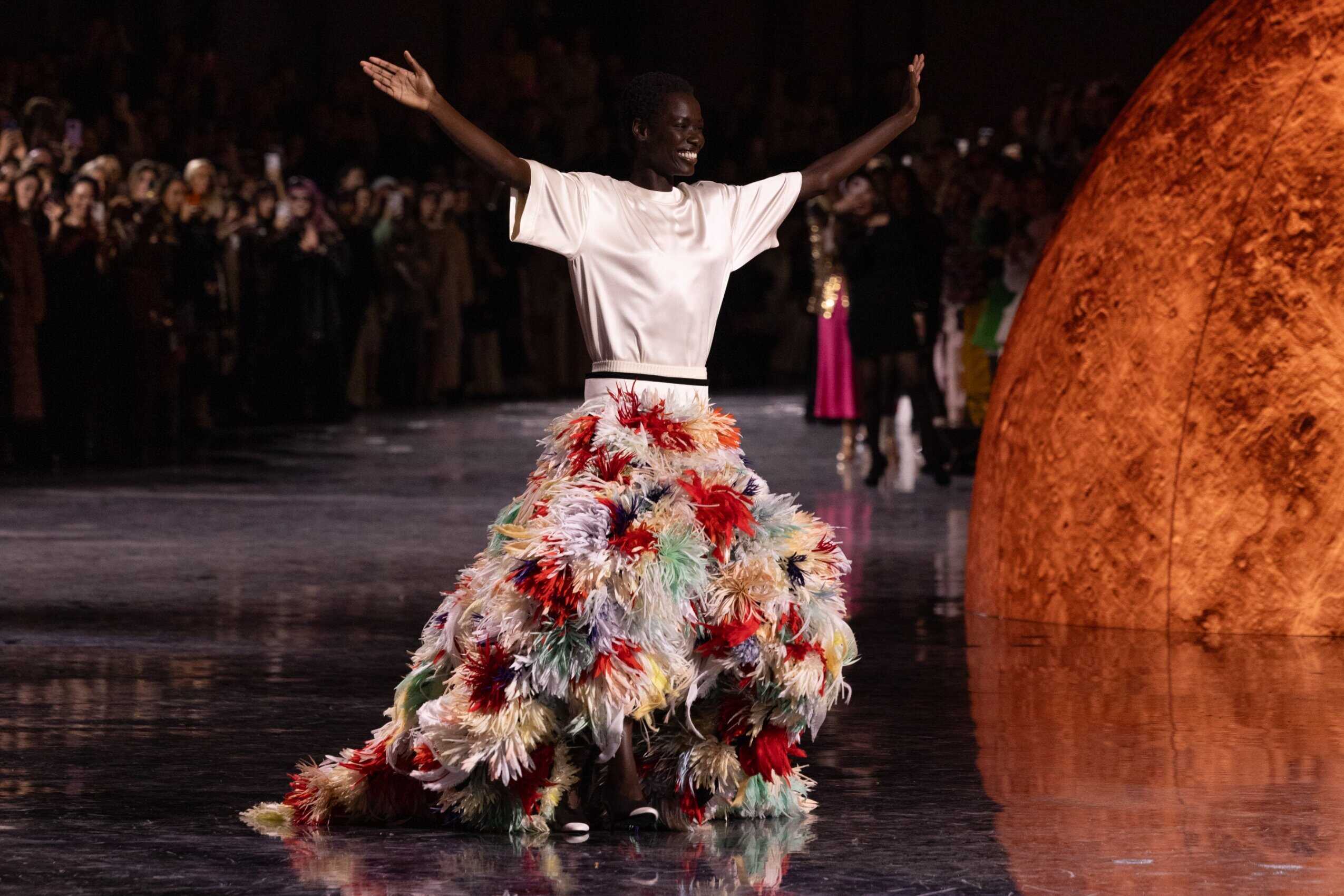
Rather than announcing itself with rupture or spectacle, Matthieu Blazy’s arrival at Chanel reveals its significance through quiet displacement. After just two collections, it becomes clear that this is not a moment of succession, but of realignment. The Maison does not change its skin; it adjusts its breathing. What Blazy initiates is a shift in posture, one that remains acutely aware of Chanel’s historical weight while allowing it to move differently in the present. Through the Spring-Summer 2026 and Métiers d’Art Pre-Fall 2026 collections, Chanel begins to speak again (not louder, but with greater precision), redefining how it exists in the world, how it occupies space, and how it meets the women who wear it today.
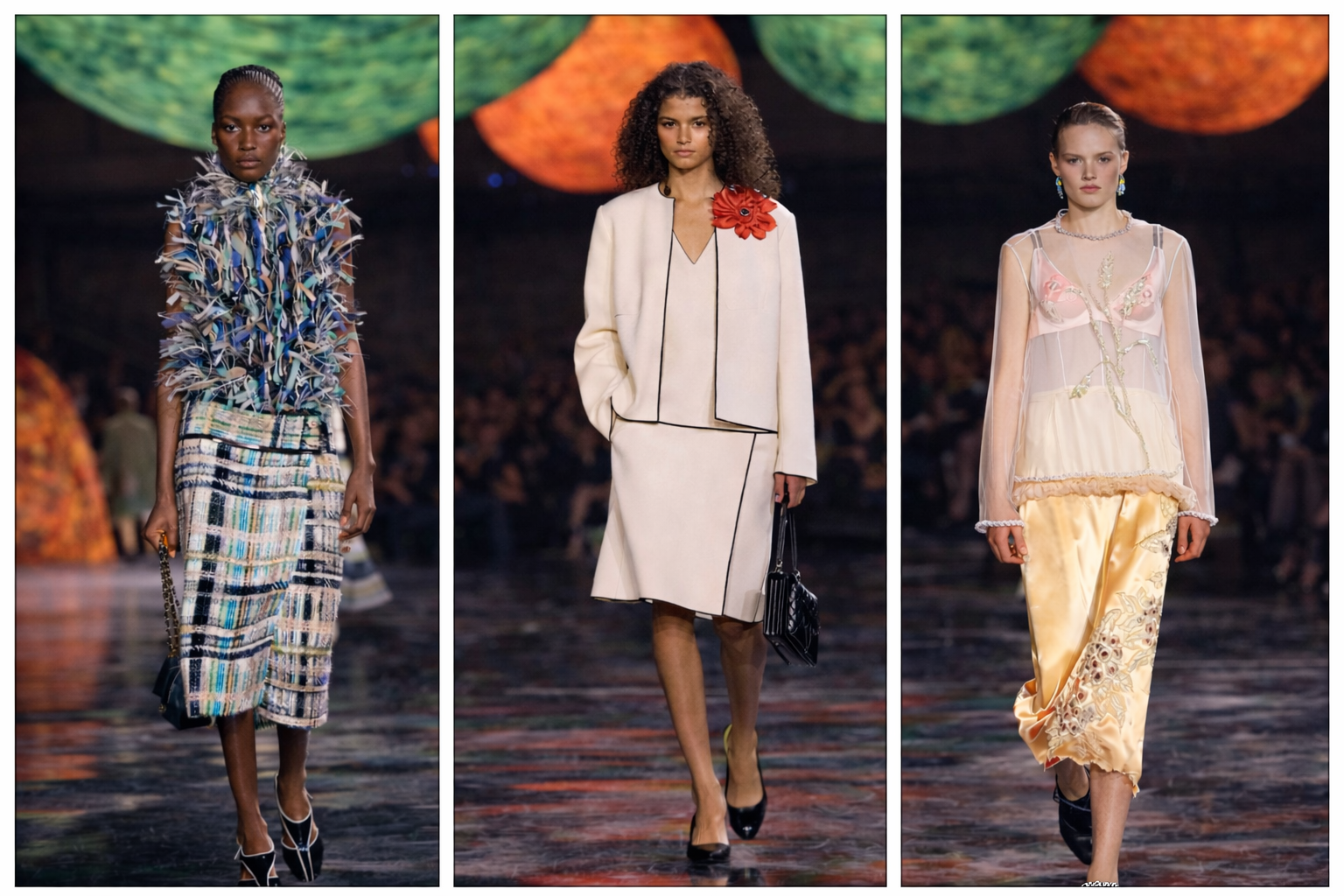
His first gesture unfolded beneath the restored glass dome of the Grand Palais, itself resurrected by Chanel, a cultural act before it was a scenographic one. Under that vast, luminous vault, a constellation of planets hovered in silence, as if marking the coordinates of a beginning. A cosmic allegory, yes, but the true provocation lay in restraint. The opening looks arrived without tweed, without the house’s most immediate signifiers. What appeared instead were precise tailors, fluid architectures, fabrics that breathed. Chanel, momentarily unlabelled, asked to be seen before being recognised. When tweed finally entered, it did so altered, frayed, abbreviated, and unsettled. Familiar, yet no longer fixed. Blazy made one thing clear: Chanel is not a relic to be preserved, but a syntax capable of producing new meaning.
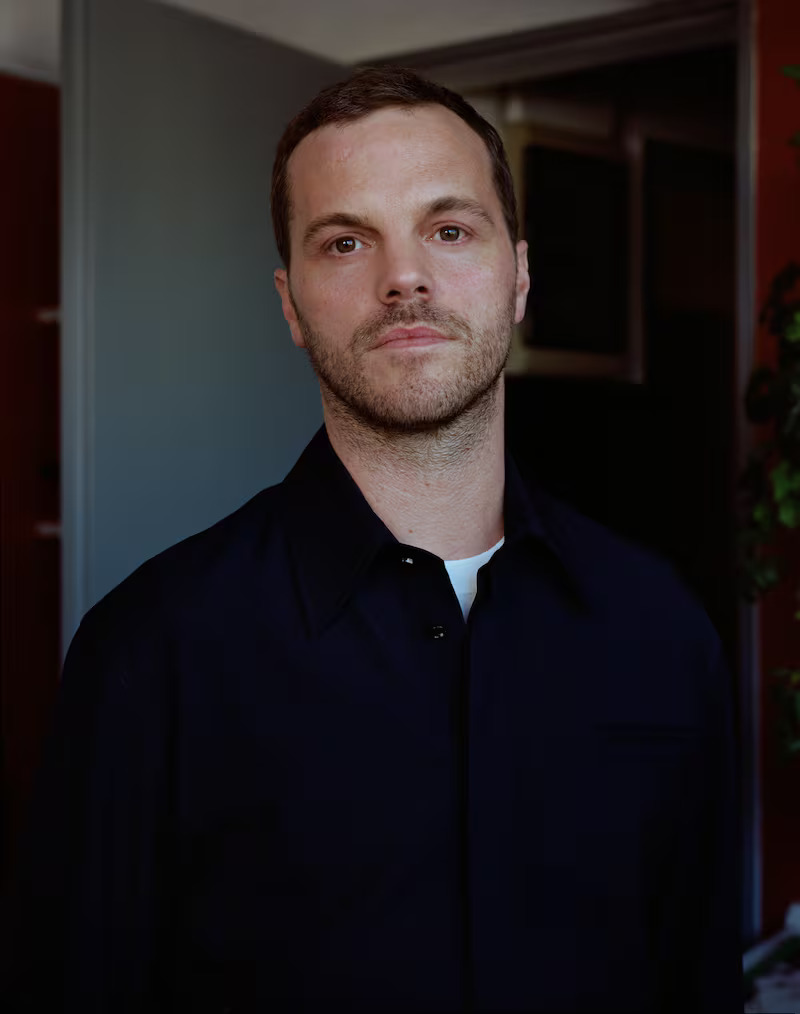
This philosophy mirrors Blazy’s own formation. Born in Paris in 1984, raised among art history, archives and auction houses, he learned early to read objects as carriers of time. At La Cambre in Brussels, fashion ceased to be a closed discipline and became a language in dialogue with art, music, and semiotics. His path through Balenciaga with Nicolas Ghesquière, Maison Margiela’s Artisanal line, Céline under Phoebe Philo, and later Bottega Veneta sharpened a rare skill: the ability to hold concept and craft in equal tension. Blazy approaches maisons as living texts, attentive to nuance, contradiction, and what history leaves unsaid.
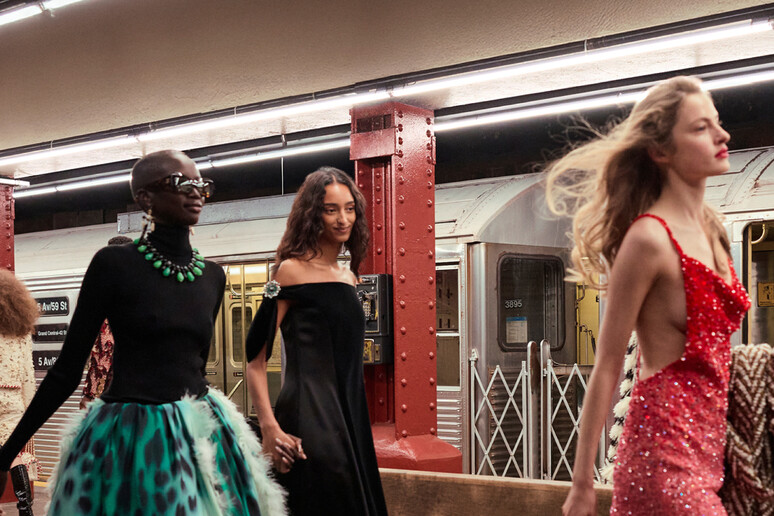
The Métiers d’Art Pre-Fall 2026 collection deepened this reading. Set within an abandoned New York subway station, it placed Chanel where luxury is least expected: underground, anonymous, in transit. Here, the slow, reverent time of the ateliers collided with the city’s compressed rhythm. The figures that emerged were plural rather than idealised: working women, flappers, women in denim, others choosing feathers and veils even below street level. Chanel ceased to project a singular fantasy and instead mirrored lived complexity.
What surfaces is a quiet but radical shift. Chanel under Blazy no longer asks women to aspire to an image held at a distance. It invites them to recognise themselves. These are clothes designed to be lived in, to walk, to wait, to endure time. Even at their most intricate, they carry weight, use, and memory. Luxury here is presence.
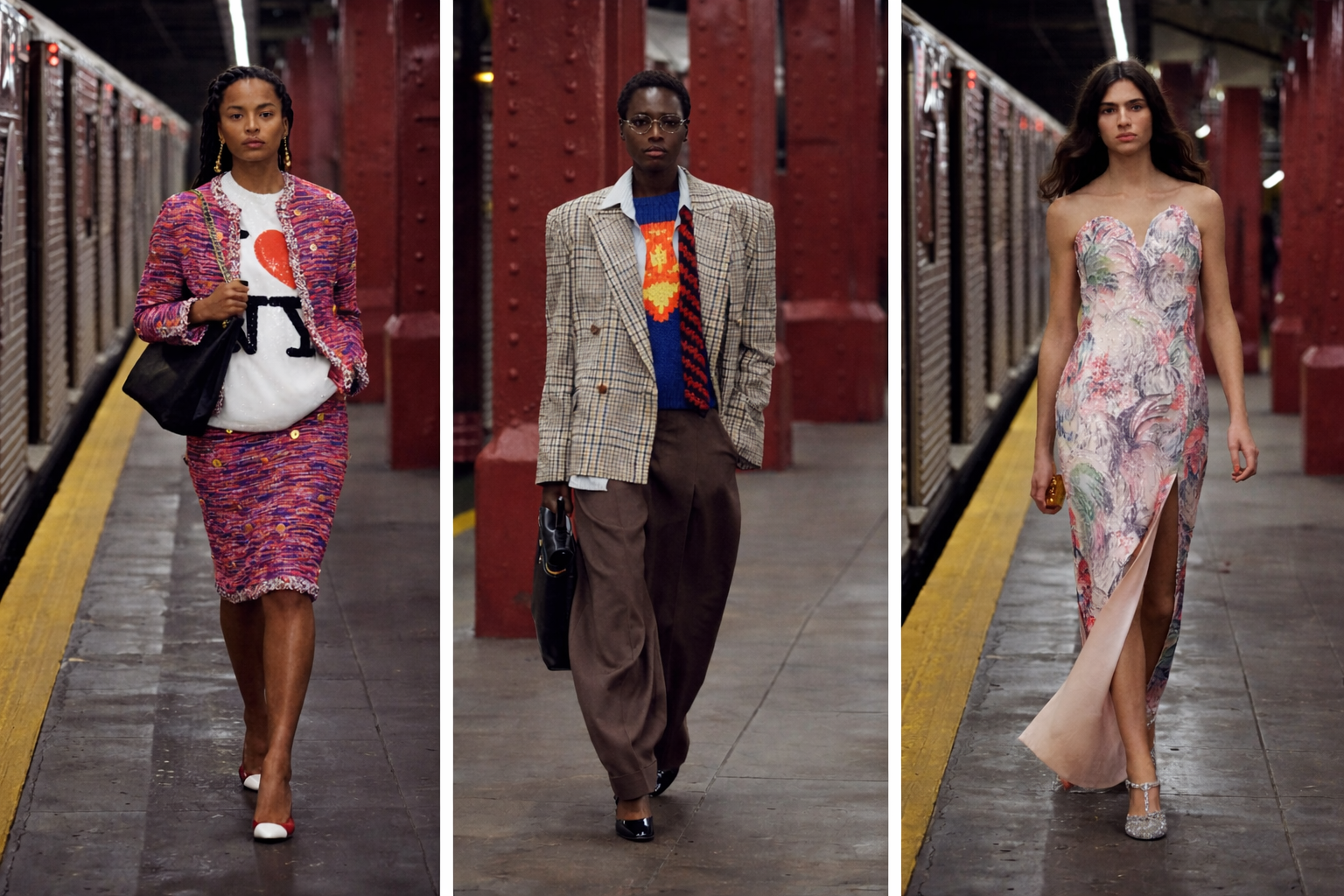
Blazy’s sensibility, curious, patient, almost archaeological in its attention to the everyday, feels precisely tuned to this moment. He treats fashion as an act of care, a cultural responsibility rather than a performance. And through this restraint, Chanel regains relevance not by amplifying its voice, but by listening.
After two collections, Chanel feels less like an icon on a pedestal and more like a language returned to circulation: spoken again, adapted, inhabited. A language that remembers where it comes from, yet moves forward with those who carry it.
related posts
.jpg)

.jpg)