#INTERVIEW: Maya Waked on the New Arab Sound
Delna Mistry Anand: You have managed this enviable balance between staying true to your strong Arab heritage and engaging with modern music trends, how do you do this?
Maya Waked: I believe that we are the result of our musical heritage, so for me it's important to honour that and keep it alive while still creating original music. I try to stay rooted in Arab musical traditions, but I don't see them as something static. Reinterpreting classics allows me to carry their emotions into a modern context and allow audiences to reconnect with their own memories and feelings. From there, I feel free to experiment contemporary sounds, as long as I remain true to myself.
DMA: With the rise of streaming platforms, how do Arab artists ensure their music stands out in a crowded, globalized industry?
MW: In a crowded, globalized space, we need to preserve our authenticity. It is the only way to stand out. For Arab artists, it means to always reflect who we are and where we come from, rather than trying to imitate what's already trending. Digital platforms give us the freedom and opportunity to reach global audiences, but they also challenge us to tell our stories clearly—through our sound, our language, and even our visuals. When the music carries real emotion and a strong identity, it naturally with listeners, no matter where they're from.
DMA: Evolution is the heartbeat of any artist. How important is it for you to experiment with new sounds and styles?
MW: Experiment is essential for me, for my creativity. I thrive to try new concepts for my live shows as well as sounds and lyrics for my releases. I am still fond of reinterpreting classics from the collective memory and write Arabic lyrics for them. I have already experienced it with several folk tunes for my songs "Min Zaman" and "Bi Beirut". Being an artist means paying attention to the world around me and to what I want to convey in my music. It is a continuous journey, that needs to evolve with time. Having a nice voice or the ability to sing is not enough. As for the future of Arab music, I see it becoming more and more diverse. We should no longer be afraid to blend traditional elements with contemporary styles or to speak to global audiences.
DMA: In your view, what does it mean to create ‘authentic’ music in an age where the lines between cultures and genres are often blurred?

MW: For me, creating authentic music today is less about fitting into a specific genre and more about being honest in what I am expressing. I always choose the sounds according to the story I am trying to tell. Especially in my live shows. For example, when I reinterpreted Arabic classics in my recent show in Dubai, I was not doing it to follow a trend, but to carry the original emotion into the present moment. That honesty, resonated with the audience and music felt real. Audiences can sense when something comes from a genuine place, no matter how many influences or different instruments are involved.
DMA: What roles do collaborations with artists from outside the Arab world play in music? How do these partnerships influence sound and message?
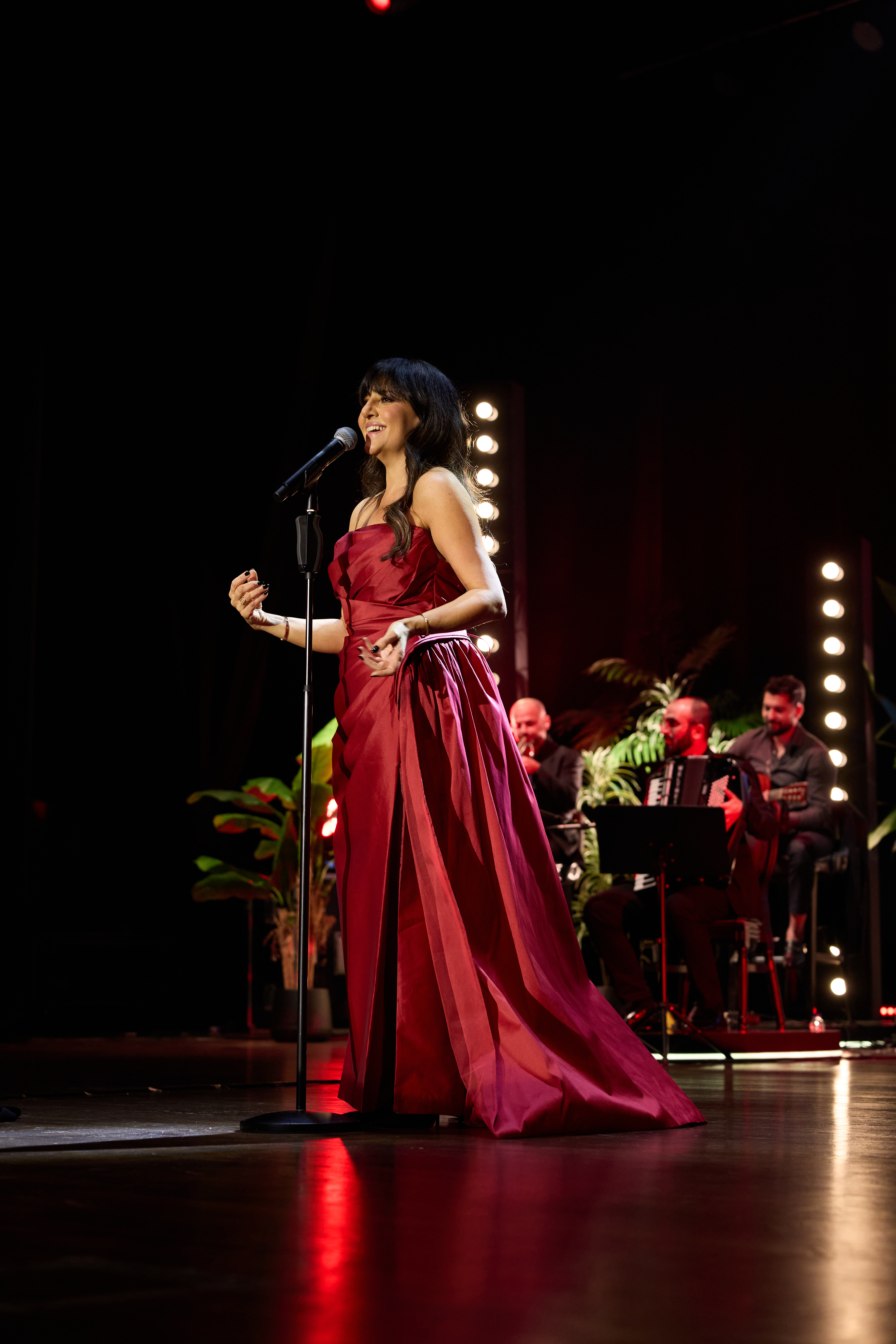
MW: Working with musicians from different backgrounds pushes me to hear my own music differently. I had the chance to perform with musicians in Europe who do not understand the lyrics of my songs and was happy to see how much they added to the sound each with his instrument and interpretation. It was as if I was stepping outside my comfort zone while staying grounded in who I am. Collaborations, especially in production approach, often shape the music in unexpected ways and allow the message to travel further, connecting with audiences beyond cultural boundaries.
DMA: As an Arab artist, do you feel a responsibility to represent your culture and community in your music?
MW: My decision to pursue my musical career came from the desire to represent my culture. Although at that time, I was living in Canada and far away from home, but felt like expressing the music nostalgia of all Arab diaspora in North America through my own voice. I saw it more as an opportunity than a burden or responsibility. My heritage shapes who I am, the stories I tell, and the emotions I convey, so naturally, it comes through in my work. I aim to highlight the richness, diversity of my culture while also challenging stereotypes and showing the world that our experiences are multifaceted. At the same time, I want my music to be universal, something anyone can connect to, so I try to balance personal cultural expression with themes that resonate more broadly.
@wakedmaya