Inside Morandi’s Studio: Joel Meyerowitz and the Life of Objects
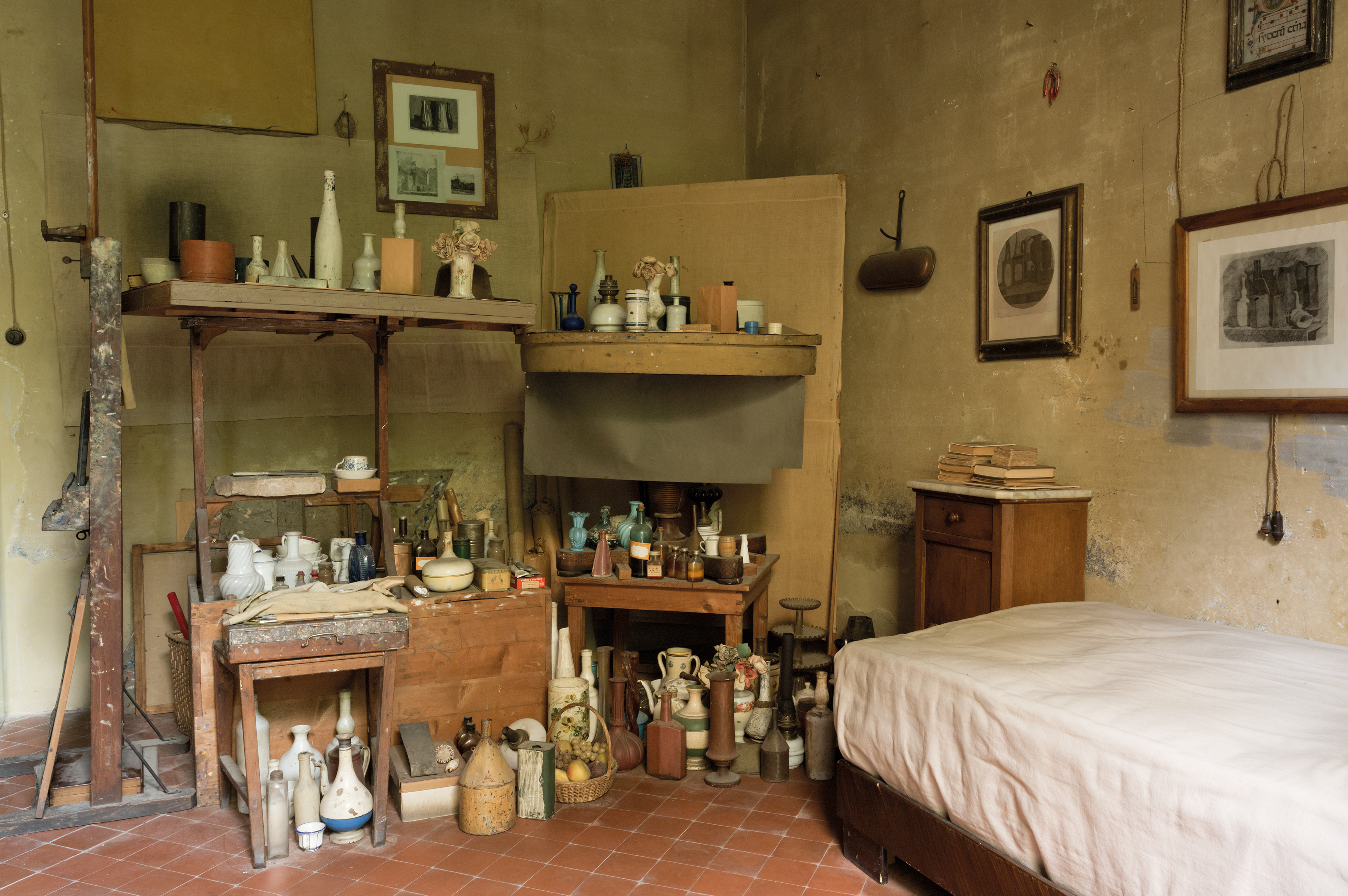
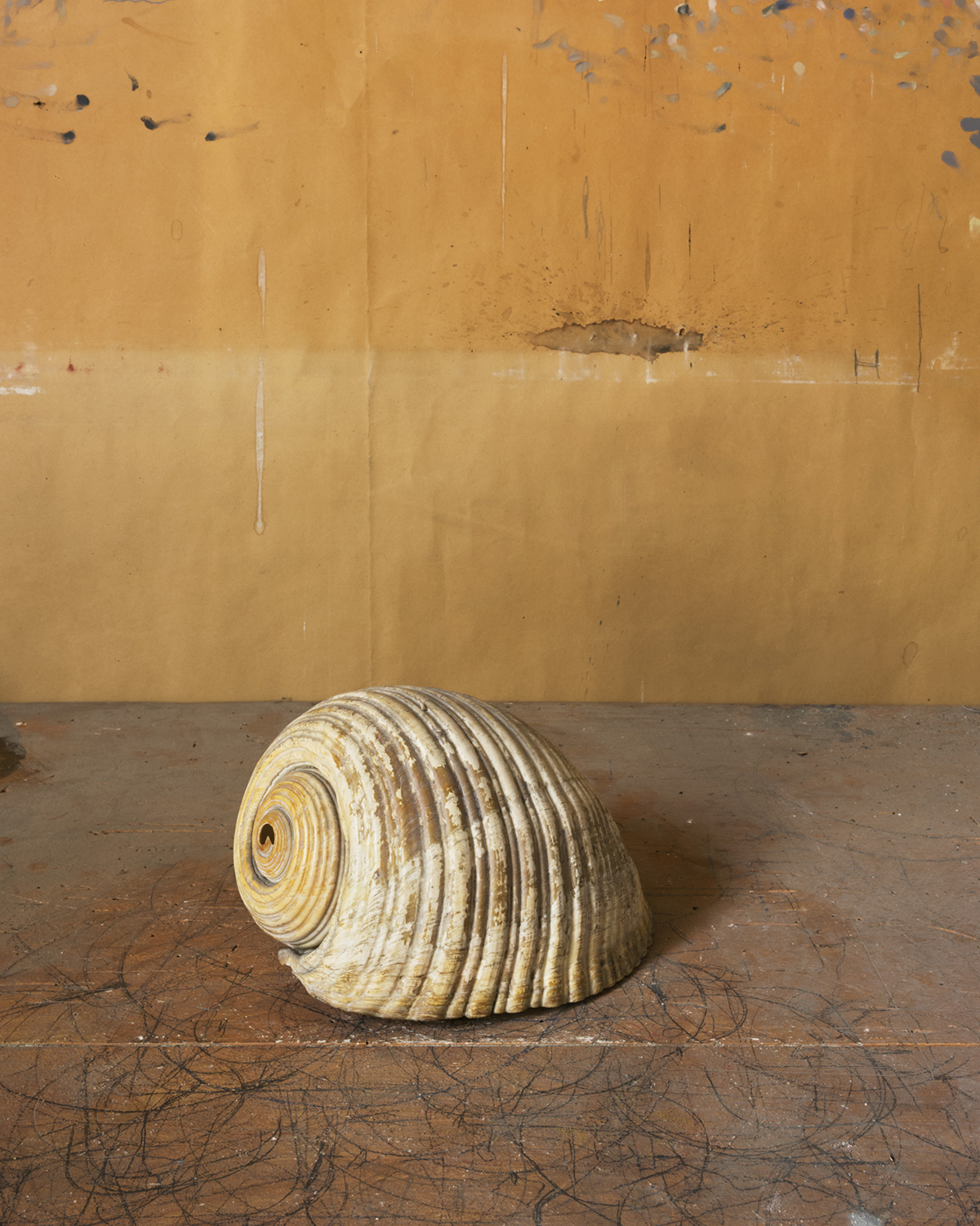
A new publication revisits one of photography’s most significant figures: Joel Meyerowitz. Morandi’s Objects. The Complete Archive of Casa Morandi presents an extensive visual record made inside the Bologna studio of painter Giorgio Morandi. Granted exceptional access decades after the artist’s death, Meyerowitz photographed every object left behind, working within the same ambient light that once informed Morandi’s compositions.
The expanded edition introduces over 130 additional images, extending the project into a detailed study that connects photography, still life, and art history. Rather than reconstructing or interpreting, Meyerowitz approached the studio as he found it, preserving its order, dust, and atmosphere. The result is both a document and a meditation on perception.
I spoke with Meyerowitz about entering this space, his evolving relationship to still life, and the decisions behind this new edition.
Tanja Beljanski : What first drew you to Giorgio Morandi’s studio and objects? And how did you feel when you were granted access to the space where he worked and painted?
Joel Meyerowitz: I was a painter when I was very young and then became a photographer. I knew the work of Giorgio Morandi from my college days. I had never made still lifes, and I was not particularly interested in that form. I am a street photographer. In 2015, I was working on a book in Provence, and I visited Cézanne’s studio. He was an influence on Morandi. In that studio, I noticed that Cézanne had painted his walls a dark grey. Even though there was a lot of light, being surrounded by that grey made me question why he chose it. Today, most artists work in white spaces. I asked the curator if I could photograph a few objects against that grey wall, simply to understand the relationship between object and background. When I looked at those photographs later, I found myself interested in still life. By that time, I was already living in Tuscany. At a certain point, I decided to go to Bologna to see Morandi’s studio. I asked the curators if I could enter the space and look at his objects and his desk. They were very generous and allowed me to spend time there. I then asked if I could take a few objects, place them on his table, and photograph them, so I could understand their presence for him. They agreed. Eventually, I suggested photographing every object in the studio without changing anything, not even the dust. I would place each object on the table where he worked and make a photograph. They supported the idea, and the project became a complete record of the objects. It also serves the museum as a catalogue.
If you look closely, you can see that Morandi drew outlines on the table to mark where objects should be placed. These marks do not appear in the paintings, where the surfaces are clean.
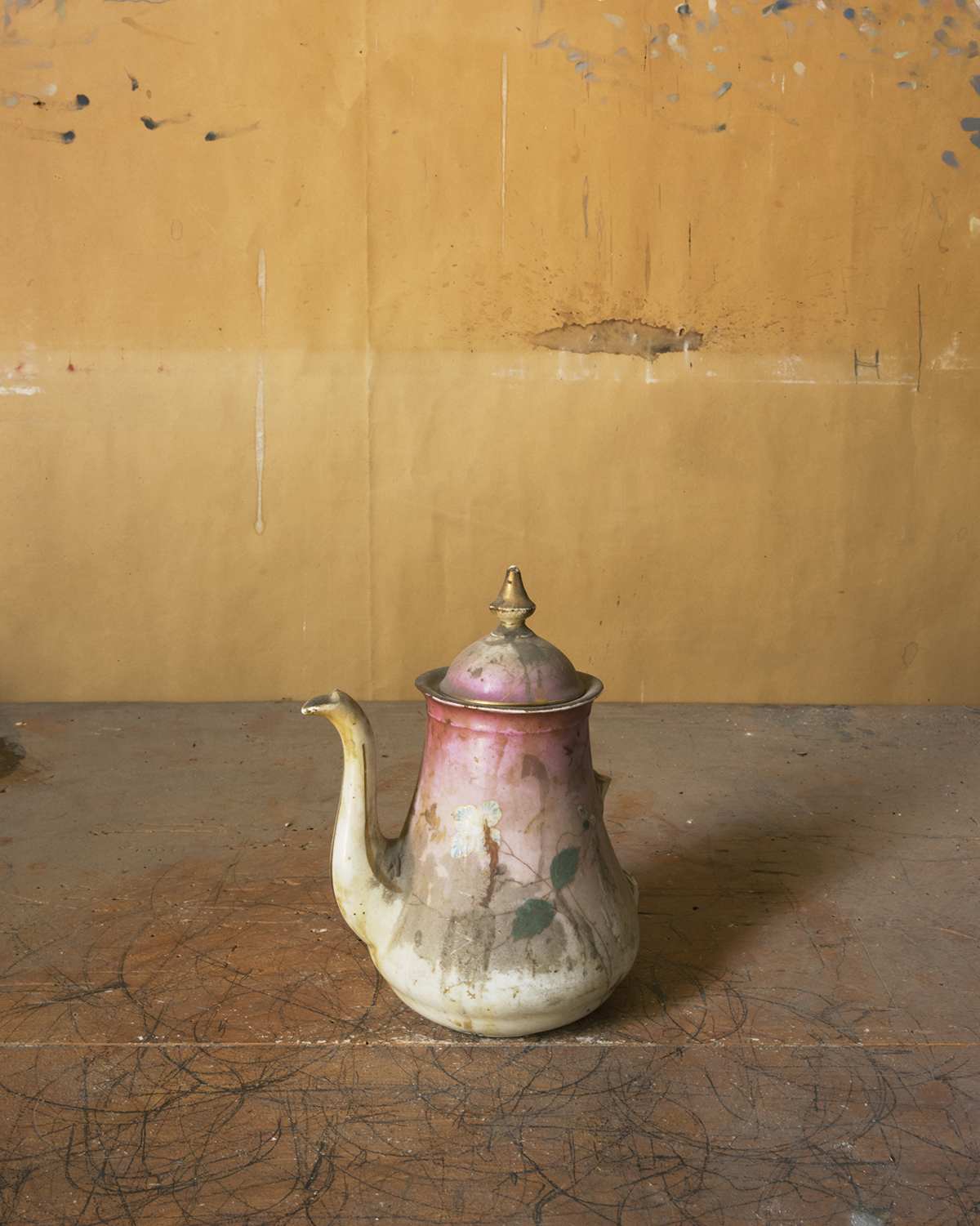
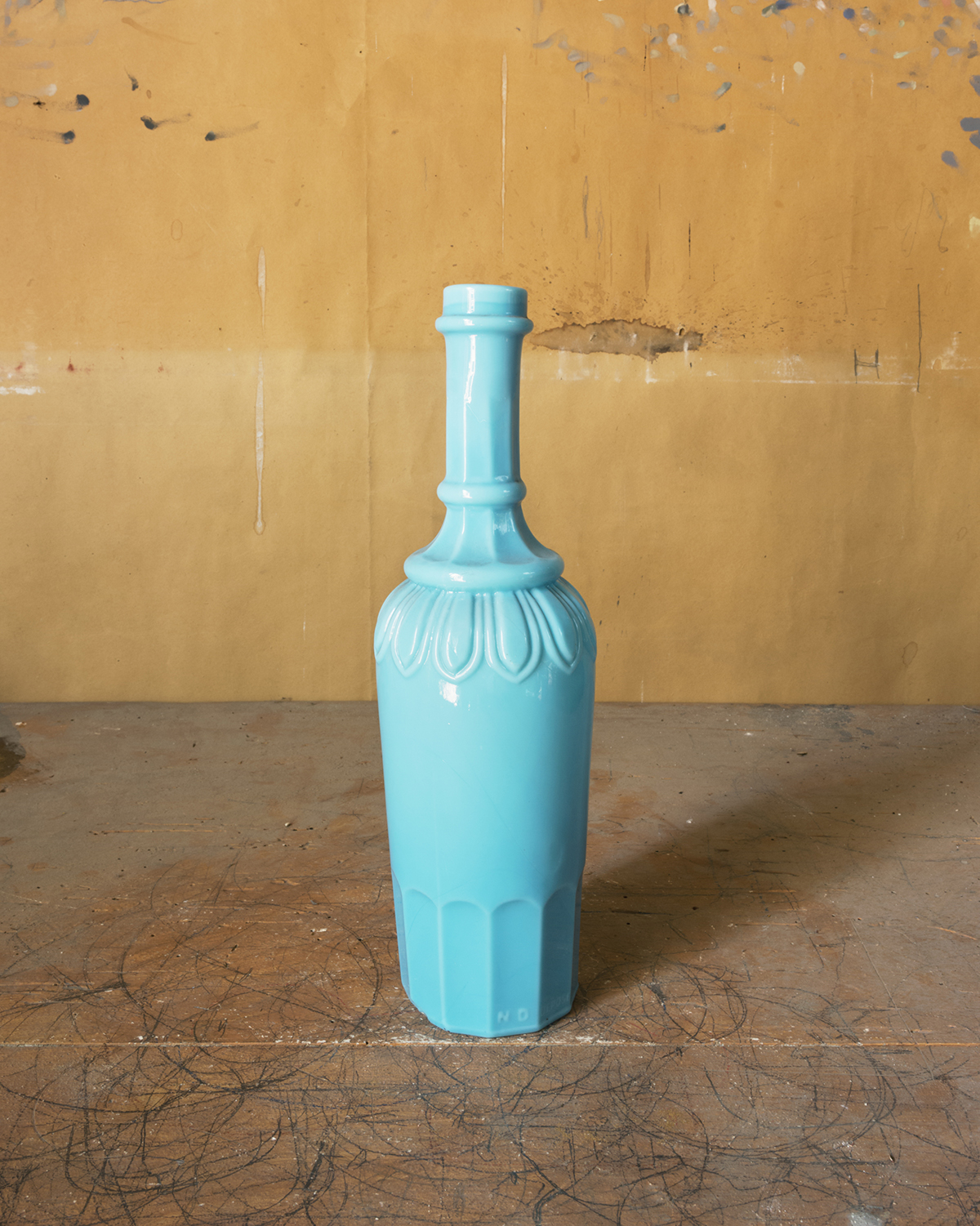
When I worked, I would take each object and rotate it slowly, without disturbing the dust, until it reached a moment where it felt complete to me. Like arranging flowers, you turn the vase until it feels right. I was looking for the spirit, the anima, of each object.
How did working in the same natural light and shadows that influenced Morandi’s paintings affect your photographic approach and your perception of the work?
The studio had a northern window, not a skylight. The light was always ambient, never direct sun. On grey days it was cooler, and on sunny days it was slightly stronger. From morning into evening, the light shifted constantly. As I spent more time there, I became aware of how this light affected both the objects and their shadows. Shadows play an important role in Morandi’s paintings. Sometimes they connect objects, sometimes they support them, and sometimes they disappear. I became attentive to the weight of light. An object casts a shadow, but light also wraps around it and softens the edges. The darkest part of a shadow sits at its core and then spreads outward. If light curves around a bottle, it creates a particular tone on its surface. In a transparent bottle, you might even see a small triangle of light inside the shadow. These are subtle details that a photographer notices and studies carefully.
In what ways did this project change, challenge or deepen your understanding of still life as an art form? Both in painting and in photography?
Sitting in that room, I began to think of Morandi as a monastic figure. He spent his life in that space, working with familiar objects he had collected, found, or even altered. I realised that still life does not require traditional subjects. You do not need fruit or fabric. You need objects that speak to your own sensibility, to your sense of form, scale, or feeling. After spending time in Provence and living in Tuscany, I began collecting objects myself. I had never been interested in collecting before. I have spent my life surrounded by photographs, and that was enough. But gradually, I started to notice objects that appealed to me. I began visiting flea markets and assembling my own arrangements. Not like Morandi, but in my own way. What influenced me was my experience as a street photographer. The way people gather, the way groups form, the relationship between scale and distance. These observations entered my still life work. By studying Morandi, I developed my own perspective on still life, while also becoming more aware of its history, from Dutch and Flemish painting to the Renaissance, where symbolic meaning often shaped the composition.
The expanded edition of this book includes over 130 new images and an updated essay. What criteria did you use in selecting the images for this new edition, and how does it differ from the original?
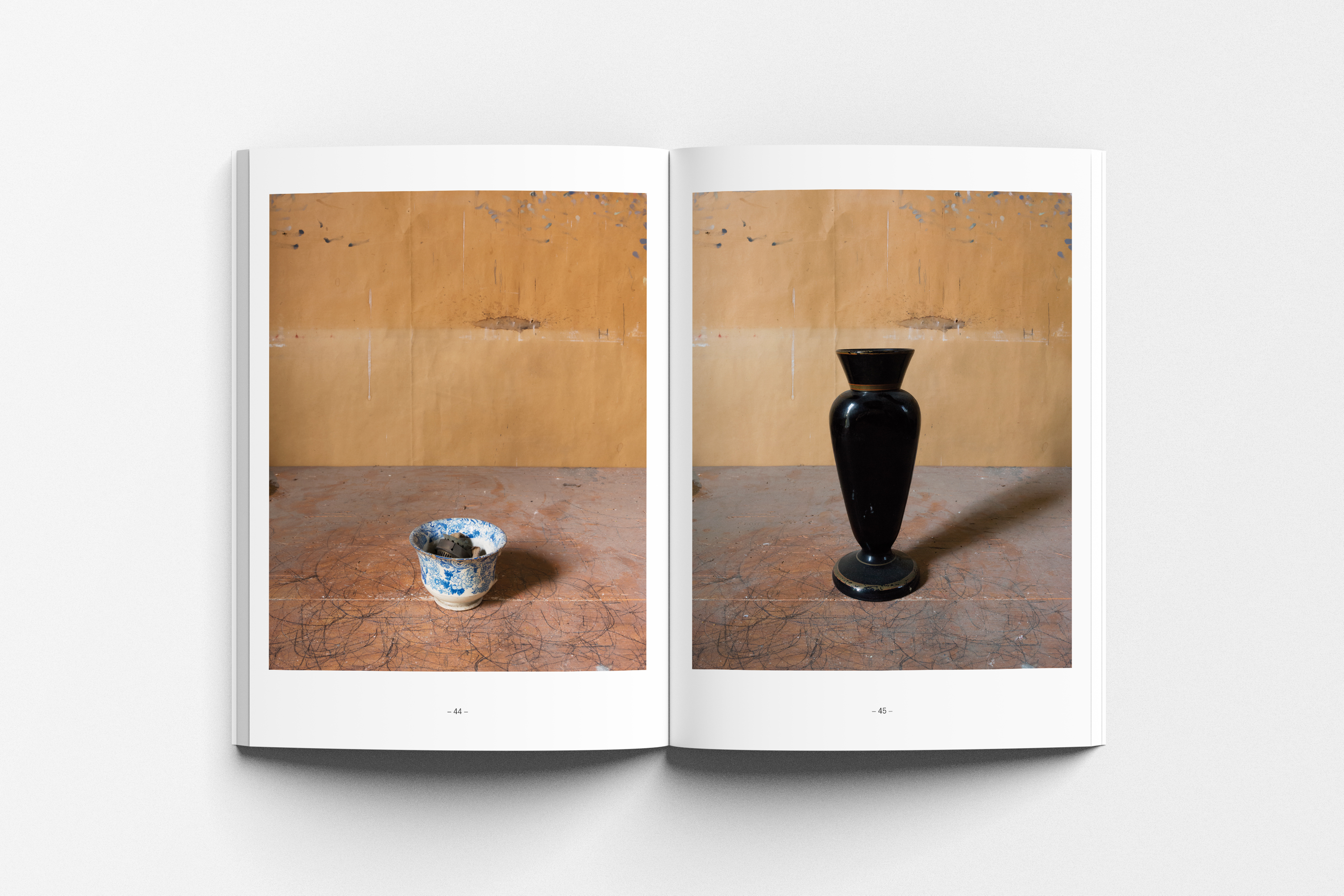
This edition moves closer to a catalogue raisonné. I was not able to include all 340 objects I photographed, but it represents a substantial portion of them. My aim was to show the range of objects Morandi collected over his lifetime. For those interested in his work, whether scholars, curators, or collectors, the book offers an opportunity to see that range. The objects include children’s toys, seashells, ceramics, bottles, and geometric forms such as cylinders, cubes, and cones. They vary, but they share a certain visual language. I think of them as his cast of characters. He would place them together, remove some, and shift their positions, creating ambiguity. Something large might sit next to something small. It might be in front, behind, or beside it. He was always exploring spatial relationships. While working in the studio, I also sensed a kind of humour in his approach. It felt as though he was in conversation with these objects as he arranged them.
Many photographers have interpreted studio and still life subjects. How do you see your work in dialogue with Morandi’s legacy, and how did your background influence your approach in this colour project?
This is a colour project. What stayed with me was the atmosphere of his studio. The walls were covered with paper that had aged over time, taking on a warm tone. You could see where he had wiped his brushes, leaving traces behind. The space had a strong presence. When I began making still lifes, I had to decide what my own approach would be. I did not want to imitate anyone. I wanted to understand how objects could relate to each other in my work. Over time, I realised that I was drawing on the energy of the street. The way people stand together, move together, and form groups influenced how I arranged objects. I tend to work in darker spaces, placing objects on a table covered with linen that I had printed in a darker tone. The light enters slowly, and the objects exist within that environment. I am working with limited colour, often within a range of greys, with small variations. I am still discovering why this approach interests me. There is also a connection to the present moment. The relationships between objects can suggest tension, imbalance, or power. In some way, they reflect the atmosphere of contemporary life.
Photos: Courtesy of and Published by Damiani Books.
related posts

Art & Culture
Laurent Pernot at the Saint Laurent Rive Droite
Art & Culture
Paris Fashion Week through the iPhone lens
.JPG)

 - embargo to 06 March 13.00 GMT.jpg)